
Menu
-
Shop All
Contact
hey@getstride.com
Stride Health Group
Stride Health Group Ltd
Company No 05158025
Lamas Road
Badersfield
Norwich
England
NR10 5FB
UK









High triglycerides: what they mean, what causes them and how to lower them
High triglycerides causes significant cardiovascular risk yet most people have never had their levels checked outside a routine GP appointment. Triglycerides are the most common form of fat found in the blood, and an estimated one in four adults in the UK has levels above the healthy range. The challenge is that raised triglycerides produce no noticeable symptoms in most cases, so the pattern can persist for years while quietly increasing the risk of heart disease, metabolic syndrome, and in severe cases, acute pancreatitis. Understanding what drives your triglyceride levels specifically requires looking at the biomarkers and lifestyle factors most commonly involved, and this is where targeted testing becomes useful.
What causes high triglycerides?
Diet high in refined carbohydrates and sugar
When you consume more calories than your body can use immediately, the liver converts the excess into triglycerides and releases them into the bloodstream for storage in fat cells. This conversion is particularly pronounced with refined carbohydrates, sugar-sweetened drinks, fruit juice, white bread, and highly processed foods. Unlike dietary fat, which enters circulation directly after a meal, excess carbohydrates are converted to triglycerides through a hepatic process that raises fasting levels over time. Cutting refined carbohydrates tends to reduce triglycerides faster than cutting dietary fat in most people.
Alcohol consumption
Alcohol has a direct and potent effect on triglyceride production in the liver. Even moderate alcohol intake raises fasting triglyceride levels in people who are susceptible. For those with borderline or elevated readings, alcohol is often the single most impactful modifiable factor: reducing intake by even half can produce measurable improvements within weeks. People with familial hypertriglyceridaemia are particularly sensitive to alcohol's effect on liver-based triglyceride synthesis.
Insulin resistance and metabolic syndrome
Insulin resistance impairs the body's ability to clear triglycerides from the bloodstream after meals, and it also drives the liver to produce more triglycerides from circulating glucose. Raised triglycerides are one of the five defining features of metabolic syndrome (alongside elevated blood pressure, high fasting glucose, low HDL cholesterol, and excess abdominal fat). If triglycerides are elevated alongside a low HDL reading, this combination is one of the most reliable indirect markers of insulin resistance even when fasting glucose appears normal. The triglyceride-to-HDL ratio is used in research as a surrogate for insulin sensitivity.
Underactive thyroid (hypothyroidism)
Thyroid hormones regulate the enzymes that break down triglycerides. When thyroid output falls, this clearance mechanism slows, and triglyceride levels rise as a consequence. Many people with borderline-high triglycerides are found on fuller testing to have subclinical hypothyroidism, where TSH is mildly elevated but T4 and T3 appear within the normal range. This pattern is reversible with appropriate thyroid support, which is why checking TSH alongside a lipid panel is clinically important when triglycerides are raised.
Obesity and excess visceral fat
Excess body fat, particularly visceral fat stored around the abdomen and organs, is a metabolic driver of raised triglycerides. Visceral adipose tissue releases fatty acids directly into the portal circulation, prompting the liver to produce more triglyceride-carrying VLDL particles. Even modest weight loss of 5 to 10 per cent of body weight can produce clinically significant reductions in triglyceride levels. This makes abdominal circumference a practical early indicator of triglyceride-related metabolic risk.
Inherited (genetic) causes
Primary hypertriglyceridaemia refers to inherited conditions that raise triglyceride levels independent of lifestyle. Familial hypertriglyceridaemia raises triglyceride levels alone, while familial combined hyperlipidaemia raises both triglycerides and LDL cholesterol. Type 3 hyperlipidaemia causes accumulation of both, and familial chylomicronaemia syndrome (a rarer condition) produces severely elevated levels that require specialist management. Genetic causes should be considered when triglycerides are persistently high despite lifestyle changes, when levels are very high at a young age, or when there is a strong family history.
Medications and secondary causes
Several commonly prescribed medications raise triglycerides as a side effect, including beta blockers, oestrogen-containing contraceptives and HRT, certain immunosuppressants, and some antiretroviral drugs used in HIV management. Uncontrolled type 2 diabetes, kidney disease, and liver disease all also impair triglyceride clearance. Secondary causes should be ruled out before concluding that elevated triglycerides are primary or lifestyle-related, which requires a broader set of blood markers than a simple lipid panel.
How to test for high triglycerides
Standard NHS lipid panels include triglycerides alongside total cholesterol, LDL, and HDL. UK guidance (updated in 2014) no longer routinely requires fasting before a triglyceride test: HEART UK recommends a non-fasting target below 2.0mmol/L. If a non-fasting result is elevated, a fasting test (10 to 14 hours without food) may follow, with a fasting target below 1.7mmol/L. Levels between 4.5 and 9.9mmol/L (fasting) indicate moderate hypertriglyceridaemia. Levels above 10mmol/L carry a significant risk of acute pancreatitis.
The limitation of testing triglycerides in isolation is that they are only one piece of the lipid picture. A meaningfully higher triglyceride reading alongside a low HDL reading, for example, tells a very different story about cardiometabolic risk than either marker alone. Similarly, triglycerides tested without HbA1c or fasting glucose miss the metabolic context that often explains why they are raised in the first place.
A more complete approach measures the full cardiovascular risk picture alongside the factors most likely to be driving elevated triglycerides:
Triglycerides measure the fat circulating in the blood. Persistently elevated levels contribute to plaque formation and increase cardiovascular risk, particularly when combined with low HDL.
HDL cholesterol is inversely related to triglycerides in most people: as triglycerides rise, HDL falls. The triglyceride-to-HDL ratio is a recognised surrogate marker for insulin resistance and cardiovascular risk.
LDL cholesterol and total cholesterol provide the broader lipid picture. Elevated triglycerides often accompany elevated LDL, and addressing one frequently helps the other.
ApoB measures the number of atherogenic lipoprotein particles more directly than LDL alone. It is increasingly used in cardiovascular risk assessment for people with raised triglycerides, where LDL can be misleadingly low.
HbA1c and fasting glucose identify whether insulin resistance or uncontrolled blood sugar is driving the triglyceride elevation.
TSH rules out hypothyroidism as a secondary cause, which is clinically important and frequently overlooked.
CRP reflects systemic inflammation, which both accompanies and is worsened by persistently raised triglycerides.
If your GP has already tested triglycerides and they are elevated, they will typically advise lifestyle changes first, with medication considered if levels remain high after three to six months. Home testing is most useful for people who want to track their levels between NHS appointments, understand the full metabolic context around their triglyceride reading, or investigate why their levels are not responding to lifestyle changes as expected.
Evidence-based strategies to lower triglycerides
Dietary carbohydrate and sugar reduction
The most consistently effective dietary intervention for high triglycerides is reducing refined carbohydrates and added sugar, rather than simply cutting dietary fat. Studies show that replacing refined carbohydrates with protein or unsaturated fats produces rapid reductions in fasting triglyceride levels. Practically, this means reducing white bread, pasta, rice, sugary drinks, fruit juice, and ultra-processed snacks, and increasing vegetables, legumes, whole grains, and quality protein sources. Tracking biomarkers before and after dietary changes is the most reliable way to know what is actually moving the needle for your biology specifically.
Omega-3 fatty acids from oily fish
Omega-3 fatty acids found in oily fish (salmon, mackerel, sardines, herring, anchovies) directly reduce the liver's production of VLDL particles, lowering circulating triglycerides. Regular consumption of two to four portions of oily fish per week has been shown to reduce triglycerides by 15 to 30 per cent in some studies. Prescription-strength omega-3 preparations are available for severe hypertriglyceridaemia, though over-the-counter supplements at standard doses have more variable effects.
Alcohol reduction
For people with elevated triglycerides, reducing alcohol is often the most impactful single lifestyle change. Alcohol stimulates hepatic VLDL production and impairs triglyceride clearance through multiple mechanisms. Even reducing intake from moderate to low levels can produce measurable improvement within two to four weeks, which makes it a useful test: if triglycerides drop significantly after reducing alcohol, that identifies a clear causal pathway worth addressing consistently.
Regular aerobic exercise
Aerobic exercise increases the activity of lipoprotein lipase, the enzyme that clears triglycerides from the bloodstream. Studies show that regular moderate-intensity exercise (150 minutes per week or more) reduces fasting triglycerides by an average of 10 to 20 per cent. The effect is dose-dependent and cumulative: the more consistently exercise is maintained, the greater and more sustained the reduction. High-intensity interval training (HIIT) produces particularly acute reductions in postprandial triglycerides.
Stride tests that can help with High triglycerides
Health Tests
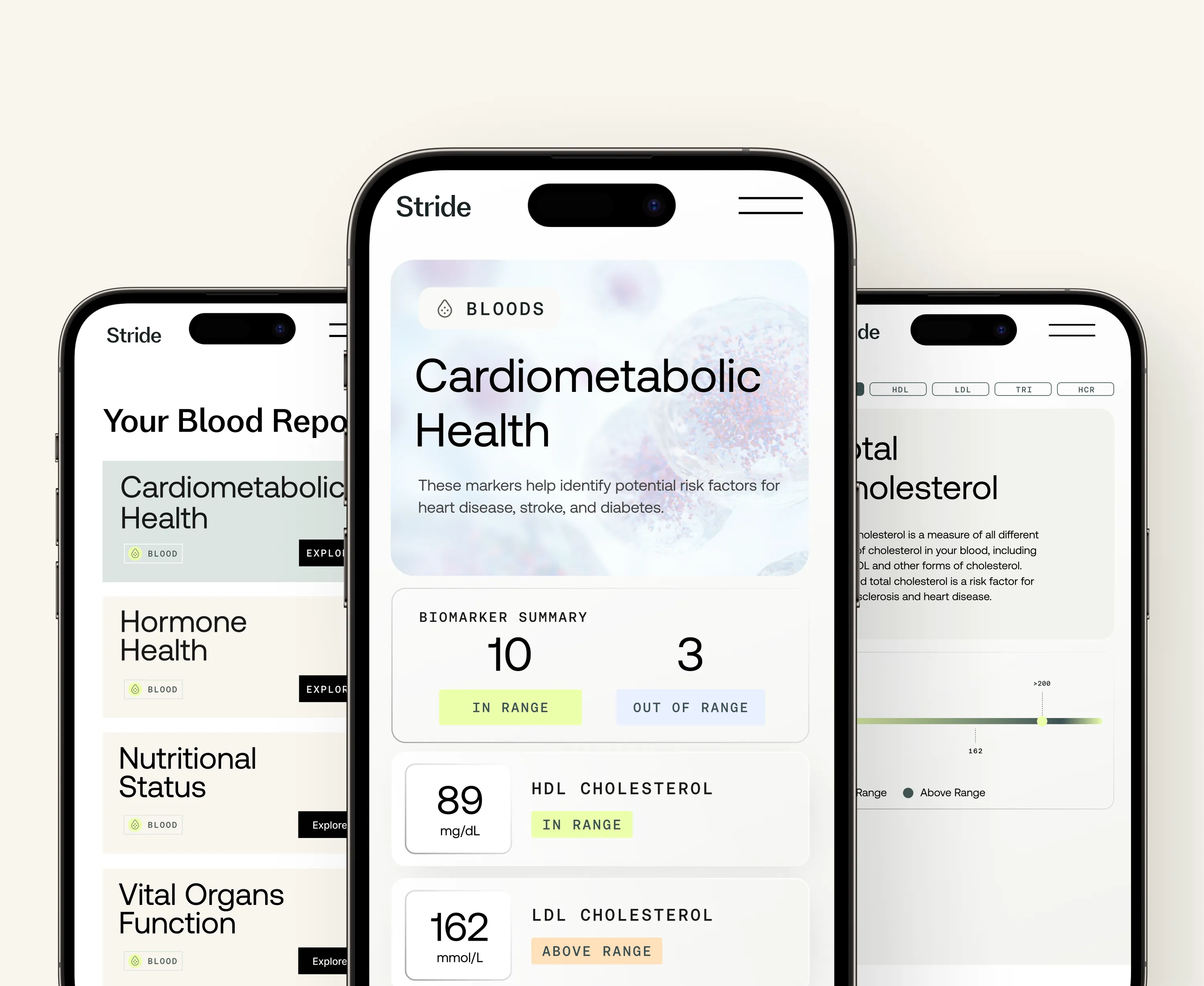
Optimal Bloods
At-home test for more than 70 blood-based biomarkers
From £399 £279.30
Biomarkers
| Biomarker | What it measures | Why it matters | Relevance |
|---|---|---|---|
| Triglycerides Blood Test (Heart Health & Metabolic Biomarker) | Fat circulating in the blood | The primary marker; persistently elevated levels increase cardiovascular and pancreatitis risk | 5 |
| HDL Cholesterol Blood Test | "Good" cholesterol | Inversely related to triglycerides; low HDL combined with high triglycerides signals significant cardiometabolic risk | 5 |
| LDL Cholesterol Blood Test | "Bad" cholesterol | Frequently raised alongside triglycerides; together they define atherogenic dyslipidaemia | 4 |
| ApoB Blood Test (Apolipoprotein B) | Total atherogenic lipoprotein particle count | More accurate than LDL for cardiovascular risk in people with high triglycerides, where LDL can be misleadingly low | 4 |
| HbA1c Blood Test (Glycated Haemoglobin) | Average blood glucose over 3 months | Elevated HbA1c indicates insulin resistance or diabetes, the most common driver of persistently high triglycerides | 4 |
| TSH Blood Test (Thyroid Stimulating Hormone) | Thyroid stimulating hormone | Hypothyroidism impairs triglyceride clearance; often overlooked as a secondary cause | 4 |
| hsCRP Blood Test (High Sensitivity C-Reactive Protein) | Systemic inflammation | High triglycerides are associated with and worsen low-grade inflammation; CRP tracks this connection | 3 |
| Glucose Blood Test | Blood sugar after fasting | Raised fasting glucose alongside high triglycerides defines a high-risk metabolic pattern | 4 |
FAQs
What level of triglycerides is considered high in the UK?
In the UK, HEART UK recommends a non-fasting triglyceride level below 2.0mmol/L. If a non-fasting result is elevated, a fasting test is performed, with a target below 1.7mmol/L after 10 to 14 hours without food or drink other than water. Fasting levels between 4.5 and 9.9mmol/L indicate moderate hypertriglyceridaemia, where your doctor will discuss dietary and lifestyle changes alongside considering your broader lipid and cardiovascular risk profile. Fasting levels above 10mmol/L indicate severe hypertriglyceridaemia, which carries a significant risk of acute pancreatitis and typically warrants specialist referral and possible medication.
What are the symptoms of high triglycerides?
High triglycerides usually cause no noticeable symptoms, which is why the condition is so frequently undetected until a blood test is done for another reason. In rare cases of very high levels (typically above 10mmol/L), fat deposits can develop under the skin as yellowish nodules called xanthomas, and the blood can appear milky or cloudy. Very high levels also carry a risk of acute pancreatitis, which causes severe abdominal pain and requires urgent medical attention. For the majority of people, however, raised triglycerides are a silent metabolic finding that only becomes apparent through a blood test.
What is the fastest way to lower triglycerides naturally?
The interventions with the most rapid and reliable impact are: reducing refined carbohydrates and added sugar (which the liver converts into triglycerides), cutting back on alcohol, and increasing oily fish consumption for omega-3 fatty acids. Of these, reducing alcohol is often the fastest-acting change for people who drink regularly, with measurable reductions visible within two to four weeks. Reducing sugar and refined carbohydrates can lower triglycerides significantly within four to six weeks. Regular aerobic exercise adds further benefit over time. The relative impact of each intervention varies between individuals, which is why tracking your levels before and after specific changes tells you more than any general guideline.
Can high triglycerides cause heart disease?
Raised triglycerides are an independent risk factor for cardiovascular disease, particularly when combined with low HDL cholesterol, elevated LDL, or other metabolic risk factors. High triglycerides contribute to the formation of atherogenic small dense LDL particles, which are more likely to penetrate artery walls and contribute to plaque formation than standard LDL particles. They are also a marker of underlying conditions (insulin resistance, metabolic syndrome, diabetes) that independently drive cardiovascular risk. Research consistently shows that very high triglycerides (above 2.3mmol/L non-fasting) are associated with increased risk of heart attack and stroke, particularly in people who also have diabetes or high blood pressure.
Is high triglycerides the same as high cholesterol?
No. Triglycerides and cholesterol are both lipids (fats) that circulate in the blood, but they are structurally different and play different roles. Triglycerides are the primary form of stored and circulating fat, used for energy. Cholesterol is a structural component of cells and a precursor to hormones. Both are measured in a standard lipid panel, and both contribute to cardiovascular risk through different mechanisms. High triglycerides frequently occur alongside high cholesterol (particularly in familial combined hyperlipidaemia and metabolic syndrome), but each can be elevated independently. Treating one does not automatically improve the other, and each requires its own assessment.
Do statins lower triglycerides as well as cholesterol?
Statins primarily reduce LDL cholesterol and have a modest effect on triglycerides, typically lowering them by 10 to 20 per cent. At high levels of triglycerides (above 4.5mmol/L fasting), additional medications such as fibrates or high-dose omega-3 preparations are often used alongside statins. For people with both high LDL and high triglycerides, a combination approach addressing diet, lifestyle, and targeted medication is usually more effective than statins alone. Monitoring both markers over time, rather than LDL alone, gives a clearer picture of whether treatment is achieving the intended metabolic effect.
What foods cause high triglycerides most rapidly?
The foods with the most rapid and pronounced effect on triglyceride levels are those high in added sugar and refined carbohydrates: sugary drinks, fruit juice, white bread, white rice, pastries, sweets, and ultra-processed snacks. Alcohol is also a potent and fast-acting trigger. Contrary to popular belief, dietary fat has a less direct short-term impact on fasting triglycerides than excess carbohydrate and sugar intake, because the liver is the primary source of fasting triglycerides and converts excess glucose and fructose directly into VLDL triglycerides. This is why low-carbohydrate diets tend to reduce triglycerides more quickly than low-fat diets in most people.
Can stress raise triglyceride levels?
Chronic psychological stress raises cortisol, which stimulates the liver to produce more VLDL and increases the release of fatty acids from fat tissue into the bloodstream. This can contribute to persistently elevated fasting triglycerides over time, particularly in people who also have insulin resistance or carry excess visceral fat. Stress-related sleep disruption compounds the effect, as poor sleep independently worsens triglyceride metabolism. Addressing stress through sleep optimisation, regular exercise, and structured recovery time is therefore a meaningful lifestyle lever for triglyceride management alongside dietary changes.
Why might my triglycerides be high even though I eat healthily?
Several non-dietary factors can cause persistently elevated triglycerides despite a clean diet: an underactive thyroid (which slows triglyceride clearance), insulin resistance (which drives hepatic overproduction), genetic conditions such as familial hypertriglyceridaemia, certain medications (beta blockers, oestrogen, some antiretrovirals), and uncontrolled or undiagnosed type 2 diabetes. If triglycerides remain elevated despite sustained dietary changes, testing thyroid function (TSH, Free T4, Free T3), blood glucose (HbA1c), and considering genetic factors is the next logical step. A comprehensive blood panel gives you the full picture rather than investigating each possible cause separately.
Can triglycerides be high because of a thyroid problem?
Yes. Thyroid hormones play a direct role in the regulation of lipoprotein lipase and hepatic lipase, the enzymes that clear triglycerides from the bloodstream. When thyroid output falls, even to subclinical levels, this clearance slows and triglycerides accumulate. It is not uncommon for people with borderline or mildly elevated triglycerides to be found on fuller testing to have subclinical hypothyroidism, where TSH is elevated but T4 appears within the standard range. Testing TSH alongside a full lipid panel allows both patterns to be assessed in a single blood draw and avoids treating triglycerides as an isolated finding when there may be a reversible underlying cause.
Find out what your body is actually trying to tell you.
Answer 8 quick questions and get a free personalised report - covering which area of your biology is most worth looking at first, what testing in that area reveals, and what actions become available once you have that data.
Where do you feel you're operating below your potential right now?
Methylation & Cellular Health
Your biology is signalling a methylation upgrade - here’s what that means and what to do about it.