
Menu
-
Shop All
Contact
hey@getstride.com
Stride Health Group
Stride Health Group Ltd
Company No 05158025
Lamas Road
Badersfield
Norwich
England
NR10 5FB
UK









Vitamin D deficiency: symptoms, risks and how to test your levels
Vitamin D deficiency is the most common nutritional deficiency in the UK, affecting a substantial proportion of adults at some point during the year, with prevalence rising sharply through autumn and winter. Unlike most nutrients, vitamin D functions as a hormone precursor, influencing gene expression in nearly every tissue in the body, from immune cells to muscle fibres to brain neurons. Vitamin D deficiency symptoms include persistent fatigue, low mood, muscle weakness, increased susceptibility to infection, and in more severe cases, bone pain, all of which are easy to attribute to other causes or simply to the season. Understanding whether low vitamin D is contributing to your symptoms requires a vitamin D blood test at home or through your GP, and interpreting the result against an optimal range rather than just a minimum threshold.

What causes vitamin D deficiency?
Insufficient sun exposure, particularly in UK winters
The body produces vitamin D when UVB radiation from sunlight reaches the skin. In the UK, the angle of the sun between October and March means UVB radiation is too weak for vitamin D synthesis, regardless of how much time is spent outdoors. This seasonal gap creates a reliable dip in vitamin D levels for most of the population each year. Even in summer, office-based working patterns, clothing choices, time spent indoors and the use of sunscreen mean that adequate sun exposure is not guaranteed. Data from over 5,500 UK adults showed that almost half had vitamin D levels below the optimal range even during the summer months, with the percentage rising further through winter.
Skin pigmentation and ethnicity
Melanin in the skin reduces UVB penetration, meaning that people with darker skin tones produce less vitamin D from the same amount of sun exposure. Rates of vitamin D deficiency are substantially higher among South Asian, Black African, Black Caribbean and mixed heritage populations in the UK, with some studies finding deficiency rates above 50% in South Asian individuals during winter. This is recognised as a significant public health issue in the UK, where there is no mandatory vitamin D food fortification programme equivalent to those in other northern European countries.
Age and reduced synthesis efficiency
The capacity to synthesise vitamin D in the skin declines with age, and older adults are at higher risk of deficiency even with equivalent sun exposure. At the same time, the consequences of deficiency in older age, particularly the risk of osteoporosis and falls, are more significant. Kidney function also declines with age, which matters because the kidneys are responsible for converting the form of vitamin D made in the skin into its active hormonal form (1,25-dihydroxyvitamin D or calcitriol). Older adults may benefit from more proactive monitoring and higher supplementation doses than younger people.
Obesity and adipose tissue sequestration
Vitamin D is fat-soluble, meaning it is stored in adipose (fat) tissue. In people with higher body fat, a greater proportion of circulating vitamin D is sequestered in fat stores and unavailable for use by tissues. The relationship is well established: higher BMI is consistently associated with lower serum vitamin D, and people with obesity typically require significantly higher doses to achieve the same blood levels as leaner individuals. Testing vitamin D levels directly is more useful than estimating requirements from bodyweight alone.
Diet and limited food sources
Very few foods contain meaningful amounts of vitamin D. Oily fish (salmon, mackerel, sardines), egg yolks and liver are the main dietary sources, along with some fortified foods such as certain breakfast cereals and dairy alternatives. A diet low in these foods provides minimal vitamin D, particularly in winter when synthesis is not possible. People following vegan diets are at additional risk unless fortified foods or supplements are used consistently. The NHS recommends that everyone in the UK consider supplementing with at least 10 micrograms (400 IU) of vitamin D from October to March.
Malabsorption conditions
Conditions affecting the gut, including coeliac disease, Crohn's disease, and other inflammatory bowel conditions, can impair fat absorption generally, which reduces vitamin D uptake since it is a fat-soluble vitamin. Weight loss surgery that bypasses the small intestine can also reduce absorption. People with these conditions may require higher doses to achieve adequate blood levels and benefit from more frequent testing to ensure levels are maintained.
How to test vitamin D levels in the UK
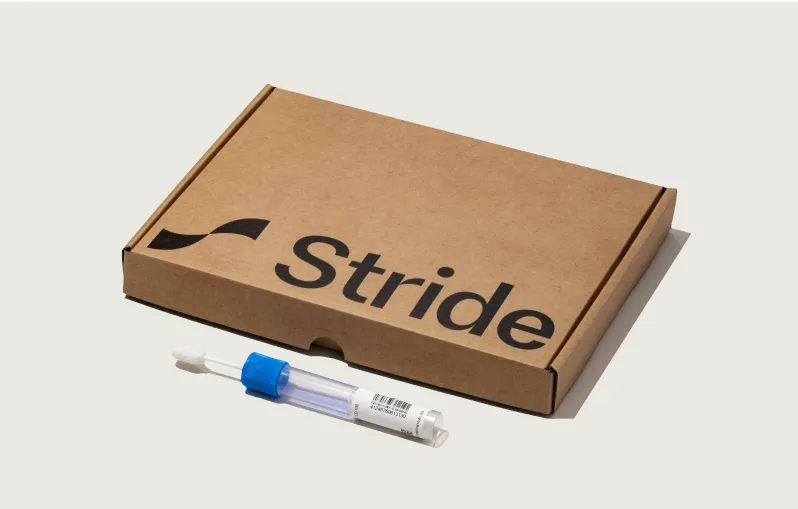
A vitamin D test measures 25-hydroxyvitamin D (25(OH)D), the form circulating in the blood that reflects overall vitamin D status. This is the standard blood test for vitamin D deficiency and is available both through the NHS and as a home blood test in the UK.
25-hydroxyvitamin D (vitamin D) is the primary diagnostic marker. The NHS defines deficiency as below 25 nmol/L and insufficiency as 25-50 nmol/L. However, optimal function for immune health, muscle function and mood is generally considered to require levels between 75 and 100 nmol/L. A result that is technically within the normal range can still represent suboptimal vitamin D status with real physiological consequences.
Vitamin D sits alongside other deficiency markers that are commonly found together, particularly in people whose diet, lifestyle or skin tone puts them at higher risk. Testing vitamin D as part of a broader nutritional panel provides the surrounding context needed to understand whether fatigue, low mood and other symptoms have a single cause or multiple overlapping ones.
For people already experiencing symptoms through the winter months, testing in October or November allows early intervention before levels drop to their annual low point.
Evidence-based strategies to support vitamin D levels
Supplementation through autumn and winter
The NHS recommends that everyone in the UK considers taking 10 micrograms (400 IU) of vitamin D daily from October to March. For people who are already deficient or who have risk factors for deficiency (darker skin tone, limited outdoor time, obesity, older age), higher doses of 1,000-2,000 IU are commonly used under GP guidance. Vitamin D3 (cholecalciferol) is generally considered more effective at raising blood levels than vitamin D2 (ergocalciferol). For vegans, D3 sourced from lichen is available as an alternative to the standard lanolin-derived form.
Sun exposure in spring and summer
During April to September, the sun is strong enough for vitamin D synthesis in the UK. Regular midday sun exposure to arms and legs, without sunscreen, for around 15-30 minutes in fair-skinned individuals and longer for those with darker skin tones, can contribute meaningfully to vitamin D stores during these months. However, the duration and intensity of exposure needed for adequate synthesis varies considerably by latitude, season, skin tone and time of day, making direct measurement of vitamin D levels more reliable than estimating from sun exposure alone.
Dietary sources
Oily fish consumed several times per week provides a meaningful contribution to vitamin D intake. Two portions of salmon per week, for example, provide roughly 50-60% of the recommended daily intake. Egg yolks, particularly from free-range chickens with outdoor access, contain variable amounts. Fortified foods including certain plant milks, breakfast cereals and margarine contribute smaller amounts and are particularly relevant for people who do not eat fish or eggs.
Testing to personalise your dose
Vitamin D supplementation without testing is essentially guesswork. Individuals vary considerably in their starting levels, their rate of synthesis, the degree to which supplementation raises their blood levels (known as dose-response), and the level that resolves their specific symptoms. Testing vitamin D levels before starting supplementation and again after two to three months shows whether the dose chosen is actually achieving the desired result. Maintaining levels above 75 nmol/L year-round, rather than simply avoiding deficiency in winter, represents a more proactive approach to the range of functions vitamin D influences.
Stride tests that can help with Vitamin D deficiency
Health Tests
Optimal Bloods
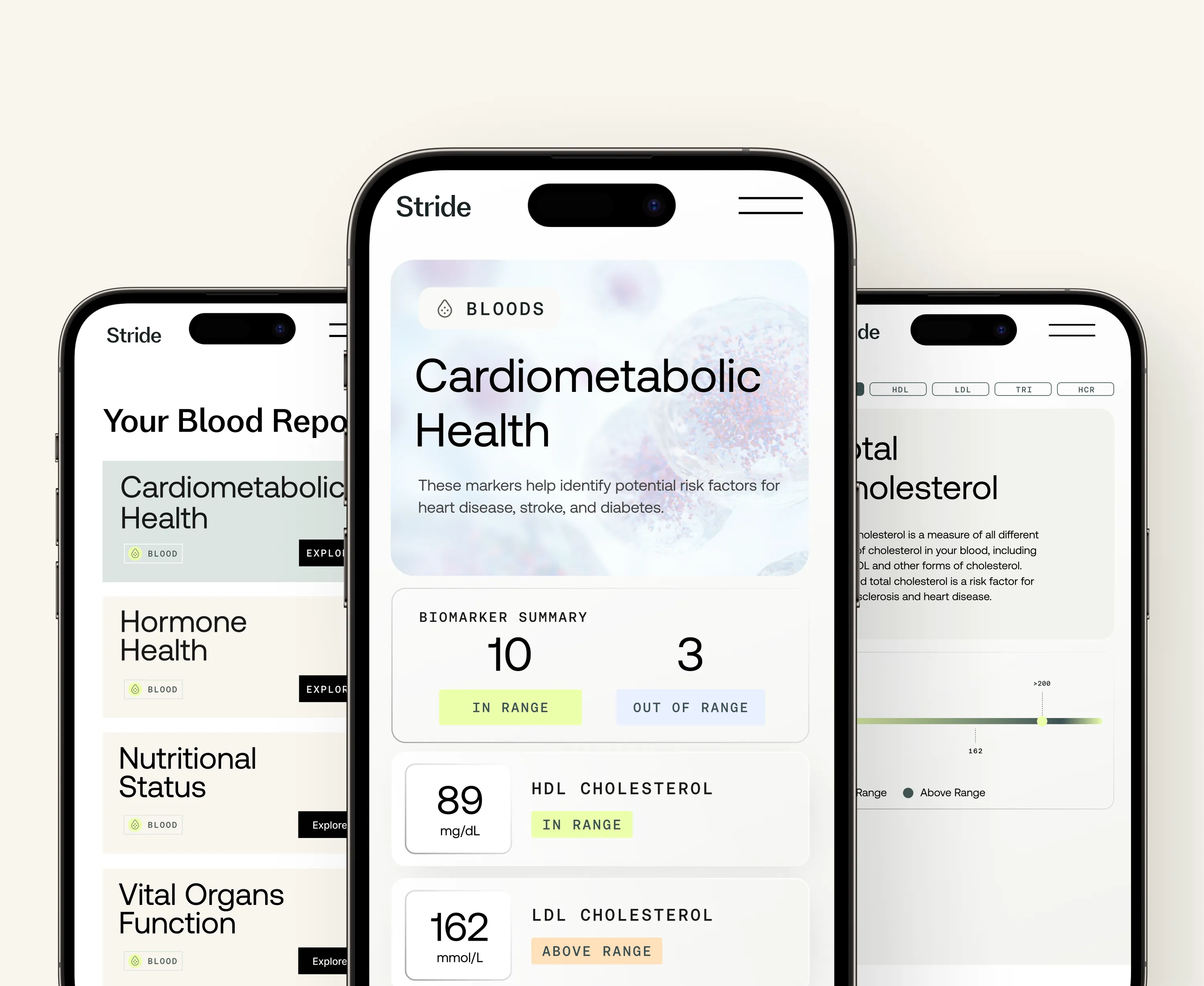
At-home test for more than 70 blood-based biomarkers
From £399 £279.30
Biomarkers
| Biomarker | What it measures | Why it matters | Relevance |
|---|---|---|---|
| Vitamin D Blood Test (25-OH) | 25-hydroxyvitamin D blood levels | Primary diagnostic marker for vitamin D deficiency and insufficiency | 5 |
| Ferritin Blood Test | Iron stores | Often co-depleted with vitamin D; both contribute to fatigue and immune function | 4 |
| Active B12 Blood Test (Holotranscobalamin) | B12 status | Frequently suboptimal alongside vitamin D in plant-based diets and winter months | 4 |
| hsCRP Blood Test (High Sensitivity C-Reactive Protein) | Systemic inflammation | Chronic inflammation impairs vitamin D function and is linked to its deficiency | 3 |
| TSH Blood Test (Thyroid Stimulating Hormone) | Thyroid function | Thyroid dysfunction and vitamin D deficiency share symptoms and are commonly co-occurring | 3 |
| TPO Antibodies (Thyroid Peroxidase Antibodies) Blood Test | Thyroid autoimmunity | Low vitamin D is associated with higher rates of autoimmune thyroid disease | 3 |
| HbA1c Blood Test (Glycated Haemoglobin) | Blood glucose regulation | Metabolic dysfunction and vitamin D deficiency are bidirectionally associated | 2 |
FAQs
What are the signs of low vitamin D in the UK?
Signs of low vitamin D in the UK often develop gradually and are easy to attribute to other causes, particularly in winter. The most commonly reported are persistent fatigue and tiredness even after adequate sleep, low mood or seasonal depression, muscle weakness or achiness, increased susceptibility to infections (frequent colds or slow recovery), bone pain particularly in the lower back, hips and legs, and, over time, increased risk of fractures. Some people also report brain fog and difficulty concentrating. These symptoms are not exclusive to vitamin D deficiency and can have other causes, which is why a vitamin D blood test at home or through your GP is a more reliable diagnostic tool than symptom assessment alone.
What is the NHS vitamin D deficiency level and what is optimal?
The NHS defines vitamin D deficiency as a 25-OH vitamin D blood level below 25 nmol/L (nanomoles per litre) and insufficiency as 25-50 nmol/L. A level above 50 nmol/L is generally considered adequate for bone health. However, many practitioners and researchers suggest that levels between 75 and 100 nmol/L are associated with better outcomes across a broader range of health markers, including immune function, muscle strength, mood and cardiovascular health. The difference between a level of 30 nmol/L (technically not deficient by NHS criteria) and 80 nmol/L can be physiologically significant in terms of vitamin D's hormonal functions in the body.
How much vitamin D do I need per day?
The NHS recommends that adults and children over one year old take 10 micrograms (400 IU) of vitamin D daily, particularly from October to March when synthesis from sunlight is not possible in the UK. People at higher risk of deficiency, including those with darker skin tones, older adults, people who are obese, those with limited outdoor exposure and people with gut conditions affecting absorption, may benefit from higher doses, typically 1,000-2,000 IU daily. The only reliable way to determine the right dose for you individually is to test your vitamin D level, supplement at an appropriate dose, and retest after two to three months to confirm your levels are reaching the desired range.
Can vitamin D deficiency cause fatigue and tiredness?
Vitamin D deficiency is a recognised cause of fatigue, though the mechanisms are not entirely understood. Vitamin D receptors are present in skeletal muscle and the brain, and deficiency appears to reduce mitochondrial function and impair energy production at the cellular level. Observational studies consistently find lower vitamin D levels in people reporting fatigue, and supplementation in deficient individuals shows improvements in energy and mood in several controlled trials. The association is particularly strong in people with levels below 25-30 nmol/L. However, fatigue is a non-specific symptom, and vitamin D deficiency should be assessed alongside other common causes including low ferritin, thyroid dysfunction and B12 deficiency.
Does vitamin D affect the immune system?
Vitamin D plays a central role in immune regulation. Vitamin D receptors are found on virtually all immune cells, and the active form of vitamin D modulates both innate immunity (the first-line response to pathogens) and adaptive immunity (the targeted antibody response). Deficiency is associated with increased susceptibility to respiratory infections, slower recovery from illness, and higher rates of autoimmune conditions, including autoimmune thyroid disease, multiple sclerosis and inflammatory bowel disease. The UK's seasonal pattern of vitamin D deficiency, lowest in winter when respiratory infections are also most prevalent, is considered by many researchers to be a contributory factor to winter illness patterns.
Can vitamin D deficiency cause depression or anxiety?
There is a consistent association between low vitamin D levels and depression, and a stronger association with seasonal affective disorder (SAD), which is characterised by low mood, fatigue and carbohydrate craving during the darker months. Vitamin D receptors are present in brain regions involved in mood regulation, and the vitamin influences the synthesis of serotonin, a neurotransmitter with direct relevance to mood. Multiple randomised controlled trials have shown improvements in depressive symptoms with vitamin D supplementation in deficient individuals, though the effect size is modest and supplementation is not a substitute for evidence-based treatments for clinical depression. Testing vitamin D alongside other mood-relevant markers including B12, folate and thyroid function provides the most comprehensive picture.
Is vitamin D deficiency more common in winter in the UK?
Yes. Vitamin D deficiency follows a consistent seasonal pattern in the UK, with blood levels reaching their annual lowest point in February and March, after several months of negligible UV synthesis. Levels typically peak in August and September following the summer months. This pattern is most pronounced in people with limited outdoor exposure and lighter skin tones, for whom the seasonal contrast is most marked. In people with darker skin tones, levels are lower year-round and the seasonal variation is less pronounced. NHS guidance recommends supplementation for all adults from October to March, and year-round supplementation for higher-risk groups.
Can you take too much vitamin D and what are the risks?
Vitamin D toxicity (hypervitaminosis D) can occur with very high supplementation doses sustained over time, but is uncommon from standard supplementation. It leads to elevated calcium levels in the blood (hypercalcaemia), which can cause nausea, confusion, kidney damage and, in severe cases, heart rhythm abnormalities. Toxicity is not produced by sun exposure alone, only through excessive supplementation. At standard doses of 400-2,000 IU daily, toxicity risk is very low. At doses of 4,000 IU or above used long-term without monitoring, the risk increases and blood level testing is appropriate. The most reliable approach is to test before and during supplementation, so that dose can be adjusted to maintain levels in the optimal range without over-supplementing.
Does vitamin D affect bone health in adults?
Vitamin D is essential for calcium absorption in the gut. Without adequate vitamin D, calcium absorption falls significantly regardless of dietary intake, and the body compensates by drawing calcium from bone, progressively reducing bone mineral density. This is the mechanism underlying vitamin D deficiency's contribution to osteoporosis and fracture risk. The relationship is well established and forms the basis of NHS recommendations for vitamin D in older adults. However, bone health involves multiple other nutrients including calcium, magnesium, vitamin K2 and protein, and adequate vitamin D alone does not guarantee bone protection if other factors are suboptimal.
How quickly can vitamin D levels be raised with supplementation?
Vitamin D levels in the blood respond to supplementation within a few weeks, but reaching and stabilising in the optimal range typically takes two to three months of consistent supplementation at an appropriate dose. Starting from a significantly deficient level requires longer to build up stores. Some practitioners use a loading protocol, with a higher dose for four to six weeks, to raise levels more quickly before moving to a maintenance dose, though this is generally done under medical supervision. Retesting after two to three months of supplementation is the most reliable way to confirm that your specific dose is achieving the desired result, since individual responses to supplementation vary considerably.
Find out what your body is actually trying to tell you.
Answer 8 quick questions and get a free personalised report - covering which area of your biology is most worth looking at first, what testing in that area reveals, and what actions become available once you have that data.
Where do you feel you're operating below your potential right now?
Methylation & Cellular Health
Your biology is signalling a methylation upgrade - here’s what that means and what to do about it.