
Menu
-
Shop All
Contact
hey@getstride.com
Stride Health Group
Stride Health Group Ltd
Company No 05158025
Lamas Road
Badersfield
Norwich
England
NR10 5FB
UK



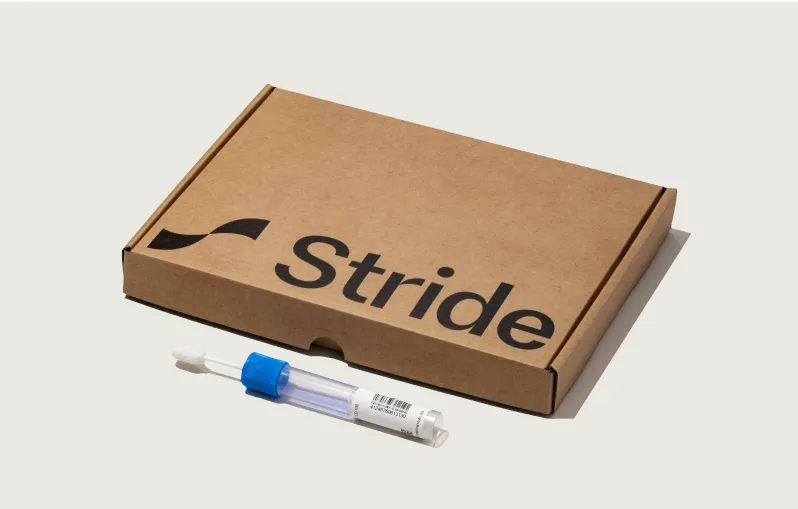






Stress and burnout: what's happening inside your body and how to measure it
Stress and burnout are not just psychological experiences. They produce measurable changes across the body's hormonal, immune, and metabolic systems, and understanding what is happening at a biomarker level is often the clearest way to differentiate between temporary stress and deeper physiological dysregulation. The question of how to test cortisol levels UK has become increasingly common, reflecting growing awareness that burnout is not simply a mental health label but a biological state with objective markers that a blood test can help illuminate.
What causes stress and burnout to affect the body?
The HPA axis and cortisol dysregulation
When the brain perceives a stressor, it triggers the hypothalamic-pituitary-adrenal (HPA) axis, which signals the adrenal glands to release cortisol, the primary stress hormone. In the short term, cortisol is adaptive: it mobilises glucose, suppresses inflammation, and sharpens alertness. The problem arises when this system remains activated over months or years. Research in psychoneuroendocrinology has shown that people in states of established burnout often show lower cortisol levels rather than higher ones, as the adrenal stress response becomes blunted after sustained overactivation. This means that a single cortisol reading interpreted in isolation can be misleading. Context, timing, and the broader hormonal picture all matter.
Chronic inflammation as a downstream effect
Paradoxically, while cortisol is anti-inflammatory in short bursts, chronic stress increases systemic inflammation. Sustained cortisol elevation disrupts the immune system's normal regulation, leading to elevated levels of inflammatory markers including C-reactive protein (CRP) and interleukin-6 (IL-6). This inflammatory state contributes to the physical symptoms that often accompany burnout: persistent fatigue, joint discomfort, brain fog, and disrupted sleep. Elevated CRP in otherwise healthy adults can often reflect a chronic stress load rather than infection or acute illness.
Thyroid disruption via the stress-thyroid connection
The relationship between the HPA axis and the hypothalamic-pituitary-thyroid (HPT) axis is bidirectional. Chronically elevated cortisol suppresses TSH secretion from the pituitary and impairs the peripheral conversion of T4 (the storage form of thyroid hormone) into T3 (the active form). This means a person under sustained stress may have thyroid function tests that appear borderline normal while still experiencing classic thyroid-related symptoms: fatigue, cold intolerance, weight changes, and difficulty concentrating. Testing Free T3 alongside TSH and Free T4 makes this pattern visible.
Nutrient depletion under chronic stress
Sustained physiological stress increases the body's demand for several key micronutrients. Vitamin B12 is depleted more rapidly during periods of high cortisol output, contributing to neurological symptoms and fatigue. Magnesium is consumed by the cortisol production process itself. Vitamin D, already deficient in a significant proportion of the UK population, plays a regulatory role in immune and HPA axis function, and low levels appear to amplify stress reactivity. Ferritin can also fall in people under sustained physical or psychological stress due to the effects of chronic inflammation on iron metabolism.
Sleep disruption and its metabolic consequences
The body's cortisol output follows a natural diurnal rhythm, peaking in the early morning hours and declining through the day. Chronic stress disrupts this rhythm, raising evening cortisol and suppressing the normal overnight recovery process. Disrupted sleep in turn worsens cortisol dysregulation, creating a self-reinforcing cycle. This extends beyond energy: disrupted sleep alters blood glucose regulation, elevates CRP, and over time impairs the immune system in ways that show up across multiple biomarker categories.
The gut-stress axis
Chronic stress alters gut microbiome composition and intestinal permeability. The gut lining becomes more permeable under sustained cortisol exposure, allowing bacterial components to enter circulation and trigger low-grade systemic inflammation. This gut-stress connection helps explain why many people experiencing burnout report digestive symptoms alongside fatigue and mood changes. The gut and brain communicate through the vagus nerve and via shared hormonal and immune pathways, making gut health an important dimension of any comprehensive stress and burnout assessment.
How to test for stress and burnout
Standard NHS testing does not include a specific burnout panel. A GP may order cortisol if Addison's disease or Cushing's syndrome is suspected, but the nuanced cortisol patterns of chronic stress and burnout are rarely captured by a single morning blood draw alone. A more useful approach measures the full biological context of the stress response rather than a single hormone.
Cortisol is the primary stress hormone, produced by the adrenal glands in response to HPA axis activation. Morning cortisol (drawn between 8am and 9am) provides a reference point for the expected daily peak. Interpreting this result alongside inflammatory markers and thyroid function gives a more complete picture than cortisol alone.
CRP (C-reactive protein) measures systemic inflammation. In chronic stress, CRP is often mildly elevated in the absence of infection, reflecting the inflammatory consequences of sustained HPA activation. Serial CRP measurements over time are more informative than a single reading.
TSH, Free T4, and Free T3 assess the downstream impact of stress on thyroid hormone production and conversion. When cortisol chronically suppresses T4-to-T3 conversion, Free T3 falls while TSH may remain within the standard reference range. This is one of the most commonly missed patterns in people attributing fatigue to stress alone.
Vitamin B12 supports neurological function and energy metabolism. Deficiency produces fatigue, brain fog, and mood changes that are clinically indistinguishable from burnout symptoms, making it essential to rule out alongside cortisol assessment.
Vitamin D plays a regulatory role in immune and HPA axis function. Low levels amplify inflammatory responses to stress and are highly prevalent across the UK population.
Ferritin (iron stores) falls in people experiencing chronic inflammation, heavy exercise, or physiological stress, contributing independently to fatigue and cognitive impairment.
Homocysteine is an amino acid that rises when B vitamin status is suboptimal and is elevated in people with chronic stress, disrupted methylation, and systemic inflammation. Elevated homocysteine is an independent risk marker for cardiovascular and cognitive health.
Evidence-based strategies to support the stress response
Building physiological resilience through sleep
The single most powerful intervention for cortisol regulation is consistent, high-quality sleep. TSH secretion follows a circadian rhythm that is disrupted by irregular sleep timing, and both cortisol and inflammatory markers are measurably elevated in people sleeping fewer than seven hours. Maintaining a consistent sleep and wake time, reducing evening light exposure, and avoiding caffeine after early afternoon all support the natural cortisol diurnal rhythm. Tracking how markers such as CRP and TSH shift in response to sleep improvements over 3-6 months is one of the clearest ways to see whether lifestyle changes are translating into biological change.
Exercise as a regulated HPA axis stimulus
Exercise activates the HPA axis acutely, raising cortisol in the short term. Done appropriately, this acute exposure actually improves the system's ability to regulate itself over time, a principle known as hormetic adaptation. For people in burnout, the type, intensity, and timing of exercise matters: excessive high-intensity training without adequate recovery can perpetuate cortisol dysregulation rather than resolve it. Low-to-moderate aerobic activity, combined with resistance training and adequate recovery, provides the most consistent support for the stress-adaptation process. Tracking CRP and ferritin while adjusting training load helps distinguish productive stress from compounding physiological strain.
Nutrition and micronutrient support
A dietary pattern centred on whole foods with adequate protein, B vitamins, magnesium, and omega-3 fatty acids provides the raw material for both cortisol production and resolution. Brazil nuts (two per day) provide selenium, which supports thyroid hormone conversion and is depleted in states of chronic stress. Leafy greens, legumes, and whole grains supply folate and magnesium. Oily fish provides anti-inflammatory omega-3 fatty acids that directly modulate the inflammatory pathways activated by chronic stress. Regular retracking of B12, vitamin D, and ferritin quantifies whether dietary and supplementation changes are restoring adequate levels.
Managing the autonomic stress response
Practices that activate the parasympathetic nervous system (the counterpart to the stress-activating sympathetic system) reduce HPA axis reactivity over time. These include slow, diaphragmatic breathing, which measurably reduces cortisol and CRP with consistent practice; structured recovery periods within the working day; and deliberate reduction in cognitive load. These are not soft lifestyle suggestions. The HPA axis responds to perceived threat, and training the autonomic system to respond proportionately to stimuli is a physiological intervention with measurable biomarker outcomes.
Stride tests that can help with Stress and burnout
Health Tests
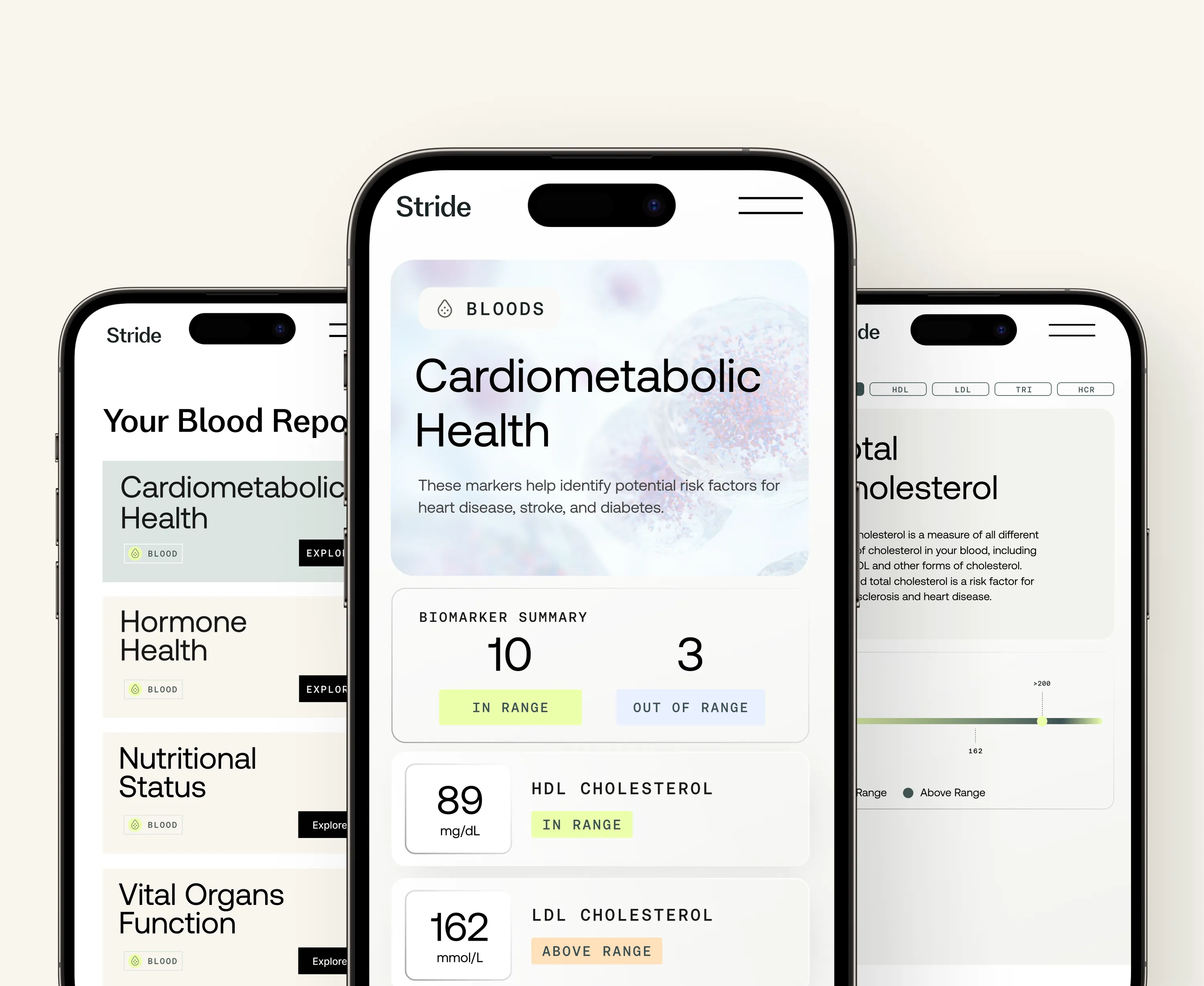
Optimal Bloods
At-home test for more than 70 blood-based biomarkers
From £399 £279.30
Health Tests
Optimal Biome
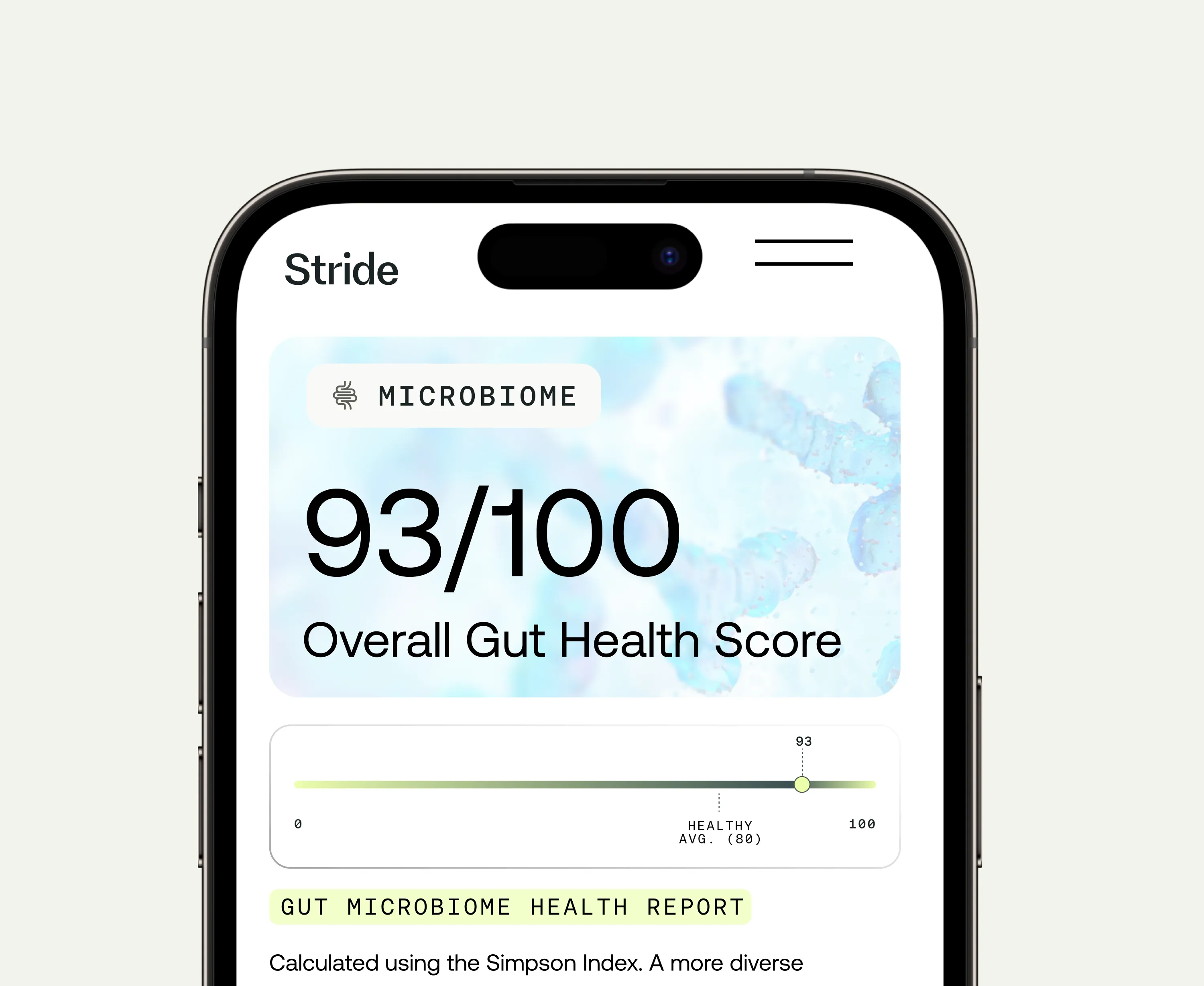
Gut microbiome test for comprehensive analysis & personalized health solutions
From £399 £279.30
Biomarkers
| Biomarker | What it measures | Why it matters | Relevance |
|---|---|---|---|
| Cortisol Blood Test | Adrenal stress hormone output | Primary HPA axis marker; can be elevated or suppressed depending on burnout stage | 5 |
| hsCRP Blood Test (High Sensitivity C-Reactive Protein) | Systemic inflammation | Elevated in chronic stress even without infection; reflects inflammatory cost of HPA overactivation | 5 |
| TSH Blood Test (Thyroid Stimulating Hormone) | Pituitary signal to thyroid | Chronic stress suppresses TSH and impairs T4-to-T3 conversion | 4 |
| FT3 Blood Test (Free Triiodothyronine) | Active thyroid hormone | Often low in chronic stress even when TSH appears normal | 4 |
| FT4 (Free Thyroxine) Blood Test | Storage form of thyroid hormone | Provides context for conversion efficiency alongside Free T3 | 4 |
| Active B12 Blood Test (Holotranscobalamin) | Active B12 status | Depleted by chronic stress; deficiency mimics burnout symptoms exactly | 4 |
| Vitamin D Blood Test (25-OH) | 25-OH vitamin D status | Regulates immune and HPA function; deficiency amplifies stress reactivity | 4 |
| Ferritin Blood Test | Iron storage levels | Falls in chronic inflammation and physiological stress; independently causes fatigue | 4 |
| HbA1c Blood Test (Glycated Haemoglobin) | Average blood glucose over 3 months | Cortisol raises blood glucose chronically; HbA1c tracks this over time | 3 |
| LDL Cholesterol Blood Test | Low-density lipoprotein | Stress influences lipid metabolism; elevated LDL often accompanies chronic cortisol elevation | 2 |
FAQs
Can a blood test actually show burnout?
No single blood test diagnoses burnout, but a comprehensive blood panel can reveal the biological patterns that accompany it. Chronic stress leaves measurable traces across multiple systems: cortisol may be dysregulated, CRP is often mildly elevated, thyroid hormone conversion can be impaired, and key nutrients including B12, vitamin D, and ferritin are frequently depleted. When these findings cluster together in a person experiencing sustained fatigue, cognitive impairment, and emotional exhaustion, they provide meaningful objective context for what is happening physiologically. Burnout is currently not a medical diagnosis in the UK, but the biology of chronic stress is measurable, and understanding where specific systems are strained supports more targeted recovery.
What does cortisol have to do with burnout?
Cortisol is the body's primary stress hormone, released by the adrenal glands in response to HPA axis activation. In acute stress, cortisol rises to mobilise energy and sharpen alertness. In chronic stress and established burnout, the pattern is often the opposite: cortisol output becomes blunted rather than elevated, as the adrenal stress response adapts to sustained overactivation. Research published in psychoneuroendocrinology has found that people with burnout more commonly show low or dysregulated cortisol rather than persistently high levels. This makes a single morning cortisol reading less informative than the broader hormonal and inflammatory picture, which is why a comprehensive panel including thyroid markers and inflammatory biomarkers provides more useful insight.
How does chronic stress affect the thyroid?
The HPA axis and the hypothalamic-pituitary-thyroid axis are directly connected at a biochemical level. Sustained cortisol elevation suppresses TSH secretion from the pituitary and inhibits the peripheral enzymes that convert T4 (the storage form of thyroid hormone) into T3 (the active form). This means a person under prolonged stress may have thyroid function that appears borderline normal on a standard TSH-only panel while actually experiencing significantly reduced active thyroid hormone at the tissue level. Testing Free T3 alongside TSH and Free T4 makes this pattern visible. The symptoms of impaired T4-to-T3 conversion overlap substantially with burnout: fatigue, brain fog, cold sensitivity, and difficulty recovering from exercise.
What is the difference between stress and burnout?
Stress and burnout exist on a continuum rather than as entirely distinct states. Stress typically involves a perceived imbalance between demands and resources, with the body mounting an active physiological response. Burnout is understood as a state that develops after sustained, unresolved stress, characterised by emotional exhaustion, depersonalisation, and a sense of reduced personal accomplishment. Biologically, the transition from stress to burnout is often marked by a shift from elevated cortisol (characteristic of acute stress) toward blunted cortisol output and increased inflammatory markers (more characteristic of established burnout). Understanding where on this continuum someone sits is one reason why biomarker testing, including cortisol and inflammatory markers, is more informative than self-reported symptoms alone.
Can burnout cause physical symptoms?
Yes. Burnout is frequently experienced as a predominantly physical condition rather than a psychological one. Common physical manifestations include persistent fatigue that does not resolve with rest, recurrent infections (reflecting the effect of chronic stress on immune regulation), disrupted sleep, gastrointestinal symptoms, headaches, and muscle or joint discomfort. These symptoms have measurable biological correlates: elevated CRP reflects the inflammatory burden, low ferritin contributes to fatigue, impaired thyroid conversion reduces cellular energy production, and depleted B12 affects neurological function. Treating the physical dimension of burnout requires addressing these underlying biomarker patterns, not only modifying behaviour and psychological patterns.
How long does it take to recover from burnout biologically?
Biomarker recovery from chronic stress and burnout typically takes three to six months of consistent, targeted intervention, though the timeline varies significantly depending on the duration and severity of the preceding stress period. Inflammatory markers such as CRP tend to respond relatively quickly to improved sleep, reduced stress load, and dietary changes. Nutrient deficiencies including vitamin D and B12 usually require two to three months of supplementation before levels stabilise. Cortisol rhythm normalisation and thyroid function improvement tend to follow as the HPA axis recovers. Retesting key markers at three to six months provides an objective way to track whether the biological recovery is progressing, independent of how someone feels on a given day.
What nutrients are most depleted by chronic stress?
Chronic stress depletes several key micronutrients through multiple mechanisms. Vitamin B12 is consumed more rapidly during periods of elevated cortisol output and is also affected by stress-related changes in digestive function. Magnesium is used in the cortisol synthesis pathway and is one of the first minerals to be depleted in states of chronic stress. Vitamin D, already deficient in a high proportion of UK adults, has a regulatory role in the immune and HPA axis systems, and low levels amplify the inflammatory and fatigue consequences of stress. Ferritin can fall when chronic inflammation alters iron metabolism, contributing independently to fatigue even when anaemia is not present. Testing these markers alongside cortisol and inflammatory markers provides the full nutritional picture.
Is adrenal fatigue a real medical condition?
Adrenal fatigue is not a recognised medical diagnosis. The term is commonly used in functional health contexts to describe a constellation of symptoms attributed to overworked adrenal glands, but the specific syndrome as described does not have an established evidence base or diagnostic criteria. The underlying biology it attempts to describe, which includes dysregulated cortisol output, HPA axis adaptation to chronic stress, and impaired stress responsiveness, is real and measurable. The more precise language is HPA axis dysregulation or blunted cortisol response, and these patterns can be assessed through cortisol testing alongside broader inflammatory, thyroid, and nutritional panels. For a clinically meaningful assessment, comprehensive biomarker testing provides more useful information than a standalone cortisol result interpreted through the adrenal fatigue framework.
Find out what your body is actually trying to tell you.
Answer 8 quick questions and get a free personalised report - covering which area of your biology is most worth looking at first, what testing in that area reveals, and what actions become available once you have that data.
Where do you feel you're operating below your potential right now?
Methylation & Cellular Health
Your biology is signalling a methylation upgrade - here’s what that means and what to do about it.