
Menu
-
Shop All
Contact
hey@getstride.com
Stride Health Group
Stride Health Group Ltd
Company No 05158025
Lamas Road
Badersfield
Norwich
England
NR10 5FB
UK









Are statins right for you? What your blood tests can tell you beyond cholesterol
Statins blood test results are one of the most common queries in cardiovascular medicine, yet the standard monitoring approach barely scratches the surface of what blood testing can reveal. Statins are among the most widely prescribed medications in the UK, taken by an estimated 8 million people to reduce LDL cholesterol and lower cardiovascular risk. But whether statins are the right choice for you, whether your current dose is actually working, and whether the side effects you may be experiencing are reflected in your blood markers, all require a broader set of measurements than the standard cholesterol test most people receive. Understanding what your blood can tell you beyond total cholesterol requires looking at the full biomarker picture, and this is where comprehensive testing becomes useful.

What do statins actually do and who are they prescribed for?
How statins work and what they target
Statins inhibit HMG-CoA reductase, an enzyme the liver uses to produce cholesterol. By reducing liver cholesterol synthesis, they prompt liver cells to upregulate LDL receptors, pulling more LDL out of circulation. The result is a reduction in LDL cholesterol of 30 to 60 per cent depending on the statin type and dose. Statins also have anti-inflammatory and plaque-stabilising effects that contribute to cardiovascular protection beyond cholesterol reduction alone. Reducing LDL by 1mmol/L through any means is associated with approximately a 22 per cent reduction in cardiovascular events over five years.
Who is prescribed statins in the UK?
NICE guidelines recommend statins for people with an estimated 10-year cardiovascular risk above 10 per cent (assessed using QRISK3), for anyone who has already had a heart attack or stroke, and for people with conditions that carry inherently elevated cardiovascular risk including type 2 diabetes, chronic kidney disease, and familial hypercholesterolaemia. Some people are also prescribed statins when specific lipid markers (LDL above 5.0mmol/L, for example) are sufficiently elevated to warrant treatment regardless of QRISK3 score. The decision involves weighing absolute benefit against individual risk of side effects and the person's preferences, which is why a fuller blood picture can meaningfully inform the conversation.
The limitation of LDL-only assessment
Standard cholesterol panels measure total cholesterol, LDL, HDL, and triglycerides. LDL is the primary target of statin therapy and the marker most commonly used to assess response. The limitation of LDL alone is that it measures the cholesterol content of LDL particles rather than the number of atherogenic particles circulating. Two people with the same LDL reading can have very different cardiovascular risk profiles if one has predominantly large, buoyant LDL particles and the other has small, dense LDL particles. ApoB measures the total number of atherogenic particles across LDL, VLDL, and IDL, and is increasingly recognised as a more accurate predictor of cardiovascular risk in people with insulin resistance, metabolic syndrome, or elevated triglycerides.
What can blood tests tell you if you are considering statins?
A fuller lipid assessment before or alongside the standard cholesterol test adds significantly to the information available for a treatment decision:
LDL cholesterol remains the primary clinical target. A level above 3.0mmol/L in the presence of other cardiovascular risk factors is typically where statin benefit becomes meaningful.
ApoB gives a more precise picture of atherogenic particle burden than LDL alone. People with elevated triglycerides and metabolic syndrome often have high ApoB despite a normal or only moderately elevated LDL, which means their cardiovascular risk is systematically underestimated by LDL-only testing.
Lp(a) is a genetically determined lipoprotein that is largely unaffected by statins but carries significant independent cardiovascular risk. People with elevated Lp(a) have substantially higher risk of heart attack and stroke, and this information changes the conversation about overall risk management even when LDL is treated effectively. Lp(a) is not included in a standard cholesterol test.
CRP measures systemic inflammation, which is an independent cardiovascular risk factor and a target of statins beyond their cholesterol-lowering effect. People with high CRP and normal cholesterol may still benefit from statins, as shown in the JUPITER trial.
Homocysteine is an independent cardiovascular risk marker linked to B vitamin metabolism and methylation. Elevated homocysteine identifies a modifiable risk pathway (B12, folate, B6 optimisation) that statin therapy does not address but that meaningfully contributes to overall cardiovascular risk.
HbA1c is relevant because statins carry a small but real risk of raising blood glucose, particularly in people who are already insulin resistant or have pre-diabetes. Knowing your baseline HbA1c before starting statins allows monitoring of this effect over time.
What to monitor in your blood if you are already taking statins
Liver function and safety monitoring
Statins are processed by the liver, and in approximately 1 in 1,000 people they cause a clinically significant rise in liver enzymes. NICE recommends a liver function test (measuring ALT) at baseline, at 3 months, and at 12 months after starting a statin or increasing the dose. An ALT above three times the upper limit of normal warrants dose reduction or switching to a different statin. For most people on stable doses, annual monitoring is sufficient, but people who drink alcohol, take other liver-processed medications, or have pre-existing liver conditions benefit from more frequent assessment.
ALT (alanine aminotransferase) is the most relevant liver marker for statin monitoring. It rises when liver cells are under stress and is the standard first indicator of statin-related hepatotoxicity.
AST (aspartate aminotransferase) provides additional liver context and is sometimes measured alongside ALT, particularly when ALT is borderline elevated.
Muscle-related markers and symptoms
Statin-associated muscle symptoms (SAMS) affect between 5 and 20 per cent of people on statins in clinical practice, ranging from mild muscle aches to the rare but serious condition of rhabdomyolysis (severe muscle breakdown). The underlying mechanism involves statins inhibiting not only cholesterol synthesis but also the production of coenzyme Q10 (CoQ10), a compound essential for mitochondrial energy production in muscle cells. Whether CoQ10 depletion is the primary mechanism of SAMS remains debated, but statins consistently reduce circulating CoQ10 levels and impair mitochondrial function in some individuals.
CK (creatine kinase) is measured when muscle symptoms are present. A CK above 10 times the upper limit of normal warrants statin discontinuation. Mild CK elevation (1 to 3 times the upper limit) in the absence of significant symptoms can be monitored while lifestyle factors (dehydration, exercise, alcohol) are addressed.
Blood glucose and diabetes risk
Statins increase the risk of new-onset type 2 diabetes by approximately 10 per cent in people at intermediate metabolic risk, primarily by impairing insulin secretion from pancreatic beta cells and worsening insulin sensitivity in peripheral tissues. This effect is dose-dependent and most pronounced with higher-intensity statins (atorvastatin, rosuvastatin) at higher doses. For people who are already insulin resistant or have pre-diabetes, monitoring HbA1c annually while on statins allows early identification of blood glucose deterioration before it reaches diabetes thresholds.
HbA1c is the appropriate marker for monitoring statin-related blood glucose effects over time. NICE recommends annual HbA1c monitoring for people on statins.
If you are on statins and experiencing muscle aches, fatigue, or other symptoms you suspect may be medication-related, a comprehensive blood panel can help determine whether these markers reflect a physiological pattern worth discussing with your GP, whether dose adjustment may be appropriate, and whether any modifiable factors (vitamin D deficiency, thyroid dysfunction, CoQ10 depletion) might be contributing independently of the statin itself.
Evidence-based strategies for optimising cardiovascular health alongside statins
Dietary approaches that work alongside statin therapy
Statins are most effective when combined with dietary changes that independently reduce cardiovascular risk. A Mediterranean-pattern diet (high in olive oil, oily fish, legumes, vegetables, nuts, and whole grains) reduces cardiovascular risk through mechanisms that complement rather than duplicate statin action, including anti-inflammatory effects, improved endothelial function, and reduced triglycerides. Reducing refined carbohydrates and ultra-processed foods addresses insulin resistance, which statins do not directly treat and which contributes substantially to overall cardiovascular risk.
Exercise, muscle health, and statin tolerance
Regular aerobic exercise reduces cardiovascular risk through multiple pathways including improved endothelial function, lower blood pressure, and improved lipid profiles. Resistance training also improves insulin sensitivity, which matters because statins can marginally worsen this. Practically, some people on statins find that high-intensity exercise worsens muscle symptoms (SAMS): if this is occurring, discussing dose reduction, switching to a different statin, or taking a two-week statin holiday to assess whether symptoms resolve may be informative. Exercising at a lower intensity consistently is more sustainable and produces meaningful cardiovascular benefit without exacerbating SAMS.
Sleep, inflammation, and cardiovascular risk
Chronic sleep restriction independently raises CRP and increases cardiovascular risk through mechanisms that statins do not address. Achieving consistently seven to nine hours of good-quality sleep lowers CRP, improves HDL metabolism, and reduces the insulin resistance that underlies much of the residual cardiovascular risk experienced by people already on statins. For people with sleep apnoea specifically, treating this condition has been shown to reduce CRP, blood pressure, and cardiovascular event risk in ways that complement lipid-lowering therapy.
Vitamin D, B12, and B vitamins for residual risk
Several micronutrient deficiencies contribute to cardiovascular risk independently of cholesterol levels. Vitamin D deficiency is associated with endothelial dysfunction, hypertension, and increased inflammatory burden. B12 and folate deficiency drive elevated homocysteine, an independent cardiovascular risk factor. Testing these alongside a full lipid panel identifies modifiable contributing factors that statin therapy leaves unaddressed.
Stride tests that can help with Statins and blood test results
Health Tests
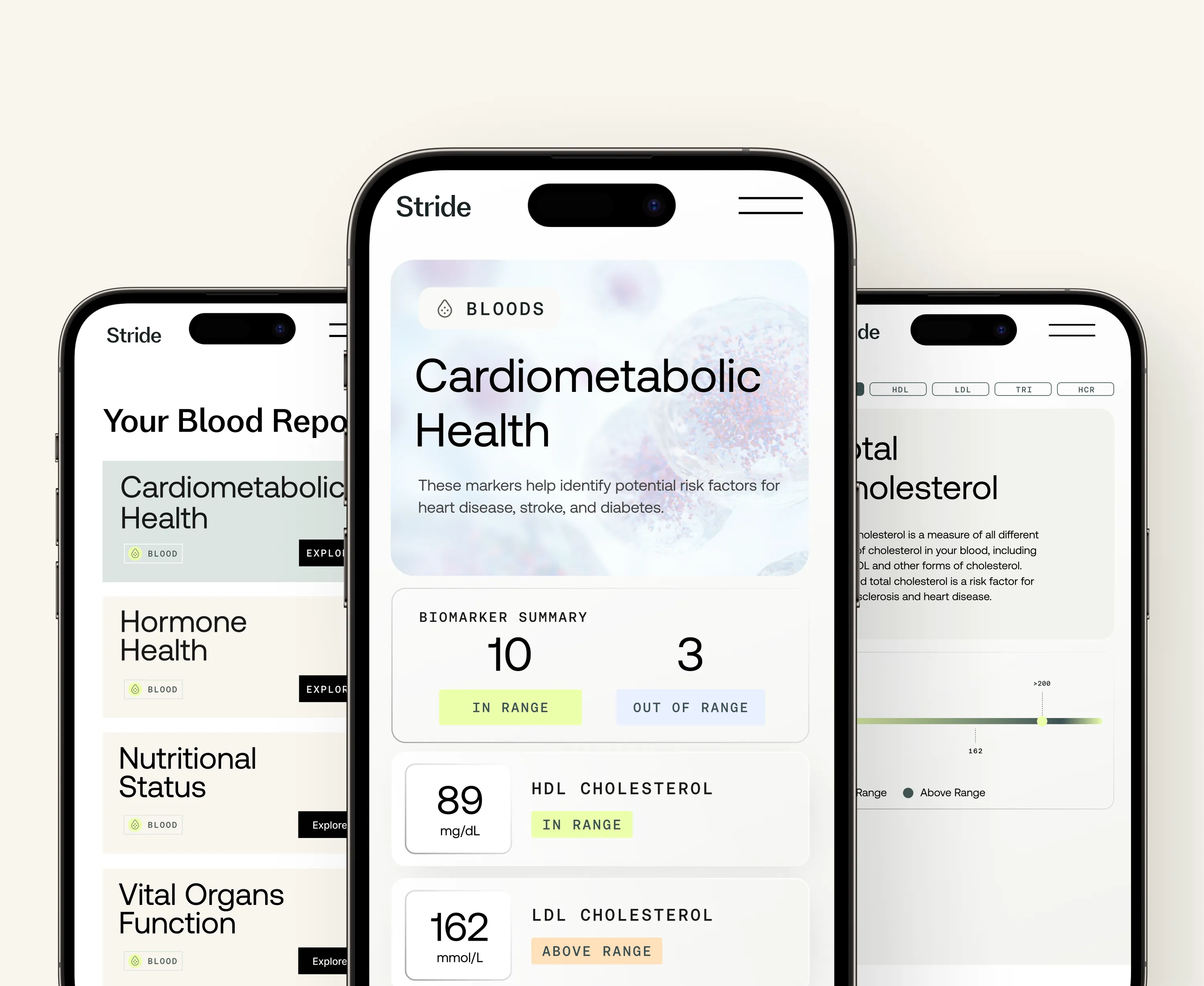
Optimal Bloods
At-home test for more than 70 blood-based biomarkers
From £399 £279.30
Biomarkers
| Biomarker | What it measures | Why it matters | Relevance |
|---|---|---|---|
| LDL Cholesterol Blood Test | "Bad" cholesterol | Primary statin target; monitors treatment response; goal below 2.0mmol/L for high-risk individuals on NICE guidelines | 5 |
| ApoB Blood Test (Apolipoprotein B) | Total atherogenic lipoprotein particle count | More accurate than LDL for assessing residual cardiovascular risk in people with metabolic syndrome | 5 |
| HDL Cholesterol Blood Test | "Good" cholesterol | Statins modestly raise HDL; combined with LDL and triglycerides gives full lipid picture | 4 |
| Triglycerides Blood Test (Heart Health & Metabolic Biomarker) | Circulating blood fat | Statins modestly reduce triglycerides; elevated triglycerides alongside LDL compounds cardiovascular risk | 4 |
| hsCRP Blood Test (High Sensitivity C-Reactive Protein) | Systemic inflammation | Independent cardiovascular risk factor; statins have anti-inflammatory effects measurable via CRP | 4 |
| Alanine Transferase (ALT) Blood Test | Liver enzyme reflecting liver cell health | Statin monitoring standard; should be checked at baseline, 3 months, and 12 months after starting | 5 |
| HbA1c Blood Test (Glycated Haemoglobin) | Average blood glucose over 3 months | Statins increase new-onset diabetes risk by approximately 10%; baseline and annual monitoring recommended | 4 |
| Vitamin D Blood Test (25-OH) | 25-OH vitamin D status | Deficiency associated with muscle function impairment, which may compound statin-related muscle symptoms | 3 |
| TSH Blood Test (Thyroid Stimulating Hormone) | Thyroid stimulating hormone | Hypothyroidism increases statin-related muscle risk and independently raises cholesterol; should be assessed before starting statins | 3 |
FAQs
What blood tests do you need before starting statins?
Before starting statin therapy, NICE recommends checking a full lipid profile (total cholesterol, LDL, HDL, triglycerides), liver function (ALT), HbA1c, and kidney function (creatinine/eGFR). TSH should also be checked to rule out hypothyroidism as a driver of elevated cholesterol, since treating hypothyroidism often reduces cholesterol significantly without requiring statins. Additional markers that add clinical value but are not always checked include ApoB (which more accurately captures atherogenic particle burden), Lp(a) (a genetically determined independent risk factor statins do not lower), CRP (which captures inflammatory cardiovascular risk), and homocysteine (an independent modifiable risk marker).
What blood tests should you have while taking statins?
NICE recommends checking liver enzymes (ALT) at baseline, three months after starting or changing the statin dose, and at twelve months. Annual lipid profiles are recommended to confirm LDL is at target and to monitor the full lipid picture. HbA1c should be checked annually given the small but real risk of statin-related blood glucose elevation, particularly in people who were already at metabolic risk before starting treatment. If you experience muscle symptoms (aches, weakness, unusual fatigue), CK (creatine kinase) should be checked and the result discussed with your GP before making any changes to your medication.
Can statins cause muscle pain and what does the blood test show?
Statin-associated muscle symptoms (SAMS) affect 5 to 20 per cent of people on statins in clinical practice. These range from mild generalised achiness to more significant weakness or pain, usually affecting large muscle groups symmetrically (both thighs, both upper arms). CK (creatine kinase) is the relevant blood marker: a level above 10 times the upper limit of normal warrants statin discontinuation, while mild CK elevation without significant symptoms can often be managed with dose reduction or a switch to a different statin. Hypothyroidism independently increases SAMS risk, making TSH testing relevant in people experiencing unexplained muscle symptoms on statins. Vitamin D deficiency also impairs muscle function and may compound SAMS.
Do statins affect blood sugar levels?
Yes, statins carry a small but clinically meaningful increased risk of new-onset type 2 diabetes, estimated at approximately 10 per cent additional relative risk in people at intermediate metabolic risk. The effect is dose-dependent and most pronounced with high-intensity statins such as atorvastatin and rosuvastatin at higher doses. Mechanistically, statins impair insulin secretion from pancreatic beta cells and can marginally worsen insulin sensitivity. For people who are already insulin resistant or have HbA1c in the pre-diabetic range, this effect warrants monitoring. NICE guidelines recommend annual HbA1c testing for people on statins. The cardiovascular benefits of statins substantially outweigh this metabolic risk in most clinical scenarios.
Is LDL cholesterol alone enough to assess statin response?
LDL cholesterol is the primary marker used to assess statin response and is the standard target in NICE and ESC guidelines. However, it has limitations. LDL measures the cholesterol content of LDL particles, not the number of particles. In people with elevated triglycerides and metabolic syndrome, LDL is often misleadingly low while ApoB (the number of atherogenic particles) remains significantly elevated, indicating persistent cardiovascular risk that LDL alone misses. For this reason, ApoB is increasingly recommended alongside LDL for monitoring in people with metabolic syndrome, type 2 diabetes, or when LDL appears to be at target but cardiovascular risk seems disproportionately high.
What is Lp(a) and does it change with statin treatment?
Lp(a), or lipoprotein(a), is a genetically determined form of LDL carrying an additional protein (apo(a)) that makes it particularly atherogenic and thrombogenic. Elevated Lp(a) is found in approximately 20 per cent of the population and is an independent predictor of heart attack and stroke risk. Unlike LDL, Lp(a) is largely unaffected by statin therapy: statins may actually raise Lp(a) slightly in some people. This means that people with high Lp(a) have residual cardiovascular risk even when LDL is well controlled on a statin, which changes the conversation about overall risk management. Lp(a) is not measured in a standard cholesterol panel and requires a specific blood test.
Can statins cause liver damage and how is this monitored?
Clinically significant liver damage from statins is rare, affecting approximately 1 in 1,000 people. The relevant blood marker is ALT (alanine aminotransferase), a liver enzyme that rises when liver cells are under stress. NICE recommends ALT testing before starting statins, at three months, and at twelve months. An ALT level above three times the upper limit of normal at any point warrants dose reduction, switching to a different statin, or stopping the medication and discussing with your GP. Mild transient ALT elevation in the early weeks of starting a statin is relatively common and often resolves without dose changes. People who drink alcohol regularly, have pre-existing liver conditions, or take other liver-processed medications should monitor ALT more frequently.
Should I try to manage cholesterol without statins if possible?
Whether statins are necessary depends on your absolute cardiovascular risk, the nature of the lipid abnormality, and what other risk factors are present. For people with 10-year cardiovascular risk below 10 per cent and LDL elevated primarily by lifestyle factors, sustained dietary changes (reducing saturated fat and refined carbohydrates, increasing oily fish and plant-based foods), regular aerobic exercise, smoking cessation, and addressing insulin resistance can achieve clinically meaningful LDL reductions without medication. Testing a full lipid panel, ApoB, CRP, Lp(a), and homocysteine alongside standard cholesterol gives the most complete picture of whether lifestyle intervention alone is sufficient or whether the absolute risk level justifies medication.
What is the role of CoQ10 in statin side effects?
Statins inhibit the same mevalonate pathway that produces both cholesterol and coenzyme Q10 (CoQ10), a compound essential for mitochondrial energy production in muscle cells. Statins consistently reduce circulating CoQ10 levels, and some researchers have proposed that this reduction contributes to statin-associated muscle symptoms (SAMS). The clinical evidence for CoQ10 supplementation reducing SAMS is mixed: several RCTs show a modest reduction in muscle pain with supplementation while others show no significant effect. Despite the uncertain evidence, CoQ10 is generally well tolerated and is worth discussing with your GP if you are experiencing muscle symptoms on a statin, particularly if other modifiable factors (hypothyroidism, vitamin D deficiency) have been ruled out.
Find out what your body is actually trying to tell you.
Answer 8 quick questions and get a free personalised report - covering which area of your biology is most worth looking at first, what testing in that area reveals, and what actions become available once you have that data.
Where do you feel you're operating below your potential right now?
Methylation & Cellular Health
Your biology is signalling a methylation upgrade - here’s what that means and what to do about it.