
Menu
-
Shop All
Contact
hey@getstride.com
Stride Health Group
Stride Health Group Ltd
Company No 05158025
Lamas Road
Badersfield
Norwich
England
NR10 5FB
UK









PCOS: symptoms, hormones and how testing can help you manage it
PCOS symptoms are often the first sign that something is affecting your hormonal balance, yet polycystic ovary syndrome (PCOS) remains one of the most underdiagnosed conditions in women of reproductive age. It affects around 1 in 10 women in the UK, though some estimates suggest the true figure may be higher because many women go undiagnosed for years. PCOS is characterised by an imbalance in the hormones that regulate the menstrual cycle, typically involving elevated androgens (male-type hormones like testosterone), disrupted ovulation, and in many cases an underlying tendency toward insulin resistance that drives much of the hormonal picture. Understanding what is happening in your blood, and which biomarkers to look at, is the most effective way to confirm whether PCOS is likely and to track whether the changes you make are working.
What causes PCOS and why does it produce such varied symptoms?
Androgen excess: the hormone most commonly out of balance
The defining feature of PCOS in most affected women is excess androgen production, primarily testosterone, from the ovaries. Even a modest elevation in circulating androgens can produce the symptoms most associated with the condition: acne that tends to be cystic or persistent beyond the teenage years, unwanted hair growth on the face, chin, chest, or abdomen (hirsutism), and thinning hair on the scalp. The degree of androgen elevation varies widely between women, which explains why some experience severe symptoms and others only subtle signs. Testing total testosterone alongside SHBG (sex hormone-binding globulin) gives the clearest picture, because SHBG binds to testosterone and makes it biologically inactive. Low SHBG, which is common in PCOS, increases the amount of free active testosterone even when the total number looks normal.
Insulin resistance: the underlying driver in most women with PCOS
The majority of women with PCOS have some degree of insulin resistance, and researchers increasingly view this as one of the central mechanisms sustaining the hormonal imbalance rather than a separate complication. When cells become resistant to insulin's signal, the pancreas compensates by producing more. Elevated insulin then stimulates the ovaries to produce additional testosterone, which in turn suppresses SHBG and drives the androgen excess that produces the visible symptoms. Critically, this pattern of insulin resistance can be present even in women with a healthy body weight: PCOS-related insulin resistance is not simply a consequence of excess weight but appears to be an intrinsic feature of the condition in many cases. Testing fasting glucose and HbA1c gives a measure of blood sugar management over time, while fasting insulin provides the most direct signal of insulin resistance that is developing before glucose levels become elevated.
Disrupted ovulation and irregular periods
PCOS disrupts the normal follicle development cycle in the ovaries, causing follicles to partially develop but not release an egg. This results in irregular, infrequent, or absent periods, which creates unpredictability around fertility. The LH-to-FSH ratio is often elevated in PCOS, with LH disproportionately high relative to FSH, because the signalling from the brain to the ovaries is disrupted. In women seeking a PCOS blood test UK, LH and FSH measured in the early part of the menstrual cycle (or at any time in women who are not having regular periods) can support the clinical picture, though the LH:FSH ratio is no longer the primary diagnostic criterion it once was.
Lipid abnormalities and cardiovascular risk
Women with PCOS are statistically more likely to have an unfavourable lipid profile: elevated triglycerides, low HDL, and sometimes elevated LDL. This pattern reflects the metabolic consequences of insulin resistance and is one of the reasons that PCOS carries a longer-term association with cardiovascular risk. Testing a full lipid panel alongside the hormonal markers gives a more complete picture of the metabolic burden of the condition. Triglyceride levels in particular tend to be sensitive to changes in diet and exercise, making them a useful marker to track as you make lifestyle adjustments.
Thyroid dysfunction as a co-occurring condition and differential diagnosis
Thyroid conditions, particularly Hashimoto's thyroiditis, are more common in women with PCOS than in the general population. Hypothyroidism produces irregular periods, weight gain, fatigue, and hair changes that overlap significantly with PCOS symptoms. Measuring TSH, and ideally Free T3 and Anti-TPO antibodies, helps to establish whether thyroid dysfunction is contributing to the symptom picture or whether PCOS is the primary driver. Some women have both conditions simultaneously.
Low-grade inflammation as a contributing mechanism
An emerging body of evidence links PCOS to increased low-grade systemic inflammation, measurable via CRP. Women with PCOS tend to have elevated CRP compared to women without the condition, even when weight is accounted for. Chronic low-grade inflammation can worsen insulin resistance and further disrupt ovarian function, creating another self-reinforcing loop within the PCOS mechanism.
How to test for PCOS
PCOS is a clinical diagnosis requiring two of three features (irregular periods, evidence of excess androgens, and polycystic ovaries on ultrasound), but blood testing is an essential part of establishing the hormonal picture and ruling out other causes. A GP will typically request some or all of the following, and the results are interpreted alongside your symptoms and history rather than as standalone diagnostic tools.
Total testosterone is the primary androgen marker. Elevated total testosterone supports the diagnosis of PCOS, though a normal result does not rule it out: SHBG must also be considered.
SHBG (sex hormone-binding globulin) is consistently low in PCOS, which increases the amount of biologically active free testosterone regardless of total testosterone levels.
LH (luteinising hormone) and FSH (follicle-stimulating hormone) assess the pituitary-ovarian signalling axis. An elevated LH-to-FSH ratio is common in PCOS, though not universal.
HbA1c reflects three-month blood sugar control and screens for pre-diabetes risk, which is significantly elevated in women with PCOS.
Lipid panel (total cholesterol, LDL, HDL, triglycerides) assesses cardiovascular risk associated with the metabolic effects of PCOS and tracks response to lifestyle changes.
TSH and thyroid function rule out hypothyroidism as a cause or co-factor for irregular periods and other overlapping symptoms.
AMH (anti-Mullerian hormone) is elevated in PCOS because the increased number of developing follicles produces more of it. AMH is increasingly used to support diagnosis and assess ovarian reserve.
CRP measures systemic inflammation, which is commonly elevated in PCOS and influences disease severity.
For the reproductive hormone markers (testosterone, SHBG, LH, FSH, AMH), your GP can request these through the NHS if PCOS is clinically suspected. Some private home testing providers also offer hormone panels specifically designed for PCOS assessment.
Evidence-based lifestyle strategies for managing PCOS
Dietary approaches targeting insulin resistance
Because insulin resistance is central to PCOS in most women, dietary approaches that reduce the insulin demand on the body tend to produce the most meaningful improvements in symptoms. A low-glycaemic dietary pattern, prioritising whole grains, legumes, vegetables, and proteins over refined carbohydrates and ultra-processed foods, reduces the blood sugar and insulin spike after meals. Even a modest reduction in body weight for those carrying excess weight (as little as 5% has been shown in research to improve androgen levels and menstrual regularity). For women at a healthy weight with PCOS, the dietary focus shifts to food quality and micronutrient density rather than calorie restriction.
Resistance training and its effect on androgen and insulin metabolism
Resistance training improves insulin sensitivity directly and has been shown in research to reduce androgen levels in women with PCOS. Muscle tissue acts as a major glucose disposal site, reducing insulin demand. A combination of resistance exercise and moderate aerobic activity appears to produce better hormonal and metabolic outcomes than cardio-only approaches. Tracking HbA1c and triglycerides over 3-6 months gives a measurable way to see whether your exercise pattern is shifting your metabolic biomarkers in the right direction.
Managing stress and cortisol
Chronic stress elevates cortisol, which promotes insulin resistance and can worsen the hormonal picture in PCOS. The adrenal glands also produce androgens, including DHEA-S, and chronic stress can amplify adrenal androgen output. Structured sleep, regular physical activity, and deliberate recovery time have biological effects on cortisol and insulin metabolism that are directly relevant to PCOS management.
Gut microbiome support and inflammation reduction
The gut microbiome influences oestrogen metabolism and systemic inflammation, both relevant to PCOS. A diet rich in fibre from diverse plant sources, fermented foods, and minimal ultra-processed food supports a more diverse microbiome and reduced inflammatory load. Tracking CRP alongside your hormonal markers helps you see whether inflammatory burden is reducing as you make dietary changes.
Stride tests that can help with PCOS
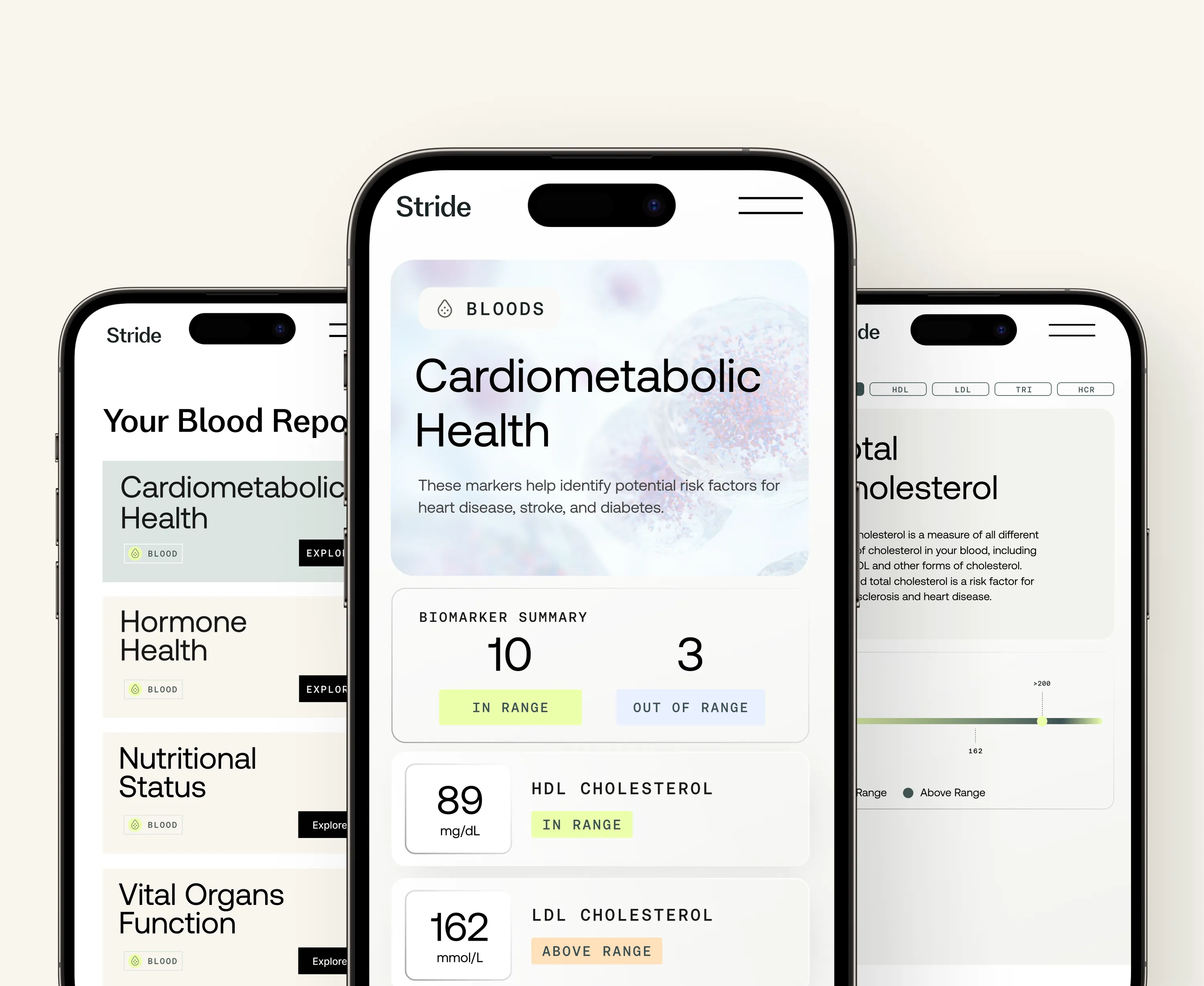
Health Tests
Optimal Bloods
At-home test for more than 70 blood-based biomarkers
From £399 £279.30
Biomarkers
| Biomarker | What it measures | Why it matters | Relevance |
|---|---|---|---|
| Testosterone Blood Test | Total circulating testosterone | Primary androgen marker; elevated in most women with PCOS | 5 |
| Sex Hormone Binding Globulin (SHBG) Blood Test | Sex hormone-binding globulin | Low SHBG increases free active testosterone even when total is normal | 5 |
| Luteinising Hormone (LH) Blood Test | Luteinising hormone | Often disproportionately elevated relative to FSH in PCOS | 4 |
| HbA1c Blood Test (Glycated Haemoglobin) | 3-month blood sugar average | Screens for pre-diabetes risk; tracks insulin resistance management | 5 |
| TSH Blood Test (Thyroid Stimulating Hormone) | Thyroid stimulating hormone | Rules out hypothyroidism, which closely mimics PCOS symptoms | 4 |
| LDL Cholesterol Blood Test | Low-density lipoprotein | Cardiovascular risk elevated in PCOS; tracks lifestyle response | 4 |
| HDL Cholesterol Blood Test | High-density lipoprotein | Typically low in PCOS; useful metabolic health marker | 4 |
| Triglycerides Blood Test (Heart Health & Metabolic Biomarker) | Blood fat level | Often elevated in PCOS; sensitive to dietary and exercise changes | 4 |
| hsCRP Blood Test (High Sensitivity C-Reactive Protein) | Systemic inflammation | Chronically elevated in many women with PCOS; tracks inflammatory load | 3 |
| TPO Antibodies (Thyroid Peroxidase Antibodies) Blood Test | Thyroid autoimmunity | Hashimoto's thyroiditis more common in women with PCOS | 3 |
| Ferritin Blood Test | Iron storage | Heavy periods can deplete ferritin; fatigue may have a nutritional component | 3 |
| Vitamin D Blood Test (25-OH) | 25-OH vitamin D | Low vitamin D is more common in PCOS and may worsen insulin resistance | 3 |
FAQs
Can you have PCOS with normal testosterone levels on a blood test?
Yes. PCOS can be present even when total testosterone is within the laboratory reference range, because the amount of biologically active testosterone depends partly on how much of it is bound to SHBG. When SHBG is low, which is common in PCOS, more testosterone is free and active in the body even if the total measured looks normal. The free androgen index (FAI), calculated from total testosterone and SHBG, is a more sensitive measure for detecting androgen excess in PCOS than total testosterone alone. Some women with clear PCOS symptoms and confirmed polycystic ovaries on ultrasound will have what appears to be a normal testosterone result because SHBG was not tested alongside it.
What is the connection between PCOS and insulin resistance?
Insulin resistance is a central feature of PCOS in most affected women and is now understood to be a driver of the hormonal imbalance rather than simply a consequence of it. When cells do not respond normally to insulin, the body produces more of it. Elevated insulin then directly stimulates the ovaries to produce more testosterone, suppresses SHBG production in the liver, and interferes with normal follicle development, creating a self-reinforcing cycle. Critically, this mechanism operates in women who are not overweight and whose fasting glucose is still normal, which is why measuring fasting insulin alongside HbA1c gives a more complete picture. Lifestyle changes that improve insulin sensitivity consistently improve PCOS markers across hormonal and metabolic measures.
Does PCOS affect fertility and is it possible to get pregnant with PCOS?
PCOS is one of the most common causes of ovulatory infertility, but it does not mean that conception is impossible. Irregular ovulation reduces the monthly probability of conception, but many women with PCOS conceive without medical assistance, sometimes once lifestyle changes have restored more regular cycles. For those who need support, ovulation induction medications are available and effective. A GP can refer without requiring a one-year trying period if PCOS is confirmed as the cause of ovulatory problems. Testing the full hormonal and metabolic picture alongside a fertility specialist provides the clearest basis for tailoring treatment.
Is the contraceptive pill a treatment for PCOS?
The combined oral contraceptive pill is one of the most commonly prescribed options for managing PCOS symptoms, particularly irregular periods, acne, and unwanted hair growth. It suppresses the pituitary signalling that drives ovarian androgen production and increases SHBG (which reduces free testosterone). The pill is effective at managing these symptoms but does not treat the underlying insulin resistance that drives PCOS in most women, so symptoms often return after stopping. Blood tests for PCOS hormones should be done at least 3 months after stopping hormonal contraception, because the pill alters hormone levels in ways that make results difficult to interpret.
What does a PCOS home blood test UK typically include?
A dedicated PCOS home test UK typically measures the key reproductive hormones: testosterone, SHBG, LH, FSH, oestradiol, prolactin, and AMH. Some broader panels also include thyroid function and HbA1c to assess metabolic and thyroid co-factors. Results are best interpreted alongside a GP appointment for clinical context, including consideration of symptoms and menstrual history. Blood tests cannot diagnose PCOS on their own: the diagnosis requires clinical assessment and in most cases a pelvic ultrasound, but testing provides important supporting evidence and helps rule out other hormonal causes of the same symptom pattern.
What diet is most effective for PCOS symptoms?
The dietary approach most consistently supported by PCOS research reduces the demand on insulin without being unnecessarily restrictive. This means prioritising whole foods with a lower glycaemic response: vegetables, legumes, whole grains, lean proteins, and unsaturated fats, while reducing refined carbohydrates, ultra-processed foods, and added sugars. Anti-inflammatory foods, particularly omega-3 rich sources like oily fish, flaxseed, and walnuts, may also help reduce the inflammatory load associated with PCOS. Individual response varies, which is why tracking biomarkers (HbA1c, triglycerides, testosterone) alongside dietary changes gives you evidence of what is actually shifting in your biology rather than relying on general advice.
Does PCOS increase the risk of type 2 diabetes?
Yes, significantly. Women with PCOS have a higher lifetime risk of developing type 2 diabetes than women without the condition, driven primarily by the insulin resistance that underlies PCOS. The risk is present across body weight categories and is not limited to women who are overweight. Regular monitoring of HbA1c, fasting glucose, and fasting insulin (the latter being the most sensitive early indicator) allows you to track metabolic trajectory over time and take targeted action before blood sugar becomes elevated. Research has shown that even modest lifestyle changes (diet, exercise) can significantly reduce progression from insulin resistance to pre-diabetes to type 2 diabetes in women with PCOS.
How is PCOS diagnosed in the UK?
PCOS is diagnosed using the Rotterdam criteria, which requires two of three features to be present: irregular or absent ovulation (typically presenting as irregular or missing periods); clinical or biochemical evidence of excess androgens (either symptoms like acne and hirsutism, or a blood test showing elevated testosterone or free androgen index); and polycystic ovaries on ultrasound (defined as 12 or more follicles per ovary or an ovarian volume greater than 10ml). A blood test alone cannot diagnose PCOS, but it is an important part of establishing the hormonal picture, ruling out other conditions (thyroid disease, hyperprolactinaemia, congenital adrenal hyperplasia), and assessing the metabolic risk that determines longer-term management priorities.
Find out what your body is actually trying to tell you.
Answer 8 quick questions and get a free personalised report - covering which area of your biology is most worth looking at first, what testing in that area reveals, and what actions become available once you have that data.
Where do you feel you're operating below your potential right now?
Methylation & Cellular Health
Your biology is signalling a methylation upgrade - here’s what that means and what to do about it.