
Menu
-
Shop All
Contact
hey@getstride.com
Stride Health Group
Stride Health Group Ltd
Company No 05158025
Lamas Road
Badersfield
Norwich
England
NR10 5FB
UK











Magnesium deficiency: symptoms you might not recognise and how to check
Magnesium deficiency is one of the most commonly overlooked nutritional shortfalls, partly because its symptoms are varied and easy to attribute to other causes, and partly because standard blood tests rarely screen for it. The mineral is involved in over 300 enzymatic reactions in the body, including energy production, muscle contraction, nerve signalling, blood pressure regulation, and sleep. When levels fall below what your biology needs, the effects show up across multiple systems at once — which is precisely why connecting the dots can take so long. Understanding which biomarkers are actually relevant to magnesium status, and what else should be checked alongside it, is where targeted testing becomes useful.

What causes magnesium deficiency?
Inadequate dietary intake from modern food
The magnesium content of food has fallen significantly over the past 60 years, with intensive farming practices reducing soil mineral levels by up to 30%. Processing strips further magnesium from grains — by up to 80% in some cases. The result is that even people eating what they consider a nutritious diet may be consistently below the NHS recommended intake of 300mg per day for men and 270mg for women. Magnesium-rich foods include dark leafy greens (spinach, kale), nuts and seeds (pumpkin seeds, almonds), legumes, wholegrains, and avocado — but these are often absent in quantity from typical UK diets.
Chronic stress and the magnesium-stress vicious cycle
Stress causes the body to excrete more magnesium via the kidneys. This is well-established at a biochemical level: the stress response elevates cortisol, which increases urinary magnesium losses. Lower magnesium then makes the nervous system more reactive to stress — reducing GABA activity, the inhibitory neurotransmitter that promotes calm. The result is a self-reinforcing cycle: stress depletes magnesium, and depleted magnesium amplifies the stress response. This pattern is particularly relevant for people experiencing persistent anxiety, poor sleep, or burnout who assume those symptoms are purely psychological.
Gut malabsorption and digestive conditions
Magnesium is absorbed in the small intestine. Conditions that compromise gut integrity or accelerate transit — including Crohn's disease, coeliac disease, and prolonged diarrhoea — significantly reduce absorption. People with inflammatory bowel conditions are at higher risk of magnesium deficiency regardless of dietary intake. Even subclinical gut dysbiosis, which affects the composition and function of the microbiome, can impair mineral absorption over time.
Medications that lower magnesium levels
Proton pump inhibitors (PPIs) — omeprazole, lansoprazole, and similar drugs used to reduce stomach acid — are among the most common causes of magnesium deficiency in the UK. Long-term PPI use is associated with clinically significant magnesium depletion. Diuretics (prescribed for blood pressure and fluid retention) also increase urinary magnesium excretion. Certain antibiotics and immunosuppressants carry similar effects. If you take any of these medications long-term, periodic magnesium monitoring is a reasonable precaution.
Type 2 diabetes and insulin resistance
People with type 2 diabetes have significantly higher rates of magnesium deficiency, driven by increased urinary losses linked to elevated blood glucose. The relationship runs in both directions: magnesium plays a role in insulin sensitivity, and deficiency may impair glucose metabolism, making blood sugar harder to control. Magnesium deficiency is also closely associated with metabolic syndrome, which clusters with insulin resistance, high triglycerides, and cardiovascular risk.
Alcohol consumption and gastrointestinal losses
Alcohol increases renal magnesium excretion and reduces absorption in the gut, while also being associated with inadequate dietary intake. Even moderate regular alcohol consumption can contribute to gradually declining magnesium status over time, without reaching the levels typically associated with clinical alcoholism.
How to test for magnesium deficiency
The most common challenge with magnesium testing is that standard serum magnesium — the version measured in a routine blood draw — reflects only the 1% of magnesium that circulates in the blood. Approximately 60% is stored in bone and around 40% in muscle and soft tissue. This means blood magnesium levels can appear normal even when intracellular stores are genuinely depleted. It is possible to have a normal serum magnesium result while experiencing real functional deficiency.
That said, serum magnesium remains the most practical and widely available measurement, and when interpreted alongside symptoms, medications, and other relevant biomarkers, it provides useful clinical information. A result below 0.70 mmol/L is considered clinically low; mild deficiency in the range of 0.50-0.70 mmol/L is estimated to affect 2.5-15% of the general population and often goes undetected.
The more important point for most people is what to test alongside magnesium, because the mineral does not act in isolation. Low magnesium suppresses parathyroid hormone and impairs potassium reuptake in cardiac cells — which means persistent magnesium deficiency can contribute to low calcium and low potassium levels. Testing the full electrolyte and nutrient picture is more informative than magnesium alone.
The standard NHS panel does not routinely include magnesium. If you have persistent symptoms — particularly muscle cramps, poor sleep, anxiety, or unexplained fatigue — and are taking medications known to deplete magnesium, requesting a test through your GP or a private blood test is a reasonable step. Results should be interpreted in the context of your symptoms and any other relevant markers.
Evidence-based strategies to support magnesium levels
Dietary changes that make a measurable difference
Increasing dietary magnesium is the first line of approach. The most magnesium-dense foods accessible in the UK include: pumpkin seeds (one of the richest sources per gram), dark chocolate (70%+), almonds and cashews, spinach and Swiss chard, edamame, black beans and lentils, and wholegrain bread and oats. Swapping refined grains for wholegrains is one of the most practical ways to incrementally improve magnesium intake without significant dietary overhaul.
Addressing the stress-magnesium loop
Because stress both depletes magnesium and is worsened by magnesium deficiency, addressing the physiological stress response is part of managing magnesium status — not separate from it. Practices that measurably reduce cortisol output, including consistent sleep timing, low-intensity exercise, and structured recovery, directly reduce urinary magnesium losses. Research shows that magnesium supplementation of 300mg daily reduced cortisol levels and improved heart rate variability in people under regular stress. Tracking both your stress markers and your magnesium levels over time shows which interventions are actually making a difference for your biology.
Sleep and magnesium's role in GABA function
Magnesium is essential for the function of GABA receptors, which regulate the nervous system's ability to calm down. Low magnesium is associated with poor sleep quality, difficulty falling asleep, and waking in the night. Evidence from a 2024 systematic review supports the benefit of magnesium supplementation for mild insomnia and anxiety. Taking magnesium glycinate or magnesium threonate in the evening, rather than magnesium oxide (which has poor bioavailability), is better supported by the evidence if supplementation is the route you're considering — though this should be discussed with a healthcare provider if you're on other medications.
Exercise, sweat, and athletic magnesium losses
Exercise increases magnesium requirements — both through sweat losses and because magnesium is required for ATP production, the cellular energy currency used in every muscle contraction. People who train regularly, particularly at high intensity, have meaningfully higher magnesium needs than sedentary individuals. Persistent muscle cramps, slow recovery, or unexplained fatigue in an otherwise fit and active person should prompt a magnesium check alongside iron and vitamin D.
Stride tests that can help with Magnesium deficiency
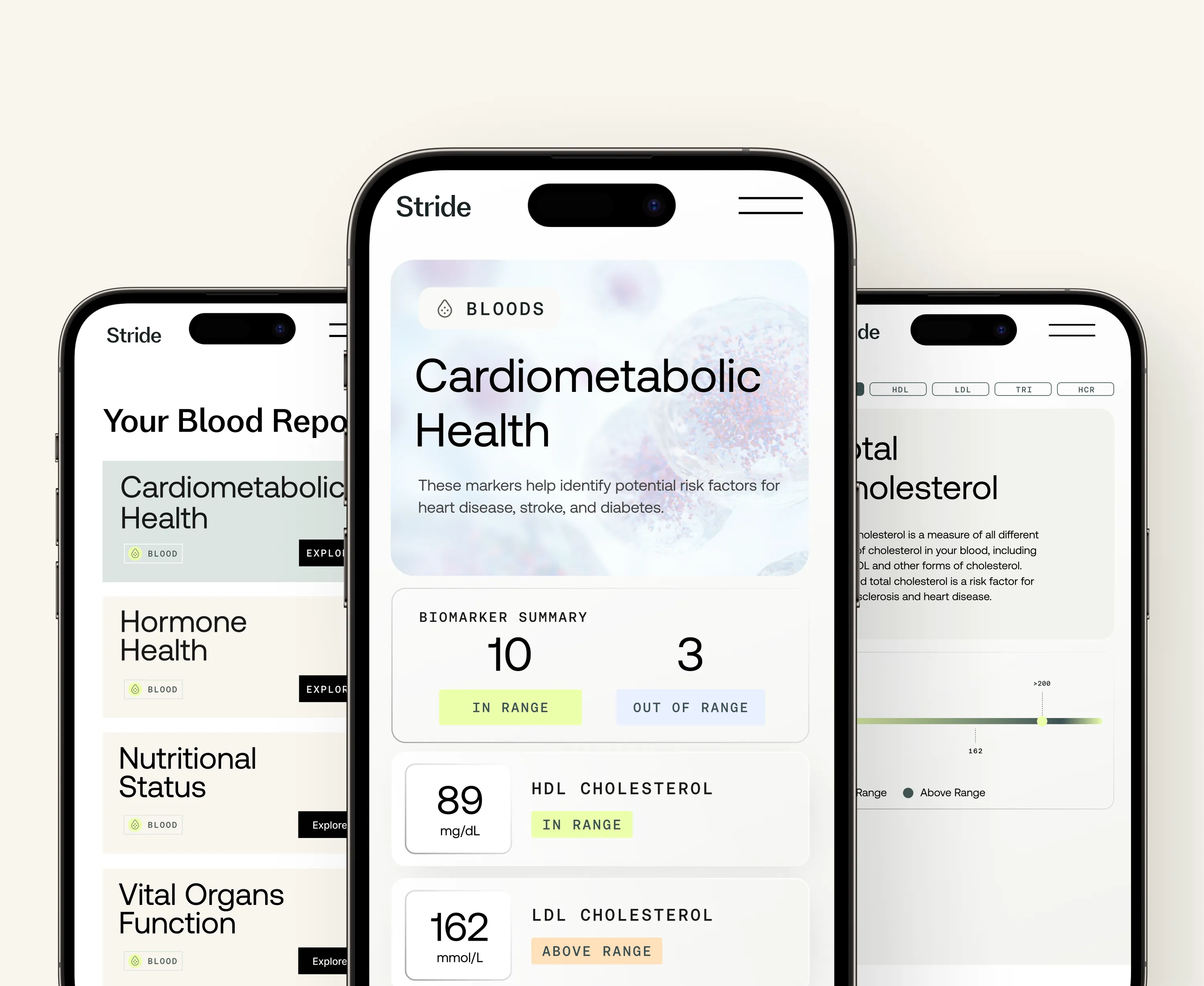
Health Tests
Optimal Bloods
At-home test for more than 70 blood-based biomarkers
From £399 £279.30
Biomarkers
| Biomarker | What it measures | Why it matters | Relevance |
|---|---|---|---|
| Magnesium Blood Test | Serum magnesium concentration | Primary screening marker for deficiency; may underestimate total body stores | 5 |
| Vitamin D Blood Test (25-OH) | 25-OH vitamin D status | Interacts with magnesium in bone health and immune function; often depleted together | 4 |
| Calcium Blood Test | Serum calcium level | Magnesium deficiency impairs parathyroid hormone, causing secondary low calcium | 4 |
| HbA1c Blood Test (Glycated Haemoglobin) | Average blood glucose over 3 months | Diabetes and insulin resistance are strongly linked to magnesium deficiency | 4 |
| Ferritin Blood Test | Iron storage | Co-depleted with magnesium in people with fatigue, poor diet, and chronic stress | 3 |
| Active B12 Blood Test (Holotranscobalamin) | Active B12 status | Often depleted alongside magnesium; contributes to fatigue, mood, and neurological symptoms | 3 |
| hsCRP Blood Test (High Sensitivity C-Reactive Protein) | Systemic inflammation | Magnesium deficiency is associated with elevated inflammatory markers | 3 |
| TSH Blood Test (Thyroid Stimulating Hormone) | Thyroid function | Thyroid disorders share symptoms with magnesium deficiency and are worth ruling out | 3 |
FAQs
What are the first signs of low magnesium you might not expect?
The earliest symptoms of magnesium deficiency are often subtle and easy to dismiss: muscle twitching around the eyelids or fingers, difficulty falling or staying asleep, low-grade anxiety that feels disproportionate to your circumstances, and a generalised fatigue that doesn't fully resolve with rest. Night cramps in the calves are a classic early signal. Because these symptoms are non-specific — they overlap with stress, iron deficiency, thyroid problems, and poor sleep hygiene — magnesium deficiency is rarely the first thing considered. The key pattern is a cluster of these symptoms appearing together, particularly in someone taking medications known to deplete magnesium (PPIs, diuretics) or under sustained stress.
Can low magnesium cause anxiety and panic attacks?
There is a well-established bidirectional relationship between low magnesium and anxiety. Magnesium inhibits excitatory neurotransmission and is required for GABA receptor function — GABA being the neurotransmitter most directly responsible for reducing neurological excitability and promoting calm. When magnesium is low, the nervous system becomes more reactive: minor stressors trigger larger responses, rumination is harder to interrupt, and the physical symptoms of anxiety (palpitations, muscle tension, shallow breathing) are amplified. A 2024 systematic review found that magnesium supplementation improved both mild anxiety and insomnia in randomised controlled trials. This doesn't mean magnesium deficiency is the cause of all anxiety — but checking magnesium status as part of a broader biomarker panel is a reasonable step if anxiety is a persistent or worsening pattern.
Can low magnesium affect sleep quality?
Yes. Magnesium has a direct role in sleep regulation via two mechanisms: it activates GABA receptors (promoting neurological quiet) and regulates melatonin production. Low magnesium is associated with difficulty falling asleep, lighter and more fragmented sleep, and early morning waking. People with confirmed magnesium deficiency who supplement appropriately often report improved sleep quality before other symptoms resolve, which reflects how directly the mineral affects the nervous system's ability to move into restorative sleep states. The dose and form of magnesium matter: magnesium glycinate and magnesium threonate are better absorbed and better tolerated than magnesium oxide, which is poorly bioavailable and commonly causes diarrhoea at higher doses.
Does a normal blood test result mean my magnesium levels are fine?
Not necessarily. Serum magnesium — the standard blood measurement — reflects only about 1% of total body magnesium. The remaining 99% is stored in bone and muscle, which the body draws on to maintain blood levels within the normal range. This means blood magnesium can appear normal even when intracellular stores are depleted. Functional deficiency at the cellular level can produce genuine symptoms while serum levels remain borderline-normal. This is why symptoms, medication history, and dietary patterns should all be considered alongside the number. If your result sits in the lower portion of the normal range (0.70-0.80 mmol/L) and you have relevant symptoms, it is worth discussing with a clinician rather than dismissing based on the number alone.
What medications deplete magnesium most significantly?
The two medication categories with the strongest evidence for causing magnesium deficiency are proton pump inhibitors (PPIs: omeprazole, lansoprazole, pantoprazole) and loop and thiazide diuretics (furosemide, bendroflumethiazide). PPI-induced magnesium deficiency typically emerges after several months of use and can become clinically significant with long-term prescription. The mechanism involves impaired magnesium absorption in the gut. Diuretics cause magnesium loss through increased urinary excretion. If you have been on either of these medication types for more than three to six months and have symptoms consistent with low magnesium, requesting a blood test is reasonable. Some antibiotics (aminoglycosides) and chemotherapy agents also deplete magnesium through renal pathways.
Can magnesium deficiency cause muscle cramps?
Yes, and this is one of the most consistently reported symptoms. Magnesium acts as a natural antagonist to calcium in muscle cells: calcium triggers muscle contraction, magnesium enables relaxation. When magnesium is low, the balance tips towards sustained contraction — which manifests as muscle cramps, spasms, and the restless leg sensations that are particularly noticeable at night. Night cramps in the calves are the classic presentation. Eyelid twitching (myokymia) is another common early sign, often appearing before more pronounced cramps develop. While other deficiencies (potassium, calcium) and conditions (thyroid disorders, peripheral vascular disease) can also cause cramps, magnesium deficiency is among the most common and most correctable causes in otherwise healthy adults.
How do I know if I'm getting enough magnesium from my diet?
The UK recommended daily intake is 300mg for men and 270mg for women, though some evidence suggests optimal requirements may be higher — particularly for people under sustained stress or with active training loads. Practically, a diet that includes daily servings of dark leafy greens, nuts, seeds, legumes, and wholegrains is well-positioned. If your diet is predominantly processed food, refined carbohydrates, or animal protein with limited plant foods, you are more likely to fall short. Tracking your intake using a food diary for a week and cross-referencing against magnesium content tables can give you a realistic baseline. However, dietary tracking doesn't capture absorption efficiency — which is why biomarker testing gives a more reliable picture of your actual status, particularly if symptoms are present.
Is magnesium deficiency more common in women?
Population surveys consistently show higher rates of inadequate magnesium intake in women than men, partly reflecting lower caloric intake overall and the impact of hormonal fluctuations on magnesium requirements. Magnesium plays a role in regulating PMS symptoms, including mood swings, cramping, and water retention: studies show that adequate magnesium is associated with reduced symptom severity. During pregnancy, requirements increase significantly and deficiency is more clinically consequential — it is used intravenously to prevent pre-eclampsia in hospital settings. Perimenopause and menopause add another layer of complexity, as declining oestrogen affects bone magnesium retention. Women in their 40s and 50s who are experiencing sleep disruption, anxiety, and muscle tension should include magnesium as part of any biomarker assessment.
Find out what your body is actually trying to tell you.
Answer 8 quick questions and get a free personalised report - covering which area of your biology is most worth looking at first, what testing in that area reveals, and what actions become available once you have that data.
Where do you feel you're operating below your potential right now?
Methylation & Cellular Health
Your biology is signalling a methylation upgrade - here’s what that means and what to do about it.