
Menu
-
Shop All
Contact
hey@getstride.com
Stride Health Group
Stride Health Group Ltd
Company No 05158025
Lamas Road
Badersfield
Norwich
England
NR10 5FB
UK








Low testosterone in men: signs, causes and how to test your levels
Low testosterone symptoms in men are often dismissed as simply the result of getting older, overworking, or not sleeping enough. While those factors do matter, the reality is that testosterone deficiency is a distinct clinical condition with identifiable biomarkers and specific causes, not just a vague consequence of modern life. Testosterone declines naturally at around 1% per year from the age of 30, but for a significant proportion of men, this decline becomes pronounced enough to produce a recognisable cluster of symptoms: persistent fatigue, reduced libido, difficulty maintaining muscle mass, low mood, and cognitive slowdown. The only way to know whether low testosterone is contributing to your symptoms is a testosterone blood test, taken at the right time and interpreted alongside the full hormonal picture.
What causes low testosterone in men?
Age-related decline in testosterone production
Testosterone production is regulated by a signalling pathway running from the hypothalamus in the brain to the pituitary gland to the testes (the HPG axis). This system becomes less efficient with age. After the late 30s and into the 40s, the hypothalamus and pituitary send progressively weaker signals, and the testes' ability to respond diminishes. The resulting gradual reduction in testosterone output is sometimes described as the "male menopause," though unlike the female menopause it is a slow, continuous process rather than a distinct transition. Research from the European Male Ageing Study found that around 17% of men aged 40-79 had biochemically low testosterone levels using moderate diagnostic thresholds, and other studies suggest the proportion meeting broader definitions of testosterone deficiency may approach 25% in men over 40.
Obesity and metabolic syndrome
Excess body fat, particularly visceral fat around the abdomen, actively suppresses testosterone. Fat tissue contains an enzyme called aromatase that converts testosterone into oestrogen, reducing circulating testosterone while raising oestrogen. Simultaneously, obesity promotes insulin resistance, which further disrupts the hormonal signalling axis. Men with metabolic syndrome (the combination of central obesity, high blood pressure, elevated blood sugar, and abnormal lipid profile) have significantly higher rates of testosterone deficiency than metabolically healthy men. The relationship runs in both directions: low testosterone worsens body composition and insulin resistance, which further suppresses testosterone, creating a cycle that requires simultaneous attention to hormonal and metabolic health.
Chronic conditions and medications
Several common health conditions are associated with reduced testosterone: type 2 diabetes, chronic kidney disease, liver disease, obstructive sleep apnoea, and HIV. Certain medications significantly suppress testosterone, including long-term opioid pain medication (which can produce a pronounced and often unrecognised form of hypogonadism), some antidepressants, antipsychotics, anticonvulsants, and prolonged use of corticosteroids. Men taking any of these medications who are experiencing low-testosterone symptoms should discuss the possibility of medication-related suppression with their prescriber before attributing symptoms to age alone.
Sleep deprivation and circadian disruption
Testosterone is primarily produced during sleep, particularly during the deep slow-wave sleep stages in the first half of the night. Shift work, chronic late nights, and untreated sleep disorders including obstructive sleep apnoea (where breathing interruptions fragment the night's sleep) can meaningfully reduce testosterone output. Research has shown that even one week of sleeping 5 hours per night can reduce testosterone levels by 10-15% in young men. Addressing sleep quality is one of the most impactful non-pharmacological levers for supporting testosterone in men who are not achieving adequate sleep.
Primary versus secondary hypogonadism
Testosterone deficiency is classified by where in the HPG axis the problem originates. Primary hypogonadism involves a problem at the level of the testes themselves (from injury, infection, genetic conditions like Klinefelter syndrome, or prior chemotherapy and radiotherapy). Secondary hypogonadism involves a signalling problem at the hypothalamus or pituitary level, with the testes functioning but receiving inadequate stimulation. LH and FSH measurements in the blood distinguish between these patterns: low testosterone with low or normal LH points to a pituitary or hypothalamic problem, while low testosterone with high LH indicates that the brain is signalling normally but the testes are not responding. This distinction matters because it affects whether treatment addresses the cause directly or replaces the testosterone that is not being produced.
Stress and cortisol
Chronic psychological and physical stress elevates cortisol, which directly suppresses testosterone production. The HPA axis (stress response) and the HPG axis (reproductive hormones) compete for resources, and during sustained stress the body consistently prioritises the stress response at the expense of testosterone production. This is a biologically appropriate short-term response that becomes problematic when stress is chronic. High cortisol also promotes fat gain and insulin resistance, both of which further compound testosterone suppression.
How to test for low testosterone in men
The British Society for Sexual Medicine (BSSM) guidelines are explicit on how a diagnosis of testosterone deficiency should be made: two morning blood tests (ideally taken before 11am, when testosterone peaks) showing consistently low levels, alongside symptoms consistent with deficiency. A single borderline result is not sufficient to diagnose or rule out low testosterone, because levels fluctuate day to day and are affected by recent illness, stress, and sleep quality.
Total testosterone is the primary measure. UK clinical guidelines generally use a total testosterone below 12 nmol/L (with symptoms) as indicating possible testosterone deficiency, though the NHS typically treats below 8.6 nmol/L. Optimal rather than just "not deficient" levels are a separate consideration.
Free testosterone is the fraction that is biologically active. When total testosterone is borderline, free testosterone provides a more nuanced picture. Free testosterone is calculated from total testosterone and SHBG (it is not measured directly in most labs).
SHBG (sex hormone-binding globulin) binds to testosterone in the blood, making it biologically unavailable. Elevated SHBG (common in older men, in liver disease, and with certain medications) can make total testosterone look normal while free testosterone is low. Conversely, low SHBG (common in obesity and insulin resistance) can produce symptoms of low testosterone even at nominally adequate total testosterone levels.
LH (luteinising hormone) and FSH (follicle-stimulating hormone) identify the location of the problem within the HPG axis and are essential for directing appropriate investigation and treatment. Men with low testosterone and high LH have a primary testicular problem. Men with low testosterone and low or inappropriately normal LH have a pituitary or hypothalamic problem that needs further investigation.
Prolactin is measured because elevated prolactin (from a benign pituitary adenoma, for example) suppresses the HPG axis and is a treatable cause of secondary hypogonadism. A prolactin test is typically included in the initial workup.
Thyroid function (TSH, Free T3) matters because hypothyroidism produces fatigue, low mood, and weight changes that overlap significantly with low testosterone symptoms. Both conditions can co-exist and both need treating independently.
HbA1c and lipid profile assess metabolic health, which is both a cause and consequence of testosterone deficiency. Men with low testosterone are at higher risk of type 2 diabetes and cardiovascular disease; treating the metabolic picture alongside the hormonal one produces better outcomes.
For testosterone-specific testing (total testosterone, free testosterone, LH, FSH, SHBG, prolactin), the NHS requires both a clinical presentation consistent with testosterone deficiency and two confirmed low morning readings before treatment is initiated. Private hormone clinics and home testing providers in the UK can facilitate these tests with rapid turnaround, which may be useful for men who want to gather initial data before a GP appointment.
Evidence-based strategies to support healthy testosterone levels
Resistance training and exercise
Resistance training is one of the most evidence-supported lifestyle interventions for testosterone. High-intensity and compound exercises (squats, deadlifts, bench press) produce acute testosterone spikes and over time support higher baseline levels through their effects on body composition, insulin sensitivity, and anabolic signalling. The key qualification is that excessive endurance training at high volumes without adequate recovery can have the opposite effect, suppressing testosterone through elevated cortisol and energy deficit. Moderate, consistent resistance training combined with recovery is more effective than volume extremes in either direction.
Sleep optimisation
Prioritising 7-9 hours of sleep per night, maintaining a consistent sleep schedule, and addressing untreated sleep apnoea if suspected are among the highest-impact lifestyle changes available for testosterone. Sleep apnoea in particular is significantly underdiagnosed in men and is associated with substantially reduced testosterone. A partner reporting observed apnoeas or loud snoring, combined with symptoms of daytime fatigue and low testosterone, warrants a GP discussion about sleep study referral.
Body composition and metabolic health
Because aromatase in fat tissue converts testosterone to oestrogen, and because insulin resistance suppresses testosterone production, reducing visceral fat and improving insulin sensitivity through dietary changes and exercise creates a compounding positive effect on testosterone over time. Tracking HbA1c and lipid markers alongside testosterone gives a measurable picture of whether the metabolic drivers of testosterone suppression are improving.
Nutrition, zinc, and vitamin D
Vitamin D receptors are present in the testes, and studies have found consistent positive associations between vitamin D status and testosterone levels. Men who are deficient in vitamin D and who supplement to restore optimal levels often show modest improvements in testosterone. Zinc is a co-factor in testosterone production, and deficiency (common in men with restricted diets, excessive alcohol, or gastrointestinal absorption problems) is associated with lower testosterone. Tracking vitamin D and B12 through a blood test gives a baseline to work from.
Stride tests that can help with Low testosterone in men
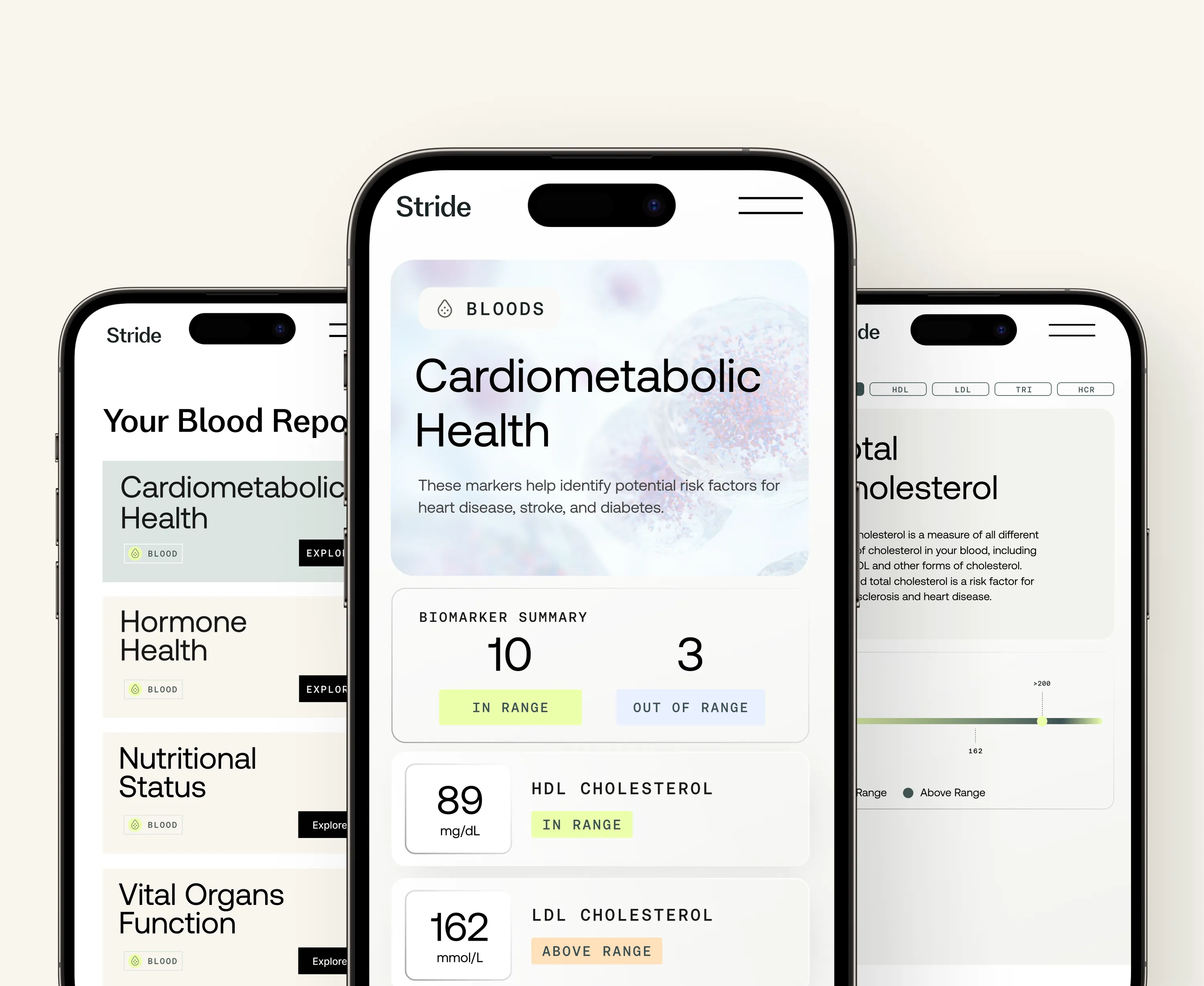
Health Tests
Optimal Bloods
At-home test for more than 70 blood-based biomarkers
From £399 £279.30
Biomarkers
| Biomarker | What it measures | Why it matters | Relevance |
|---|---|---|---|
| Testosterone Blood Test | Circulating testosterone | The primary diagnostic marker; two morning tests required | 5 |
| Sex Hormone Binding Globulin (SHBG) Blood Test | Sex hormone-binding globulin | Affects how much testosterone is biologically available | 5 |
| Luteinising Hormone (LH) Blood Test | Luteinising hormone | Identifies whether deficiency is primary (testicular) or secondary (pituitary) | 5 |
| Prolactin Blood Test | Pituitary hormone | Elevated prolactin suppresses testosterone and requires specific investigation | 4 |
| TSH Blood Test (Thyroid Stimulating Hormone) | Thyroid stimulating hormone | Hypothyroidism closely mimics low testosterone symptoms | 4 |
| FT3 Blood Test (Free Triiodothyronine) | Active thyroid hormone | Captures T4-to-T3 conversion problems that TSH alone can miss | 3 |
| HbA1c Blood Test (Glycated Haemoglobin) | 3-month blood sugar average | Insulin resistance both causes and results from low testosterone | 4 |
| LDL Cholesterol Blood Test | Low-density lipoprotein | Cardiovascular risk increased in testosterone deficiency | 3 |
| Vitamin D Blood Test (25-OH) | 25-OH vitamin D | Associated with testosterone levels; common deficiency in the UK | 4 |
| hsCRP Blood Test (High Sensitivity C-Reactive Protein) | Systemic inflammation | Chronic inflammation suppresses the HPG axis and testosterone production | 3 |
| Ferritin Blood Test | Iron storage | Low ferritin independently causes fatigue that overlaps with low testosterone symptoms | 3 |
| Triglycerides Blood Test (Heart Health & Metabolic Biomarker) | Blood fat level | Elevated triglycerides indicate metabolic syndrome, a major testosterone risk factor | 3 |
FAQs
What are the most common signs of low testosterone in men over 40?
The most commonly reported symptoms of low testosterone in men over 40 are persistent fatigue that is disproportionate to sleep and activity levels, reduced libido and changes in sexual function (including reduced frequency of morning erections), difficulty building or maintaining muscle despite exercising, increased body fat particularly around the abdomen, low mood or a blunted sense of motivation and drive, and reduced cognitive sharpness. Sleep disruption is also frequently reported. These symptoms are non-specific, meaning they have multiple potential causes, which is why a confirmed blood test showing two low morning testosterone readings is required alongside symptoms to make a clinical diagnosis. Many men who experience these symptoms attribute them to stress or ageing for years before seeking assessment.
How should a testosterone blood test for men be taken?
Testosterone levels follow a circadian rhythm and are significantly higher in the morning than in the afternoon or evening. BSSM guidelines recommend that blood for testosterone testing should be drawn between 7am and 11am on two separate occasions, ideally at least one week apart. A result taken in the afternoon can underestimate testosterone by 30% or more and lead to a false-positive diagnosis of deficiency. Testing should also be deferred during acute illness or periods of severe stress, both of which transiently suppress testosterone. If the first result shows low testosterone, the second test is taken to confirm, because day-to-day variability means a single low reading is not sufficient for diagnosis.
What is the difference between total and free testosterone?
Total testosterone measures all testosterone in the blood, including testosterone that is bound to proteins (mainly SHBG and albumin) and the smaller free fraction. Only free testosterone (roughly 2-3% of the total) is biologically active and able to bind to androgen receptors in tissues. When SHBG is high, for example in older men or in liver disease, a significant proportion of total testosterone is bound and unavailable, making total testosterone an overestimate of biological effect. Conversely, when SHBG is low (in obesity and insulin resistance), free testosterone may be adequate even when total testosterone looks borderline. Free testosterone is calculated from total testosterone and SHBG in most UK labs rather than measured directly, which is why testing both is necessary for an accurate picture.
At what testosterone level does treatment become appropriate?
UK clinical guidelines from the BSSM define testosterone deficiency as a total testosterone below 12 nmol/L (on two morning tests) combined with symptoms consistent with the condition. The NHS typically initiates treatment at levels below 8.6 nmol/L. Private testosterone replacement therapy (TRT) clinics often apply the BSSM rather than NHS threshold. Treatment appropriateness also depends on ruling out correctable causes (such as obesity, sleep apnoea, medication effects, and pituitary tumours) before initiating replacement therapy, because addressing these causes can sometimes restore testosterone without requiring TRT. There is no universal optimal level: the clinical goal is the dose that resolves symptoms and brings testosterone into the mid-normal range for age.
Can low testosterone affect mental health and mood in men?
Yes. Testosterone has direct effects on the brain via androgen receptors in regions involved in mood regulation, motivation, and reward processing. Low testosterone is associated with increased rates of depression, anxiety, irritability, and a reduced sense of general wellbeing in research studies. Men with confirmed testosterone deficiency who receive testosterone replacement therapy often report improvement in mood, energy, and drive as among the most significant effects of treatment. However, the relationship is bidirectional: clinical depression and chronic stress both suppress testosterone through cortisol and HPA axis activation. Distinguishing whether low mood is a consequence of low testosterone or vice versa can be complex, and some men benefit from addressing both simultaneously.
Does testosterone affect heart health and cardiovascular risk?
The relationship between testosterone and cardiovascular health is more nuanced than early concerns suggested. Low testosterone is itself associated with higher rates of cardiovascular disease, metabolic syndrome, and all-cause mortality in multiple large studies. More recent evidence, including large randomised trials, suggests that testosterone replacement therapy in men with confirmed deficiency does not increase and may modestly reduce cardiovascular risk when used appropriately. Any man starting TRT should have a baseline cardiovascular assessment including blood pressure, lipid profile, HbA1c, and haematocrit, and these should be monitored regularly during treatment. Men with established cardiovascular disease should have TRT managed in consultation with their cardiologist.
What lifestyle changes can help raise testosterone naturally?
The most evidence-supported lifestyle interventions for raising testosterone include: regular resistance training (particularly compound exercises at moderate-to-high intensity), achieving and maintaining a healthy body composition by reducing visceral fat, prioritising 7-9 hours of sleep per night and addressing sleep apnoea if present, managing chronic stress through structured recovery and stress-reduction practices, and ensuring adequate dietary zinc and vitamin D (supplementing where deficient). Alcohol intake beyond moderate levels suppresses testosterone production and should be reduced. These changes can produce meaningful improvements in testosterone levels in men with lifestyle-driven suppression, though they will not fully compensate for primary testicular failure or other biological causes of deficiency.
How long does it take to see results from testosterone replacement therapy?
The timescale for different aspects of improvement differs significantly. Libido often improves within 3-6 weeks. Mood and energy improvements are commonly reported within the first 3 months. Improvements in muscle mass and body composition typically become apparent after 3-6 months of consistent TRT alongside exercise. Bone density improvements take 12 months or more to become measurable. Full optimisation of TRT, in terms of finding the right dose and formulation, often takes 3-6 months of titration based on blood tests every 3 months and symptom tracking. Testosterone levels should be checked at the same time of day as the initial diagnostic tests, and the frequency and type of monitoring should be guided by the prescribing clinician.
Find out what your body is actually trying to tell you.
Answer 8 quick questions and get a free personalised report - covering which area of your biology is most worth looking at first, what testing in that area reveals, and what actions become available once you have that data.
Where do you feel you're operating below your potential right now?
Methylation & Cellular Health
Your biology is signalling a methylation upgrade - here’s what that means and what to do about it.