
Menu
-
Shop All
Contact
hey@getstride.com
Stride Health Group
Stride Health Group Ltd
Company No 05158025
Lamas Road
Badersfield
Norwich
England
NR10 5FB
UK











Fibromyalgia: symptoms, overlapping conditions and biomarkers worth checking
Fibromyalgia symptoms are among the most searched chronic pain queries in the UK, and the condition remains one of the most challenging to navigate for both patients and clinicians. Fibromyalgia is characterised by widespread musculoskeletal pain, persistent fatigue, non-restorative sleep, and cognitive difficulties sometimes called fibro fog. What makes it particularly difficult is that it shares symptoms with several other conditions, including hypothyroidism, vitamin D deficiency, anaemia, and inflammatory arthritis, and there is no definitive blood test that confirms the diagnosis. Blood testing does not diagnose fibromyalgia, but it plays a critical role in identifying or ruling out the overlapping conditions that can cause or worsen the same symptom pattern.

What causes fibromyalgia and what conditions mimic it?
Central sensitisation and pain processing
Fibromyalgia is understood primarily as a disorder of central pain processing. In people with fibromyalgia, the central nervous system amplifies pain signals, a mechanism called central sensitisation, meaning that stimuli that would be mildly uncomfortable or unnoticed in most people are experienced as significantly painful. This explains why fibromyalgia pain is widespread rather than localised, and why it affects multiple body regions simultaneously. The underlying neurobiology involves altered activity in descending pain modulation pathways and changes in how the brain processes sensory input.
Hypothyroidism as a key mimic
Hypothyroidism and fibromyalgia share a remarkably similar symptom profile: widespread muscle pain, persistent fatigue, cognitive slowing, poor sleep quality, weight changes, and low mood. This overlap is clinically significant because a meaningful proportion of people presenting with fibromyalgia-like symptoms will, on investigation, have undiagnosed hypothyroidism or subclinical thyroid dysfunction. Thyroid function testing, including TSH and Free T4, is recommended as a standard part of the diagnostic workup for all people with suspected fibromyalgia. Identifying hypothyroidism matters because it is treatable, and effective thyroid management can resolve a significant portion of the symptom burden.
Vitamin D deficiency and musculoskeletal pain
Low vitamin D status is associated with musculoskeletal pain, muscle weakness, and fatigue that can closely resemble fibromyalgia. Studies of people diagnosed with fibromyalgia consistently find higher rates of vitamin D deficiency than in matched controls. In a retrospective analysis of over 2,000 patients with fibromyalgia, 42.4% had vitamin B12 deficiency below 400 ng/L, and fatigue and memory loss were significantly more common in the deficient group. Low vitamin D and low B12 can each independently produce a symptom pattern that, in the absence of testing, might be attributed to fibromyalgia rather than a correctable deficiency.
Iron deficiency and ferritin status
Iron deficiency is very common in people with fibromyalgia and can cause or worsen fatigue, poor sleep, and depressive symptoms independently of whether fibromyalgia is present. Ferritin, the marker of stored iron, can be low even when haemoglobin is normal, meaning that standard anaemia screens may miss iron-depleted individuals who are nonetheless experiencing the functional effects of insufficient iron. Restless leg syndrome, which is associated with fibromyalgia, is also strongly linked to low ferritin status, making this a clinically significant biomarker to check in anyone presenting with the fibromyalgia symptom cluster.
Inflammatory arthritis and autoimmune conditions
Rheumatoid arthritis, lupus, Sjogren's syndrome, and other inflammatory rheumatic diseases can produce widespread pain, fatigue, and cognitive symptoms that overlap significantly with fibromyalgia. A key distinguishing feature is the presence of inflammatory markers (elevated CRP or ESR) and specific autoimmune antibodies. Normal inflammatory markers, alongside a pattern of widespread pain without joint swelling or structural damage, generally support a fibromyalgia diagnosis rather than inflammatory arthritis. However, fibromyalgia and inflammatory rheumatic disease can coexist, and the presence of one does not exclude the other.
Sleep disruption and the fibromyalgia-sleep cycle
Poor sleep quality is both a symptom and a driver of fibromyalgia. People with fibromyalgia are frequently found to have disrupted slow-wave (deep) sleep, during which pain thresholds are normally restored and cellular repair occurs. The disruption of this sleep architecture perpetuates the central sensitisation pattern, increases pain sensitivity the following day, and contributes to the fatigue and cognitive symptoms that accompany the pain. Conditions that disrupt sleep independently, including sleep apnoea, restless leg syndrome, and circadian rhythm disruption, can worsen fibromyalgia significantly, and assessing these overlapping contributors is part of a comprehensive approach.
How to test when fibromyalgia is suspected
There is no blood test that diagnoses fibromyalgia. The diagnosis is clinical, based on the pattern and duration of symptoms assessed against the American College of Rheumatology 2016 criteria, which evaluate widespread pain index and symptom severity score. Blood testing serves a different but equally important purpose: ruling out conditions with overlapping symptoms that are treatable, and identifying deficiencies that may be causing or significantly worsening the symptom pattern.
The recommended baseline workup for suspected fibromyalgia includes full blood count, thyroid function (TSH and Free T4), ferritin and iron studies, vitamin D, vitamin B12, and inflammatory markers (CRP or ESR). This panel identifies hypothyroidism, vitamin deficiencies, iron deficiency, and inflammatory conditions, each of which can produce a symptom pattern that mimics or worsens fibromyalgia.
If your inflammatory markers are elevated (suggesting a process beyond fibromyalgia is active), or if you have joint swelling, rashes, or other signs that suggest inflammatory arthritis or an autoimmune condition, your GP should be involved for further specialist investigation. Fibromyalgia is a clinical diagnosis made after other conditions have been considered and ruled out through appropriate assessment.
Evidence-based strategies to support symptom management in fibromyalgia
Sleep quality as a primary lever
Because disrupted slow-wave sleep both reflects and perpetuates central sensitisation, improving sleep architecture has direct effects on fibromyalgia symptom severity. Consistent sleep timing, darkness during sleep, avoiding alcohol (which fragments sleep architecture even when it initially promotes drowsiness), and assessing for sleep apnoea, which may require a specialist referral, are the most impactful sleep interventions. Low-dose amitriptyline and similar medications prescribed by GPs are specifically intended to restore slow-wave sleep architecture in fibromyalgia, rather than to act primarily as antidepressants.
Graduated movement and pacing
Regular low-to-moderate intensity physical activity consistently reduces fibromyalgia symptom severity, including pain intensity, fatigue, and cognitive function, in randomised controlled trials. The challenge is pacing: overexertion on better days, followed by significant flares, is a common pattern that worsens the overall trajectory. Graduated aerobic activity, starting at very low intensity and increasing slowly over weeks, is the evidence-based approach. Activities like walking, swimming, and cycling tend to be better tolerated than high-impact exercise.
Addressing nutrient deficiencies
Correcting identified deficiencies, particularly vitamin D, B12, and ferritin, should be a first step before pursuing more complex symptom management approaches. Vitamin D supplementation in deficient individuals improves musculoskeletal pain and may reduce fatigue. B12 repletion in deficient individuals is associated with improvements in cognitive symptoms and fatigue. Iron supplementation in those with low ferritin addresses restless leg syndrome and reduces fatigue. Tracking these biomarkers before and after supplementation gives measurable confirmation that levels are improving.
Gut health and the microbiome connection
A growing body of research links gut microbiome composition to central sensitisation and widespread pain conditions. Gut dysbiosis, which produces systemic inflammatory signalling, may worsen the neuroinflammatory environment relevant to fibromyalgia. Supporting microbiome diversity through a varied plant-rich diet, reducing ultra-processed food intake, and tracking microbiome composition over time is a practical approach with meaningful supporting evidence, even if the specific mechanisms in fibromyalgia are still being characterised.
Stride tests that can help with Fibromyalgia
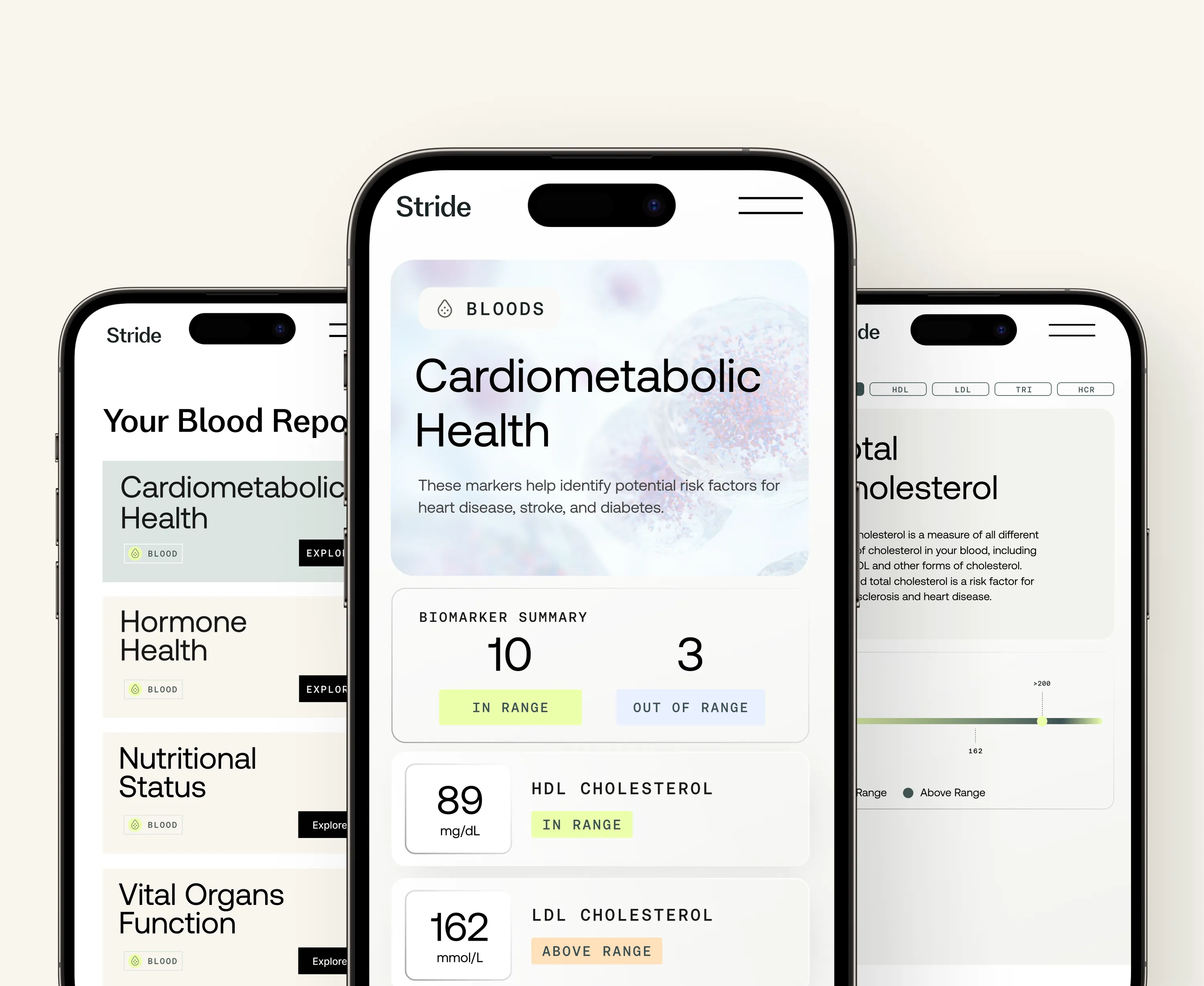
Health Tests
Optimal Bloods
At-home test for more than 70 blood-based biomarkers
From £399 £279.30
Biomarkers
| Biomarker | What it measures | Why it matters | Relevance |
|---|---|---|---|
| TSH Blood Test (Thyroid Stimulating Hormone) | Pituitary thyroid signal | Hypothyroidism shares nearly every fibromyalgia symptom; ruling it out is a clinical requirement | 5 |
| FT4 (Free Thyroxine) Blood Test | Circulating thyroid hormone | Identifies subclinical hypothyroidism where TSH is borderline; provides fuller thyroid picture | 4 |
| Vitamin D Blood Test (25-OH) | 25-OH vitamin D status | Low vitamin D is associated with musculoskeletal pain and may directly worsen fibromyalgia symptoms | 5 |
| Ferritin Blood Test | Iron storage levels | Iron deficiency is common in fibromyalgia and causes or worsens fatigue, poor sleep, and restless leg syndrome | 5 |
| Active B12 Blood Test (Holotranscobalamin) | Active B12 status | B12 deficiency is common in fibromyalgia patients and independently associated with fatigue and cognitive symptoms | 5 |
| hsCRP Blood Test (High Sensitivity C-Reactive Protein) | Systemic inflammatory marker | Normal CRP supports a fibromyalgia picture; elevated CRP suggests an additional inflammatory process | 5 |
| HbA1c Blood Test (Glycated Haemoglobin) | 3-month average blood glucose | Elevated blood glucose increases pain sensitivity and neuroinflammatory burden; relevant to fibromyalgia symptom severity | 3 |
FAQs
Is there a blood test for fibromyalgia?
There is no blood test that can confirm a fibromyalgia diagnosis. Fibromyalgia is diagnosed clinically, based on the pattern and severity of symptoms assessed against the American College of Rheumatology 2016 criteria, which look at widespread pain and symptom burden over at least three months. Blood tests are used for a different purpose: ruling out conditions with overlapping symptoms (particularly hypothyroidism, inflammatory arthritis, vitamin deficiencies, and anaemia) and identifying deficiencies that may be causing or significantly worsening the symptom pattern. A comprehensive blood panel is therefore still a valuable part of the fibromyalgia evaluation, even though it cannot deliver the diagnosis itself.
What conditions can be mistaken for fibromyalgia?
Several conditions produce symptom patterns that closely overlap with fibromyalgia. Hypothyroidism shares widespread muscle pain, fatigue, cognitive slowing, and poor sleep. Vitamin D deficiency causes musculoskeletal pain and fatigue. Iron deficiency produces exhaustion, cognitive symptoms, and disturbed sleep. Rheumatoid arthritis and lupus can produce widespread pain and fatigue alongside fibromyalgia-like symptoms. Sleep disorders including sleep apnoea cause the non-restorative sleep and cognitive difficulties characteristic of fibromyalgia. Multiple sclerosis and other neurological conditions can produce pain and cognitive symptoms. Ruling out these conditions through appropriate testing is a standard step before a fibromyalgia diagnosis is made.
Why do so many doctors run blood tests before diagnosing fibromyalgia?
Blood testing in the fibromyalgia workup serves two critical functions: excluding conditions that would benefit from specific treatment and identifying co-existing issues that worsen fibromyalgia symptoms. If hypothyroidism is present and treated, a significant proportion of the symptom burden may resolve without fibromyalgia-specific management. If vitamin D is severely deficient, correcting it may reduce musculoskeletal pain independently. If inflammatory arthritis is present alongside fibromyalgia, it requires its own treatment that fibromyalgia management does not address. Running a comprehensive blood panel before attributing symptoms to fibromyalgia alone ensures that treatable causes are not missed.
Can vitamin D deficiency cause fibromyalgia-like symptoms?
Yes. Low vitamin D status is associated with widespread musculoskeletal pain, muscle weakness, and fatigue that can closely resemble fibromyalgia. Studies of people diagnosed with fibromyalgia consistently find higher rates of vitamin D deficiency than in healthy control populations. Whether the relationship is causal remains under research, but several small trials have found that correcting severe vitamin D deficiency in people with widespread pain improves symptoms meaningfully. Testing vitamin D is a straightforward, low-cost step that should precede a fibromyalgia diagnosis rather than following it, given that a correctable deficiency may explain the symptom pattern.
Can fibromyalgia and hypothyroidism occur at the same time?
Yes. Fibromyalgia and hypothyroidism are not mutually exclusive, and they can coexist. The symptom overlap can make it difficult to distinguish between them without testing. A key practical point: if you have been diagnosed with fibromyalgia but your thyroid has not been tested comprehensively (including TSH, Free T4, and Anti-TPO antibodies rather than TSH alone), it is worth pursuing a full thyroid panel. Subclinical hypothyroidism, and early Hashimoto's thyroiditis with detectable antibodies but normal TSH, can contribute significantly to the fibromyalgia-like symptom pattern without appearing on a standard thyroid screen.
How is fibromyalgia actually diagnosed?
Fibromyalgia is diagnosed using the American College of Rheumatology 2016 criteria, which assess two components: the Widespread Pain Index (WPI, a count of pain areas from 0 to 19) and the Symptom Severity Scale (SSS, scored 0 to 12 across fatigue, sleep, and cognitive symptoms). A diagnosis is supported when WPI is 7 or more with SSS 5 or more, or WPI 4 to 6 with SSS 9 or more, with symptoms present for at least 3 months and no other condition that would better explain the pattern. This represents a shift from the older tender point criteria and allows diagnosis based on symptom pattern rather than physical examination findings alone.
Does fibromyalgia show on blood tests?
Fibromyalgia typically does not show on standard blood tests. CRP is usually normal, reflecting that fibromyalgia is not an inflammatory arthritis. White blood cell counts, liver and kidney function, and thyroid markers are usually normal in people with fibromyalgia and no overlapping conditions. When blood results are abnormal, it generally points to an additional or alternative diagnosis. The value of blood testing in fibromyalgia is therefore what it does not show (ruling out inflammatory, autoimmune, and thyroid causes) rather than a positive finding that confirms the condition.
What is fibro fog and what biomarkers are linked to it?
Fibro fog refers to the cognitive difficulties commonly experienced in fibromyalgia: difficulty concentrating, word-finding problems, memory lapses, and mental fatigue. The underlying mechanisms overlap with those of fibromyalgia more broadly, including central sensitisation, disrupted sleep, and neuroinflammation. Biomarkers most closely linked to similar cognitive symptoms include low vitamin B12 (particularly associated with memory loss and concentration difficulty in the fibromyalgia population), elevated homocysteine (which affects neurological function and is driven by B12 and folate status), low ferritin (associated with cognitive fatigue), and poor sleep quality, which is measurable through its downstream effects on inflammatory markers and biomarker patterns rather than directly through a blood test.
Find out what your body is actually trying to tell you.
Answer 8 quick questions and get a free personalised report - covering which area of your biology is most worth looking at first, what testing in that area reveals, and what actions become available once you have that data.
Where do you feel you're operating below your potential right now?
Methylation & Cellular Health
Your biology is signalling a methylation upgrade - here’s what that means and what to do about it.