
Menu
-
Shop All
Contact
hey@getstride.com
Stride Health Group
Stride Health Group Ltd
Company No 05158025
Lamas Road
Badersfield
Norwich
England
NR10 5FB
UK









Do I need HRT? How hormone testing can help you decide
Do I need HRT is one of the most commonly asked questions by women navigating perimenopause and menopause in the UK, and the honest answer is more nuanced than a blood test result alone can reveal. Hormone replacement therapy works by supplementing the oestrogen and progesterone your ovaries produce in diminishing quantities during the menopausal transition. Understanding whether HRT is appropriate for you, and which type, involves weighing your symptoms, your health history, and, in specific circumstances, some targeted blood tests that can clarify the picture when symptoms alone do not.
What drives the decision to start HRT?
Symptoms are the primary diagnostic tool
NICE guidelines are clear on this point: for women over 45 who are experiencing typical perimenopause or menopause symptoms, a diagnosis can be made on the basis of age and symptoms without a blood test. Classic symptoms include hot flushes, night sweats, sleep disruption, low mood, brain fog, reduced libido, joint pain, vaginal dryness, and changes in the menstrual cycle. If these symptoms are present and your age fits the expected window, most GP or menopause specialist consultations will begin with a thorough symptom review rather than blood tests.
When perimenopause is harder to diagnose
The perimenopause, which can last several years before the final menstrual period, is the most diagnostically challenging phase. Hormone levels during this time fluctuate significantly from day to day and even hour to hour. This is precisely why a single oestrogen or FSH blood test can be misleading: a result within the "normal" range does not rule out perimenopause, and many women experience significant symptoms while their blood tests look unremarkable. As one British Menopause Society council member has noted, it is possible to have entirely normal blood results alongside very significant menopausal symptoms.
Age under 45 and premature ovarian insufficiency
For women under 45 experiencing menopause symptoms, blood testing becomes essential rather than optional. Premature ovarian insufficiency (POI) is diagnosed when the ovaries stop functioning normally before age 40, and it affects around 1 in 100 women. Two blood tests measuring FSH (follicle-stimulating hormone) taken 4-6 weeks apart are required to confirm POI, because a single elevated result is insufficient. POI carries different health implications from typical menopause, including a higher risk of bone density loss and cardiovascular changes, making early diagnosis and appropriate HRT particularly important.
Conditions that can mimic menopause symptoms
Before attributing all symptoms to menopause, it is worth ruling out other conditions that produce an overlapping picture. Hypothyroidism causes fatigue, low mood, brain fog, weight gain, and hair thinning: the same pattern that many women in their 40s attribute to the start of the menopausal transition. Anaemia from low ferritin produces exhaustion and cognitive sluggishness. Vitamin D deficiency contributes to low mood and joint pain. These conditions are treatable in their own right and do not improve with HRT. A blood panel that assesses these co-factors gives a fuller picture of what is driving the symptom burden before a treatment decision is made.
Testing before starting testosterone therapy
Testosterone is prescribed for some women alongside standard HRT to support libido, mood, energy, and cognitive function. British Menopause Society guidelines require baseline measurement of total testosterone and SHBG (sex hormone-binding globulin) before starting testosterone, and periodic monitoring thereafter, to ensure levels remain within a physiologically appropriate female range. This is one of the specific scenarios where a blood test directly informs HRT management.
Monitoring HRT when symptoms are not resolving
If you are already on HRT and your symptoms are continuing or worsening despite dose adjustments, blood testing can clarify whether the issue is one of absorption. Some women do not absorb transdermal oestrogen effectively through the skin, particularly with lower doses. Checking oestradiol levels 4-6 hours after applying a transdermal product can reveal whether an adequate amount is reaching the bloodstream. Similarly, if symptoms persist at a dose that appears adequate on paper, an oestradiol measurement helps distinguish between poor absorption, rapid metabolism, and the possibility that something else is contributing to symptoms.
How to investigate symptoms before and during HRT
The most useful starting point is a comprehensive blood panel that rules out the conditions most likely to complicate or mimic the menopause picture, rather than focusing solely on hormone levels that will fluctuate regardless.
TSH, Free T4, and Free T3 assess thyroid function. Hypothyroidism is significantly more common in women, particularly in their 40s and 50s, and produces symptoms that overlap almost precisely with perimenopause. A thyroid panel alongside hormonal assessment prevents misattribution of thyroid symptoms to menopause.
Ferritin reflects iron storage. Low ferritin causes fatigue, brain fog, and hair thinning that can be severe enough to dominate a woman's symptom experience during perimenopause. It is also common in women who have had heavy periods during the perimenopausal transition.
Vitamin D deficiency is associated with low mood, joint pain, and fatigue. It also affects bone health, which becomes particularly relevant during the menopausal transition when oestrogen-driven bone protection reduces.
Vitamin B12 is relevant because B12 deficiency produces cognitive symptoms and low mood that are easy to conflate with hormonal changes, and because B12 is directly involved in methylation pathways that affect how the body processes hormones.
Lipid panel (LDL, HDL, total cholesterol, triglycerides) is increasingly important at the menopausal transition. Oestrogen has a protective effect on cardiovascular lipid profiles; as levels decline, LDL tends to rise and HDL may fall. Establishing a baseline lipid profile at perimenopause and tracking changes over time is part of a comprehensive approach to long-term cardiovascular health.
HbA1c gives a three-month average of blood sugar control, relevant because insulin resistance becomes more common around menopause and contributes to weight gain, fatigue, and cardiovascular risk.
CRP (C-reactive protein) measures systemic inflammation, which increases with the menopausal transition and can amplify other symptoms.
Homocysteine reflects methylation pathway efficiency. Elevated homocysteine is associated with cardiovascular risk and is influenced by B12, folate, and MTHFR gene variants: all factors that can intersect with the hormonal changes of menopause in ways that affect long-term health outcomes.
For specific hormone testing (oestradiol, FSH, LH, testosterone, SHBG), your GP can request these through the NHS if clinically indicated, or they can be accessed through private menopause clinics and some home testing providers. If you are over 45 and experiencing typical symptoms, NHS guidance does not require these tests before starting HRT.
Evidence-based strategies to support hormonal health during menopause
Strength training and bone protection
As oestrogen levels decline, bone density can reduce. Resistance exercise stimulates bone remodelling and helps preserve both muscle mass and skeletal strength during the menopausal transition. Evidence supports weight-bearing and resistance activity specifically for bone health outcomes, alongside its effect on mood, metabolic health, and sleep quality.
Nutrition, methylation, and cardiovascular risk
The menopausal transition shifts the cardiovascular risk profile in a way that dietary choices can meaningfully influence. A diet lower in refined carbohydrates and saturated fat, higher in omega-3 fatty acids and fibre, and rich in B vitamins (B6, B12, folate) supports both lipid management and homocysteine clearance. Tracking lipid and homocysteine levels over time is one of the most direct ways to see whether your dietary and lifestyle choices are moving your cardiovascular markers in the right direction.
Sleep quality and circadian rhythm support
Poor sleep is one of the most commonly reported and impactful symptoms of the menopause transition, driven by a combination of night sweats, changing sleep architecture, and altered cortisol patterns. Sleep disruption amplifies mood, cognitive, and energy symptoms significantly. Consistent sleep timing, a cooler sleeping environment, and reducing alcohol (which disrupts sleep architecture and can worsen night sweats) are among the most evidence-based practical changes available.
Managing inflammation as a long-term priority
Low-grade systemic inflammation tends to increase around menopause. A Mediterranean-style dietary pattern, regular moderate exercise, and management of chronic stressors all reduce inflammatory load as measured by CRP and other inflammatory markers. Tracking CRP as part of your ongoing biomarker monitoring gives you a way to see whether your choices are having a measurable effect on inflammatory status over time.
Stride tests that can help with Do I need HRT?
Health Tests
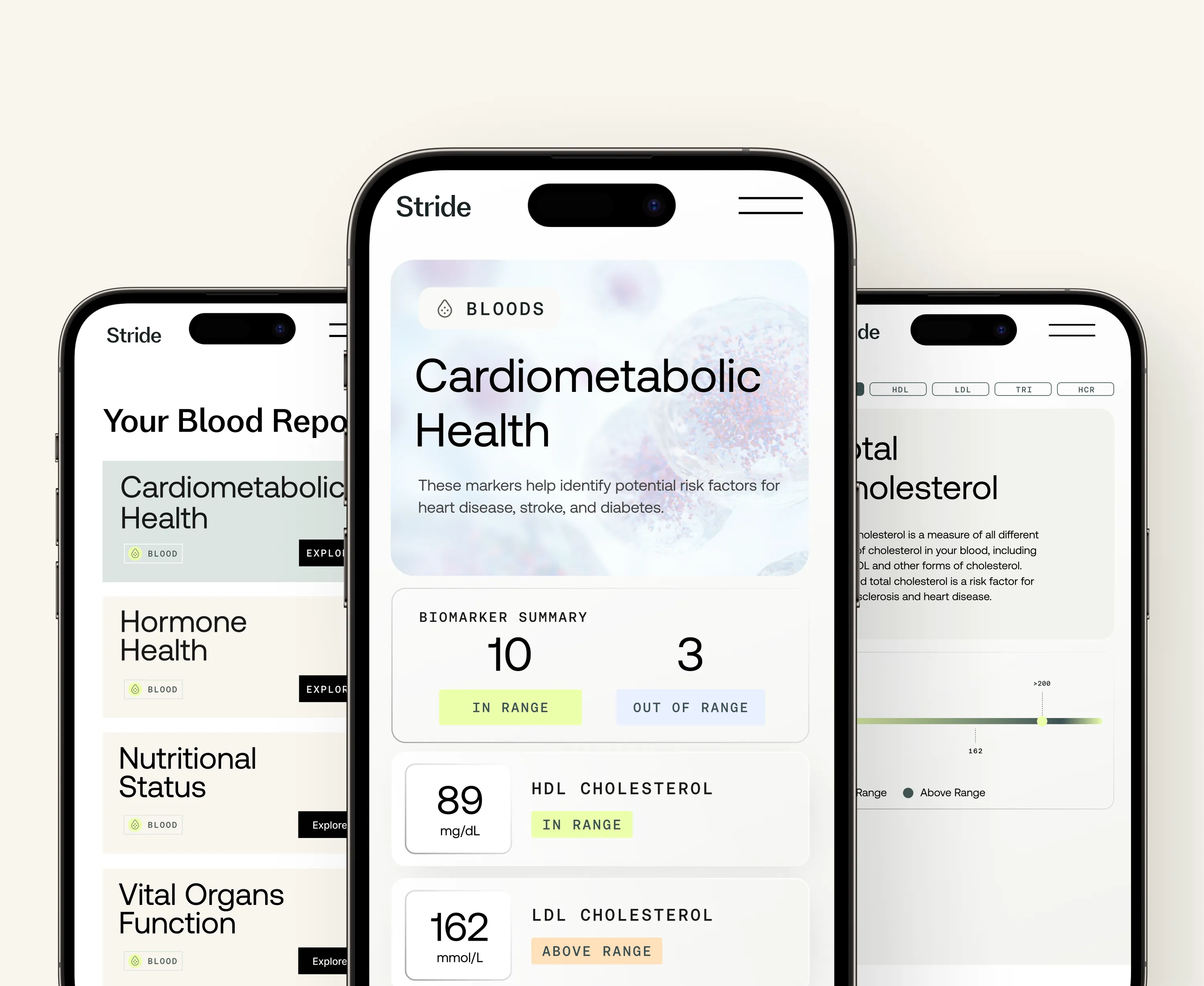
Optimal Bloods
At-home test for more than 70 blood-based biomarkers
From £399 £279.30
Biomarkers
| Biomarker | What it measures | Why it matters | Relevance |
|---|---|---|---|
| Oestradiol Blood Test | Active form of oestrogen | Confirms low oestrogen; used to monitor HRT absorption when symptoms persist | 5 |
| Luteinising Hormone (LH) Blood Test | Luteinising hormone | Assesses ovulation function alongside FSH | 4 |
| Testosterone Blood Test | Total testosterone | Baseline required before starting testosterone therapy; monitoring ongoing levels | 4 |
| Sex Hormone Binding Globulin (SHBG) Blood Test | Sex hormone-binding globulin | Determines how much testosterone is biologically active | 4 |
| TSH Blood Test (Thyroid Stimulating Hormone) | Pituitary signal for thyroid output | Thyroid dysfunction mimics menopause symptoms closely | 5 |
| FT3 Blood Test (Free Triiodothyronine) | Active thyroid hormone | Captures T4-to-T3 conversion problems that TSH alone misses | 4 |
| Ferritin Blood Test | Iron storage | Low ferritin causes fatigue and brain fog; common in women with heavy perimenopausal periods | 4 |
| Vitamin D Blood Test (25-OH) | 25-OH vitamin D | Deficiency contributes to low mood and joint pain; bone health protection at menopause | 4 |
| Active B12 Blood Test (Holotranscobalamin) | B12 status | Deficiency produces cognitive symptoms; involved in methylation and homocysteine clearance | 3 |
| LDL Cholesterol Blood Test | Low-density lipoprotein | Tends to rise as oestrogen declines; cardiovascular risk increases at menopause | 4 |
| hsCRP Blood Test (High Sensitivity C-Reactive Protein) | Systemic inflammation | Inflammation increases at menopause and amplifies symptom burden | 3 |
| HbA1c Blood Test (Glycated Haemoglobin) | 3-month blood sugar average | Insulin resistance increases around menopause; affects weight and energy | 3 |
FAQs
Do I need a blood test before starting HRT?
Not usually, if you are over 45 and experiencing typical perimenopausal or menopausal symptoms. NICE guidelines state that for women in this group, a diagnosis can be made on the basis of symptoms and age alone, without blood tests. Blood tests become necessary in specific circumstances: if you are under 45 and menopause is suspected, if premature ovarian insufficiency needs to be confirmed, if your symptoms are unclear and other conditions need ruling out, or if testosterone therapy is being considered, where baseline measurement is required. For most women approaching menopause at a typical age, a symptom review with a GP or menopause specialist is the appropriate starting point.
Can a blood test confirm I am perimenopausal?
A blood test alone cannot reliably confirm perimenopause, for a straightforward biological reason: hormone levels fluctuate enormously from day to day and even hour to hour during the perimenopause. FSH and oestradiol levels that look normal on a particular morning may be very different a week later. This is why NICE does not recommend blood tests for diagnosis in women over 45, and why British Menopause Society guidance notes that normal blood results do not exclude perimenopause. Symptoms are a more consistent and clinically useful guide to the menopausal transition than hormone levels at a single point in time.
What blood tests are used to diagnose premature ovarian insufficiency?
Premature ovarian insufficiency (POI) is diagnosed using two FSH (follicle-stimulating hormone) tests taken at least 4 weeks apart. A single elevated FSH result is insufficient because levels can fluctuate significantly. The threshold used in UK clinical practice is FSH above 25 IU/L on both tests, alongside menstrual changes and symptoms. Oestradiol levels are typically low in POI, though again a single test is not diagnostic on its own. Women under 40 who are experiencing menopause symptoms should discuss POI testing with their GP rather than relying on a single home test result.
Should I test my oestrogen levels while on HRT?
Routine oestrogen testing is generally not recommended for women whose symptoms are well-managed on HRT. The oestradiol level in your blood does not reliably predict how well the HRT is working for you clinically, and levels fluctuate significantly even in women taking a consistent dose. Testing becomes useful in specific situations: if your symptoms are not improving despite dose increases, which may indicate poor absorption of transdermal preparations; if you are on oral HRT and absorption concerns arise; or if you continue to experience symptoms at a dose that should theoretically be sufficient. In these cases, checking oestradiol 4-6 hours after applying a transdermal product (or at a consistent time with other forms) can help guide dose adjustments.
What blood tests do I need before starting testosterone therapy?
British Menopause Society guidelines require baseline measurement of total testosterone and SHBG (sex hormone-binding globulin) before starting testosterone therapy, and periodic monitoring (typically every 3-6 months initially, then annually once stable) to ensure levels remain within the upper physiological female range. The free androgen index, calculated from total testosterone and SHBG, is the most useful measure of biologically active testosterone. These specific hormone tests are not routinely included in a standard blood panel, so a dedicated hormone blood test through a GP or menopause specialist is needed alongside the standard health markers.
Can thyroid problems be mistaken for menopause?
Yes, and this is one of the most clinically important overlaps in women's health. Hypothyroidism (underactive thyroid) produces fatigue, weight gain, brain fog, low mood, hair thinning, and feeling cold, which are also common menopause symptoms. Both conditions are more prevalent in women and both become more common from the mid-40s onwards. A TSH test (and ideally Free T4 and Free T3 for a complete thyroid picture) rules out thyroid dysfunction before attributing all symptoms to the menopause transition. Treating hypothyroidism that has been missed because its symptoms were attributed to perimenopause can produce significant improvements in how a woman feels, regardless of whether HRT is also appropriate.
Does HRT affect cholesterol levels?
HRT can affect the lipid profile, and the nature of that effect depends partly on how the HRT is taken. Oral oestrogen tends to raise triglycerides and can affect LDL and HDL measurements. Transdermal oestrogen (patches, gels, sprays) has a more neutral effect on lipid metabolism because it bypasses the liver's first-pass processing of oral preparations. The menopause transition itself tends to cause LDL to rise and HDL to fall as oestrogen's protective effect on lipid metabolism reduces, so establishing a baseline lipid panel before starting HRT and tracking it over time provides a meaningful picture of how your cardiovascular markers are changing, regardless of which treatment approach you take.
What should I ask my doctor about before starting HRT?
Before starting HRT, it is worth discussing your personal and family history of cardiovascular disease, blood clots (particularly deep vein thrombosis or pulmonary embolism), breast cancer, and any conditions affecting the liver. These factors influence which type of HRT is most appropriate, since different formulations carry different risk profiles. Transdermal oestrogen, for example, does not increase clot risk the way that some oral preparations do, making it preferred in women with certain risk factors. Understanding your current cholesterol levels, blood pressure, and blood sugar control as baseline measurements is also valuable, since the menopause transition shifts cardiovascular risk in ways that are worth monitoring over time.
Find out what your body is actually trying to tell you.
Answer 8 quick questions and get a free personalised report - covering which area of your biology is most worth looking at first, what testing in that area reveals, and what actions become available once you have that data.
Where do you feel you're operating below your potential right now?
Methylation & Cellular Health
Your biology is signalling a methylation upgrade - here’s what that means and what to do about it.