
Menu
-
Shop All
Contact
hey@getstride.com
Stride Health Group
Stride Health Group Ltd
Company No 05158025
Lamas Road
Badersfield
Norwich
England
NR10 5FB
UK











Bloating: what causes it, which tests can help and how to reduce it
Bloating is one of the most common digestive complaints in the UK, yet it is also one of the most misunderstood. Bloating causes range from the straightforward, such as swallowing air or eating too quickly, to the more systemic, including disrupted gut bacteria, food intolerances, and hormonal fluctuations. Understanding what is driving your bloating specifically requires looking at the underlying biology rather than guessing at food triggers, and this is where targeted testing becomes useful.

What causes persistent bloating after eating?
Gut microbiome imbalance and bacterial overgrowth
The gut is home to trillions of microorganisms that play a central role in digestion. When the balance of bacteria becomes disrupted, a condition known as dysbiosis, fermentation of undigested food increases, producing excess gas. Small intestinal bacterial overgrowth (SIBO) is a related pattern in which bacteria that normally reside in the large intestine colonise the small intestine. Carbohydrates reaching these misplaced bacteria are rapidly fermented, producing hydrogen and methane gases that cause distension, bloating after eating, and in some cases alternating constipation and diarrhoea. Bloating test UK searches often reflect people who have experienced bloating for months without a clear dietary explanation, and SIBO or dysbiosis is frequently the underlying mechanism.
Food intolerances and malabsorption
Lactose intolerance, fructose malabsorption, and sensitivity to fermentable carbohydrates (FODMAPs) are among the most common dietary drivers of bloating. When the gut lacks sufficient digestive enzymes, unabsorbed sugars reach colonic bacteria and are fermented, generating gas. The resulting bloating tends to be dose-dependent and timing-specific, appearing predictably after certain foods rather than constantly. A gut microbiome test can reveal the bacterial composition contributing to fermentation, while a blood panel can identify whether coeliac disease or nutrient deficiencies associated with malabsorption are present.
Coeliac disease and gluten sensitivity
Coeliac disease, which affects around 1 in 100 people in the UK, causes an immune reaction to gluten that damages the small intestinal lining. Bloating is a cardinal symptom, alongside diarrhoea, fatigue, and in some cases iron deficiency. Non-coeliac gluten sensitivity can produce similar bloating without the autoimmune mechanism. Both require investigation: coeliac disease can be identified through blood antibody testing (tTG-IgA) and genetic markers, while routine blood testing can rule out associated anaemia and nutrient deficiency.
Hormonal fluctuations and the gut-hormone axis
Bloating and hormones are closely connected, particularly in women. Oestrogen and progesterone both influence gut motility and fluid retention. Many women notice pronounced bloating in the week before menstruation, during perimenopause, and at other hormonal transition points. This hormonal bloating tends to shift across the cycle and is often accompanied by other symptoms such as mood changes, fatigue, or breast tenderness. A blood panel that assesses hormonal markers alongside inflammation and thyroid function provides a more complete picture.
Thyroid dysfunction and slowed gut motility
The thyroid regulates metabolic rate throughout the body, including the speed at which food moves through the digestive tract. An underactive thyroid reduces gut motility, allowing food to sit and ferment for longer before passing through. This creates a pattern of bloating and constipation that responds poorly to dietary changes alone, because the underlying driver is hormonal rather than nutritional. TSH, Free T4, and Free T3 are all relevant markers when bloating accompanies persistent fatigue and cold sensitivity.
Stress and the gut-brain axis
Chronic psychological stress alters gut function through the gut-brain axis, changing motility, increasing intestinal permeability, and shifting the composition of the microbiome. People under sustained stress often notice that gut symptoms worsen regardless of what they eat. Elevated cortisol suppresses digestive enzyme production and alters the balance of bacteria in the colon, which can amplify gas production and bloating. Inflammation markers such as CRP can reflect the systemic inflammation that often accompanies both stress and gut dysfunction.
Coexisting conditions that can present as bloating
Bloating can also be a symptom of conditions including inflammatory bowel disease, ovarian health changes, and in rare cases more serious underlying pathology. A persistent, progressive change in bloating, particularly when accompanied by unexplained weight loss, blood in stool, or bloating that does not shift across the day, warrants prompt GP assessment. The testing outlined on this page is most useful for people with established bloating patterns that have not responded to straightforward dietary changes.
How to test for the causes of bloating
Testing for bloating depends on whether the driver appears to be primarily gut-based, systemic, or a combination of both. A gut microbiome test provides a detailed analysis of bacterial composition, revealing dysbiosis patterns and populations associated with excessive gas production. A blood panel addresses the systemic layer: coeliac antibodies, thyroid markers, inflammation indicators, and nutrient status.
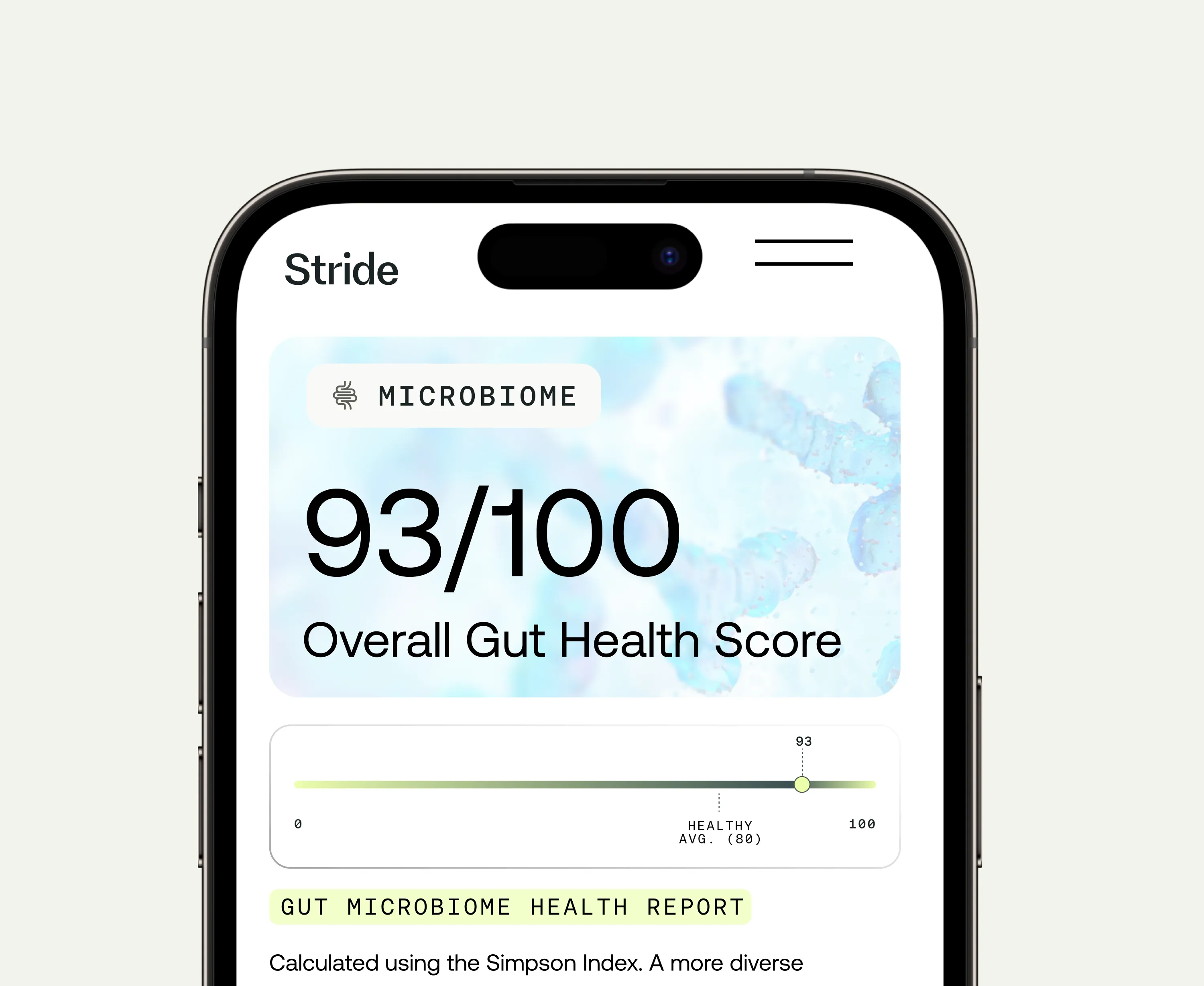
Stride Optimal Biome analyses the gut microbiome using stool sample sequencing, identifying the balance of bacterial species, markers of gut inflammation, and patterns associated with fermentation, IBS, and dysbiosis. It provides direct insight into whether the gut bacterial environment is contributing to persistent bloating.
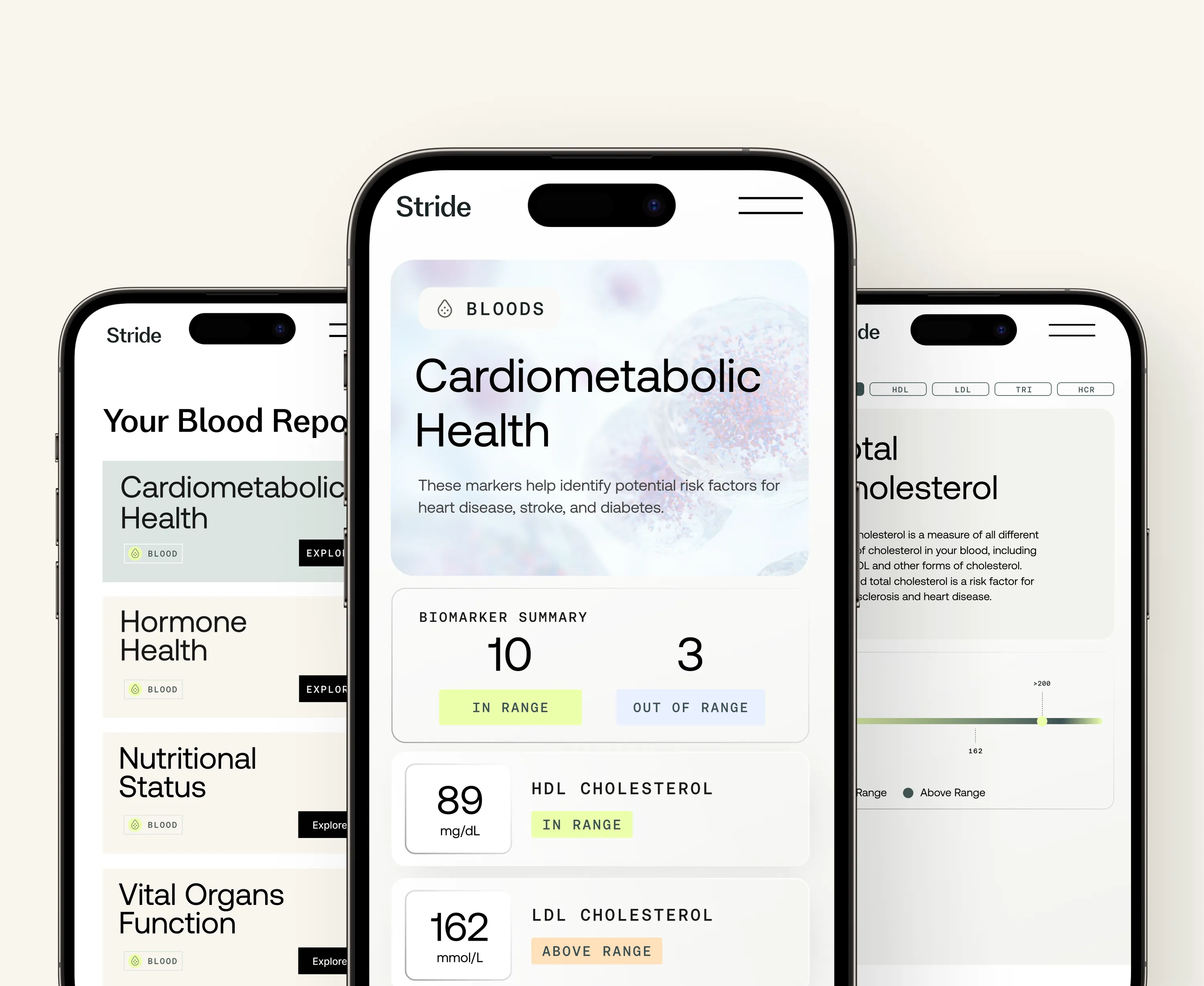
Stride Optimal Bloods includes CRP (inflammation marker), TSH, Free T4, Ferritin, Vitamin D, Vitamin B12, tTG-IgA (coeliac screen), homocysteine, full lipid panel, HbA1c, and more.
Why both matter for bloating: persistent bloating rarely has a single cause. Testing the microbiome alongside systemic blood markers gives a complete picture of what is happening at the gut level and what systemic factors may be contributing. It also rules out conditions such as coeliac disease and thyroid dysfunction that are frequently missed because their bloating symptoms are attributed to diet. Both include a 1:1 expert consultation to walk through your results in the context of your specific symptoms.
If bloating has been present for a long time without investigation, the most useful starting point is identifying whether it is primarily gut-driven, systemic, or both. A GP can test for coeliac disease and thyroid function as a first step. A gut microbiome test adds the layer of bacterial composition that standard NHS tests do not cover.
Evidence-based strategies to reduce bloating
Dietary approaches that support gut balance
The low-FODMAP approach, developed at Monash University, is the most extensively researched dietary intervention for bloating linked to fermentable carbohydrates. It involves temporarily restricting short-chain carbohydrates that are poorly absorbed and rapidly fermented, before reintroducing foods systematically to identify individual triggers. This is best undertaken with dietitian support, as long-term restriction can reduce microbiome diversity. Tracking symptoms alongside food choices, and ideally alongside biomarker data, gives a far more reliable picture than elimination alone.
Supporting microbiome diversity through food
A varied plant-based diet rich in different fibre types feeds a wider range of beneficial bacterial species. Research consistently shows that people eating 30 or more different plant foods per week have significantly greater microbiome diversity than those eating fewer. Fermented foods such as kefir, live yoghurt, and sauerkraut introduce beneficial bacteria and have been shown in controlled trials to increase microbiome diversity and reduce inflammatory markers. These are additive strategies that work alongside, rather than instead of, identifying the specific bacterial imbalances contributing to your pattern.
Managing the gut-brain-stress connection
Stress management is not a soft recommendation: it is mechanistically relevant to bloating. The vagus nerve, which runs between the brain and the gut, responds to psychological state and directly regulates gut motility, digestive enzyme production, and the inflammatory environment of the gut. Practices that measurably activate the parasympathetic nervous system, including diaphragmatic breathing, regular moderate exercise, and consistent sleep, have been shown to improve gut motility and reduce bloating frequency. Tracking biomarker shifts alongside lifestyle changes is the most reliable way to confirm whether a particular approach is working for your individual biology.
Addressing thyroid and hormonal contributors
If thyroid function is identified as a contributing factor, optimising thyroid hormone levels through appropriate medical management typically improves gut motility and reduces bloating within weeks to months. Hormonal bloating linked to the menstrual cycle often responds to targeted nutritional support for oestrogen metabolism, including adequate dietary fibre and cruciferous vegetables that support hepatic oestrogen clearance. Retesting relevant markers after a sustained period of dietary or lifestyle change provides objective evidence of whether the approach is making a difference.
Stride tests that can help with Bloating
Health Tests
Optimal Biome
Gut microbiome test for comprehensive analysis & personalized health solutions
From £399 £279.30
Health Tests
Optimal Bloods
At-home test for more than 70 blood-based biomarkers
From £399 £279.30
Biomarkers
| Biomarker | What it measures | Why it matters | Relevance |
|---|---|---|---|
| hsCRP Blood Test (High Sensitivity C-Reactive Protein) | Systemic inflammation | Elevated in gut inflammation and dysbiosis-related conditions | 4 |
| TSH Blood Test (Thyroid Stimulating Hormone) | Thyroid stimulating hormone | Thyroid dysfunction slows gut motility and worsens fermentation | 4 |
| FT3 Blood Test (Free Triiodothyronine) | Active thyroid hormone | More directly linked to gut motility than TSH alone | 3 |
| Ferritin Blood Test | Iron storage | Low ferritin is associated with coeliac and malabsorption | 3 |
| Vitamin D Blood Test (25-OH) | 25-OH vitamin D status | Deficiency is linked to gut permeability and microbiome imbalance | 3 |
| Active B12 Blood Test (Holotranscobalamin) | B12 status | Low B12 can indicate malabsorption; deficiency is common in gut conditions | 3 |
| HbA1c Blood Test (Glycated Haemoglobin) | Average blood sugar over 3 months | Blood sugar dysregulation affects gut motility and microbiome | 2 |
FAQs
Why am I always bloated even when I eat healthy foods?
Persistent bloating despite eating well is often explained by factors beyond food choice. Healthy foods, particularly those high in fermentable fibres such as legumes, onions, garlic, and cruciferous vegetables, are among the most commonly fermented by gut bacteria. If the composition of your gut microbiome is imbalanced, even nutritious foods can produce excess gas. Other explanations include small intestinal bacterial overgrowth, lactose or fructose malabsorption, thyroid dysfunction reducing gut motility, and food intolerances to specific proteins such as gluten. A gut microbiome test alongside a comprehensive blood panel is the most systematic way to work out which of these is driving the pattern, rather than eliminating foods indefinitely and hoping the bloating resolves.
Can a blood test show why I am bloated?
A blood test cannot diagnose the root cause of bloating on its own, but it can identify several conditions that commonly cause it. A comprehensive blood panel can detect coeliac disease through tTG-IgA antibodies, thyroid dysfunction through TSH and Free T3, inflammation through CRP, and nutrient deficiencies such as low ferritin and B12 that often accompany gut malabsorption. Together with a gut microbiome test that directly analyses the bacterial environment of the gut, blood testing gives a much more complete picture than dietary elimination trials alone.
What is the difference between bloating caused by SIBO and food intolerance bloating?
SIBO-related bloating tends to appear relatively consistently after most meals, particularly those containing carbohydrates, and is often accompanied by excess gas and sometimes alternating bowel patterns. Food intolerance bloating is more specific to particular foods: lactose intolerance causes bloating predictably after dairy, while fructose malabsorption causes it after fruit and certain sweeteners. The timing is also different: SIBO bloating often appears within one to two hours of eating any carbohydrate-containing meal, while food intolerance bloating is more closely tied to specific food exposures. A gut microbiome test can identify dysbiosis and overgrowth patterns, while elimination diets help identify specific food triggers. In practice, the two often coexist.
Can hormones cause bloating and if so which hormones are involved?
Yes. Oestrogen and progesterone directly influence gut motility and fluid retention, which is why many women experience more pronounced bloating in the premenstrual phase of their cycle and during perimenopause. Progesterone has a relaxant effect on smooth muscle including the gut wall, which can slow transit time and increase gas retention. Thyroid hormones also regulate gut motility, and an underactive thyroid is a frequently overlooked cause of persistent bloating that does not resolve with dietary changes. A blood panel that includes thyroid markers alongside hormonal and inflammatory biomarkers can reveal whether endocrine factors are contributing to your pattern.
Is bloating after every meal a sign of gut dysbiosis?
Bloating after every meal, particularly when it occurs regardless of what is eaten, is a strong indicator that something systematic rather than food-specific is driving the pattern. Gut dysbiosis, where the balance between beneficial and harmful bacterial species is disrupted, increases fermentation across all carbohydrate-containing foods rather than just specific triggers. SIBO, which is closely related to dysbiosis, produces consistent post-meal bloating that reflects bacterial activity in the small intestine responding to food arriving from the stomach. A gut microbiome test can directly assess the bacterial composition and identify whether dysbiosis or overgrowth is present.
What does constant bloating that does not go away overnight mean?
Bloating that is present first thing in the morning and does not fully clear overnight is more likely to reflect a structural or motility-related issue rather than simple post-meal gas. Possible explanations include constipation, impaired gut motility from thyroid dysfunction, significant bacterial overgrowth in the small intestine, or in some cases fluid retention related to hormonal or kidney function issues. If bloating is consistently present before eating and does not reduce with changes to diet or stress management, a comprehensive assessment including a blood panel and a gut microbiome test is the appropriate next step.
Can stress and anxiety cause persistent bloating?
Stress and anxiety produce measurable changes to gut function through the gut-brain axis. The stress response activates the sympathetic nervous system, which reduces digestive enzyme production, alters gut motility, and shifts the composition of the gut microbiome over time. People under chronic stress often notice that bloating worsens regardless of what they eat, because the gut environment itself has become dysbiotic. CRP, a blood inflammation marker, frequently reflects the systemic low-grade inflammation associated with chronic stress and gut dysfunction. Addressing the stress response through structured practices alongside investigating the microbiome directly is more effective than dietary restriction alone.
What tests does a GP typically run for bloating and what do they miss?
A standard NHS workup for persistent bloating usually includes a coeliac screen (tTG-IgA), thyroid function (TSH only), full blood count, and occasionally a CRP. These tests are useful for ruling out coeliac disease, severe anaemia, and obvious thyroid disease. What they typically do not include is Free T3 (which can reveal conversion problems missed by TSH alone), vitamin D and B12 status, a comprehensive gut microbiome analysis, or any assessment of bacterial overgrowth patterns. The result is that many people with persistent bloating are told their tests are normal when underlying microbiome imbalances, subclinical thyroid issues, or nutrient deficiencies have not been fully evaluated.
How long does bloating from gut dysbiosis take to improve with treatment?
The timeframe for improvement in gut dysbiosis depends on the severity of the imbalance, the interventions used, and individual biology. Dietary changes that support microbiome diversity typically produce noticeable symptom improvement within four to six weeks for mild dysbiosis, though significant remodelling of the microbiome is a process that takes three to six months of consistent dietary change. Where SIBO is confirmed, antibiotic or antimicrobial treatment produces faster symptom relief, though relapse without addressing the underlying cause is common. Retesting the microbiome after a period of intervention is the most objective way to confirm whether the bacterial composition has shifted and whether further changes are needed.
Find out what your body is actually trying to tell you.
Answer 8 quick questions and get a free personalised report - covering which area of your biology is most worth looking at first, what testing in that area reveals, and what actions become available once you have that data.
Where do you feel you're operating below your potential right now?
Methylation & Cellular Health
Your biology is signalling a methylation upgrade - here’s what that means and what to do about it.