
Menu
-
Shop All
Contact
hey@getstride.com
Stride Health Group
Stride Health Group Ltd
Company No 05158025
Lamas Road
Badersfield
Norwich
England
NR10 5FB
UK










Vitamin B12 deficiency: symptoms, who's at risk and how to check
Vitamin B12 deficiency is significantly more common in the UK than most people realise. A YouGov survey in 2025 found that nearly one in three Brits may be at risk, yet most do not recognise the warning signs, mistaking fatigue, brain fog and poor memory for stress or ageing instead. B12 deficiency symptoms can develop slowly over months or years before becoming clinically obvious, and standard blood testing frequently underestimates the problem because serum B12 alone has limited sensitivity for detecting functional deficiency. Understanding whether B12 is at the root of your symptoms requires looking at the biomarkers most commonly involved, including B12 in the context of homocysteine and methylation markers, and this is where comprehensive B12 deficiency testing becomes genuinely informative.

What causes vitamin B12 deficiency?
Diet low in animal products
Vitamin B12 is found almost exclusively in animal-derived foods: meat, fish, eggs and dairy. Plant-based foods do not contain meaningful amounts of bioavailable B12, with the exception of some fortified products. Research using the EPIC-Oxford cohort found that 52% of vegans were classified as vitamin B12 deficient by serum B12 measurement, compared to 7% of vegetarians and very few omnivores. The prevalence of B12 deficiency is increasing in the UK alongside the growing adoption of vegan and vegetarian diets. People following plant-based diets who are not supplementing consistently should regard B12 testing as a routine annual priority, not an occasional check.
Pernicious anaemia and intrinsic factor deficiency
Pernicious anaemia is an autoimmune condition in which the stomach fails to produce intrinsic factor, a protein required for B12 absorption in the small intestine. Without intrinsic factor, dietary B12 cannot be absorbed regardless of intake. Pernicious anaemia is more common in older adults, in people with a family history of the condition, and in those with other autoimmune conditions. It is one of the most frequently missed diagnoses in people presenting with neurological symptoms, fatigue and anaemia, and requires lifelong B12 supplementation (usually by injection) rather than dietary changes.
Age-related changes in absorption
The absorption of vitamin B12 requires stomach acid for liberation from food proteins, intrinsic factor for uptake in the terminal ileum, and functional transport proteins in the blood. All three of these mechanisms can become less efficient with age. Gastric acid production declines after the age of 50, which reduces the release of B12 from food, and conditions including atrophic gastritis (chronic stomach inflammation) can progress to more significant absorption failure. Older adults often have normal dietary B12 intake but inadequate absorption, making B12 testing a relevant consideration in anyone over 50 presenting with fatigue or cognitive changes.
Medications affecting B12 status
Metformin, used widely for type 2 diabetes, consistently reduces B12 absorption over time. Long-term use of proton pump inhibitors (PPIs) and H2 blockers, prescribed for acid reflux and stomach ulcers, reduces gastric acid and impairs B12 liberation from food. Nitrous oxide (used recreationally and in dentistry) irreversibly inactivates B12 with a single exposure in susceptible individuals, and can precipitate acute B12 deficiency in people who already have borderline levels. Anyone on long-term metformin or PPIs should include B12 testing as part of routine monitoring.
MTHFR gene variants and B12 utilisation
Up to half of the UK population carry variants in the MTHFR gene that reduce the efficiency of the methylation pathway. This pathway depends on both B12 and folate to function correctly. People with MTHFR variants may have serum B12 levels that appear normal while functional B12 activity at the cellular level is compromised, because the gene variant impairs conversion of B12 to its active methylated form. Elevated homocysteine, a downstream marker of this inefficiency, provides evidence of functional B12 insufficiency even when the B12 number itself looks acceptable. This is the specific connection between B12 deficiency and methylation that makes Stride's DNA testing particularly relevant for anyone with persistent neurological or cognitive symptoms despite apparently normal B12 levels.
Gut conditions affecting absorption
Coeliac disease, Crohn's disease and other conditions affecting the small intestine can reduce B12 absorption, particularly when the terminal ileum (the section of small bowel where intrinsic factor-bound B12 is taken up) is involved. Gastric bypass and other weight loss surgeries that reduce the surface area of the stomach or small intestine carry a significant risk of B12 deficiency that requires monitoring and, typically, supplementation.
How to test for vitamin B12 deficiency in the UK
Standard B12 testing measures total serum B12, which includes both active and inactive forms of the vitamin. The active form (holotranscobalamin) is only around 20% of total B12 but is the fraction actually available to cells. This means that serum B12 can be within the reference range while functional B12 at the tissue level is inadequate. A B12 blood test UK that includes homocysteine alongside B12 provides significantly more information about whether the methylation system is actually working efficiently.
Serum vitamin B12 provides the primary screening measure. Levels below 150 pmol/L are generally considered deficient; levels below 200-250 pmol/L are considered borderline and can be associated with symptoms, particularly neurological ones.
Homocysteine is the most clinically useful functional marker for B12 status. Homocysteine is an amino acid that builds up in the blood when either B12 or folate is insufficient for the methylation reactions that clear it. Elevated homocysteine above 12-15 micromol/L is a reliable indicator of functional B12 or folate insufficiency, even when serum B12 appears within the normal range. It is also independently associated with increased risk of cardiovascular disease, cognitive decline and stroke.
Folate is assessed alongside B12 because both nutrients work in concert in the methylation pathway. B12 deficiency and folate deficiency can produce overlapping symptoms, and both elevate homocysteine. Testing them together allows accurate attribution.
Evidence-based strategies to address B12 deficiency
Dietary sources and supplementation for vegans and vegetarians
For people who eat animal products, dietary B12 from meat, fish, eggs and dairy is generally sufficient to maintain adequate levels unless an absorption problem is present. For vegans and vegetarians, reliable supplementation is essential. A daily supplement containing at least 10-25 micrograms of cyanocobalamin is the standard recommendation, since the absorption of B12 from supplements is dose-dependent and only a small fraction of each dose is absorbed. Fortified foods including certain plant milks, breakfast cereals and nutritional yeast contribute some B12 but are generally insufficient as the sole source. Retesting B12 and homocysteine annually confirms whether your supplementation approach is maintaining functional adequacy.
Choosing the right form of B12
Cyanocobalamin is the most widely available and studied form. Methylcobalamin is the active, pre-converted form that bypasses the methylation steps that MTHFR variants can impair. For people with confirmed MTHFR variants, methylcobalamin may be the more effective choice. Hydroxocobalamin, used in NHS injections for pernicious anaemia, has a longer half-life in the body than cyanocobalamin. If standard B12 supplementation is not raising levels or resolving symptoms, discussing the form of B12 with a practitioner and testing homocysteine to assess functional response is the appropriate next step.
Monitoring through blood testing
B12 deficiency is reversible when caught early, but neurological damage from prolonged severe deficiency can be irreversible. The most common missed opportunity is the diagnostic delay that occurs when borderline B12 levels are observed but no action is taken, sometimes for years. Testing B12 alongside homocysteine gives a functional picture that is more clinically actionable than serum B12 alone. If homocysteine is elevated, B12 and folate intervention is warranted regardless of where serum B12 sits within the reference range.
The B12 and methylation connection
B12 is a cofactor in the methylation cycle, the biochemical process that adds methyl groups to DNA, neurotransmitters, hormones and other molecules. This cycle is essential for nerve function, cognitive health, mood regulation and gene expression. Homocysteine accumulates when the cycle is running inefficiently, providing a measurable marker of downstream impact. People with elevated homocysteine alongside low-normal B12 are experiencing functional methylation impairment that a standard normal result would miss entirely. This is why Stride's approach of testing B12 and homocysteine together provides materially more useful information than either marker alone.
Stride tests that can help with Vitamin B12 deficiency
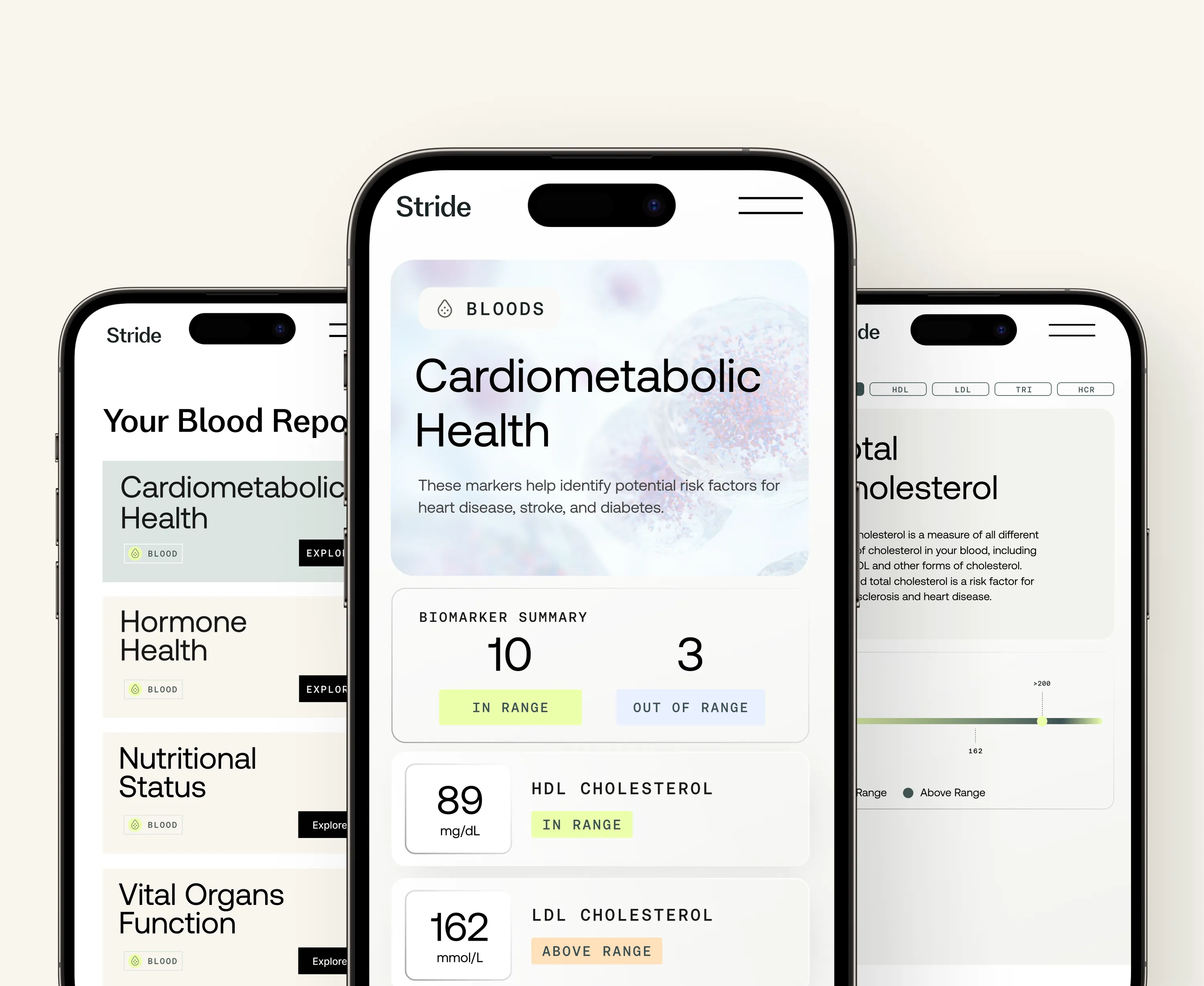
Health Tests
Optimal Bloods
At-home test for more than 70 blood-based biomarkers
From £399 £279.30

Health Tests
DNA & Methylation Test
Genetic methylation testing, three levels
From £169 £109.85
Biomarkers
| Biomarker | What it measures | Why it matters | Relevance |
|---|---|---|---|
| Folate (Vitamin B9) Blood Test | Folate status | Works with B12 in methylation; deficiency elevates homocysteine and compounds B12-related symptoms | 5 |
| Ferritin Blood Test | Iron stores | Often deficient alongside B12 in plant-based diets; compounds fatigue | 4 |
| Vitamin D Blood Test (25-OH) | 25-OH vitamin D | Commonly co-deficient with B12 in vegan diets and winter months | 3 |
| MTHFR Gene Test (Methylenetetrahydrofolate Reductase) | Methylation genetics | Identifies gene variants that reduce efficiency of B12 and folate utilisation in the methylation pathway | 4 |
| hsCRP Blood Test (High Sensitivity C-Reactive Protein) | Systemic inflammation | Elevated CRP can interact with B12 metabolism and indicates whether inflammation is a co-contributor | 2 |
FAQs
What are the early signs of B12 deficiency to look out for?
Early B12 deficiency symptoms are often subtle and frequently attributed to stress, overwork or ageing. The most commonly reported early signs are persistent fatigue and low energy, brain fog and difficulty concentrating or remembering things, low mood or mild depression, and tingling or numbness in the hands or feet. Some people also experience a sore or inflamed tongue and mouth ulcers. These symptoms can develop over months before becoming obviously connected to a nutritional deficiency, particularly because serum B12 can remain within the laboratory reference range during the early stages of functional depletion. Testing B12 alongside homocysteine allows identification of functional insufficiency before the deficiency becomes clinically obvious.
Can vitamin B12 deficiency cause brain fog?
B12 plays a direct role in maintaining the myelin sheath around nerve fibres, which insulates neurons and allows rapid signal transmission. When B12 falls, myelin integrity can be compromised, slowing nerve conduction and contributing to the cognitive symptoms people describe as brain fog: difficulty concentrating, slow thinking, poor memory and mental fatigue. B12 also supports the methylation reactions required for neurotransmitter synthesis, including dopamine and serotonin, which affect alertness and mood. Elevated homocysteine, which accumulates when B12 or folate is insufficient, is independently associated with brain shrinkage and accelerated cognitive decline over time. Brain fog that is not explained by sleep or stress warrants checking B12 and homocysteine, not just B12 alone.
Who is most at risk of vitamin B12 deficiency in the UK?
The groups with the highest risk of B12 deficiency in the UK are people following vegan or vegetarian diets (particularly vegans, where over half may be deficient if not supplementing); older adults over 60, due to declining gastric acid and absorption efficiency; people on long-term metformin for type 2 diabetes; people on long-term proton pump inhibitors or H2 blockers; people with pernicious anaemia or other autoimmune gastric conditions; people who have had gastric surgery or gastric bypass; and people with Crohn's disease or coeliac disease affecting the terminal ileum. People with MTHFR gene variants may also have higher functional requirements for B12 even when dietary intake appears adequate.
What is the connection between B12 and methylation?
Methylation is a fundamental biochemical process in which a small chemical unit (a methyl group) is transferred between molecules, enabling DNA repair, neurotransmitter synthesis, hormone processing and numerous other cellular functions. Vitamin B12 is a required cofactor for methionine synthase, the enzyme that converts homocysteine to methionine in the methylation cycle. Without adequate B12, this conversion stalls, homocysteine accumulates, and methionine production falls. Since methionine is the precursor to SAMe (S-adenosylmethionine), the body's primary methyl donor, B12 deficiency effectively reduces the capacity of the entire methylation system. People with MTHFR gene variants have reduced efficiency in the same pathway, meaning their functional B12 requirements are higher than someone without the variant to achieve the same methylation output.
Can a standard NHS B12 blood test miss B12 deficiency?
Yes. Standard serum B12 testing measures total B12, including both active and inactive forms. Only around 20% of serum B12 is in the active form (holotranscobalamin) that cells can actually use. As a result, serum B12 can be within the reference range while functional B12 availability at the cellular level is insufficient. The most practical way to identify functional B12 deficiency when serum B12 is borderline is to check homocysteine. An elevated homocysteine alongside a low-normal B12 strongly suggests that the methylation cycle is not running efficiently, regardless of the absolute B12 number. Many patients experience diagnostic delays of years when symptoms are present but serum B12 appears borderline normal and no functional marker is checked.
Does vitamin B12 deficiency affect mood and mental health?
B12 plays a role in the synthesis of serotonin, dopamine and other neurotransmitters that regulate mood, motivation and anxiety. Deficiency has been associated with depression, low mood and irritability in multiple observational studies, and there is a plausible biological mechanism through its role in methylation and neurotransmitter production. Elevated homocysteine from B12 insufficiency has also been linked to an increased risk of depression. The overlap between B12 deficiency symptoms and depression is significant enough that checking B12, folate and homocysteine is considered a relevant step in anyone presenting with mood changes, particularly in the absence of an obvious psychological trigger.
How is pernicious anaemia different from other causes of B12 deficiency?
Pernicious anaemia is an autoimmune condition in which the immune system attacks the stomach cells that produce intrinsic factor, a protein essential for B12 absorption. Without intrinsic factor, dietary B12 and orally supplemented B12 at standard doses cannot be absorbed. This distinguishes it from dietary deficiency, where absorption is intact. Pernicious anaemia requires either high-dose oral B12 (which at doses above 1,000 mcg relies on passive absorption bypassing intrinsic factor) or, more reliably, intramuscular B12 injections. Standard serum B12 testing does not identify pernicious anaemia: a test for intrinsic factor antibodies and, if positive, treatment with injectable B12 is the correct approach. Pernicious anaemia is associated with other autoimmune conditions including autoimmune thyroid disease.
Can vitamin B12 and methylation testing be done together?
Yes, and for many people this is the most informative approach. A blood panel that includes serum B12, folate and homocysteine tests the biochemical output of the methylation system, showing whether B12 and folate are functionally sufficient regardless of where the absolute B12 number sits. A DNA methylation test identifies whether MTHFR variants or other genetic factors are reducing the efficiency of the pathway, which informs the choice of B12 form for supplementation and helps explain why some people experience B12-related symptoms despite apparently normal levels. Used together, blood and DNA testing provide a personalised picture of methylation health that a single B12 blood test cannot achieve.
What is the difference between cyanocobalamin and methylcobalamin B12 supplements?
Cyanocobalamin is a synthetic form of B12 that the body converts to the active forms, methylcobalamin and adenosylcobalamin, through a multi-step process. Methylcobalamin is one of the two naturally active forms and is the form required specifically for the methylation cycle enzyme methionine synthase. For people with MTHFR variants, the conversion steps from cyanocobalamin to methylcobalamin may be less efficient, meaning they may absorb standard supplementation normally but achieve a lower functional result. In these cases, methylcobalamin (or hydroxocobalamin) supplementation bypasses the conversion steps and may be more effective. The distinction matters most for people with persistent symptoms or elevated homocysteine despite adequate cyanocobalamin supplementation.
Find out what your body is actually trying to tell you.
Answer 8 quick questions and get a free personalised report - covering which area of your biology is most worth looking at first, what testing in that area reveals, and what actions become available once you have that data.
Where do you feel you're operating below your potential right now?
Methylation & Cellular Health
Your biology is signalling a methylation upgrade - here’s what that means and what to do about it.