
Menu
-
Shop All
Contact
hey@getstride.com
Stride Health Group
Stride Health Group Ltd
TMS House
Cray Avenue
Orpington
Kent BR5 3QB
UK
Company No 05158025








News
8 Minutes
Folic acid is now in UK bread. How well does your body use it?
From December 2026, UK white flour must contain folic acid. Why it’s happening, why it’s safe, and how DHFR and MTHFR shape what your body does with it.

 06/11/2026
Why is folic acid being added to bread in the UK?
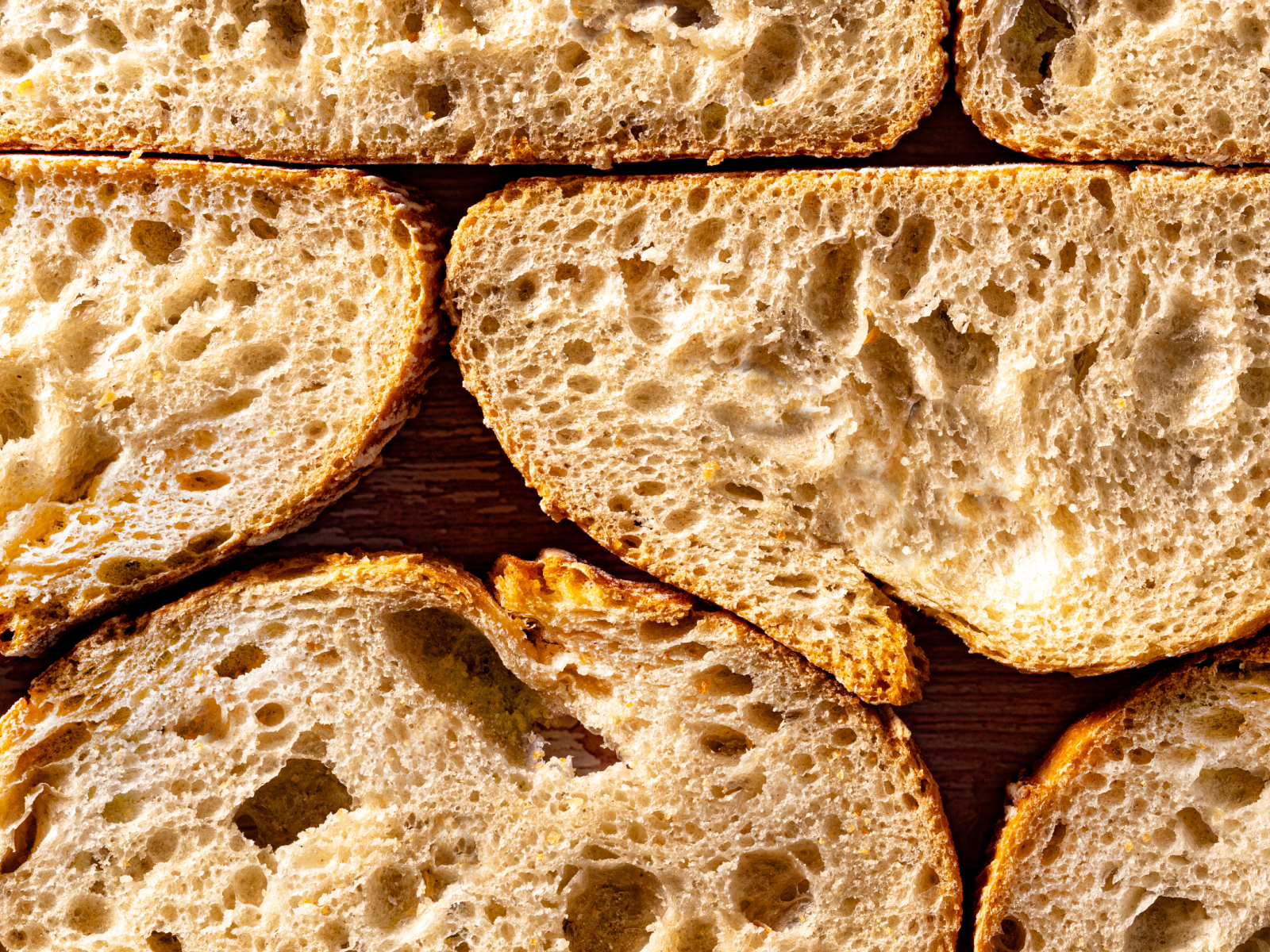
Folic acid is being added to UK bread flour to prevent neural tube defects, such as spina bifida, in babies. Under regulations the government introduced in November 2024, millers must add 250 micrograms of folic acid to every 100g of non-wholemeal wheat flour by the end of 2026. Wholemeal flour and small mills producing under 500 tonnes a year are exempt.
Millers and bakers report a surge of customer questions, according to BBC News. Soon most bread will contain folic acid; the useful question is how well your body processes it. The answer runs through a chain of genes. DHFR and MTHFR convert folic acid into its active form, and around 1 in 10 people in many European populations carry an MTHFR genotype that cuts that enzyme’s activity to about 30% of normal. Genes further along, such as MTR, MTRR and TCN2, decide what your body does with folate and B12 next.
This article explains:
What does folic acid do in the body?
Folic acid is the synthetic form of folate, also called vitamin B9. The body uses folate to make and repair DNA, to run the methylation cycle and to build the neural tube in early pregnancy. Humans cannot make folate, so it must come from food or supplements.
DNA synthesis
Folate supplies the building blocks cells need to copy and repair DNA when they divide.
Methylation
Folate drives the methylation cycle, which regulates gene activity and clears homocysteine from the blood.
Neural tube development
Folate helps the neural tube, which becomes the baby’s brain and spinal cord, close in early pregnancy.
Natural folate occurs in leafy green vegetables, pulses, eggs and liver, but cooking and storage destroy much of it. Folic acid is more stable and better absorbed, which suits it to fortification.
How will fortified flour prevent birth defects?
Fortified flour raises folate levels in women who become pregnant without planning to. The neural tube forms by around the fourth week of pregnancy, the BBC reports, often before a woman knows she is pregnant, so folic acid started after a positive test arrives too late.
The NHS advises taking 400 micrograms of folic acid daily while trying to conceive, ideally from three months before, and until week 12 of pregnancy. NHS data suggests nearly half of UK pregnancies are unplanned, so many women miss that window. Canada and the US, which have fortified flour for decades, recorded falls in neural tube defects.
“Fortification is written for the whole population, but your genes make you a population of one.”
Is folic acid in flour safe?
UK health authorities consider 250 micrograms per 100g safe. The Department of Health and Social Care (DHSC) says scientists set the level to be effective and safe, and a GP quoted by the BBC saw no evidence of harm.
A petition opposing the policy has gathered more than 50,000 signatures, citing personal choice and people with low vitamin B12. The B12 concern has a basis: high folic acid intake can mask the anaemia of B12 deficiency while nerve damage continues.
Folate and vitamin B12 work as a pair: the MTR gene makes an enzyme that uses both to recycle homocysteine, so your B12 status and your genes both shape how well folate works.
How do DHFR, MTHFR and other genes affect folic acid processing?
Folic acid passes through two enzymes before cells can use it for methylation. DHFR (dihydrofolate reductase) makes the first conversion, and MTHFR (methylenetetrahydrofolate reductase) makes the last, producing methylfolate. DHFR matters most for folic acid, because much food folate arrives already partly converted.
DHFR works slowly in the human liver, and when intake outpaces it, unmetabolised folic acid appears in the blood. Its health effects are still being studied.
MTHFR is the second checkpoint. Its best-studied variant, C677T, is common. Frequencies vary by region, but in many European populations one copy, carried by around 4 in 10 people, leaves the enzyme working at about 65% of normal. Two copies, carried by around 1 in 10, cut activity to about 30%.
MTHFR does not work alone. Genes upstream and downstream can offset or amplify a variant, so a single MTHFR result tells only part of the story. Your full methylation genotype tells you whether your diet needs to do more of the work.
| Form of vitamin B9 | Main sources | Needs DHFR? | Needs MTHFR? |
|---|---|---|---|
| Food folate | Greens, pulses, eggs, liver | No | Partly |
| Folic acid | Supplements, fortified flour | Yes | Yes |
| Methylfolate | Some supplements | No | No |
Should anyone avoid fortified bread because of their genes?
No. A slice of fortified white bread provides well under 100 micrograms of folic acid, far below the UK guidance upper level of 1,000 micrograms a day. Research suggests the liver’s DHFR enzyme only becomes a bottleneck above that level, so bread fits any diet whatever your DHFR or MTHFR result.
What does the Stride DNA test show?
The Stride DNA & Methylation Test reads these genes from an at-home cheek swab, with results in 10 working days. Every level, from Core to Optimal, reads every gene in all five methylation cycles, not just MTHFR. The four that handle folic acid most directly are:
DHFR
Makes the first conversion of folic acid. Stride reads its 19-base-pair deletion (rs70991108): a 2008 study linked it to unmetabolised folic acid, a larger 2015 study found no effect on blood folate.
MTHFR
Converts folate and folic acid into methylfolate. Stride reads C677T (rs1801133) and A1298C (rs1801131).
MTR
Uses methylfolate and B12 to turn homocysteine back into methionine (rs1805087).
MTRR
Keeps the MTR enzyme working by regenerating its B12 cofactor (rs1801394).
The same test reads TCN2 and FUT2, which affect how B12 is absorbed and carried into cells, and CBS and BHMT, which give homocysteine other routes out.
If folic acid is your main question, start with the MTHFR & Methylation Test. It reads every gene in the five methylation cycles, including all four above, with five reports and a 1:1 consultation. You can upgrade to the full DNA & Methylation Test later using the same sample.
Should you test your genes or your blood?
A DNA test shows how your folate pathway is built; a blood test shows your folate and B12 levels today. Every Stride DNA test includes a 1:1 expert consultation that turns your genotype into diet actions, including whether impaired methylation is worth addressing.
Optimal Bloods, available in the UK, measures folate and active B12 among more than 70 biomarkers, with a home blood draw and results in 7 working days.
A DNA test is an educational tool, not a diagnosis. Anyone planning a pregnancy should follow NHS folic acid advice whatever their results.
Who should pay attention to their folate levels?
Two groups should think about folate more deliberately:
Anyone planning a pregnancy should still follow the NHS supplement advice. A GP can prescribe a higher 5mg dose for some women, including those with diabetes, a family history of neural tube defects or certain epilepsy medicines. Stride’s guides to fertility and nutrition and pregnancy health biomarkers cover other markers worth checking.
Anyone who wants data instead of guesswork can take a DNA test to see how their folic acid and B12 pathways are built, then use blood tests to track how their diet is working.
References and further reading
Bailey SW and Ayling JE (2009). The extremely slow and variable activity of dihydrofolate reductase in human liver and its implications for high folic acid intake. Proceedings of the National Academy of Sciences.
BBC News (2026). Why is folic acid being added to bread flour?. BBC News.
Department of Health and Social Care (2024). Birth defects prevented by fortifying flour with folic acid. GOV.UK.
Frosst P et al. (1995). A candidate genetic risk factor for vascular disease: a common mutation in methylenetetrahydrofolate reductase. Nature Genetics.
Kalmbach RD et al. (2008). A 19-base pair deletion polymorphism in dihydrofolate reductase is associated with increased unmetabolized folic acid in plasma and decreased red blood cell folate. Journal of Nutrition.
NHS (2026). Pregnancy vitamins and supplements. nhs.uk.
Ozaki M et al. (2015). The dihydrofolate reductase 19 bp polymorphism is not associated with biomarkers of folate status in healthy young adults, irrespective of folic acid intake. Journal of Nutrition.
Scientific Advisory Committee on Nutrition (2006). Folate and Disease Prevention. The Stationery Office.
UK Government (2024). The Bread and Flour (Amendment) (England) Regulations 2024. legislation.gov.uk.
Wilcken B et al. (2003). Geographical and ethnic variation of the 677C>T allele of 5,10 methylenetetrahydrofolate reductase (MTHFR): findings from over 7000 newborns from 16 areas world wide. Journal of Medical Genetics.
FAQs
Which bread contains added folic acid in the UK?
Bread made from non-wholemeal wheat flour, including most white bread, will contain added folic acid once the rules take full effect at the end of 2026. Flour must contain 250 micrograms of folic acid per 100g. Wholemeal flour and small mills producing under 500 tonnes a year are exempt, and many millers already fortify.
Should people with an MTHFR variant avoid fortified bread?
No. Fortified bread is safe for everyone, whatever their genes. An MTHFR variant slows the conversion of folic acid into methylfolate, but fortification adds far less folic acid than the levels linked to concerns. NHS folic acid advice applies to everyone regardless of genotype. Knowing your MTHFR genotype tells you how much your diet needs to do.
What is unmetabolised folic acid?
Unmetabolised folic acid is folic acid that circulates in the blood before the DHFR enzyme has converted it. It appears when folic acid intake outpaces DHFR, which works slowly in the human liver and varies between people. Researchers are still studying whether it affects health.
Do I still need folic acid supplements if I am planning a pregnancy?
Yes. The NHS advises taking 400 micrograms of folic acid daily while trying to conceive and until week 12 of pregnancy. Fortified flour raises baseline intake but does not replace the supplement. Some women need a higher 5mg dose on prescription, so check with a GP.
How can I find out how well my body processes folic acid?
A DNA test reveals your genotype for DHFR, MTHFR and other folate pathway genes, and a blood test shows your current folate and B12 levels. Every level of the Stride DNA & Methylation Test reads all five methylation cycles, including DHFR, MTHFR, MTR, MTRR and TCN2, from an at-home cheek swab, and Optimal Bloods measures folate and active B12 for UK customers.
Is a DNA test worth it if I am planning a pregnancy?
A DNA test shows how your body handles folic acid and B12, which helps you plan your diet before and during pregnancy. It does not replace NHS folic acid advice, which applies to everyone, so share your results with your GP or midwife.
The bottom line
From the end of 2026, 250 micrograms of folic acid in every 100g of UK white flour will raise everyone’s baseline folate intake at a level that is safe whatever your genes.
How well your body processes that folic acid depends on a chain of genes, from DHFR and MTHFR through to MTR, MTRR and TCN2, which a single cheek swab can read.
Your genotype shows how to build the rest of your diet around your own biology, alongside standard NHS advice.
Find out what your body is actually trying to tell you.
Answer 8 quick questions and get a free personalised report - covering which area of your biology is most worth looking at first, what testing in that area reveals, and what actions become available once you have that data.
Where do you feel you're operating below your potential right now?
Methylation & Cellular Health
Your biology is signalling a methylation upgrade - here’s what that means and what to do about it.