
Menu
-
Shop All
Contact
hey@getstride.com
Stride Health Group
Stride Health Group Ltd
Company No 05158025
Lamas Road
Badersfield
Norwich
England
NR10 5FB
UK











Impaired methylation: what it is, why it matters and what your DNA can reveal
Impaired methylation is one of the most commonly overlooked explanations for persistent fatigue, low mood, brain fog, and elevated cardiovascular risk in otherwise healthy adults. Methylation describes the continuous transfer of a small chemical unit (a methyl group) across DNA, proteins, neurotransmitters, and hormones: a process running in billions of cells every second that underpins energy production, detoxification, mood regulation, and healthy ageing. When it is working efficiently, this biochemical cycle operates largely unnoticed. When it is impaired, the downstream effects can be wide-reaching and non-specific, making methylation dysfunction one of the most commonly missed factors behind persistent symptoms. Understanding what is driving your methylation status specifically requires looking at the genetic variants and functional biomarkers most directly involved, and this is where targeted DNA methylation testing becomes useful.

What causes impaired methylation?
MTHFR gene variants (C677T and A1298C)
The most well-studied cause of impaired methylation is a variant in the MTHFR gene, which codes for an enzyme responsible for converting dietary folate into its active, usable form (5-methyltetrahydrofolate, or 5-MTHF). Two variants, C677T and A1298C, are found in a significant proportion of the population: approximately 10% of people in the UK are homozygous for C677T (carry two copies of the variant), which can reduce MTHFR enzyme activity by up to 70%. A reduced-activity MTHFR enzyme means less active folate available for the methylation cycle, which directly affects the body's ability to convert homocysteine into methionine, produce SAM (the body's primary methyl donor), and support the hundreds of methylation-dependent reactions downstream. Carrying a variant does not guarantee impaired methylation, but it means the cycle is more vulnerable to disruption whenever nutrient intake or lifestyle factors are suboptimal.
Nutrient deficiencies: B12, folate, B6, and riboflavin
The methylation cycle depends on a specific set of nutritional cofactors to operate. Vitamin B12 is required by the enzyme methionine synthase to recycle homocysteine back to methionine. Folate (as 5-MTHF) provides the methyl group for this conversion. Vitamin B6 supports the transsulphuration pathway, where excess homocysteine is converted to cysteine and ultimately to glutathione. Riboflavin (B2) is required for MTHFR enzyme function itself. Deficiency in any of these nutrients, which is particularly common in people following plant-based diets, those with gut absorption issues, or those taking medications like metformin or proton pump inhibitors, can functionally impair the cycle regardless of genetic status.
Lifestyle factors: stress, alcohol, and environmental burden
Chronic psychological stress depletes SAM (S-adenosylmethionine), the body's primary methyl donor, by increasing demand across the nervous system and adrenal pathways. Alcohol directly impairs folate absorption and utilisation, disrupting methylation cycle input. Exposure to certain environmental toxins and heavy metals can similarly burden the cycle by increasing methylation demand in detoxification pathways. These factors are modifiable and often interact with underlying genetic predispositions to produce a combined burden that a genetic variant alone would not cause.
Gut absorption and mucosal health
Active folate and B12 absorption both depend on gut integrity. Reduced gastric acid (common with ageing, PPI use, or H. pylori infection), poor small intestinal absorption, or gut dysbiosis can all limit how much of these critical cofactors reaches the bloodstream. For people with existing methylation pathway variants, compromised gut absorption removes the nutritional buffer that would otherwise compensate for reduced enzyme activity.
Ageing and cumulative epigenetic drift
As the body ages, DNA methylation patterns shift in a predictable direction, a process measured by the epigenetic methylation clock. These age-related changes are linked to altered gene expression, reduced cellular repair capacity, and increasing biological age relative to chronological age. Testing biological age via DNA methylation provides a direct window into whether cumulative lifestyle and genetic factors are accelerating or decelerating the ageing process at a cellular level.
How to test for impaired methylation
Standard NHS testing does not routinely include MTHFR variant analysis or DNA methylation profiling. Homocysteine, the most accessible functional indicator of methylation status, is occasionally requested but is not part of standard primary care blood panels. This means that many people with impaired methylation, and the elevated cardiovascular, cognitive, or hormonal risk that can follow from it, remain unidentified until a more comprehensive assessment is sought.
A thorough approach to understanding methylation status combines two layers:
Genetic testing reveals which methylation pathway variants you carry, how many copies of each variant are present, and which downstream pathways (detoxification, neurotransmitter balance, cardiovascular risk) are most likely to be affected. This provides a lifelong reference point for how your biology handles methylation, independent of current nutrient status.
Functional blood testing (specifically homocysteine) shows whether those genetic variants are currently producing a measurable effect. Elevated homocysteine is the clearest signal that the methylation cycle is underperforming in practice, not just in theory.
For those who want a functional picture alongside their genetics, measuring homocysteine, B12, and CRP through a comprehensive blood panel is a valuable complement to DNA analysis. If your GP has already identified elevated homocysteine or low B12, a DNA methylation test can explain the underlying driver: whether it is genetic, nutritional, lifestyle-related, or a combination of all three.
Evidence-based strategies to support healthy methylation
B vitamins and active supplementation
For people with confirmed MTHFR variants, the specific form of B vitamin supplementation matters. Standard folic acid requires the MTHFR enzyme to convert it to its active form. For those with reduced MTHFR activity, methylfolate (5-MTHF) bypasses this step and is more directly usable by the methylation cycle. Similarly, methylcobalamin (the active form of B12) and pyridoxal-5-phosphate (active B6) are preferred over standard synthetic forms when conversion may be impaired. These are targeted nutritional inputs that support the methylation cycle based on your specific genetic profile, not universal recommendations.
Dietary methyl donors and cofactors
Foods naturally rich in folate (dark leafy greens, legumes, eggs), B12 (meat, fish, dairy), and choline (eggs, liver, soy) provide the raw materials the methylation cycle needs. Choline is a methyl donor in its own right via the BHMT pathway, providing an alternative route to homocysteine recycling that does not depend on MTHFR. Betaine (found in beetroot, spinach, and quinoa) acts similarly. A diet that consistently supplies these inputs reduces the methylation cycle's dependence on any single enzyme or pathway.
Reducing methylation depletion
Consistently high stress output, regular alcohol consumption, and heavy processed food intake all increase demand on, or reduce input to, the methylation cycle. Managing these factors does not replace addressing genetic or nutritional drivers, but it substantially reduces the burden on a cycle that may already be running at reduced capacity. Tracking biomarker shifts over time (homocysteine, biological age) is the most reliable way to see whether the changes you are making are shifting your methylation status in a meaningful direction.
Sleep and cellular repair
Methylation-dependent DNA repair processes are most active during sleep. Consistent, sufficient sleep is not incidental to methylation health: it is when the body carries out much of the gene expression regulation that relies on methylation machinery. Disrupted sleep is associated with accelerated biological ageing via epigenetic drift, and this effect is directly measurable with a DNA methylation clock retested at six-month intervals.
Stride tests that can help with Impaired methylation

Health Tests
DNA & Methylation Test
Genetic methylation testing, three levels
From £169 £109.85
Health Tests
Optimal Bloods
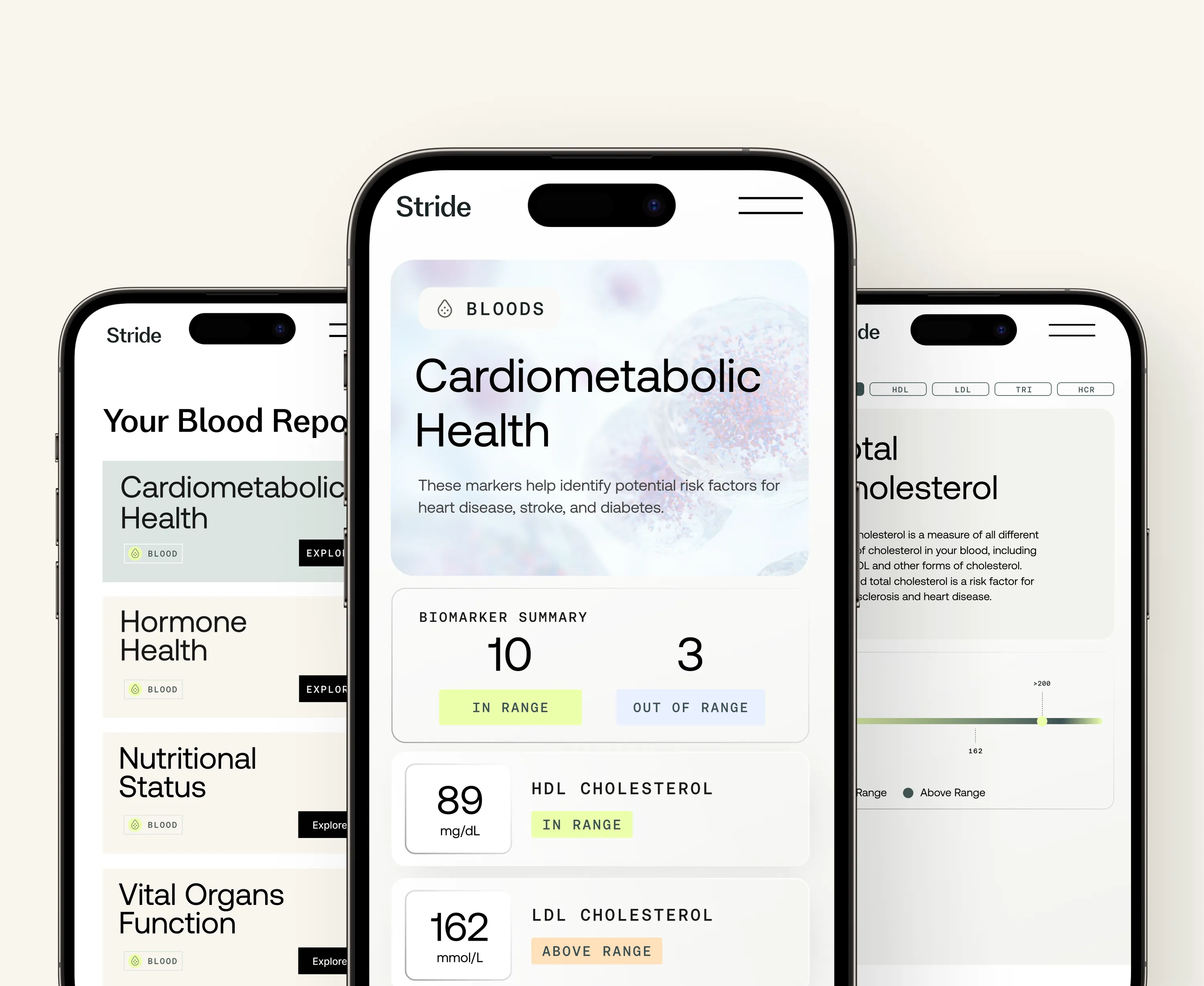
At-home test for more than 70 blood-based biomarkers
From £399 £279.30
Biomarkers
| Biomarker | What it measures | Why it matters | Relevance |
|---|---|---|---|
| MTHFR Gene Test (Methylenetetrahydrofolate Reductase) | MTHFR enzyme activity from the C677T and A1298C variants | Most studied methylation gene; homozygous C677T can reduce MTHFR activity by up to 70%; A1298C combined with C677T significantly impairs folate processing and SAM production | 5 |
| COMT Gene Test (Catechol-O-Methyltransferase) | Dopamine and oestrogen processing via the methylation pathway | Affects mood, stress tolerance, and hormone clearance; interacts directly with SAM availability | 4 |
| MTR Gene Test (Methionine Synthase) | Methionine synthase function | Directly converts homocysteine to methionine using B12 and folate | 4 |
| CBS Gene Test (Cystathionine Beta Synthase) | Transsulphuration pathway efficiency | Controls how excess homocysteine is directed into detoxification and glutathione production | 3 |
FAQs
What is methylation and why does it matter for health?
Methylation is a biochemical process in which a small chemical unit (a methyl group) is attached to DNA, proteins, neurotransmitters, or hormones. This process switches genes on or off, regulates mood chemistry, supports detoxification, and maintains cardiovascular health, happening billions of times per second across every cell in the body. When the methylation cycle works efficiently, it supports stable energy, clear cognition, effective stress processing, and healthy ageing. When it is impaired, whether from genetic variants, nutritional gaps, or lifestyle factors, the downstream effects can include elevated homocysteine, reduced neurotransmitter availability, impaired detoxification, and accelerated biological ageing. Understanding your own methylation status is one of the most actionable insights available for long-term preventative health.
What are the common symptoms of impaired methylation?
Impaired methylation does not produce a single recognisable symptom set, which is part of what makes it easy to overlook. Common patterns include persistent fatigue that does not resolve with adequate sleep, low mood or depression, anxiety and difficulty managing stress, brain fog and difficulty concentrating, recurrent mouth ulcers, poor recovery from illness, and elevated homocysteine on a blood test. Some people with impaired methylation also experience cardiovascular symptoms such as elevated blood pressure or early atherosclerosis, which run through the homocysteine pathway. Because these symptoms overlap with many other conditions, identifying impaired methylation typically requires genetic variant analysis and functional blood markers rather than symptoms alone.
How common is the MTHFR gene variant in the UK population?
MTHFR variants are among the most prevalent functional genetic variants in the population. Approximately 10% of people in the UK carry two copies of the C677T variant (homozygous), which can reduce MTHFR enzyme activity by up to 70%. A larger proportion carry one copy (heterozygous), producing a more modest reduction in efficiency. The A1298C variant is similarly common, and a significant number of people carry combinations of both. Most people with MTHFR variants are unaware they have them. Many experience no measurable effect if their nutritional intake and lifestyle consistently compensate for the reduced enzyme activity, but those whose diet or lifestyle creates additional stress on the cycle are more likely to develop measurable downstream effects.
What is the connection between impaired methylation and homocysteine?
Homocysteine is an amino acid produced during normal protein metabolism. In a well-functioning methylation cycle, homocysteine is efficiently converted back to methionine (via the MTR enzyme using B12 and folate) or directed into the transsulphuration pathway (via the CBS enzyme using B6). When methylation is impaired, whether from genetic variants or nutrient deficiencies, homocysteine accumulates in the blood. Elevated homocysteine is associated with increased cardiovascular risk, cognitive decline, and inflammation. This is why homocysteine is used as a functional indicator of methylation status: it reflects how well the cycle is actually running in practice, not just what the genes suggest about theoretical capacity.
Can impaired methylation affect mood and mental health?
There is a meaningful body of research linking methylation pathway variants, particularly MTHFR and COMT, to depression, anxiety, and mood regulation. The connection runs through neurotransmitter production: serotonin, dopamine, and norepinephrine are all synthesised and broken down through methylation-dependent pathways. The COMT enzyme, which breaks down dopamine and oestrogen, is heavily dependent on SAM (the methyl donor produced by a functioning methylation cycle). When SAM availability is reduced due to methylation impairment, COMT activity can be altered, shifting the balance of these neurotransmitters. This does not mean methylation impairment causes mood disorders directly, but it can be a contributing factor in people who do not respond fully to standard nutritional or pharmaceutical approaches.
Is methylation or MTHFR testing available on the NHS?
NHS testing does not routinely include MTHFR variant analysis or DNA methylation profiling. Homocysteine testing is occasionally available through NHS blood panels but is not part of standard primary care assessment. For most people, accessing a comprehensive DNA methylation test (covering genetic variants and biological age) requires going through a private testing provider. If a GP suspects methylation dysfunction based on elevated homocysteine or a family history of cardiovascular disease or thrombosis, they may consider requesting MTHFR testing via a reference laboratory, though this is not standard practice in most UK primary care settings.
What is the difference between a DNA methylation test and a standard MTHFR test?
A standard MTHFR test checks for two specific gene variants (C677T and A1298C) and returns a result indicating how many copies of each you carry. A broader DNA methylation test analyses methylation patterns across thousands of sites on the genome, generating information about biological age, gene expression regulation, and how the methylation machinery is functioning across multiple pathways simultaneously. Stride's approach combines both layers: genetic variant analysis of the key methylation pathway genes (MTHFR, COMT, MTR, MTRR, CBS) alongside epigenetic biological age data derived from genome-wide DNA methylation patterns. This gives a genetic foundation and a functional readout in a single test.
What supplements are most relevant if I have an MTHFR variant?
For people with confirmed MTHFR C677T (homozygous or compound heterozygous), the most evidence-supported nutritional adjustment is replacing standard folic acid with methylfolate (5-MTHF), which does not require MTHFR enzyme conversion. Methylcobalamin (active B12) is preferred over cyanocobalamin for the same reason. Riboflavin (B2) supports MTHFR enzyme function and is worth considering alongside folate and B12. Betaine (trimethylglycine) provides an alternative methyl donor via the BHMT pathway, reducing dependence on the MTHFR-dependent route. These are supportive nutritional inputs, not treatments for any condition. Dosage and suitability should always be discussed with a qualified practitioner based on your specific genetic and blood test results.
Can methylation status be improved through diet alone?
For people with mild methylation impairment driven primarily by nutritional gaps rather than significant genetic variants, dietary changes can make a meaningful difference. A consistent supply of active folate (from leafy greens and legumes), B12 (from animal-source foods or supplements), B6 (from poultry, fish, and potatoes), and choline (from eggs and liver) provides the methylation cycle with the raw materials it needs. Betaine from beetroot, spinach, and wholegrains adds a parallel methyl donor. For people with compound genetic variants that significantly reduce enzyme activity, diet alone is less likely to be sufficient. Tracking homocysteine and biological age at intervals is the most reliable way to see whether what you are doing is actually shifting your methylation status for your individual biology.
How does biological age connect to the methylation pathway?
Biological age, measured through DNA methylation clocks, reflects how the body's epigenetic patterns have shifted relative to chronological age. These clocks work by analysing methylation levels at specific sites across the genome: sites that change in a predictable direction as the body ages, and that are strongly influenced by lifestyle, diet, stress, sleep, and the efficiency of the methylation machinery itself. An elevated biological age (older than chronological age) indicates that the cumulative effect of these factors is accelerating epigenetic drift. Retesting biological age at six-month intervals, alongside making tracked changes to nutrition and lifestyle, allows you to see whether the actions you are taking are measurably slowing or reversing this process for your biology specifically.
Find out what your body is actually trying to tell you.
Answer 8 quick questions and get a free personalised report - covering which area of your biology is most worth looking at first, what testing in that area reveals, and what actions become available once you have that data.
Where do you feel you're operating below your potential right now?
Methylation & Cellular Health
Your biology is signalling a methylation upgrade - here’s what that means and what to do about it.