
Menu
-
Shop All
Contact
hey@getstride.com
Stride Health Group
Stride Health Group Ltd
Company No 05158025
Lamas Road
Badersfield
Norwich
England
NR10 5FB
UK










News
8 Minutes

Are Genetic Methylation Tests Worth It, and Are They Legit?
What a genetic methylation test can and can't tell you, who gets real value from one, the red flags to avoid, and what Stride customers say in reviews.

 19/06/2024
The short answer
A genetic methylation test is worth it if you'll act on what it tells you, such as which forms of folate and B12 suit you, which nutrients deserve more attention and which blood markers to keep an eye on. If you're hoping it will diagnose something, or explain your symptoms on its own, it will disappoint you.
The lab science behind these tests is legitimate. Reading genetic variants from a cheek swab is a mature technique and very accurate at a good lab. Where tests differ, sometimes a lot, is in how they interpret those variants and what they tell you to do next.
We sell a methylation test, so we have an interest in the answer. We've tried to set out the limits as plainly as the benefits, because a test bought for the wrong reason helps nobody.
This article explains:
What a genetic methylation test can tell you
Methylation is the way your cells attach small chemical tags, called methyl groups, to DNA, proteins and other molecules. It helps switch genes on and off, make and clear neurotransmitters, and recycle homocysteine, an amino acid your body needs to keep in check. The process depends on a set of enzymes, and the genes that make those enzymes vary from person to person.
A genetic test reads those variations. The best known is MTHFR, which helps turn folate into its active form, 5-MTHF. Others include MTR and MTRR, which depend on vitamin B12, and COMT, which helps break down dopamine and adrenaline. A variant can reduce how well an enzyme works, which may mean you need more of a nutrient, or a different form of it, to keep that pathway running well.
Your inherited tendencies
Which methylation pathways may run less efficiently, based on genes such as MTHFR, MTR and CBS.
Where to focus your diet
Whether folate, B12, riboflavin or choline deserves more attention in your meals.
Which blood markers to watch
Results can flag markers worth checking, such as folate, active B12 and homocysteine.
A result for life
Your genes don't change, so you only need to test once.
These variants are common. When we analysed more than 10,000 Stride methylation results, almost everyone had at least one inefficiency. The methionine cycle was affected in 85% of results, the BH4 cycle in 53% and the folate cycle in about 40%. Only around 2% of people had fully normal folate and BH4 function.
That cuts both ways. It shows why a test that reads a single gene misses most of the picture. It also shows that carrying a variant is ordinary human variation, not a sign that something is wrong with you.
What it can't tell you
This is where a lot of marketing, and a lot of online reviews, get carried away.
Your current levels. A gene result can't tell you if you're low in folate or B12 today, or if your homocysteine is raised. Diet, absorption, alcohol, medication and age all play a part, and often matter more than your genes. Only a blood test shows your current status.
A diagnosis. Genetic results describe tendencies. An MTHFR variant isn't a disease, and clinical guidelines in the UK and US don't recommend routine MTHFR testing to investigate blood clots or recurrent miscarriage.
The cause of your symptoms. Tiredness, low mood and brain fog have many possible causes, from low iron to thyroid problems to poor sleep. A methylation result might be part of the picture, but it can't confirm or rule anything out.
Your progress. Your genes are fixed, so a genetic test can't show change over time. Blood markers can. Epigenetic tests, which estimate biological age from methylation marks on your DNA, are a separate product.
A precise dose. Most variants have a modest effect on their own, and nobody can read an exact supplement dose from a genotype.
“A genetic test tells you how you're built. A blood test tells you how you're doing.”
If you have symptoms, start with your GP rather than a DNA test. These can be signs of B12 or folate deficiency, anaemia or other conditions that need proper investigation:
Who gets the most value, and who can skip it
A test tends to earn its keep when one of these applies to you:
You already take B vitamins or a methylation supplement and want to know whether the forms and focus suit you, rather than going on what you've read on social media.
You've had a raised homocysteine result and want to understand which pathways might be involved, alongside your GP's advice.
You eat little or no animal food, so B12 and choline already need some thought, and you'd like to know whether your genes add to that.
You're planning a pregnancy and want to talk through folate with your GP or midwife. The NHS advice to take 400 µg of folic acid a day before conception and for the first 12 weeks of pregnancy applies whatever your result.
When you can probably skip it
If you eat a varied diet, feel well, don't take supplements and have no particular question, a methylation test is optional. Leafy greens and pulses, enough protein, limited alcohol, good sleep and not smoking support methylation whatever your genes, and a test is unlikely to change that advice much.
Think twice, too, if health data tends to make you anxious. A report full of words like “reduced” and “impaired” can cause more worry than it's worth, especially with no one to explain it.
And if you can only spend on one thing, a blood test that checks folate, B12, iron and vitamin D will often tell you more about how you are right now.
Are methylation tests legit? How to spot a good one
Consumer methylation tests are wellness tests. They aren't the diagnostic genetic tests the NHS uses for inherited conditions, and a good provider makes that clear. Within that, quality varies a lot. These are the signs we'd look for:
These would put us off:
For a side-by-side look at the main tests, including what each covers and where you can buy it, see our guide to the best genetic methylation tests.
What reviewers say about Stride
Our customers rate us 4.8 out of 5 from 420 reviews. You can read them in full on our reviews page.
Stride Health Group Ltd is a UK company based in Norwich. Our founder and CEO, Andrew Steele, is a former British 400m champion who ran in Team GB's 4x400m relay at the Beijing 2008 Olympics, a result later upgraded to bronze. He also co-founded the DNA testing company DNAfit, which was sold to Prenetics in 2018.
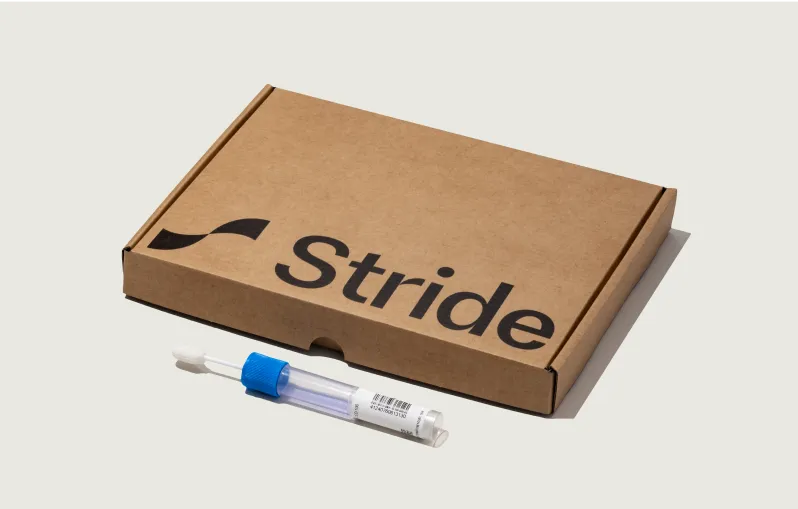
Our DNA & Methylation Test uses an at-home cheek swab analysed at accredited specialist laboratories, with results in about 10 working days. Every level covers all five methylation cycles we report on, and every level includes MTHFR and COMT. You also get a 1:1 consultation with a Stride expert, so you aren't left alone with a page of gene names.
What to do next
Name your question. Folate form, B12, a homocysteine result, pregnancy planning. If you can't name one, you may not need a test yet.
Test your genes once. The results won't change.
Check your bloods. Folate and active B12 show your current status, and your GP can check homocysteine. Retest after any change to see whether it's working.
Start with food. Leafy greens and pulses for folate; meat, fish, eggs and dairy for B12; eggs for choline. Our guide to supporting methylation naturally has more.
Add supplements only where they fit. If your results and bloods point that way, MS-01 Methylation Support provides folate as methylfolate, B12 as methylcobalamin and B6 as P5P. Folate contributes to normal homocysteine metabolism, and vitamin B12 contributes to the reduction of tiredness and fatigue. If you take medication, check with your GP or pharmacist first.
FAQs
Are genetic methylation tests accurate?
Reading the variants is very accurate when an accredited lab does it. The real differences between tests are in interpretation: which genes they include, how strong the evidence is and how sensibly they turn results into advice.
Do I need to repeat a methylation test?
No. Your genes don't change, so a genetic methylation test only needs doing once. Blood markers such as folate, active B12 and homocysteine do change, and they're the ones to retest after you adjust your diet or supplements.
Can a methylation test diagnose a health condition?
No. It shows inherited tendencies, not a diagnosis. If you have symptoms such as ongoing tiredness, pins and needles or low mood, see your GP, who can check for deficiencies and other causes.
Will the NHS test my MTHFR or methylation genes?
Not usually. MTHFR testing isn't part of routine NHS care, and UK guidance doesn't recommend it for investigating blood clots or recurrent miscarriage. Your GP can test folate and B12, and homocysteine where it's clinically relevant.
Is Stride a legitimate company?
Yes. Stride Health Group Ltd is a UK company based in Norwich, founded by Andrew Steele, who previously co-founded the DNA testing company DNAfit. Customers rate Stride 4.8 out of 5 from 420 reviews, and samples are analysed at accredited specialist laboratories.
The bottom line
A genetic methylation test is worth it when you have a clear question and will act on the answer. It shows tendencies you were born with, not what's happening in your body now, and it can't diagnose anything.
If you do test, read the results alongside blood markers such as folate and active B12, start with food, and add supplements only where both point the same way. If you have symptoms, see your GP first.
Find out what your body is actually trying to tell you.
Answer 8 quick questions and get a free personalised report - covering which area of your biology is most worth looking at first, what testing in that area reveals, and what actions become available once you have that data.
Where do you feel you're operating below your potential right now?
Methylation & Cellular Health
Your biology is signalling a methylation upgrade - here’s what that means and what to do about it.