
Menu
-
Shop All
Contact
hey@getstride.com
Stride Health Group
Stride Health Group Ltd
Company No 05158025
Lamas Road
Badersfield
Norwich
England
NR10 5FB
UK








News
8 Minutes

Power or endurance? What your genes say about how you should train
Some people thrive on sprints and heavy lifts; others only come alive on long miles. Learn how ACE, ACTN3 and PPARGC1A shape whether you lean power or endurance, and how to train for the body you have.

 30/09/2026
Are you built for power or endurance?
Stand an Olympic sprinter next to a marathon runner and you are looking at two different engines. One releases enormous force in under ten seconds. The other holds a steady pace for more than two hours. Both have trained for years, but they did not start from the same place.
In elite sport, you see that gap every day. Athletes follow near-identical programmes and progress at very different rates. Some thrive on heavy lifts and short, explosive efforts; others only come alive once the sessions get long. The reason sits in their muscle fibres, their mitochondria and the genes that build them.
The same pattern holds outside elite sport. Put a group of people on the same training plan and some improve dramatically while others barely move. Research suggests genetics accounts for a large share of that difference.
Most training advice is written for the average person, and nobody is the average person. Knowing whether your body leans towards power or endurance tells you where your training hours will pay back the most.
This article explains:
Power and endurance, defined
Every body can build both power and endurance. Your genes decide which one returns more for the same hours of work.
Endurance
Your ability to keep going: 10K runs, long rides and steady swims. It depends on your heart, lungs and slow-twitch muscle fibres supplying energy without tiring.
Power
Your ability to produce force quickly: sprints, jumps and heavy lifts. It depends on fast-twitch muscle fibres and how forcefully they contract.
Three things decide how you respond
Before the genes, the biology. Three systems shape whether your body leans towards power or endurance.
Muscle fibres
Slow-twitch fibres resist fatigue and fuel long efforts. Fast-twitch fibres contract hard and fast but tire quickly, and your ratio of the two is partly inherited.
Mitochondria
These structures inside your muscle cells turn fuel and oxygen into energy. The more you have, and the faster you build new ones, the longer you can sustain effort.
Blood flow
Your blood vessels decide how quickly oxygen reaches working muscle. Hormones and enzymes widen and tighten those vessels throughout every session.
Each of these systems runs on proteins, and each protein is built from a gene. Small differences in those genes create real differences in how you train.
The three genes that matter most
ACE: the blood pressure gene
Long name: angiotensin-converting enzyme
What it does: controls blood pressure and the balance of fluid and sodium in your blood. ACE is the most researched gene in sports performance: a 1998 study in Nature was the first to link a single gene to human physical performance.
Sports connection: power or endurance, depending on your genotype
| Genotype | Enzyme activity | Training response | Leans towards |
|---|---|---|---|
| II | Lowest | More slow-twitch fibres, higher VO2max | Endurance |
| ID | Intermediate | Responds to a mix of both | Both |
| DD | Highest | Strong muscle growth and recovery | Power |
The I version shows the most consistent link: it appears more often in elite endurance athletes and in mountaineers who climb above 8,000 metres without supplemental oxygen. The link between the D version and power is less consistent.
ACTN3: the sprinter gene
Long name: alpha-actinin-3
What it does: builds a structural protein inside your fast-twitch muscle fibres
Sports connection: power or endurance, depending on your genotype
Your muscles contain two main fibre types. Slow-twitch fibres power long, steady efforts. Fast-twitch fibres fire hard and fast for sprints, jumps and heavy lifts, but tire quickly.
ACTN3 builds alpha-actinin-3, a protein found almost only in fast-twitch fibres. The protein works like scaffolding inside each fibre, anchoring the parts that contract and holding them steady when they fire with maximum force.
The gene comes in two versions. The R version makes working alpha-actinin-3. The X version carries a small error that stops production, so it makes none. You inherit one version from each parent, which gives you one of three combinations. Some DNA reports label them by the DNA letters at that point in the gene instead: CC, CT or TT.
RR (CC)
Both copies make alpha-actinin-3, so your fast-twitch fibres have their full scaffolding. RR is the most common combination among elite sprinters, and RR carriers tend to gain the most from explosive training.
RX (CT)
One copy makes the protein and one does not, so you produce a reduced amount. RX carriers are usually good at strength, speed and power, though less so than RR on average.
XX (TT)
Neither copy works, so your fast-twitch fibres make no alpha-actinin-3. XX carriers are rare among elite power athletes and more common among endurance athletes.
Why XX is not a weakness
Around one in five people of European descent carry XX, and they live perfectly healthy lives. Without alpha-actinin-3, their fast-twitch fibres take on some slow-twitch traits: slightly less peak power, but more resistance to fatigue.
The effect is real but small. ACTN3 explains only a small share of the differences between athletes, and people of every genotype can build speed and strength with the right training.
What it means for your training
If you are RR or RX, your fast-twitch fibres are built to respond to heavy lifts, sprints and plyometrics, so power work should pay off quickly. If you are XX, you can still build strength and speed, but your natural advantage is fatigue resistance: higher-rep strength work and longer efforts play to it.
PPARGC1A: the mitochondria gene
Long name: peroxisome proliferator-activated receptor gamma coactivator 1-alpha (PGC-1α)
What it does: tells your muscles to build more mitochondria, burn fat and carbohydrate for fuel, and shift fibres towards the fatigue-resistant, slow-twitch type. Every long or hard session switches it on.
Sports connection: endurance
| Genotype | Version | Training response | Leans towards |
|---|---|---|---|
| GG | Gly/Gly | Strong response to endurance training | Endurance |
| AG | Gly/Ser | Lower VO2max in some studies | Weaker endurance |
| AA | Ser/Ser | Lower VO2max and efficiency in some studies | Weaker endurance |
Every version responds to training. The gene shapes how strongly you adapt, not whether you can.
“Your genes load the dice; your training rolls them.”
The supporting cast
Eleven more genes add smaller effects. Each one nudges a single system, and each leans towards power, endurance or both.
| System | Genes | What they influence | Leans towards |
|---|---|---|---|
| Blood flow | VEGF, BDKRB2 | Capillary growth, vessel widening | Endurance |
| Blood flow | AGT | Raw material for the ACE pathway | Power |
| Energy | ADRB2 | Adrenaline response, fuel release | Endurance |
| Energy | NRF2 | Mitochondria-building genes | Endurance |
| Energy | PPARA | Fat burning in muscle and heart | Both |
| Muscle growth | TRHR | Lean muscle gains from strength work | Power |
| Structure | COL5A1, VDR | Tendon collagen, vitamin D response | Endurance |
| Inflammation | IL6, CRP | Inflammation and repair after training | Both |
How the Stride fitness report reads your DNA
No single gene makes you a sprinter or a marathoner. The signal comes from the combination, and some genes amplify each other: the power-linked version of AGT has a stronger effect alongside ACE’s D version, while the endurance-linked version of BDKRB2 works best alongside ACE’s I version.
Your Stride fitness report analyses 15 variants across these 14 genes, reading ADRB2 at two separate points. Each variant you carry adds weight to the power side, the endurance side or neither. Together, they place you on a spectrum from strongly power to strongly endurance.
The report also covers three more areas that shape how you should train.
Aerobic training response
How quickly your cardiovascular fitness climbs with cardio.
Injury predisposition
How your tendons, ligaments and joints handle load, based on collagen genes such as COL1A1 and COL5A1.
Recovery efficiency
How fast you bounce back, based on genes that drive inflammation and antioxidant protection after hard sessions.
How to train for your result
If you lean power
Build your plan around short, maximal efforts with full recovery. Quality of movement beats volume: stop a set when your speed or form drops.
Hill sprints and plyometrics
Kettlebell swings and Olympic lifts
Heavy compound lifts in sets of three to five reps, with two to three minutes of rest between sets
If you lean endurance
Build your plan around steady, sustained work. Spend most of your training at a pace where you could hold a conversation, and add one or two harder sessions a week.
Long runs, rides and swims
Tempo efforts and rowing
Higher-rep strength work with lighter weights
If you sit in the middle
Mix both, deliberately. A week might include two strength or power sessions, two steady aerobic sessions and one interval session that blends the two.
What your genes can’t tell you
Genetics shapes how fast you adapt. It does not set a ceiling on what you can achieve.
Each variant here has a small effect on its own, and research on several of them is still developing. Your sleep, nutrition, training history and consistency all shape your results as much as your DNA does.
Use your result to decide where to spend more of your time, not to rule anything out.
FAQs
Can I change whether I’m a power or endurance responder?
Your genes stay the same for life. Your fitness does not. Training changes your muscle fibres, mitochondria and blood vessels whatever your result, and your result tells you which kind of training changes them fastest.
Can my genes tell me which sports I’d be good at?
No. Sporting performance depends on many factors at once: your genes, body shape, skill, coaching, training history and mindset all play a part. Your DNA can show which kind of training your body responds to best, but it cannot pick your sport for you. However power-based your profile, if you have short arms and legs, you probably won’t make it to the NBA (sorry!).
Do I need to be an athlete for this to be useful?
No. If you have limited time to train, knowing what your body responds to helps you spend that time well.
Should I stop the type of training I don’t respond to?
No. Shift the balance of your week towards your lean, and keep both in the plan.
Which genes affect power and endurance?
ACE, ACTN3 and PPARGC1A have the strongest research behind them. Eleven more genes, including VEGF, PPARA and COL5A1, add smaller effects on blood flow, energy, tendon structure and inflammation.
Is ACTN3 really the speed gene?
ACTN3 earned the nickname because people who produce alpha-actinin-3 are over-represented among elite sprinters. Its effect is small, though: it explains only a small share of performance differences, and people of any ACTN3 genotype can build speed and power with the right training.
The bottom line
Your genes shape whether power or endurance training returns more for your effort, but they never set a limit on what you can achieve.
Most people spend years testing workouts until something sticks; your DNA can show you where to start.
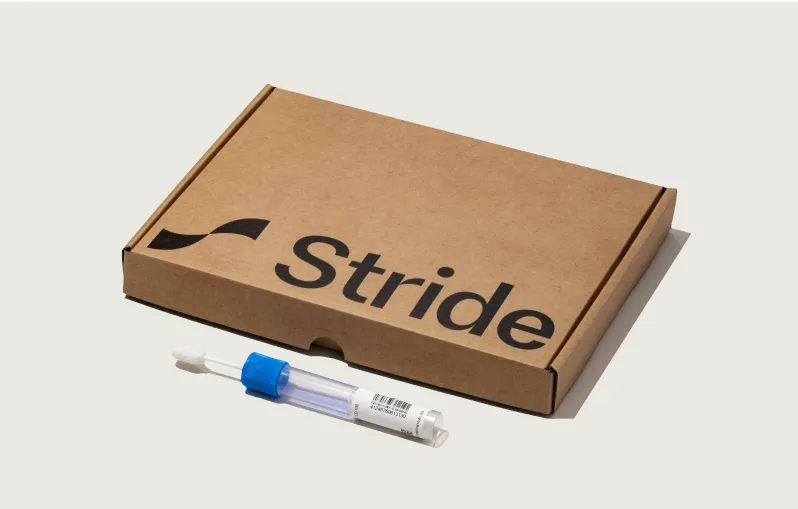
The Stride fitness report comes with the Optimal DNA & Methylation Test, where one at-home cheek swab shows how your body responds to training alongside the genes behind your energy, nutrients, mood and stress.
Find out what your body is actually trying to tell you.
Answer 8 quick questions and get a free personalised report - covering which area of your biology is most worth looking at first, what testing in that area reveals, and what actions become available once you have that data.
Where do you feel you're operating below your potential right now?
Methylation & Cellular Health
Your biology is signalling a methylation upgrade - here’s what that means and what to do about it.