
Menu
-
Shop All
Contact
hey@getstride.com
Stride Health Group
Stride Health Group Ltd
Company No 05158025
Lamas Road
Badersfield
Norwich
England
NR10 5FB
UK




News
8 Minutes
The Methionine Cycle Explained: SAMe, Homocysteine and Methylation
How the methionine cycle makes SAMe and recycles homocysteine, step by step, plus the nutrients and genes it relies on and how to check yours.

 01/10/2025
What the methionine cycle is
The methionine cycle is the loop of reactions that turns methionine, an amino acid you get from protein, into SAMe (S-adenosylmethionine), your body's main methyl donor. Once SAMe has given away its methyl group, what's left becomes homocysteine, which is then recycled back into methionine so the loop can start again.
You may also see it called the methylation cycle, the activated methyl cycle or the SAM cycle. It runs in nearly every cell, with the liver doing the heaviest lifting, and it depends on a short list of nutrients: folate, vitamin B12, vitamin B6, riboflavin (B2), choline and betaine.
It works hand in hand with the folate cycle, and most advice about supporting methylation is really about keeping these two turning.
This article explains:
The methionine cycle, step by step
Picture methionine at the top of a loop and homocysteine at the bottom. There are two ways back up, and one way out.
| Step | What happens | Enzyme (gene) | What it needs |
|---|---|---|---|
| 1. Make SAMe | Methionine joins with ATP, the cell's energy carrier, to form SAMe | Methionine adenosyltransferase (MAT1A, MAT2A) | ATP, magnesium |
| 2. Donate a methyl group | SAMe passes its methyl group to DNA, a protein, a neurotransmitter or another molecule, and becomes SAH (S-adenosylhomocysteine) | Methyltransferases, such as DNMTs, COMT and PEMT | Nothing beyond SAMe |
| 3. Release homocysteine | SAH is split into homocysteine and adenosine | SAH hydrolase (AHCY) | Quick removal of both products |
| 4a. Recycle with folate | Homocysteine takes a methyl group from 5-MTHF (5-methyltetrahydrofolate) and becomes methionine again | Methionine synthase (MTR), kept active by MTRR | Folate as 5-MTHF, vitamin B12, riboflavin, zinc |
| 4b. Recycle with betaine | Homocysteine takes a methyl group from betaine instead, mainly in the liver and kidneys | Betaine-homocysteine methyltransferase (BHMT) | Betaine (TMG) from food or from choline, zinc |
| Exit | Homocysteine joins with serine and leaves the cycle, becoming cystathionine and then cysteine | Cystathionine beta-synthase (CBS), then cystathionine gamma-lyase (CTH) | Vitamin B6 |
Step 3 is the one people overlook. The enzyme that splits SAH can also run in reverse, and given the chance it will, so homocysteine has to be moved on quickly. If it lingers, SAH builds up as well, and SAH blocks most methyltransferases. That's why researchers often look at the ratio of SAMe to SAH, sometimes called the methylation index, rather than at SAMe alone.
SAMe directs the traffic
SAMe has a second job: deciding which route homocysteine takes. When SAMe is plentiful, it switches on CBS, sending spare homocysteine into the transsulphuration pathway to make cysteine and, from that, the antioxidant glutathione. At the same time it slows MTHFR in the folate cycle, so less 5-MTHF is made for recycling. When SAMe runs low, the balance tips back towards recycling.
What SAMe does with its methyl groups
A methyl group is one carbon atom bonded to three hydrogens. Adding one to a molecule changes how it behaves: it can quieten a gene, finish making a hormone or mark a neurotransmitter for breakdown. SAMe is the donor for the great majority of these reactions.
DNA and gene activity
DNA methyltransferases tag DNA with methyl groups, helping set which genes are active in each type of cell. The histone proteins that package DNA are methylated too.
Creatine
The final step in making creatine, which muscles and the brain use for quick bursts of energy, takes a methyl group from SAMe. It's one of the cycle's biggest single customers.
Cell membranes and the liver
The PEMT enzyme uses three SAMe molecules to make each molecule of phosphatidylcholine, a building block of cell membranes that the liver also needs to export fat.
Brain chemistry
COMT uses SAMe to break down dopamine, noradrenaline and adrenaline. SAMe also supplies the last step in making adrenaline and melatonin.
Beyond these, SAMe helps inactivate histamine inside cells and process oestrogens. Diet changes the load: meat and fish supply some ready-made creatine and eggs supply choline, so your body has less of each to make from scratch.
Homocysteine: where it goes and why it matters
Homocysteine is an amino acid your body only makes as a by-product of methylation. Small amounts are normal, but it isn't meant to hang around. MTR recycles most of it. In the liver and kidneys BHMT shares the work, and anything sent down the one-way exit is handled by CBS.
When none of these keeps up, homocysteine spills into the blood. Raised levels are linked to heart disease, stroke and, in older adults, cognitive decline. Trials that lowered homocysteine with B vitamins have shown little effect on heart attacks, with a possible small benefit for stroke, so treat it as a useful sign of how your B vitamins and methylation are doing rather than a target in its own right.
Many UK labs use an upper limit of around 15 µmol/L for a fasting sample, though reference ranges vary. The usual reason for a raised result is low folate, B12, B6 or riboflavin. Reduced kidney function, smoking, heavy drinking, some medicines and genetic variants such as MTHFR C677T can push it up too.
Homocysteine isn't part of Optimal Bloods. To have it measured, ask your GP, who may test it if there's a clinical reason, or use a private lab. Folate and active B12, which explain many raised results, are both included.
The nutrients that keep it turning
Every step needs a helper. An ordinary mixed diet covers most of them, but intake, absorption and genetics vary from person to person.
| Nutrient | Its job in the cycle | Everyday sources |
|---|---|---|
| Methionine | Raw material for SAMe | Eggs, fish, chicken, cheese, tofu, Brazil nuts |
| Folate | Becomes 5-MTHF, the methyl donor for MTR | Spinach, broccoli, asparagus, chickpeas, lentils |
| Vitamin B12 | Cofactor for MTR | Meat, fish, eggs, milk, fortified plant milks and cereals |
| Riboflavin (B2) | Keeps MTRR and MTHFR working | Milk, yoghurt, eggs, mushrooms, almonds |
| Vitamin B6 | Powers CBS and CTH on the exit route | Chicken, salmon, chickpeas, potatoes, bananas |
| Betaine (TMG) | Methyl donor for BHMT | Beetroot, spinach, quinoa, wheat bran |
| Choline | Converted to betaine, and saves the SAMe the liver would spend making phosphatidylcholine | Eggs, beef, chicken, salmon, soya, broccoli |
| Zinc and magnesium | Zinc for MTR and BHMT; magnesium for making SAMe | Pumpkin seeds, cashews, red meat, wholegrains, spinach |
Plant foods don't provide reliable vitamin B12, so vegans need fortified foods or a supplement. Absorption of B12 tends to fall with age and with long-term use of metformin or acid-suppressing medicines.
The genes Stride reports for this cycle
Stride's DNA & Methylation Test looks at six genes for the methionine cycle. Each one touches a different part of it:
MTR makes methionine synthase, the B12-dependent enzyme that recycles homocysteine using 5-MTHF.
MTRR makes methionine synthase reductase. Every so often the B12 inside methionine synthase is oxidised and stops working, and MTRR switches it back on using cofactors made from riboflavin.
BHMT makes the enzyme for the betaine route, a back-up that becomes more important when folate or B12 runs short.
PEMT makes phosphatidylcholine in the liver and is one of the biggest users of SAMe. Oestrogen boosts it, which helps explain why men and postmenopausal women tend to be more sensitive to low-choline diets.
FUT2 affects the sugars in the mucus lining your gut, which shapes your gut bacteria. Large genetic studies link FUT2 variants with differences in blood B12 levels.
TCN2 makes transcobalamin, the protein that carries B12 from your blood into your cells. B12 bound to it is what a blood test reports as active B12, and some studies link certain TCN2 variants with lower levels.
A variant in one of these genes doesn't mean your cycle is broken. Most nudge an enzyme's activity a little, and what you eat can amplify or offset that. Stride's report combines them into a rating for the whole cycle, and a 1:1 consultation with a Stride expert is included to talk through yours.
What happens when the cycle slows
A slower cycle shows up first in the chemistry. Homocysteine builds up, SAH rises with it and the SAMe to SAH ratio falls, which holds back methylation reactions across the body. If B12 is the bottleneck, folate gets stuck as 5-MTHF, a problem known as the folate trap, and the folate cycle starts to struggle as well.
What you feel, if anything, is much less specific. Tiredness and low mood often get blamed on methylation, but they have many possible causes. The signs of low B12 or folate are clearer. See your GP if you notice:
Nitrous oxide deserves a specific mention. Sold as laughing gas, it inactivates the B12 inside methionine synthase, and heavy recreational use can cause serious nerve damage, even in young people who otherwise eat well.
What Stride's data shows
Stride has analysed more than 10,000 methylation test results, and 85% showed an impaired methionine cycle. That's the highest of the five pathways in Stride's report.
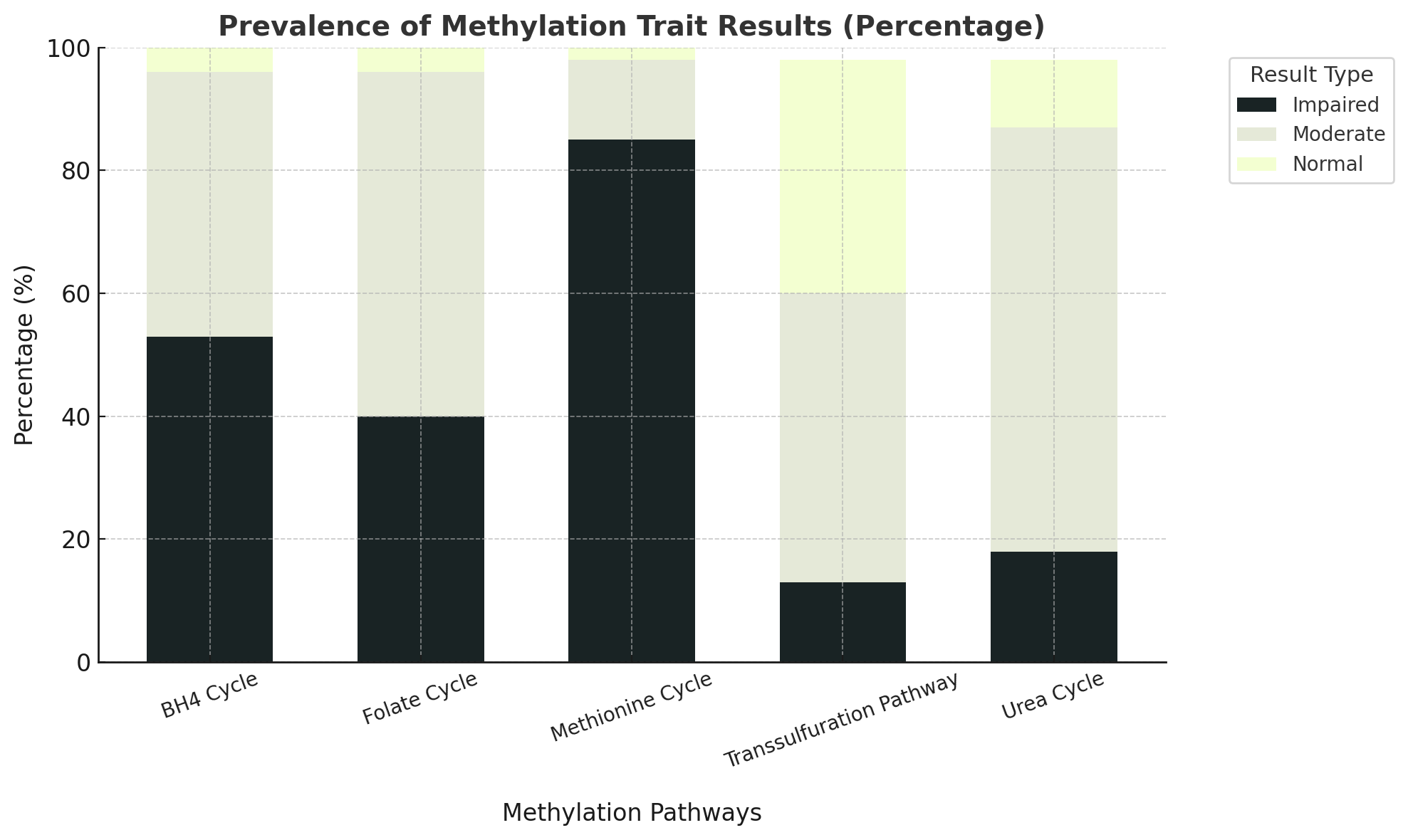
That sounds alarming, but an impaired rating describes how your genes are set up, not how well the cycle is running today. Diet, alcohol, medicines and your general health decide the rest, which is why blood markers are the other half of the picture.
How to support your methionine cycle
Start with food
Regular protein, leafy greens and pulses most days will cover a lot of ground. Add B12-rich foods (or fortified foods if you're vegan), eggs for choline, and beetroot, spinach or quinoa for betaine. Folate leaches into cooking water, so steam or microwave your greens rather than boiling them.
Habits that make a difference
Keep alcohol moderate. Alcohol reduces folate absorption and directly slows methionine synthase. UK guidance is to drink no more than 14 units a week on a regular basis, spread over three or more days.
Don't smoke. Smoking is consistently linked with higher homocysteine.
Review your medicines with your GP. Metformin and long-term acid-suppressing drugs can lower B12, and methotrexate and some anti-epileptic drugs affect folate. Don't stop anything, but ask whether monitoring makes sense for you.
When supplements make sense
A supplement can help if your diet is limited, a blood test shows low folate or B12, or your genes point to a slower cycle. Methylfolate (5-MTHF) and methylcobalamin are already in the forms the cycle uses, so they skip conversion steps that some variants slow down.
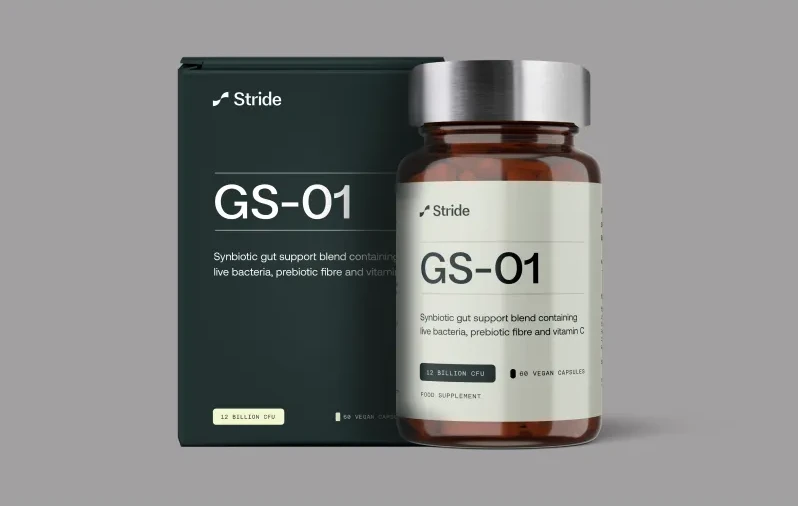
MS-01 Methylation Support combines 400 µg of methylfolate with methylcobalamin, vitamin B6 as P5P, vitamin C and trimethylglycine (TMG, the supplement name for betaine) in one daily capsule. Folate, vitamin B6 and vitamin B12 all contribute to normal homocysteine metabolism. For a wider, food-first plan, see how to support methylation naturally.
How to check your methionine cycle
Genes and blood answer different questions, so it helps to have both.
Your genes. The DNA & Methylation Test, an at-home cheek swab sold in the UK, Europe and the US, covers all six genes at every level, alongside the other four cycles. If you've already tested with 23andMe, Optimal DNA Link produces methylation reports from your raw data.
Your current status. Optimal Bloods (UK only) includes folate and active B12 (holotranscobalamin), the B12 your cells can actually take up. Members of StrideOne have their bloods retested every six months, which shows whether changes to diet or supplements are moving the numbers.
Homocysteine. Through your GP or a private lab.
FAQs
What is the methionine cycle in simple terms?
A recycling loop for methyl groups. Your body turns methionine from protein into SAMe, uses SAMe's methyl group for jobs such as regulating genes and making creatine, then converts the leftover homocysteine back into methionine using folate and vitamin B12, or betaine.
How are the methionine and folate cycles connected?
They share one reaction. Methionine synthase takes a methyl group from 5-MTHF, made in the folate cycle, and gives it to homocysteine. That remakes methionine and returns the folate to the folate cycle. Low folate or low vitamin B12 slows both cycles at once.
What is SAMe?
S-adenosylmethionine, the body's main methyl donor. It's made from methionine and ATP, and it supplies methyl groups to DNA, proteins, neurotransmitters and the fats in cell membranes. Once it has donated its methyl group it becomes SAH, which is then split to release homocysteine.
What causes high homocysteine?
Most often low folate, vitamin B12, vitamin B6 or riboflavin. Reduced kidney function, smoking, heavy drinking, some medicines and genetic variants such as MTHFR C677T can also raise it. Your GP can measure it and look for the cause.
What foods support the methionine cycle?
Leafy greens, pulses, eggs, fish, meat, dairy, beetroot and wholegrains between them supply folate, B12, B6, riboflavin, choline and betaine. Vegans need fortified foods or a B12 supplement, because plant foods don't provide reliable B12.
The bottom line
The methionine cycle turns methionine into SAMe, spends its methyl group on jobs from gene regulation to making creatine, then recycles the leftover homocysteine with folate and B12 or with betaine, or sends it down the transsulphuration pathway with help from vitamin B6.
Your genes shape how efficiently each step runs; your diet and habits decide how well it keeps up. A DNA test shows the first, and blood tests for folate, active B12 and homocysteine show the second.
Find out what your body is actually trying to tell you.
Answer 8 quick questions and get a free personalised report - covering which area of your biology is most worth looking at first, what testing in that area reveals, and what actions become available once you have that data.
Where do you feel you're operating below your potential right now?
Methylation & Cellular Health
Your biology is signalling a methylation upgrade - here’s what that means and what to do about it.