
Menu
-
Shop All
Contact
hey@getstride.com
Stride Health Group
Stride Health Group Ltd
Company No 05158025
Lamas Road
Badersfield
Norwich
England
NR10 5FB
UK







News
8 Minutes
The BH4 cycle: The hidden driver of mood, energy, and focus
What BH4 does for dopamine, serotonin and nitric oxide, the genes that affect it, and which foods and nutrients help your body make and recycle it.

 29/09/2025
What BH4 is
BH4 (tetrahydrobiopterin) is a cofactor: a helper molecule that certain enzymes need before they can work. Without it, your body can’t turn the amino acids from your food into serotonin, dopamine or noradrenaline, and it can’t make enough nitric oxide to keep blood vessels relaxed.
The BH4 cycle is how your body makes BH4 and recycles it after each use. It gets far less attention than sleep, exercise or stress, but it affects the same things: mood, focus and energy.
Why BH4 matters
The BH4 cycle underpins some of your body’s most important processes:
- Neurotransmitter metabolism: BH4 helps turn amino acids like tryptophan and tyrosine into mood-shaping chemicals: serotonin, dopamine, noradrenaline, and melatonin.
- Phenylalanine processing: BH4 lets your liver turn phenylalanine into tyrosine, the building block for dopamine and thyroid hormones.
- Nitric oxide production: needed for healthy blood flow, circulation, and cardiovascular health.
- Oxidative stress control: when BH4 runs low, nitric oxide synthase can become uncoupled and make superoxide, a damaging free radical, instead of nitric oxide. This enzyme uses arginine, an amino acid it shares with the urea cycle.
When the cycle runs well, your body can keep up its supply of these brain chemicals and of nitric oxide. If it slows, that can show up as poor sleep, irritability, low mood or fatigue, although plenty of other things cause those too.
The DNA connection
How efficiently your BH4 cycle works isn’t just about lifestyle. Your genes also play a role. Variants in a few key genes can change how quickly you make, recycle, or use BH4 and how sensitive you are to imbalances.
- MTHFR: Converts folate into its active form (5-MTHF), which helps recycle BH4. Certain variants can make this process less efficient, meaning you may need higher folate intake.
- COMT: Breaks down dopamine, noradrenaline, and adrenaline. Slower COMT activity can leave you with higher levels, linked to stress reactivity or mood swings.
- VDR: Encodes the vitamin D receptor. Vitamin D, acting through this receptor, helps switch on tyrosine hydroxylase, the BH4-dependent enzyme that starts dopamine production. Variants here may increase demand for vitamin D and dopamine precursors.
- MAOA: Helps clear away serotonin, noradrenaline, and dopamine. Variants can affect how quickly (or slowly) these neurotransmitters are broken down.
- MAOB: Plays a similar role to MAOA, clearing dopamine and a breakdown product of histamine. Like MAOA, this gene sits on the X chromosome, meaning males carry only one copy so the effect of a variant may be more pronounced.
At Stride, we’ve analysed more than 10,000 results from our DNA & Methylation Test. Just over half (53%) showed an impaired BH4 cycle, and only about 2% had fully normal function in both the BH4 and folate cycles.
So if your BH4 cycle isn’t perfect, you’re not alone.
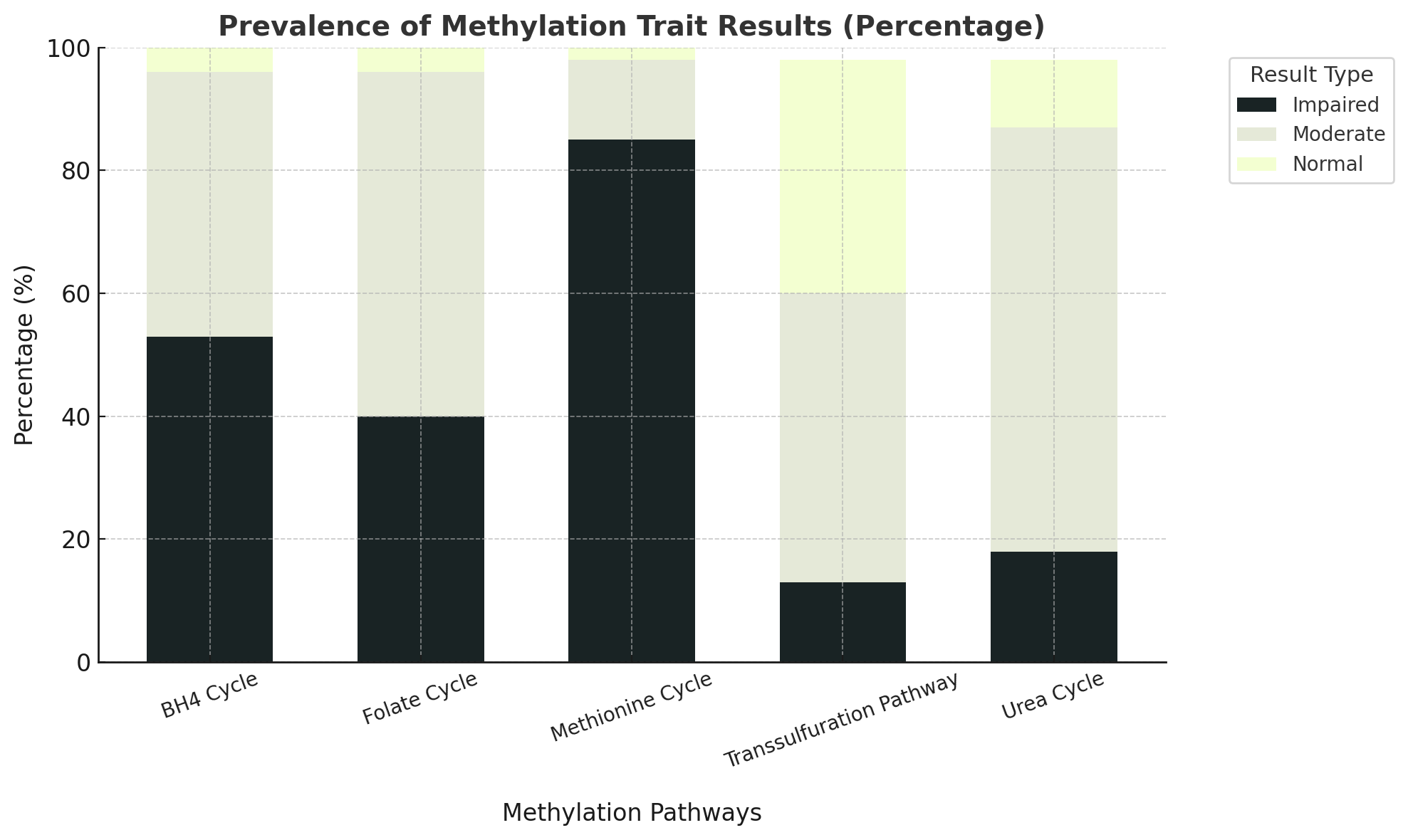
Explore each pathway in depth: Folate, Methionine, Transsulphuration, Urea
Supporting your BH4 cycle
Your DNA sets the blueprint, but lifestyle, nutrition, and environment have the power to change the outcome. Here’s how you can support BH4 health in daily life:
- Folate & B-vitamins: Leafy greens, beans, and whole foods rich in folate, plus B2, B6, and B12, are essential cofactors.
- Vitamin D: Sunlight or supplementation supports VDR-linked pathways and dopamine production.
- Stress management: High stress and oxidative load can deplete BH4, so practices like mindfulness, breathwork, or simply walking outside matter.
- Avoid toxins: Heavy metals and chronic inflammation interfere with BH4 recycling. Reducing exposure and keeping inflammation low supports balance.
- Know your genes: Understanding your variants helps personalise your approach, whether you need more folate, extra vitamin D, or strategies for balancing neurotransmitter activity.
BH4 supplements: what actually helps
BH4 isn’t a vitamin, and you don’t need it from food. Your body makes its own from GTP, a molecule your cells also use for energy and to build RNA, then recycles it after each reaction.
When BH4 is sold, it’s sold as a medicine. Its synthetic form, sapropterin, is prescribed under specialist care for phenylketonuria (PKU) and rare inherited BH4 deficiencies, where it can help lower phenylalanine levels. It isn’t an everyday supplement, and it isn’t something to take for mood or focus without medical advice. If you see a product marketed for BH4 support, read the label to see which nutrients it actually contains.
For most people, support means giving your body what it needs to make and recycle its own BH4, and to use it well:
| Nutrient | How it helps | Where to find it |
|---|---|---|
| Folate (as 5-MTHF) | Research suggests 5-MTHF helps protect BH4 from oxidation. DHFR, a folate-cycle enzyme, also turns oxidised BH4 back into its active form. | Spinach, asparagus, broccoli, chickpeas, lentils |
| Vitamin C | Lab studies show it stabilises BH4 and protects it from oxidation | Peppers, kiwi fruit, oranges, strawberries, broccoli |
| Vitamin B6 | Powers the step straight after BH4’s, turning L-DOPA into dopamine and 5-HTP into serotonin | Chicken, salmon, chickpeas, potatoes, bananas |
| Riboflavin (B2) | Helps MTHFR make 5-MTHF | Milk, yoghurt, eggs, mushrooms, almonds |
| Iron | The BH4-dependent enzymes that make dopamine and serotonin contain iron | Red meat, lentils, tofu, fortified cereals |
| Protein | Supplies phenylalanine, tyrosine and tryptophan for neurotransmitters, and arginine for nitric oxide | Eggs, fish, poultry, dairy, tofu, beans, pumpkin seeds |
No food is a meaningful source of BH4 itself, so there isn’t one special BH4 food to add. A diet with plenty of vegetables, fruit, beans and good-quality protein covers everything in the table. Folate as 5-MTHF also feeds the methionine cycle, which makes the SAMe that COMT needs to break down dopamine.
If you’d like a supplement, MS-01 Methylation Support provides folate as methylfolate (5-MTHF), vitamin B12 as methylcobalamin, vitamin B6 as P5P and vitamin C in one daily capsule. Folate and vitamin B6 contribute to normal psychological function, and vitamin C contributes to the protection of cells from oxidative stress.
If you take antidepressants or other medicines that act on serotonin or dopamine, speak to your GP or pharmacist before trying amino acid supplements such as 5-HTP or tyrosine. If you have PKU, follow your metabolic team’s advice.
FAQs
Is BH4 a vitamin?
No. BH4 (tetrahydrobiopterin) is a cofactor your body makes for itself from GTP, so you don't need it from food. It's often grouped with B vitamins because folate, riboflavin and B6 support the pathways it works in, and vitamin C helps keep it in its active form.
Can you take BH4 as a supplement?
Not as an everyday supplement. The medicine form, sapropterin, is prescribed under specialist care for PKU and rare inherited BH4 deficiencies. For general support, focus on folate, vitamin C, vitamin B6, riboflavin and enough protein, from food first.
Why clarity matters
The BH4 cycle doesn’t often make headlines. Yet it’s central to how your brain chemistry, hormones, and energy systems talk to each other.
At Stride, we believe that when you understand your biology, you can act with clarity. Knowing your BH4 cycle efficiency can help explain why you might be more sensitive to stress, prone to sleep disruption, or need extra nutritional support.
And when you see the full picture of DNA, bloods, and biome, you stop guessing and start optimising.
Find out what your body is actually trying to tell you.
Answer 8 quick questions and get a free personalised report - covering which area of your biology is most worth looking at first, what testing in that area reveals, and what actions become available once you have that data.
Where do you feel you're operating below your potential right now?
Methylation & Cellular Health
Your biology is signalling a methylation upgrade - here’s what that means and what to do about it.