
Menu
-
Shop All
Contact
hey@getstride.com
Stride Health Group
Stride Health Group Ltd
Company No 05158025
Lamas Road
Badersfield
Norwich
England
NR10 5FB
UK
Extra 10% Off | Enter code GIFT at checkout


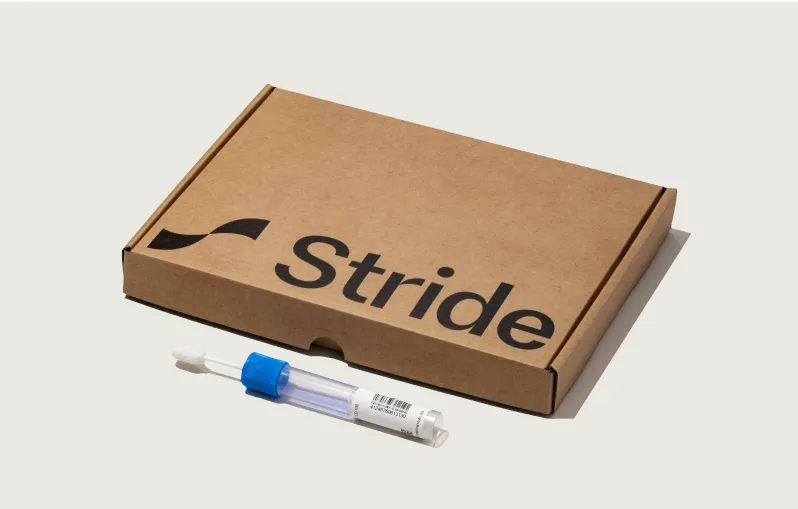





TSH Blood Test (Thyroid Stimulating Hormone)
TSH, or thyroid stimulating hormone, is a pituitary hormone that tells your thyroid gland how hard to work. A TSH blood test is the front door into thyroid health, helping identify underactive hypothyroid and overactive hyperthyroid patterns and guiding treatment and monitoring over time.
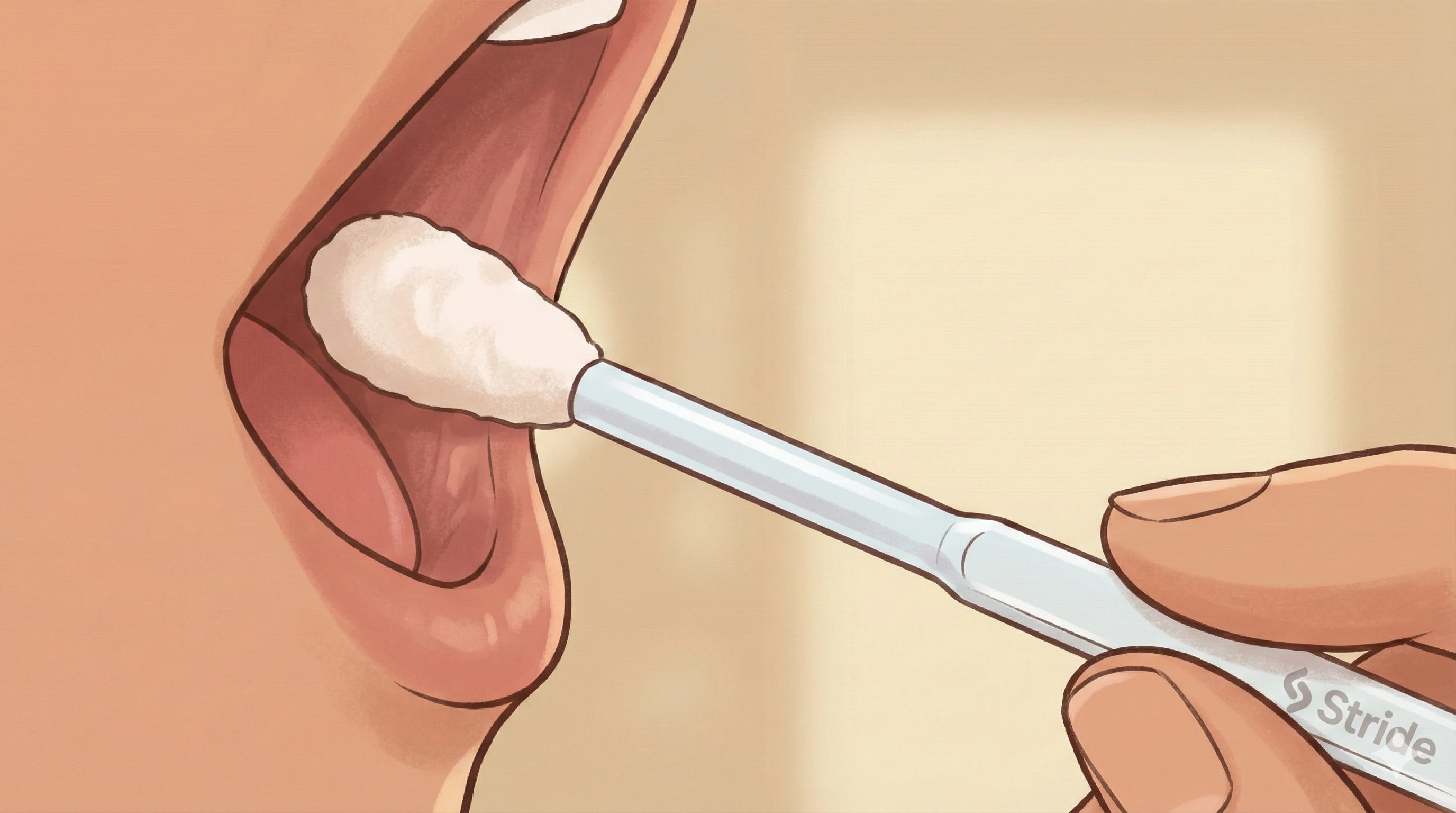

Sample type
Blood sample

Collection
At-home

Often paired with
Free T4, free T3, TPO antibodies, thyroglobulin antibodies TgAb, lipid panel, HbA1c, full blood count, vitamin B12, vitamin D

Fasting required
Not usually. TSH is not significantly affected by short term food intake. Follow any specific instructions given for your broader blood panel.
Key benefits of testing TSH
A TSH blood test can help you:
- Detect underactive or overactive thyroid function, often before symptoms are very advanced.
- Monitor how well thyroid hormone replacement or anti thyroid medication is working and whether your dose is right.
- Explain symptoms such as fatigue, weight changes, low mood, anxiety, palpitations, or temperature intolerance.
- Guide decisions about investigating thyroid autoimmunity, nodules, or broader hormonal issues.
- Track thyroid health over time if you have a family history of thyroid disease or other autoimmune conditions.
What is TSH (Thyroid Stimulating Hormone)
TSH is a hormone produced by the pituitary gland, a small structure at the base of your brain. The pituitary acts as a control centre for many hormones, including those that govern thyroid activity.
TSH's main role is to regulate how much thyroid hormone your thyroid gland produces. It does this by binding to TSH receptors on thyroid cells and stimulating the production and release of thyroxine T4 and, to a lesser extent, triiodothyronine T3.
This forms part of the hypothalamic pituitary thyroid axis:
- Low circulating thyroid hormones lead the pituitary to increase TSH, asking the thyroid to work harder.
- High thyroid hormones signal back to the pituitary to reduce TSH, easing off stimulation.
Because of this feedback loop, TSH is extremely sensitive to changes in thyroid hormone levels.
What does TSH do
TSH serves as the main throttle for thyroid hormone production. Through its control of T4 and T3, TSH indirectly influences:
- Metabolism and energy expenditure.
- Heart rate and cardiovascular function.
- Temperature regulation.
- Mood, cognition, and mental clarity.
- Menstrual cycles, fertility, and pregnancy.
- Cholesterol levels and weight regulation.
When TSH is too high, it usually indicates that the thyroid is underperforming and the pituitary is trying to push it harder. When TSH is too low, it usually indicates that the thyroid is producing too much hormone or that too much replacement hormone is being taken.
Why is TSH important for thyroid and overall health
TSH is important because it offers a highly sensitive readout of how well your thyroid is meeting your body's hormone needs. Clinically, this means:
- Raised TSH typically points toward hypothyroidism or under replacement in people on thyroid hormone.
- Low TSH typically points toward hyperthyroidism, over replacement, or, more rarely, pituitary problems.
- Small changes in T4 and T3 can cause relatively large shifts in TSH, making it an early indicator of imbalance.
Abnormal TSH levels are associated with a wide range of symptoms, from fatigue and weight gain to anxiety, palpitations, and bone health changes. Long term, untreated thyroid dysfunction can influence cardiovascular risk, fertility, pregnancy outcomes, and quality of life.
TSH vs free T4 vs free T3 vs TPO antibodies: what is the difference
These tests all relate to thyroid health but measure distinct aspects:
- TSH measures the pituitary signal telling the thyroid how hard to work.
- Free T4 measures the main circulating thyroid hormone available to tissues.
- Free T3 measures the more active thyroid hormone, which is often converted from T4 in tissues.
- TPO antibodies measure immune activity directed at the thyroid enzyme thyroid peroxidase, indicating autoimmunity rather than hormone output.
In practice:
- TSH is usually the first test ordered for suspected thyroid problems.
- Free T4 (and sometimes free T3) are added to confirm and characterise hypothyroid or hyperthyroid states.
- TPO antibodies help determine whether thyroid dysfunction is autoimmune in origin, such as Hashimoto thyroiditis or Graves disease.
What factors affect TSH levels
TSH is influenced by thyroid hormone levels, pituitary function, medications, and broader health context. Key factors include:
1. Thyroid hormone production
- Primary hypothyroidism underactive thyroid due to thyroid disease raises TSH, often with low free T4.
- Hyperthyroidism overactive thyroid lowers TSH, often with high free T4 and or T3.
2. Thyroid hormone replacement or anti thyroid therapy
- Taking levothyroxine or similar medication lowers TSH, and dose adjustments are guided largely by TSH results.
- Anti thyroid drugs used in hyperthyroidism aim to reduce hormone output, which should allow TSH to rise back toward the reference range.
3. Pituitary and hypothalamic function
- Rarely, pituitary or hypothalamic disease can cause low or inappropriately normal TSH despite low thyroid hormone levels central hypothyroidism.
- In these cases, interpreting TSH alone can be misleading, so free T4 and clinical context are critical.
4. Medications and acute illness
- Drugs such as high dose steroids, dopamine agonists, certain psychiatric medications, and biotin supplements can affect TSH measurements.
- Non thyroidal illness and acute severe illness can transiently alter TSH and thyroid hormone levels, a pattern sometimes called "sick euthyroid syndrome."
5. Age, pregnancy, and reference ranges
- TSH reference ranges may shift with age, and some guidelines accept higher upper limits in older adults.
- In pregnancy, different TSH targets and narrower ranges are often used, particularly in the first trimester, to support optimal fetal development.
Can TSH be abnormal if I feel fine
Yes. TSH can be outside the reference range even when you have no obvious symptoms.
Examples include:
- Subclinical hypothyroidism where TSH is slightly raised but free T4 remains in range. Some people feel well; others may have subtle symptoms.
- Subclinical hyperthyroidism where TSH is low but free T4 and T3 are within range. This may be symptom free but carry long term implications for heart rhythm or bone health.
In these scenarios, decisions about treatment and monitoring depend on:
- How far TSH is from the reference range.
- Age, cardiovascular risk, bone health, pregnancy status, and symptoms.
- The presence of TPO antibodies or structural thyroid changes.
Normal vs optimal TSH: what is the difference
Laboratory reference ranges for TSH typically sit around:
- Lower limit roughly 0.3 to 0.5 mIU/L.
- Upper limit roughly 4.0 to 4.5 mIU/L, sometimes slightly higher in older adults.
However, what is optimal can differ by person and context:
- Many adults feel best and have favourable outcomes when TSH is within the middle of the reference range, for example around 1 to 2.5 mIU/L, if they are not on treatment.
- People on levothyroxine often have tighter TSH targets agreed with their clinician, sometimes lower but within a safe range.
- In pregnancy, lower upper limits are often used, and TSH targets are adjusted by trimester.
The goal is a TSH that reflects stable, adequate thyroid hormone levels for your body, rather than simply falling anywhere within the population range.
Do I need to fast for a TSH test
Fasting is not usually required for TSH testing. You can typically have your TSH checked at any time of day, although:
- Some labs prefer morning samples, as TSH can show mild daily variation.
- If your blood draw includes tests that do require fasting, such as lipids or glucose, you will still need to follow those instructions.
Always follow the preparation guidance provided so that all parts of your panel are reliable.
How can TSH related thyroid imbalance be managed (clinician guided)
Managing TSH related thyroid imbalance focuses on correcting the underlying thyroid hormone status and addressing the cause where possible. Depending on your situation, clinician guided strategies may include:
- Starting thyroid hormone replacement, usually levothyroxine, in overt hypothyroidism or in some subclinical cases with symptoms or risk factors.
- Adjusting the dose of thyroid hormone based on repeat TSH and free T4 measurements, typically checked every 6 to 8 weeks after a change.
- Using anti thyroid medications, radioiodine, or surgery in cases of hyperthyroidism, then monitoring TSH and free T4 closely.
- Investigating pituitary or hypothalamic causes if TSH and hormone patterns suggest central hypothyroidism or inappropriate TSH secretion.
- Supporting overall health with attention to nutrients, sleep, stress, and coexisting autoimmune or metabolic conditions, which can influence how you feel at a given TSH level.
Stride tests that include TSH
FAQs
What is the TSH (Thyroid Stimulating Hormone) blood test
The TSH blood test measures how much thyroid stimulating hormone your pituitary gland is producing. It shows how strongly your brain is asking your thyroid to work and is the main screening test for underactive and overactive thyroid conditions.
What is a normal TSH level
Typical adult reference ranges run from around 0.3 to 4.5 mIU/L, though exact limits vary between laboratories and can be slightly higher in older adults. Levels outside this range suggest that thyroid function or pituitary signalling may be out of balance and need further assessment.
What is an optimal TSH level for health
Optimal TSH levels depend on your age, overall health, whether you are on thyroid medication, and if you are pregnant. Many adults feel well with TSH in the mid reference range, but your clinician will help set a personalised target, especially if you have thyroid disease or are on treatment.
Is TSH better than free T4 for checking thyroid
TSH is usually the most sensitive initial test for thyroid imbalance, but it is not the whole story. Free T4 (and sometimes free T3) are needed to confirm and characterise the type and severity of thyroid dysfunction. TPO antibodies add important context for autoimmunity.
Can TSH be normal if I have thyroid symptoms
Yes. It is possible to have symptoms that overlap with thyroid issues while TSH remains within the reference range, because many symptoms such as fatigue, low mood, and weight change can have multiple causes. In some situations, your clinician may also check free T4, free T3, TPO antibodies, or other markers to build a more complete picture.
Do I need TSH testing
You may benefit from a TSH test if you have symptoms suggestive of thyroid imbalance, a family history of thyroid disease, other autoimmune conditions, unexplained changes in weight or energy, or irregular menstrual cycles. TSH is also routinely monitored if you are on thyroid hormone replacement or anti thyroid medication.
Do I need to fast for a TSH test
Fasting is not typically required for a TSH test. You can usually have your TSH measured at any time of day. If your blood draw includes tests that do require fasting, such as lipids or glucose, follow those instructions.
How can I improve my TSH result
Improving TSH usually means optimising thyroid hormone levels and addressing any underlying thyroid condition. This may involve adjusting thyroid medication, treating autoimmune thyroid disease, or addressing pituitary issues, guided by your clinician. Supporting sleep, stress, nutrient status, and overall metabolic health can also help you feel better at a given TSH level.
Do I need a TSH (Thyroid Stimulating Hormone) test
If you want to understand whether your energy, mood, weight, or cardiovascular risk could be influenced by your thyroid, or you already have thyroid disease and want to optimise control, discussing a TSH test with your clinician is a smart step. Within StrideOne, TSH is measured alongside thyroid hormones, antibodies, and metabolic markers so you can see how your thyroid fits into your full health picture and where to focus next.