
Menu
-
Shop All
Contact
hey@getstride.com
Stride Health Group
Stride Health Group Ltd
Company No 05158025
Lamas Road
Badersfield
Norwich
England
NR10 5FB
UK
Extra 10% Off | Enter code GIFT at checkout


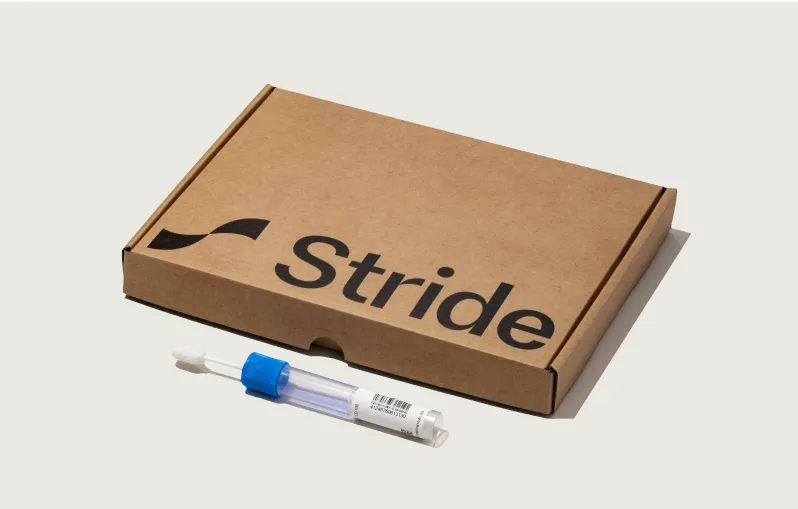






TPO Antibodies (Thyroid Peroxidase Antibodies) Blood Test
Thyroid peroxidase TPO antibodies are immune proteins directed against the thyroid peroxidase enzyme inside the thyroid gland. When raised, they strongly suggest autoimmune thyroid disease, most commonly Hashimoto thyroiditis, and can help explain underactive thyroid patterns, fluctuating symptoms, or a strong family history of thyroid problems.


Sample type
Blood sample

Collection
At-home

Often paired with
TSH, free T4, free T3, thyroglobulin antibodies TgAb, thyroid stimulating hormone receptor antibodies TRAb, vitamin B12, vitamin D, ferritin, cortisol

Fasting required
0
Key benefits of testing TPO antibodies
A TPO antibodies blood test can help you:
- Identify whether your thyroid symptoms are likely driven by autoimmune activity rather than non immune causes.
- Detect autoimmune thyroid disease earlier, sometimes before TSH or free T4 move out of range.
- Estimate the risk that subclinical hypothyroidism will progress to overt hypothyroidism in future.
- Clarify risk in people with a strong personal or family history of thyroid disease or other autoimmune conditions.
- Guide clinician decisions on how closely to monitor your thyroid, how often to retest, and when to consider treatment.
What are TPO antibodies
Thyroid peroxidase TPO is an enzyme found on the surface and within the membranes of thyroid follicular cells. Its main role is to catalyse key steps in the production of thyroid hormones, including the iodination of tyrosine residues and the coupling reactions that form T4 and T3.
TPO antibodies are autoantibodies produced by the immune system when it mistakenly recognises TPO as a target. Instead of focusing solely on pathogens like bacteria and viruses, immune cells generate antibodies against this self protein, which is a hallmark of thyroid autoimmunity.
In healthy individuals, TPO antibodies are absent or present only at very low levels. Persistently raised levels suggest that the immune system is actively targeting the thyroid and increase the likelihood of autoimmune thyroid disorders.
What do TPO antibodies do
TPO antibodies are markers of immune activity directed at the thyroid rather than direct measures of hormone production. Their presence and level can:
- Indicate that the immune system is attacking TPO and, by extension, the thyroid gland.
- Help differentiate autoimmune thyroid disorders from non autoimmune causes of hypothyroidism or goitre.
- Predict a higher chance of progression from mild or subclinical thyroid dysfunction to overt hypothyroidism.
In autoimmune thyroiditis, TPO antibodies are often present at high levels and coexist with inflammation and gradual destruction of thyroid tissue. Over time, this can reduce the gland's ability to produce sufficient thyroid hormones.
Why are TPO antibodies important for thyroid and overall health
Thyroid health influences energy, metabolism, mood, menstrual cycles, fertility, and cardiovascular risk. TPO antibodies matter because:
- They are the most sensitive single marker for autoimmune thyroid disease, including Hashimoto thyroiditis and, less commonly, Graves disease.
- Their presence increases the probability that unexplained fatigue, weight change, temperature sensitivity, or mood changes are related to thyroid autoimmunity.
- In people with borderline or subclinical hypothyroidism, TPO positivity suggests a higher likelihood of progression and can justify closer monitoring or earlier treatment.
TPO antibodies also signal broader autoimmune tendency. People with raised TPO antibodies are more likely to have or develop other autoimmune conditions such as type 1 diabetes, pernicious anaemia, or autoimmune adrenal disease, although this is not inevitable.
TPO antibodies vs TSH and free T4: what is the difference
These tests all relate to thyroid health but measure different aspects:
- TSH thyroid stimulating hormone is produced by the pituitary and acts as the main signal telling the thyroid to produce hormones. It is often the first marker to rise when thyroid output falls.
- Free T4 and free T3 measure the circulating levels of the main thyroid hormones available to tissues. Low free T4 with high TSH typically indicates overt hypothyroidism.
- TPO antibodies measure immune activity directed at the thyroid enzyme TPO. They do not directly measure hormone levels but indicate whether autoimmunity is present.
This distinction matters because:
- You can have raised TPO antibodies with normal TSH and free T4, indicating early or latent autoimmune thyroid disease.
- You can have hypothyroidism from non autoimmune causes, such as previous surgery, radioiodine treatment, or medication, with negative TPO antibodies.
- Together, these markers give a clearer picture of both thyroid function and its underlying cause.
What factors affect TPO antibody levels
TPO antibody levels are driven mainly by immune and genetic factors rather than lifestyle, though broader health context still matters.
1. Genetics and family history
- Autoimmune thyroid disease often runs in families, and TPO antibodies are more common when close relatives have Hashimoto thyroiditis, Graves disease, or other autoimmune conditions.
- Certain genetic backgrounds make the immune system more likely to produce TPO antibodies.
2. Other autoimmune conditions
- TPO antibodies are more frequent in people with autoimmune diseases such as type 1 diabetes, coeliac disease, rheumatoid arthritis, vitiligo, and pernicious anaemia.
- In these contexts, TPO testing can help screen for thyroid involvement when symptoms or abnormal TSH suggest thyroid dysfunction.
3. Sex and age
- TPO antibodies are more common in women than men and tend to become more prevalent with age.
- They are often detected in women during fertility work ups, pregnancy, or postpartum, when thyroid autoimmunity can influence outcomes and recovery.
4. Pregnancy and postpartum period
- Pregnancy can unmask or temporarily shift autoimmune thyroid activity. Some women develop or reveal raised TPO antibodies in pregnancy or after delivery.
- TPO positive women have a higher risk of postpartum thyroiditis and of developing persistent hypothyroidism later.
5. Iodine intake and environmental factors
- Very high or very low iodine intake may modulate thyroid autoimmunity in some populations, though genetics remain the primary driver.
- Certain medications, infections, and environmental exposures have been linked with triggering or unmasking autoimmune thyroiditis in susceptible individuals.
Can TPO antibodies be high if my thyroid function is normal
Yes. This is a common and important pattern.
- Many people have raised TPO antibodies with normal TSH and free T4, a state sometimes called euthyroid autoimmune thyroiditis.
- In these cases, the immune system is targeting the thyroid, but hormone output remains adequate, at least for now.
This pattern suggests:
- An increased lifetime risk of developing hypothyroidism compared with TPO negative individuals.
- The value of periodic monitoring of TSH and symptoms, especially if you have additional risk factors such as pregnancy plans or other autoimmune diseases.
Not everyone with positive TPO antibodies will develop overt thyroid disease, but the presence of antibodies is a meaningful piece of the puzzle.
Normal vs high TPO antibodies: what is the difference
Reference ranges for TPO antibodies vary slightly between laboratories and assay methods, but typically:
- A result within the reported reference range is considered negative or non significant for thyroid autoimmunity.
- Values above the cut off are considered positive and support a diagnosis of autoimmune thyroid disease when combined with clinical findings and other tests.
- Higher titres often correlate with more active or established autoimmune thyroiditis, though the exact number is less important than the presence and trend over time.
From a prevention and monitoring perspective:
- A positive TPO result in someone with mild TSH elevation suggests a higher likelihood of progression to overt hypothyroidism.
- A positive result in someone with normal TSH prompts periodic rechecking rather than immediate treatment in most cases.
Do I need to fast for a TPO antibodies test
No. Fasting is not usually required for TPO antibody testing. You can generally have the test at any time of day, with or without food.
If TPO antibodies are being measured as part of a broader panel that includes markers requiring fasting, such as lipids or glucose, you may still be asked to fast for those tests. In that case, follow the instructions provided.
How can TPO antibody related risk be managed clinician guided
There is no simple lifestyle intervention that reliably removes TPO antibodies, but you can still meaningfully manage risk and symptoms. Depending on your situation, clinician guided strategies may include:
- Monitoring thyroid function regularly with TSH and free T4, especially if you are TPO positive and have borderline or subclinical changes.
- Starting thyroid hormone replacement when indicated, for example in overt hypothyroidism or in some cases of subclinical hypothyroidism, particularly with symptoms or pregnancy.
- Addressing broader autoimmune and metabolic health through nutrition, movement, sleep, and stress management, which support overall resilience even if they do not directly normalise antibodies.
- Considering screening for associated autoimmune conditions where clinically appropriate, guided by your symptoms and family history.
In general, management focuses on optimising thyroid hormone levels and quality of life rather than chasing TPO antibody numbers alone. Trends may be informative but are not usually the primary treatment target.
Stride tests that include TPO Antibodies
FAQs
What is the TPO antibodies blood test
The TPO antibodies blood test measures thyroid peroxidase antibodies, immune proteins that target the TPO enzyme in the thyroid. Raised levels suggest autoimmune thyroid disease, most commonly Hashimoto thyroiditis, and can help explain thyroid symptoms and guide monitoring.
What is a normal TPO antibodies level
A normal TPO antibodies level is any value within the reference range reported by your laboratory. Results above the upper limit are considered positive and associated with thyroid autoimmunity, though exact cut offs vary between labs and need to be interpreted in context with TSH, free T4, and symptoms.
What is an optimal TPO antibodies level for thyroid health
From a thyroid health perspective, having TPO antibodies within the reference range is generally preferable, as it suggests no active thyroid targeting autoimmunity. If TPO antibodies are raised, the focus shifts to monitoring thyroid function regularly, managing symptoms promptly, and supporting overall autoimmune resilience rather than achieving a specific antibody number.
Are TPO antibodies better than TSH for diagnosing thyroid problems
TPO antibodies and TSH answer different questions. TSH reflects how well the thyroid is meeting the body's hormone needs, while TPO antibodies indicate whether autoimmunity is present. Together with free T4 and free T3, they give a more complete picture than either marker alone.
Can TPO antibodies be high if my thyroid levels are normal
Yes. TPO antibodies can be raised even when TSH and free T4 are still within the reference range. This suggests autoimmune thyroid activity is present but has not yet led to overt hypothyroidism. In this situation, your clinician will usually recommend periodic monitoring of thyroid function and symptoms over time.
Do I need TPO antibodies testing
You may benefit from a TPO antibodies test if you have symptoms suggestive of thyroid disease, abnormal TSH or free T4 results, a strong family history of autoimmune thyroid conditions, or other autoimmune diseases. It can also be helpful in the evaluation of subclinical hypothyroidism and in pregnancy planning for people at higher risk.
Do I need to fast for a TPO antibodies test
Fasting is not usually required for TPO antibody testing. You can typically have the test at any time of the day. If your blood draw includes other tests that require fasting, follow the instructions given for those.
How can I lower my TPO antibodies
There is no guaranteed way to normalise TPO antibodies, since they reflect underlying autoimmune activity. However, you can support thyroid and overall health by optimising thyroid hormone levels when needed, eating a nutrient dense diet, moving regularly, prioritising sleep, managing stress, and working with your clinician to monitor for and manage any associated autoimmune conditions.
Do I need a TPO antibodies test
If you want to understand whether your thyroid symptoms or abnormal blood tests are likely driven by autoimmunity, or you have a strong family or personal history of autoimmune conditions, discussing a TPO antibodies test with your clinician is a sensible step. Within StrideOne, TPO antibodies are measured alongside thyroid hormones and broader biomarkers so you can see how thyroid autoimmunity fits into your overall health picture and where to focus next.