
Menu
-
Shop All
Contact
hey@getstride.com
Stride Health Group
Stride Health Group Ltd
Company No 05158025
Lamas Road
Badersfield
Norwich
England
NR10 5FB
UK
Extra 10% Off | Enter code GIFT at checkout






Testosterone Blood Test
Testosterone is a key sex and anabolic hormone that shapes energy, libido, muscle mass, mood, red blood cell production and body composition in both men and women. A testosterone blood test helps explain symptoms from low libido and fatigue to acne, hair changes and metabolic shifts, and is central to understanding hormone balance and long term health.
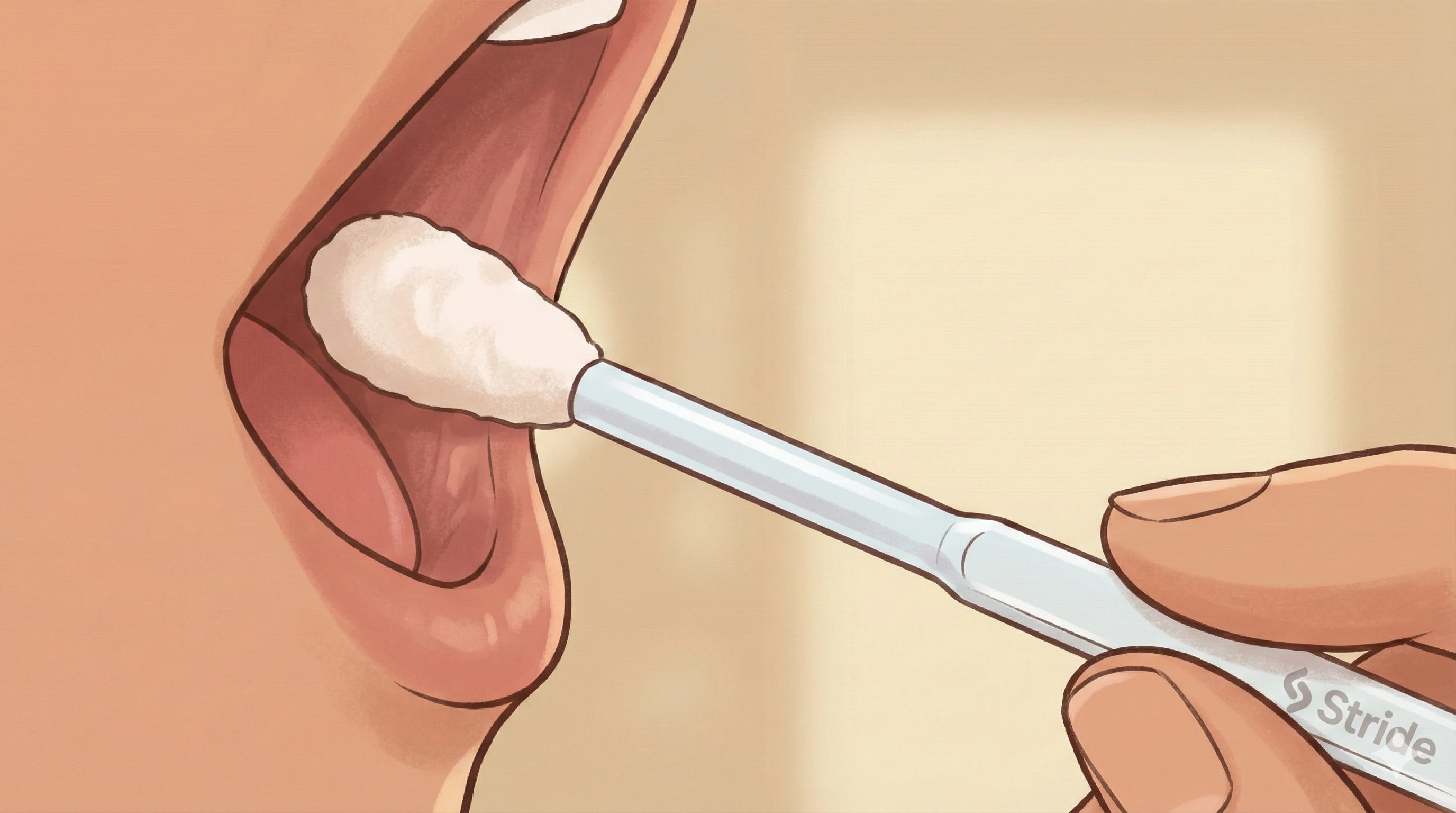

Sample type
Blood sample

Collection
At-home, At-home nurse visit

Often paired with
SHBG, Free Androgen Index (FAI), free testosterone, LH, FSH, oestradiol, prolactin, thyroid panel, metabolic markers

Fasting required
Often recommended in the morning for men (follow your test instructions)
Key Benefits of Testing Testosterone
- Helps investigate low libido, erectile issues, fatigue and reduced muscle mass in men
- Assesses androgen excess in women, including PCOS type patterns, acne and unwanted hair growth
- Provides context for mood changes, bone health, body composition and performance in all sexes
- Supports diagnosis and monitoring of hypogonadism, PCOS and other hormone disorders
- Tracks the impact of lifestyle interventions or testosterone related treatments over time
What is Testosterone?
Testosterone is a steroid hormone produced mainly by the testes in men and by the ovaries and adrenal glands in women. It circulates in the blood bound to proteins such as SHBG and albumin, with a smaller fraction remaining free and biologically active.
In men, testosterone is the dominant sex hormone, crucial for pubertal development, male reproductive function and long term vitality. In women, testosterone is present at lower concentrations but still plays a meaningful role in libido, mood, muscle maintenance and bone health.
What does Testosterone do in the body?
Testosterone acts on androgen receptors in tissues throughout the body. It supports muscle protein synthesis, red blood cell production, bone density and maintenance of lean mass. It also influences fat distribution, often favouring more central patterns when levels are low or when balance with other hormones is off.
In the brain, testosterone contributes to libido, motivation and mood. In the reproductive system, it supports sperm production in men and influences ovarian function, egg development and androgen to oestrogen balance in women. Imbalances in either direction can lead to symptoms such as low energy, low sex drive, fertility challenges, hair loss or acne.
Why is Testosterone important for long term health?
Beyond short term symptoms, testosterone has long term implications for metabolic and cardiovascular health, bone strength and quality of life. Persistently low testosterone in men can be associated with reduced bone density, loss of muscle mass, higher visceral fat and changes in insulin sensitivity. Persistently high androgen activity in women can drive PCOS patterns and influence metabolic risk.
Because testosterone interacts with SHBG, oestradiol, thyroid hormones and metabolic markers, measuring it as part of a wider panel reveals how connected systems are behaving. This is particularly important in prevention focused care, where the aim is not only to treat clear deficiency or excess but to optimise for resilience and longevity.
Total Testosterone vs Free Testosterone and FAI
Total testosterone measures all testosterone in the blood, including what is tightly bound to SHBG and what is loosely bound or free. However, only free and albumin bound testosterone are readily available to tissues. Free testosterone can be measured directly or estimated using total testosterone and SHBG.
Free Androgen Index (FAI) uses total testosterone and SHBG to approximate the proportion of active testosterone. In men, total testosterone plus SHBG or calculated free testosterone are commonly used to understand androgen status. In women, where values are lower, FAI is often more sensitive for detecting androgen excess or deficiency than total testosterone alone.
What factors affect Testosterone levels?
Testosterone levels are influenced by age, sex, genetics, pituitary signals, metabolic health and lifestyle. Key drivers include:
1. Age, sex and life stage
- Men have much higher testosterone than women, with peak levels in late adolescence and early adulthood
- In men, testosterone tends to decline gradually with age, with wide variation between individuals
- In women, testosterone peaks in early adulthood and changes across the menstrual cycle, pregnancy and menopause
2. Pituitary and hypothalamic signals
- LH and FSH from the pituitary regulate testosterone production in the testes and ovaries
- Pituitary or hypothalamic disorders can reduce LH and FSH, leading to low testosterone with inappropriately low or normal gonadotropins
- Tumours or other lesions can alter this axis in both men and women
3. Testicular and ovarian function
- Primary testicular failure in men, due to genetic conditions, infection, trauma, chemotherapy or aging, can lead to low testosterone with high LH and FSH
- In women, ovarian androgen production can be increased in PCOS and some other conditions, raising testosterone and related androgens
4. Metabolic health and body composition
- Obesity, insulin resistance and metabolic syndrome can lower total testosterone and SHBG in men, reducing free levels over time
- Central adiposity and metabolic strain can also modulate androgen production and conversion in women
- Weight loss and improved metabolic health often raise testosterone in men and can normalise androgen excess patterns in women
5. Medications and lifestyle factors
- Glucocorticoids, opioids, some antidepressants and many other drugs can lower testosterone
- Anabolic steroids and testosterone therapy increase androgen exposure, often suppressing natural production
- Sleep deprivation, chronic stress, excessive alcohol and physical overtraining can all affect androgen levels
Normal vs optimal Testosterone levels
Reference ranges for testosterone differ by sex, age and laboratory. In many adult men, normal total testosterone ranges are roughly around 8 to 30 nmol/L, while adult women usually sit below about 2 to 3 nmol/L, with specific intervals provided by each lab. A result below the reference range suggests biochemical hypogonadism in men, while a result above female ranges can indicate androgen excess in women.
From an optimisation lens, the sweet spot depends on symptoms, life stage and goals. Some men experience low testosterone symptoms at values technically in range, particularly if SHBG is high and free testosterone is low. Some women have androgen excess symptoms despite total testosterone near the upper normal limit. Context from SHBG, FAI, oestradiol and metabolic markers is essential.
Do I need to fast for a Testosterone test?
For men, testosterone is usually measured in the morning when levels are highest and most stable. Fasting is often recommended, especially when the test is part of a broader metabolic panel, to reduce short term variation and improve comparability.
In women, timing within the menstrual cycle can matter depending on the question being asked, although testosterone fluctuations across the cycle are smaller than for some other hormones. Always follow the timing and fasting guidance provided with your specific test so that results are reliable and repeatable.
What can raise Testosterone levels?
Elevated testosterone can be physiological or pathological, depending on context. Contributors include:
- Testosterone therapy or anabolic steroid use
- PCOS and other ovarian androgen excess conditions in women
- Rare androgen secreting tumors of the adrenal glands or gonads
- Very low SHBG, increasing the proportion of free testosterone for a given total level
In women, raised testosterone and FAI can drive hirsutism, acne, male pattern hair loss, irregular cycles and subfertility. In men, very high levels from exogenous use can increase red blood cell counts, impact cholesterol patterns and suppress natural production.
What can lower Testosterone levels?
Low testosterone has a wide range of potential causes. These can include:
- Primary testicular failure in men due to infection, trauma, surgery, radiation, chemotherapy or genetic conditions
- Functional suppression of the axis from chronic illness, obesity, stress, overtraining, severe calorie restriction or sleep disturbance
- Pituitary or hypothalamic disorders that reduce LH and FSH drive
- Certain medications such as opioids, glucocorticoids, some antidepressants and anti androgen therapies
Symptoms of low testosterone in men can include low libido, erectile dysfunction, reduced morning erections, low energy, depressed mood, reduced muscle mass, increased fat mass and lower performance in training. In women, low androgens can contribute to low libido, reduced vitality and changes in muscle and bone health.
Stride tests that include Testosterone
FAQs
What is the Testosterone blood test?
The testosterone blood test measures how much testosterone is circulating in your blood, usually as total testosterone, and helps assess sex hormone balance, reproductive health, energy, mood and body composition.
What is a normal Testosterone level?
Normal testosterone ranges depend on sex, age and the laboratory, but adult men typically have much higher values than adult women. Your lab report shows the reference interval for your sex and age so you can see where your result sits.
What are signs of low Testosterone?
In men, low testosterone can cause low libido, fewer morning erections, erectile issues, fatigue, low mood, reduced muscle mass, increased body fat and lower training response. In women, low testosterone can contribute to low sexual desire, reduced vitality and changes in muscle and bone health.
What are signs of high Testosterone?
In women, high testosterone or high FAI can lead to acne, unwanted facial or body hair, scalp hair thinning, oily skin, irregular periods and subfertility. In men, very high levels, particularly from external use, can cause acne, mood swings, increased red blood cells and suppression of natural production.
Do I need a Testosterone test?
You might consider a testosterone test if you have low libido, erectile issues, unexplained fatigue, mood changes, reduced muscle mass, acne, unwanted hair growth, irregular cycles or fertility challenges, or if you are tracking hormone health as part of a prevention focused strategy. Including testosterone in your Stride panels helps you see how this pivotal hormone interacts with 500 plus other biomarkers and whether your interventions are genuinely moving the needle.