
Menu
-
Shop All
Contact
hey@getstride.com
Stride Health Group
Stride Health Group Ltd
Company No 05158025
Lamas Road
Badersfield
Norwich
England
NR10 5FB
UK
Extra 10% Off | Enter code GIFT at checkout


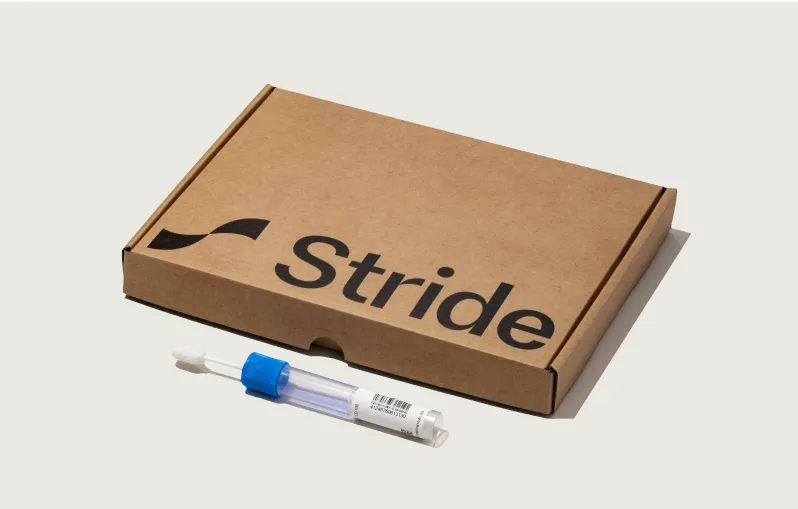





T4 Blood Test (Thyroxine)
T4 (thyroxine) is the main hormone produced by your thyroid gland and a central driver of metabolism, energy use and temperature regulation. A T4 blood test helps detect underactive or overactive thyroid states and provides key context for symptoms like fatigue, weight change and heart rate shifts when interpreted with TSH and other thyroid markers.
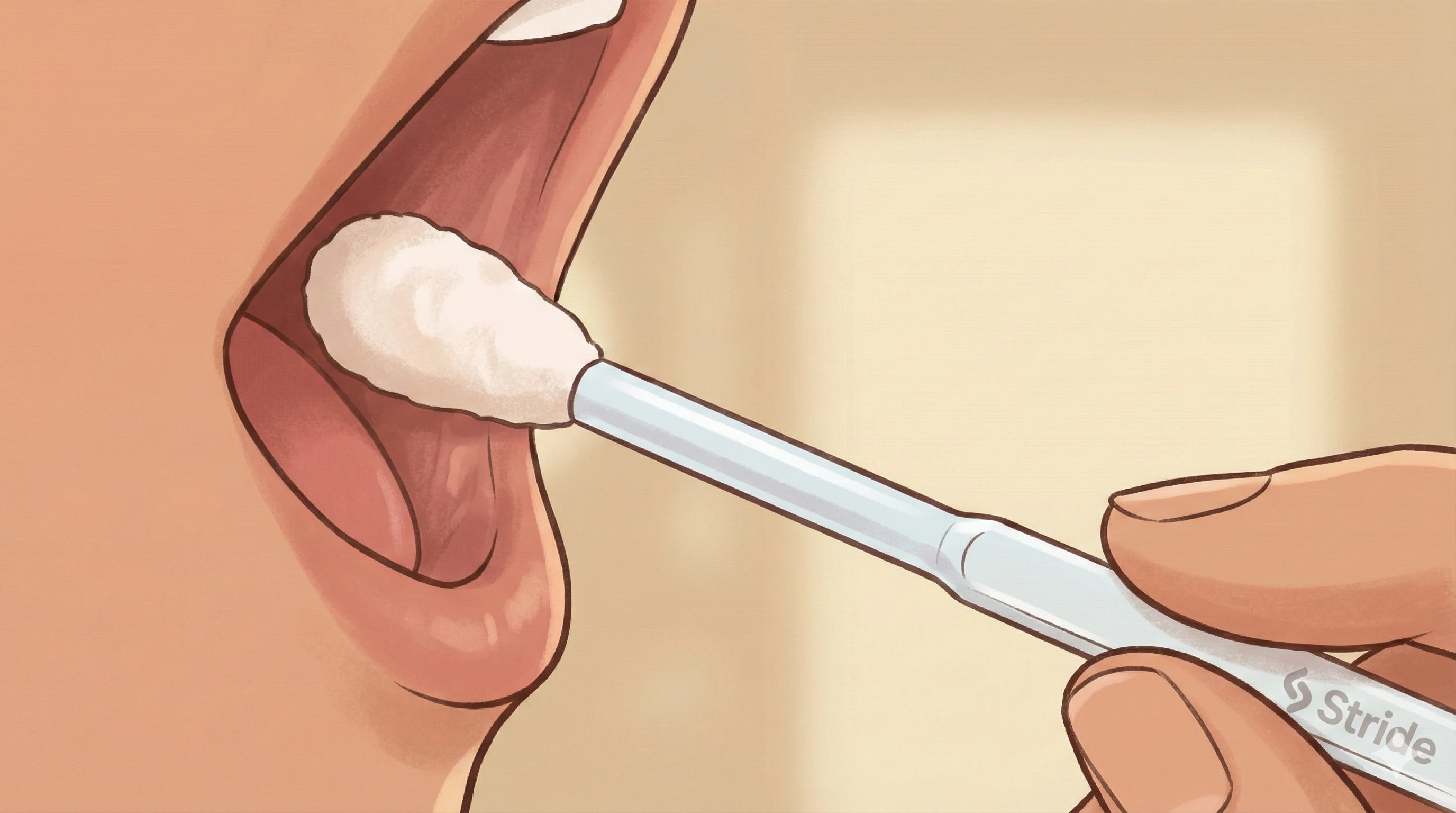

Sample type
Blood sample

Collection
At-home

Often paired with
TSH, Free T4, Free T3, thyroid antibodies (Anti TPO, Anti TG), lipid profile, glucose and metabolic markers

Fasting required
Not usually required (follow your test instructions)
Key Benefits of Testing T4
- Measures how much thyroxine your thyroid is releasing into the bloodstream
- Supports diagnosis of hypothyroidism and hyperthyroidism when combined with TSH
- Helps clarify thyroid status where symptoms and TSH do not fully match
- Monitors thyroid hormone replacement or suppression therapy over time
- Provides metabolic context for weight changes, energy, mood, bowel habits and heart rate
What is T4 (Thyroxine)?
Thyroxine, or T4, is the principal hormone produced by the thyroid gland. It is made from tyrosine and iodine and released into the bloodstream where most of it binds to carrier proteins such as thyroxine binding globulin, albumin and transthyretin.
T4 itself has modest biological activity compared with T3. Its main role is to act as a circulating prohormone that can be converted into T3 inside tissues. Total T4 tests measure both the protein bound and free fractions, while Free T4 tests measure only the unbound, active portion.
What does T4 do in the body?
T4 is distributed via the circulation to organs including the liver, muscles, brain and heart. In these tissues, enzymes called deiodinases convert T4 into T3, the more active hormone that binds to thyroid receptors in cell nuclei and alters gene expression. Through this pathway, thyroid hormones regulate heat production, oxygen use, heart contractility, gastrointestinal motility and many aspects of brain and muscle function.
Healthy T4 production supports steady energy, a comfortable temperature range, a regular heart rate, predictable digestion and stable mood. Too little circulating T4 contributes to hypothyroid symptoms such as fatigue, weight gain, feeling cold and low mood. Too much T4 contributes to hyperthyroid symptoms such as weight loss, palpitations, heat intolerance, anxiety and tremor.
Why is T4 important for thyroid health?
T4 is the main output of the thyroid gland, so it provides a direct measure of hormone production. TSH, produced by the pituitary, responds to circulating T4 and T3 levels in a feedback loop. Checking both TSH and T4 together helps distinguish between a thyroid gland problem and an issue higher up in the control system.
In primary hypothyroidism, TSH is high and T4 is low. In primary hyperthyroidism, TSH is suppressed and T4 is high. In central (pituitary or hypothalamic) thyroid problems, T4 may be low while TSH is inappropriately normal or low. T4 also helps monitor people on levothyroxine, a synthetic form of T4, and those on treatments that alter thyroid function.
Total T4 vs Free T4 and TSH
Total T4 measures all thyroxine in the blood, including what is bound to proteins and what is free. Because binding proteins can change with pregnancy, oestrogen therapy, liver disease and other conditions, total T4 can be influenced by factors beyond thyroid output.
Free T4 measures just the unbound hormone that is available to tissues and is therefore more specific for thyroid function. TSH shows how the pituitary is responding to circulating hormones. In most modern assessments, TSH and Free T4 form the core of thyroid evaluation, with total T4 adding context in selected situations.
What factors affect T4 levels?
T4 levels are shaped by thyroid hormone production, protein binding and conversion into T3 and other metabolites. Influential factors include:
1. Thyroid gland function
- Autoimmune hypothyroidism (such as Hashimoto thyroiditis) lowers T4 production over time
- Graves disease and other hyperthyroid conditions increase T4 release
- Thyroid surgery, radioiodine therapy or congenital thyroid absence reduce T4 production capacity
2. Pituitary and hypothalamic control
- Pituitary or hypothalamic disorders that impair TSH production can lead to low T4 with a low or in range TSH
- Tumors, infiltrative diseases or pituitary damage from surgery, radiotherapy or trauma can all impact the axis
3. Binding proteins and systemic conditions
- Pregnancy, oestrogen therapy and some liver conditions increase T4 binding proteins, raising total T4 while Free T4 may remain normal
- Severe illness, low protein states and certain medications can lower binding proteins and modify total T4 without necessarily altering Free T4
4. Medications
- Levothyroxine and other thyroid hormone replacements increase T4 levels
- Amiodarone, lithium, some anti seizure drugs and high dose steroids can alter thyroid hormone synthesis, release or conversion
- Biotin supplements in high doses can interfere with some assays if not paused before testing, depending on the lab method
5. Nutrition and systemic health
- Severe iodine deficiency or, in some cases, very high iodine intake can impair normal thyroxine synthesis
- Prolonged undernutrition or serious illness can alter thyroid hormone metabolism and conversion, affecting T4 and T3 patterns
Normal vs optimal T4 levels
Adult reference ranges for total T4 often sit roughly around 50 to 160 nmol/L, while Free T4 reference intervals typically sit around 10 to 22 pmol/L, with exact values depending on the laboratory and assay. A total or Free T4 below the reference range suggests hypothyroidism or central thyroid dysfunction, while a value above suggests hyperthyroidism or overtreatment with thyroid hormone.
From an optimisation perspective, it is not just the absolute T4 number that matters but how it sits relative to TSH, Free T3, antibodies and your symptoms. Two people can share the same T4 level and feel very different. The goal is a stable pattern that matches your life stage, context and how you want to feel and perform.
Do I need to fast for a T4 test?
A T4 test generally does not require fasting. Blood samples are often taken in the morning, particularly if T4 is being measured with TSH and other hormones that have diurnal patterns.
If you are taking levothyroxine, your clinician may advise a consistent approach to whether you take your dose before or after the test to allow like for like comparison over time. If T4 is included within a broader fasting panel, follow the fasting instructions provided for the full set of tests.
What can raise T4 levels?
Raised T4 levels reflect increased thyroid hormone production or excessive replacement therapy. Common causes include:
- Graves disease and other forms of primary hyperthyroidism
- Over treatment with levothyroxine or combination therapy that includes T4
- Thyroiditis in its early or inflammatory phase, when stored hormone leaks into the circulation
- High estrogen states or increased binding proteins, which can raise total T4 while Free T4 remains normal
Persistently high T4, particularly with suppressed TSH and hyperthyroid symptoms, usually requires further evaluation and clinician guided management.
How can T4 be supported over time?
Supporting a healthy T4 pattern is about maintaining a thyroid axis that produces enough hormone for your needs without overshooting. Practical, clinician aligned steps often include:
- Using TSH and Free T4, and sometimes Free T3 and antibodies, to guide levothyroxine dosing rather than focusing on T4 alone
- Treating underlying autoimmune thyroid disease and reviewing medications that affect thyroid function
- Ensuring appropriate iodine intake and supporting overall nutritional status, including selenium and iron within safe limits
- Monitoring thyroid function when starting or changing medications known to interact with the thyroid
For some people, small dose adjustments or timing changes of medication can make a meaningful difference in symptoms, even within the reference range. Regular retesting gives a picture of how your thyroid responds over months and years rather than at a single snapshot.
Stride tests that include T4
FAQs
What is the T4 blood test?
The T4 blood test measures the level of thyroxine, the main hormone produced by your thyroid gland, and helps assess whether your thyroid is underactive, overactive or responding as expected to treatment.
What is a normal T4 level?
Normal total T4 levels in adults are typically around 50 to 160 nmol/L and normal Free T4 levels around 10 to 22 pmol/L, though exact ranges differ by laboratory. Your result is interpreted in context of these intervals, your TSH and your clinical picture.
Can T4 be abnormal when TSH is normal?
Yes. Total T4 can be altered by changes in binding proteins, while Free T4 can occasionally sit outside the reference range in some central thyroid disorders or during certain medications, even if TSH appears normal. This is why a full thyroid panel can be more informative than TSH alone in complex situations.
What does a low T4 result mean?
A low T4 result often indicates hypothyroidism, especially when TSH is raised. It can also be seen in central thyroid disorders, in some severe illnesses and if thyroid tissue has been removed or ablated. Typical symptoms include fatigue, weight gain, feeling cold, dry skin and low mood, but people vary.
What does a high T4 result mean?
A high T4 result usually indicates hyperthyroidism or overtreatment with thyroid hormone, particularly when TSH is suppressed. Symptoms can include palpitations, weight loss, heat intolerance, tremor, anxiety and sleep disturbance. Transient elevations can occur in thyroiditis or around medication changes.
Do I need a T4 (Thyroxine) test?
You might consider a T4 test if you have symptoms suggestive of thyroid imbalance, if a previous TSH result was borderline or abnormal, if you are on thyroid medication and want to check dosage, or if you are tracking thyroid function as part of a broader preventative health strategy. Including T4 in your Stride panels helps you see how this core hormone fits into your network of more than 500 biomarkers and whether your choices are truly moving the needle.