
Menu
-
Shop All
Contact
hey@getstride.com
Stride Health Group
Stride Health Group Ltd
Company No 05158025
Lamas Road
Badersfield
Norwich
England
NR10 5FB
UK
Extra 10% Off | Enter code GIFT at checkout


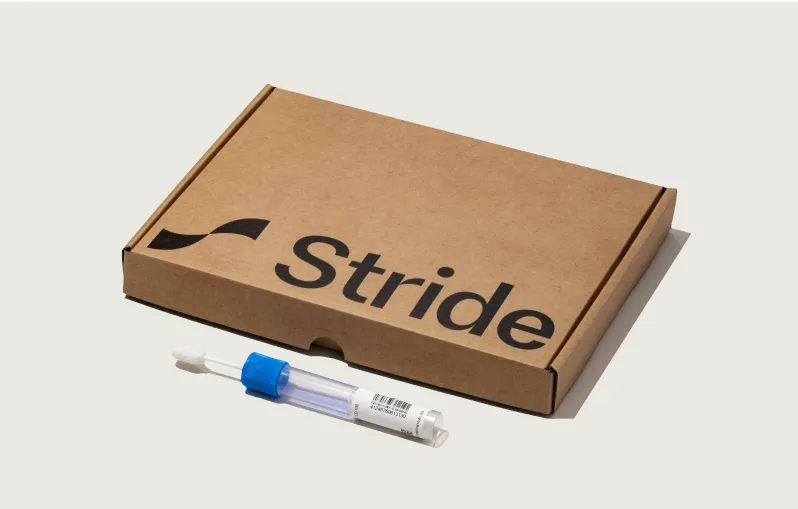





Red Cell Distribution Width (RDW) Blood Test
Red cell distribution width RDW describes how much your red blood cells vary in size. When RDW is combined with haemoglobin, MCV, and other red cell indices, it becomes a powerful way to spot early anaemia, distinguish between different types of anaemia, and flag wider health risks linked to chronic disease and inflammation.

Sample type
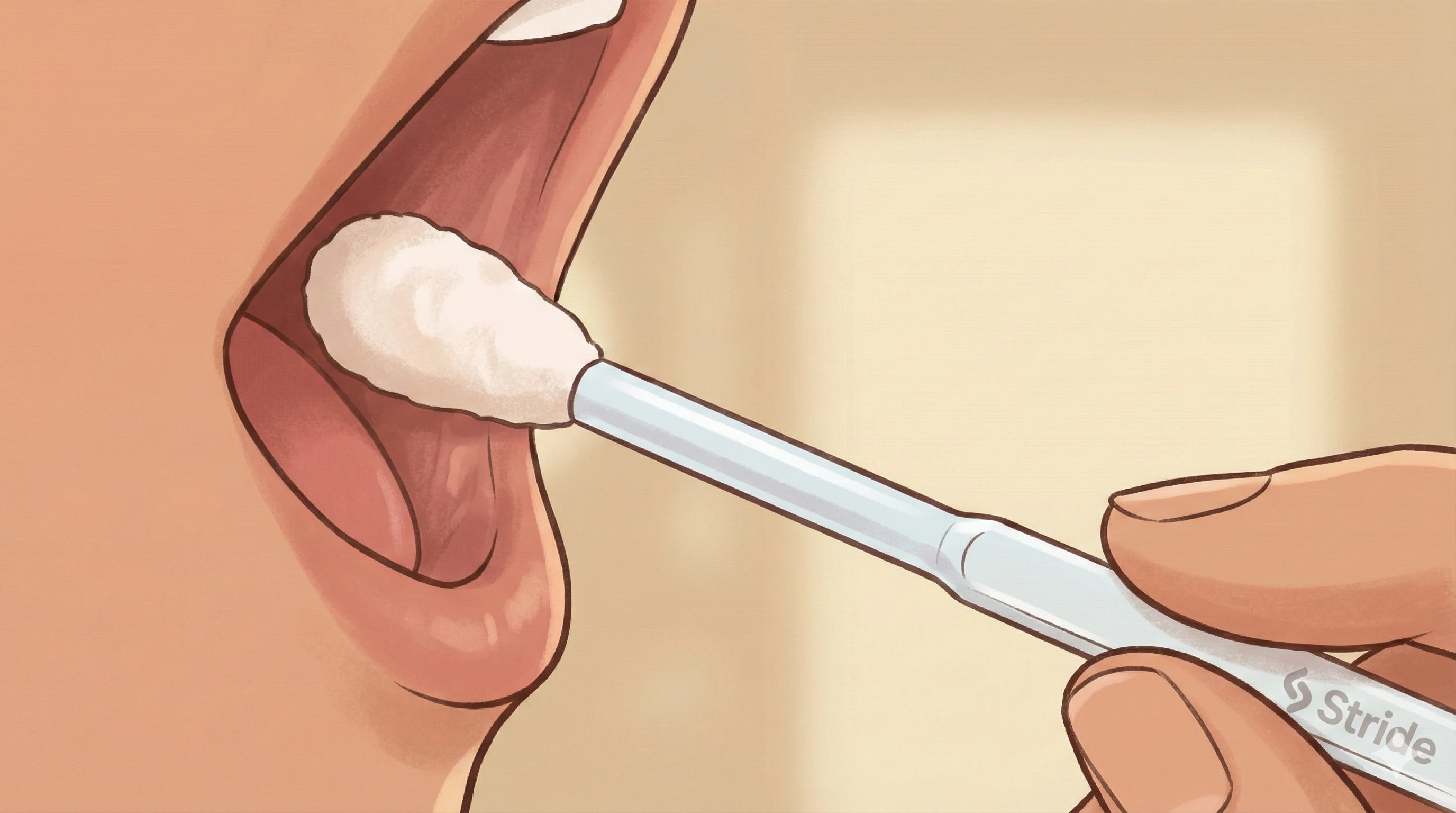
Blood sample

Collection
At-home

Often paired with
Haemoglobin, haematocrit, red blood cell count RBC, mean corpuscular volume MCV, mean corpuscular haemoglobin MCH, mean corpuscular haemoglobin concentration MCHC, ferritin and iron studies, vitamin B12, folate, kidney and liver function, inflammatory markers

Fasting required
0
Key benefits of testing Red Cell Distribution Width (RDW)
An RDW blood test can help you:
- Detect early changes in red blood cell size that may precede obvious anaemia.
- Distinguish iron deficiency anaemia from thalassaemia trait and anaemia of chronic disease when interpreted with MCV and other indices.
- Flag nutritional problems such as iron, B12, or folate deficiency before haemoglobin falls markedly.
- Provide extra prognostic insight in people with cardiovascular and chronic disease, where high RDW has been linked with worse outcomes.
- Guide more focused testing for blood loss, malabsorption, chronic inflammation, or bone marrow disorders.
What is Red Cell Distribution Width (RDW)
RDW stands for red cell distribution width and reflects how much variation there is in the size of your red blood cells. It is:
- Calculated by looking at the spread of red blood cell volumes around the mean cell volume MCV.
- Expressed as a percentage, with typical adult reference ranges often around 11 to 14 or 11 to 15 percent depending on the laboratory.
- Reported automatically as part of a full blood count.
A low or normal RDW indicates that most red cells are similar in size. A high RDW means there is greater variation with both smaller and larger red cells present.
What does RDW show about your red blood cells
RDW shows how uniform or mixed your red blood cell population is:
- Normal RDW suggests a relatively uniform red cell size.
- High RDW indicates anisocytosis, meaning there is a wide spread of cell sizes, often reflecting a mixture of older normal cells and newer cells that are either smaller or larger due to nutrient or marrow issues.
In anaemia workups:
- High RDW is common in iron deficiency, B12 and folate deficiency, mixed nutritional deficiencies, and some haemolytic states.
- Normal RDW in microcytic anaemia is more suggestive of thalassaemia trait, where cells are uniformly small.
Why is RDW important for anaemia, chronic disease, and long term risk
RDW matters because:
- It helps refine anaemia diagnosis: a high RDW with low MCV points toward iron deficiency, while low MCV with normal RDW points more toward thalassaemia trait.
- It can rise early in iron deficiency, sometimes before MCV falls, providing an early warning of developing microcytic anaemia.
- High RDW has been associated in research with higher risks of adverse outcomes in cardiovascular disease and other chronic illnesses, reflecting underlying inflammation, oxidative stress, and marrow stress.
RDW is therefore both a classification tool for anaemia and a subtle marker of broader physiological strain.
RDW vs MCV vs haemoglobin vs ferritin: what is the difference
These markers work together to tell the red cell story:
- RDW shows variation in red cell size.
- MCV shows average red cell size.
- Haemoglobin shows the total oxygen carrying protein level.
- Ferritin shows iron stores.
Common patterns:
- Iron deficiency anaemia: low MCV, high RDW, low ferritin.
- Thalassaemia trait: low MCV, normal RDW, normal or high RBC count, often normal ferritin.
- B12 or folate deficiency: high MCV, high RDW, often low or borderline haemoglobin.
- Anaemia of chronic disease: normal or low MCV, normal or mildly raised RDW, normal or high ferritin.
What factors affect RDW levels
RDW is influenced by how consistently red blood cells are produced and how they are lost or destroyed. Key influences include:
1. Iron deficiency and chronic blood loss
- Iron deficiency causes the bone marrow to produce smaller red cells and can mix new microcytic cells with older normal sized ones, raising RDW.
- Chronic blood loss from heavy periods, gastrointestinal bleeding, or frequent blood donation gradually increases RDW as iron deficiency develops.
2. Vitamin B12 and folate status
- B12 or folate deficiency leads to larger than normal red cells macrocytes and often increases RDW because size variation widens.
- Mixed deficiencies iron plus B12 or folate can produce a very broad RDW with both small and large cells together.
3. Thalassaemia and haemoglobinopathies
- Thalassaemia trait usually produces uniformly small red cells, often with normal RDW despite low MCV.
- RDW helps differentiate thalassaemia trait from iron deficiency anaemia when both present with microcytosis.
4. Haemolysis, acute bleeding, and bone marrow response
- When the marrow responds to blood loss or haemolysis by releasing more reticulocytes larger young red cells, RDW can rise.
- Bone marrow disorders such as myelodysplastic syndromes can also widen RDW due to abnormal red cell production.
5. Chronic disease, inflammation, and organ function
- Chronic liver or kidney disease, systemic inflammation, and some cancers can increase RDW, sometimes even without clear anaemia.
- RDW may reflect broad physiological stress, oxidative damage, and disordered marrow signalling in these conditions.
Normal vs high vs low RDW: what is the difference
Reference ranges vary slightly, but for adults:
- Normal RDW is often around 11 to 14 or 11 to 15 percent.
- High RDW means a percentage above the upper limit for your lab, indicating increased variation in red cell size.
- Low RDW is uncommon and usually not clinically significant; a normal or low RDW generally indicates uniform cell size.
Broad interpretation:
- High RDW with anaemia suggests nutritional deficiencies iron, B12, folate, haemolysis, or mixed causes.
- High RDW without obvious anaemia can signal subclinical nutrient deficiency, chronic disease, or cardiometabolic stress and merits context driven follow up.
- Normal RDW narrows the list of likely anaemia causes and can support diagnoses like thalassaemia trait or pure acute blood loss.
Do I need to fast for an RDW blood test
Fasting is not usually required for an RDW test.
You may be asked to:
- Fast if RDW is measured as part of a fasting metabolic or lipid panel.
- Maintain your usual hydration and activity before the test so red cell indices reflect your typical baseline.
How can abnormal RDW be managed clinician guided
Managing RDW focuses on addressing the cause of red cell size variation rather than targeting the percentage itself. Depending on your situation, clinician guided steps may include:
- Checking haemoglobin, MCV, MCH, MCHC, and RDW together to classify the anaemia pattern.
- Testing ferritin and iron studies, vitamin B12, folate, and, where indicated, thyroid, liver, kidney, and inflammatory markers.
- Investigating menstrual, gastrointestinal, or other sources of chronic blood loss.
- Considering haemoglobinopathy testing when microcytosis is present with normal ferritin and RDW patterns suggest thalassaemia.
- Treating underlying deficiencies, chronic diseases, or marrow disorders and monitoring RDW and related indices over time.
Stride tests that include Red Cell Distribution Width (RDW)
FAQs
What is the Red Cell Distribution Width (RDW) blood test
The RDW blood test measures how much your red blood cells vary in size and is reported automatically as part of a full blood count. It helps diagnose and classify anaemia and can also provide insight into broader health and chronic disease risk when interpreted with other red cell indices.
What is a normal RDW level
In most adults, a normal RDW is around 11 to 14 or 11 to 15 percent, though the exact reference range depends on the laboratory. Your report will show the range used and whether your RDW is within, below, or above that range.
What is an optimal RDW level for health and performance
Optimal RDW is a stable value within the normal range, indicating a relatively uniform red cell population and balanced red cell production. The best pattern for you is assessed together with haemoglobin, MCV, ferritin, B12, folate, inflammation, and how you feel rather than focusing on RDW alone.
Is RDW better than MCV for checking anaemia
RDW and MCV provide different but complementary information. MCV shows average cell size, while RDW shows how varied the sizes are. Together they help distinguish iron deficiency, thalassaemia trait, B12 or folate deficiency, and mixed patterns much more accurately than either alone.
Can RDW be high even if my haemoglobin is normal
Yes. RDW can be high in early iron deficiency, mild B12 or folate deficiency, chronic disease, or systemic inflammation even when haemoglobin is still within range. This can act as an early signal that red cell production is under stress and deserves attention.
Do I need an RDW blood test
You will usually have RDW measured whenever you have a full blood count, which is one of the most common health tests. It is particularly relevant if you have fatigue, reduced performance, heavy periods, gut symptoms, restricted diets, chronic illness, or a family history of blood disorders.
Do I need to fast for an RDW test
Fasting is not generally required for RDW by itself. If your full blood count is part of a fasting panel, you will follow those instructions and RDW will be calculated from that sample.
How can I improve my RDW result
Improving RDW involves correcting iron, B12, or folate deficiency where present, treating chronic blood loss, managing liver, kidney, thyroid, or inflammatory disease, and supporting healthy bone marrow function with adequate nutrition, sleep, and reduced alcohol, all under clinical guidance. As these drivers are addressed, RDW and other red cell indices usually move toward a more uniform and healthier pattern.
Do I need a Red Cell Distribution Width (RDW) blood test
If you want a more detailed understanding of why your energy, mood, or performance is not where you expect it to be, or you have risk factors for anaemia, chronic disease, or nutrient deficiencies, discussing a full blood count including RDW with your clinician is a practical step. Within StrideOne, RDW sits alongside hundreds of other biomarkers, helping you see exactly how this red cell size marker fits into your broader health, resilience, and longevity story.