
Menu
-
Shop All
Contact
hey@getstride.com
Stride Health Group
Stride Health Group Ltd
Company No 05158025
Lamas Road
Badersfield
Norwich
England
NR10 5FB
UK
Extra 10% Off | Enter code GIFT at checkout





RASD1 Gene Test (Ras Related Dexamethasone Induced 1)
The RASD1 gene test analyses DNA for variants in a dexamethasone induced small G protein that sits at the intersection of stress signalling, nitric oxide pathways, and circadian regulation. Understanding your RASD1 status adds genetic context to how your brain and vascular system respond to stress, osmotic changes, and neuronal activation so you can personalise prevention and recovery strategies rather than guessing.
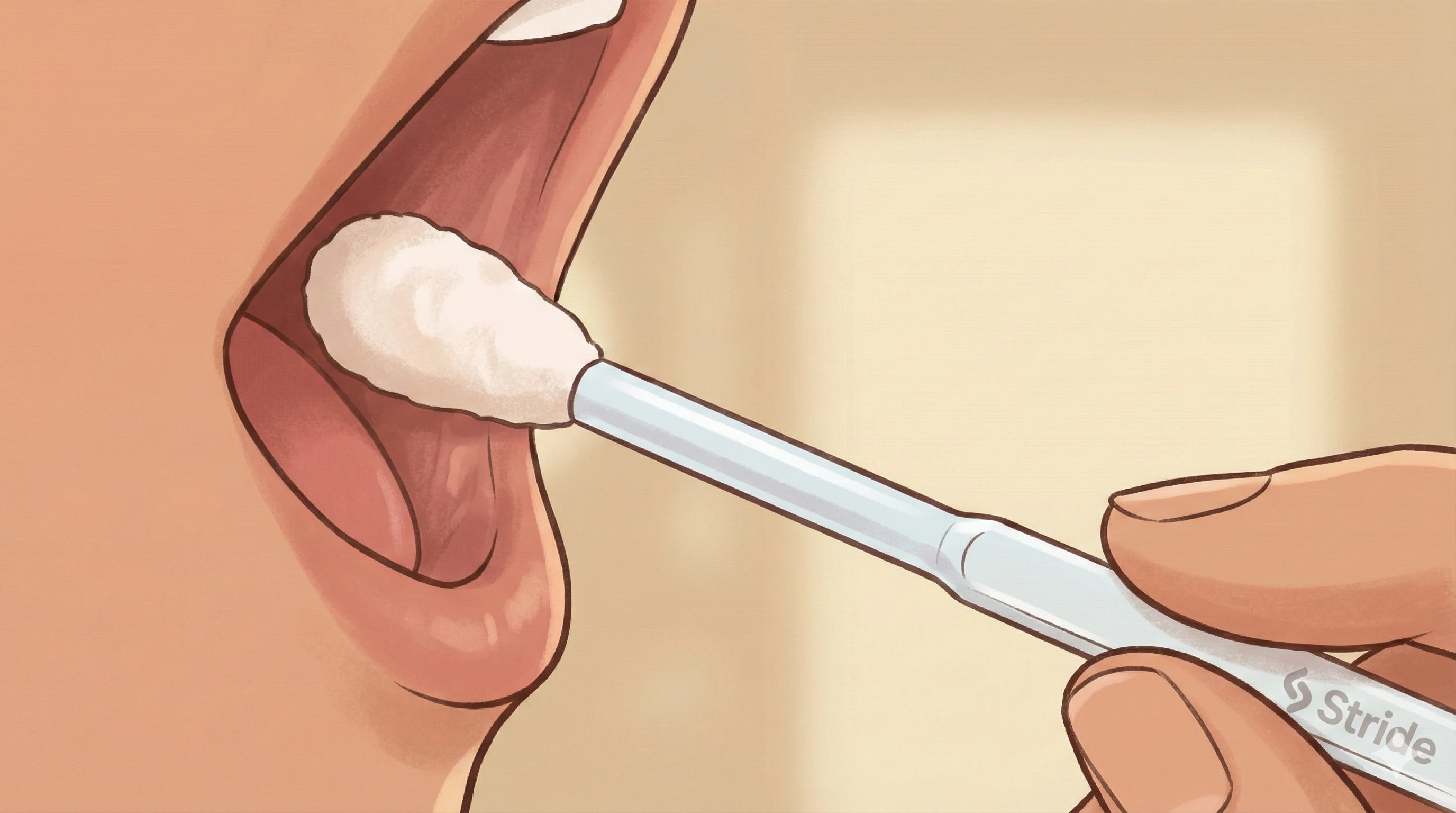

Sample type
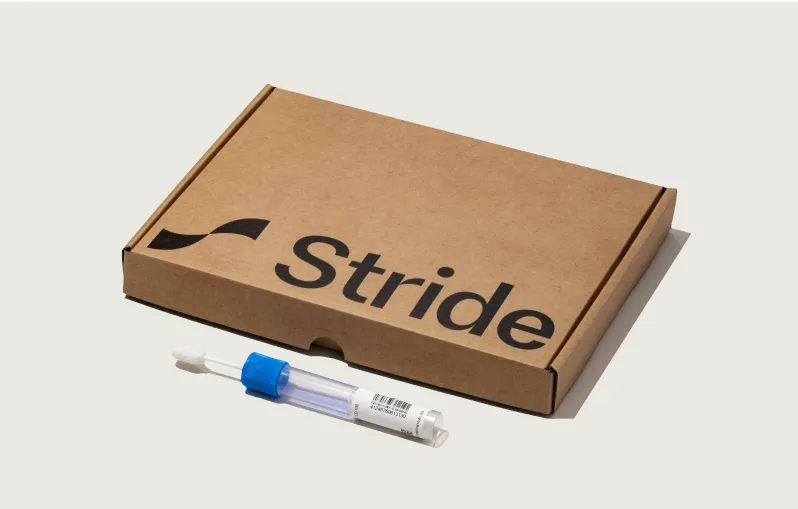
Cheek swab, Blood sample

Collection
At-home

Often paired with
PER2, PER3, VIP, HPA axis and cortisol profiles, cardiometabolic markers, mood and cognitive assessments

Fasting required
Not required for DNA testing; follow clinical guidance for any accompanying blood tests
Key benefits of testing RASD1
- Identify whether you carry RASD1 variants that may alter small GTPase signalling, potentially influencing how neurons integrate nitric oxide, NMDA receptor activity, and G protein coupled receptor inputs.
- Help explain differences in stress reactivity, osmotic stress handling, or circadian phase shifting in a small subset of people, by highlighting a genetic tendency that can be supported rather than fixed.
- Add context to research informed discussions around neurovascular health, brain plasticity, and exercise induced neurogenesis where RASD1 has been implicated as a modulator in experimental models.
- Inform personalised strategies for sleep, stress, training, and cardiovascular prevention when RASD1 is viewed alongside clock genes, HPA axis markers, and lifestyle data, rather than as a single deterministic marker.
- Clarify your baseline signalling architecture around cAMP, nitric oxide, and ERK/MAPK pathways, so long term optimisation plans can be built on both genetics and dynamic biomarkers.
What is the RASD1 gene?
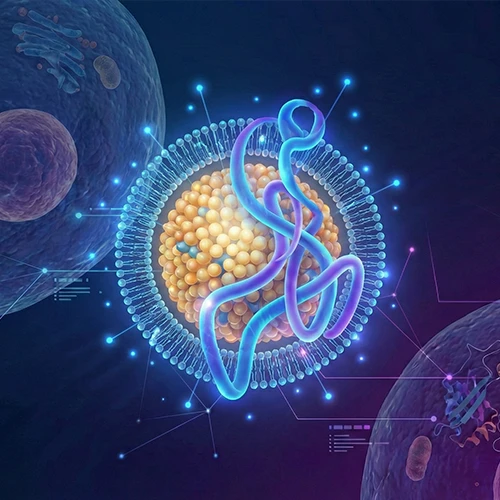
RASD1 (Ras related dexamethasone induced 1), also known as Dexras1, encodes a member of the Ras superfamily of small GTP binding proteins that act as molecular switches in multiple signalling pathways. The protein contains conserved GTPase domains and a C terminal CAAX motif that helps target it to membranes where it can interact with G proteins and adaptor proteins.
RASD1 expression is found in several tissues, including brain, heart, liver, kidney, and bone marrow, and is inducible by glucocorticoids such as dexamethasone and by osmotic stress in hypothalamic neurons. This inducible pattern has positioned RASD1 as a potential regulator of stress related transcriptional responses, particularly in vasopressin and corticotropin releasing hormone producing neurons.
What does RASD1 do?
RASD1 functions as a small G protein that can modulate multiple signalling cascades. It has been shown to act as a guanine nucleotide exchange factor for Gi/Go proteins, influence adenylyl cyclase activity, and interact with neuronal nitric oxide synthase linked adaptor proteins such as CAPON, connecting NMDA receptor driven nitric oxide production to downstream Ras family signalling.
In hypothalamic and circadian centres, RASD1 is induced by glucocorticoids and osmotic challenges and can inhibit the cAMP PKA CREB signalling pathway, acting as a brake on stress induced gene transcription in vasopressin expressing neurons. Experimental work also implicates RASD1 in photic and nonphotic phase shifting of the circadian clock and in exercise dependent neurogenesis, highlighting its role as a fine tuner of how environmental stimuli reshape neuronal circuits.
Why is RASD1 important for health?
RASD1 bridges several interconnected systems: stress and HPA axis regulation, circadian rhythm adjustment, nitric oxide and NMDA receptor signalling, and certain aspects of vascular and tumour biology. Altered RASD1 expression has been studied in relation to hypothalamic responses to stress, glioma cell migration and survival, neurogenesis, and endothelial survival pathways in experimental and observational research.
For everyday health, RASD1 is best viewed as part of a wider network that determines how your brain and vasculature adapt to repeated stressors such as sleep disruption, exercise, osmotic load, and inflammatory signals. Common variants appear to act as modulators rather than direct causes of disease, with real world impact emerging mainly when combined with other genetic factors, environmental exposures, and lifestyle patterns.
RASD1 vs other stress markers
It is easy to assume that RASD1 testing and standard stress or cardiovascular markers tell you the same story, but they capture different layers of your biology. Hormones such as cortisol or vasopressin, alongside heart rate variability and blood pressure, describe your current stress and autonomic state; RASD1 testing looks at inherited variants that may subtly influence how signalling cascades respond when those hormones and neurotransmitters are activated.
This distinction matters because you can have RASD1 variants and still show completely healthy stress biomarkers and cardiovascular profiles when your lifestyle supports robust recovery and rhythm alignment. Conversely, elevated stress hormones, hypertension, or mood changes can occur without notable RASD1 variants due to other signalling pathways, environmental factors, or coexisting conditions that are often more actionable in day to day practice.
Factors that modify RASD1 variants
The influence of RASD1 variants is strongly shaped by your stress load, sleep, environment, and underlying health rather than the gene alone, which means you have meaningful room to change the trajectory. Several modifiable factors can either buffer or amplify any genetic tendency.
- HPA axis activation and recovery: Chronic psychological stress, poor sleep, and frequent activation of glucocorticoid pathways drive the context in which RASD1 is induced. Tools that improve stress recovery, such as exercise, breath work, and structured downtime, often matter more than genotype.
- Circadian and light environment: Because RASD1 participates in light and activity related phase shifting in experimental models, irregular light exposure, night work, and social jet lag can interact with this pathway. Regular light cues and stable routines support healthier signalling dynamics.
- Metabolic and vascular health: Blood pressure, endothelial function, and metabolic status shape the environment in which nitric oxide and Ras family pathways operate. Optimising blood pressure, lipids, and glucose handling reduces the likelihood that small signalling differences translate into vascular risk.
- Brain and cognitive demands: High cognitive load environments, sleep restriction, and intensive training can stress plasticity related pathways where RASD1 has been implicated in experimental neurogenesis work. Aligning workload and recovery cushions any underlying sensitivity.
- Coexisting conditions and medications: Conditions or drugs that affect NMDA receptor signalling, nitric oxide synthase activity, or glucocorticoid levels can change how important RASD1 becomes in practice. In these scenarios, genotype information is best interpreted alongside specialist input and broader biomarker data.
RASD1 variants without symptoms
Yes, and this is expected. Most people with common RASD1 variants never develop a recognisable RASD1 specific syndrome and only discover their status through broad DNA panels that cover stress and signalling genes.
Features sometimes linked to stress signalling pathways, such as variable stress tolerance, mood shifts, or blood pressure changes, are non specific and influenced by many other genes and environmental factors. Severe or rare disorders directly driven by RASD1 have not been widely characterised in the general population, and experimental findings in cell or animal models do not automatically translate into clear human symptom clusters.
Common RASD1 genotypes
Common RASD1 genotypes primarily differ in how they may influence expression levels or protein function in response to stimuli such as glucocorticoids or nitric oxide. While research is still emerging, the practical viewpoint is to see these variants as potential modifiers of signalling rather than deterministic labels.
- Reference RASD1 pattern: Reflects the typical sequence and regulation observed in most of the population, where stress and circadian responses depend more on overall HPA axis dynamics, clock genes, and lifestyle factors than on RASD1 alone.
- Variants affecting regulatory regions or protein sequence: Certain polymorphisms may alter how strongly RASD1 is upregulated or how efficiently it interacts with partners such as G proteins, CAPON, or FE65, but real world impact is likely modest and context dependent.
- Rare or high impact variants: In clinical testing panels, rare variants may be reported, but their significance often remains uncertain and needs to be interpreted within family history, phenotype, and other genetic findings rather than in isolation.
How to prepare for a RASD1 test
For DNA based RASD1 testing, preparation is straightforward because your genotype is stable and does not change from day to day. The main choice is selecting a panel that positions RASD1 within a broader set of stress, sleep, and cardiovascular genes, so the information can be interpreted in context.
Standalone RASD1 genotyping using blood or saliva does not require fasting, since it focuses on DNA sequence rather than dynamic hormones or peptides. If RASD1 is included as part of a package that also assesses cortisol, vasopressin related markers, or metabolic panels, your clinician or testing instructions may recommend specific preparation to keep results comparable over time.
Do I need a RASD1 test?
A RASD1 test is most useful when the result will influence how you approach stress management, sleep, training, or long term cardiovascular and brain health as part of a broader biomarker strategy. It is less helpful when pursued in isolation without considering symptoms, lifestyle, and other markers.
- Complex or persistent stress related symptoms: If you experience ongoing stress related issues despite good foundational habits and are exploring comprehensive genetics, RASD1 can contribute one more piece to your stress signalling map, alongside HPA axis and clock genes.
- Advanced prevention and performance focus: People looking to integrate detailed signalling information into high performance or longevity plans may find RASD1 a helpful addition, especially when combined with neuroimaging, vascular markers, and structured training data.
- Clinical genetics context: In certain hereditary disease panels, RASD1 may appear as part of broader workups. In these settings, decisions about screening or treatment should always be made in partnership with a specialist who can interpret the gene alongside clinical findings.
- Curiosity within a larger panel: For those using whole exome or multi gene panels, RASD1 is part of a larger constellation of insights that together shape a more nuanced understanding of stress and circadian biology rather than standing alone.
Stride tests that include RASD1


Health Tests
Core DNA Methylation Test
5 reports: Methylation profile reports
From $229 $183.20
FAQs
What is the RASD1 gene test?
The RASD1 gene test analyses your DNA from blood or saliva to look for variants in the Ras related dexamethasone induced 1 gene that can influence how cells integrate glucocorticoid, nitric oxide, and G protein coupled receptor signalling.
What does a RASD1 gene mutation mean?
Common RASD1 variants usually act as subtle modifiers of signalling rather than direct causes of disease, potentially shifting how strongly stress, circadian, or nitric oxide related signals are translated inside neurons or vascular cells.
Do RASD1 variants always cause health problems?
No; most people with RASD1 variants never develop clear health problems linked specifically to this gene. Outcomes depend far more on stress load, sleep, cardiovascular health, and broader genetic background than on RASD1 alone.
Is RASD1 testing recommended for stress or brain disorders?
RASD1 testing may appear in some clinical panels, but it is not a stand alone diagnostic tool for stress, mood, or cognitive disorders. Interpretation always needs to consider symptoms, history, and other biomarkers.
Can RASD1 affect circadian rhythms or exercise response?
Experimental work suggests RASD1 participates in photic and nonphotic phase shifts of the circadian clock and in exercise induced neurogenesis, but in everyday life these pathways are also strongly shaped by light exposure, training design, and recovery.
Do I need a RASD1 test?
You might consider a RASD1 test if you are building a comprehensive genetic picture of your stress and circadian biology and plan to use the information to refine sleep timing, stress management, training, or long term prevention in collaboration with a clinician or coach.
Do I need to fast for RASD1 testing?
Fasting is not required for DNA based RASD1 testing, although accompanying blood tests such as cortisol, glucose, or lipid profiles may have specific preparation instructions that are worth following for consistent tracking.
How can I optimise RASD1 related pathways?
Rather than trying to treat the gene, focus on high quality sleep, strong circadian cues, smart stress management, consistent movement, nutrient dense nutrition, and cardiovascular prevention so your signalling networks, including those involving RASD1, can perform well over time, whatever your genotype.