
Menu
-
Shop All
Contact
hey@getstride.com
Stride Health Group
Stride Health Group Ltd
Company No 05158025
Lamas Road
Badersfield
Norwich
England
NR10 5FB
UK
Extra 10% Off | Enter code GIFT at checkout


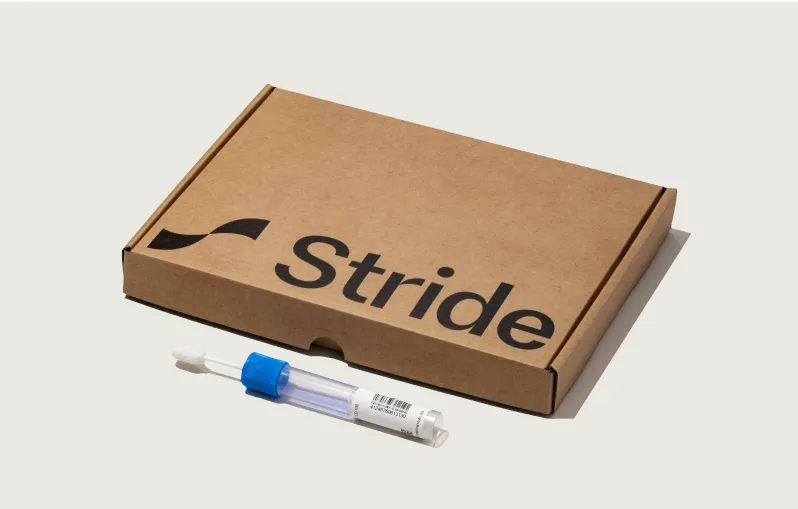





Progesterone Blood Test
Progesterone is a key reproductive hormone that prepares the body for pregnancy, stabilises the uterine lining and supports early gestation. A progesterone blood test is one of the most useful tools for confirming ovulation, understanding cycle quality and explaining fertility, perimenopausal and hormone related symptoms.
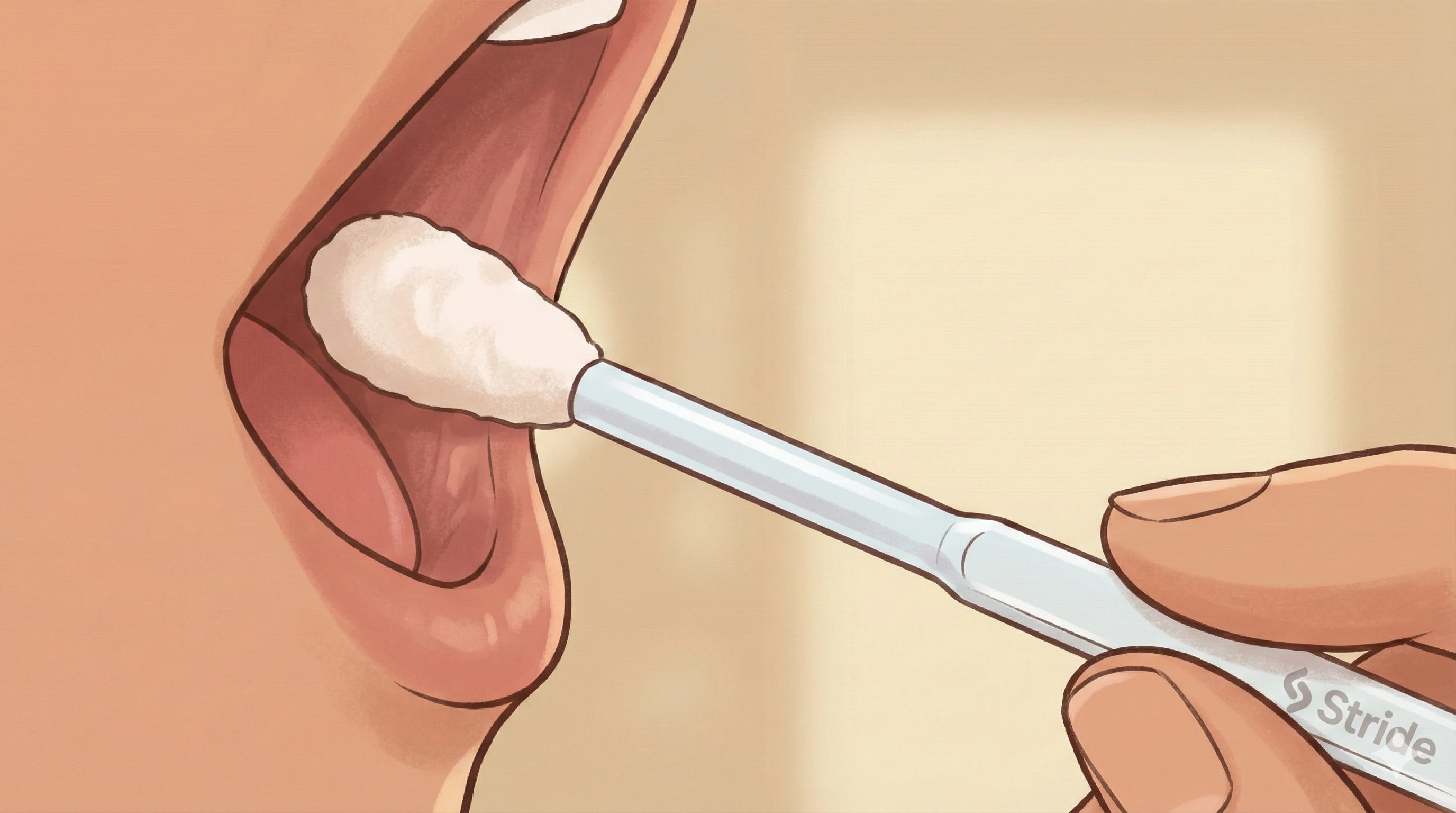

Sample type
Blood sample

Collection
At-home, At-home nurse visit

Often paired with
Oestradiol, FSH, LH, AMH, prolactin, thyroid panel, testosterone, pelvic ultrasound

Fasting required
Not usually required
Key Benefits of Testing Progesterone
- Confirms whether ovulation has occurred in a given cycle
- Assesses luteal phase quality and whether the uterine lining is being supported for implantation
- Helps investigate irregular periods, fertility challenges and early pregnancy concerns
- Provides context for perimenopausal symptoms, heavy or erratic bleeding and PMS patterns
- Monitors response to fertility treatment, hormone therapy and cycle focused interventions
What is Progesterone?
Progesterone is a steroid hormone produced mainly by the corpus luteum in the ovary after ovulation and, in pregnancy, by the placenta. In smaller amounts, it is also made by the adrenal glands and, in men, by the testes.
Progesterone acts through specific receptors in the uterus, brain, breasts and many other tissues. It is often described as a balancing partner to oestradiol, modulating how oestrogen signals are expressed across the menstrual cycle and throughout the body.
What does Progesterone do in the body?
After ovulation, the follicle that released the egg transforms into the corpus luteum, which produces progesterone. Progesterone's main role in this phase is to convert the uterine lining from a proliferative state to a secretory one, making it receptive for a fertilised egg to implant.
Progesterone also has systemic effects. It influences body temperature, sleep and mood, and can have a calming effect on some parts of the nervous system. When pregnancy occurs, progesterone supports early gestation by maintaining the uterine lining and reducing uterine contractions. If pregnancy does not occur, progesterone levels fall, triggering menstruation.
Why is Progesterone important for reproductive health?
Progesterone is the hormone that confirms ovulation has actually happened, not just that it might. Adequate progesterone during the luteal phase is essential for implantation and early pregnancy maintenance. Low or suboptimal levels can be associated with anovulatory cycles, short luteal phases and difficulty conceiving.
Beyond fertility, progesterone balance affects how you experience the second half of your cycle. Imbalances can contribute to PMS type symptoms, breast tenderness, sleep changes and mood shifts. In perimenopause, fluctuating ovulation and progesterone output often drive symptoms before oestradiol has fallen consistently.
Progesterone vs Oestradiol and other hormones
Oestradiol and progesterone work in sequence across the menstrual cycle. Oestradiol rises in the first half of the cycle to stimulate growth of the uterine lining, while progesterone in the second half stabilises and matures that lining. FSH and LH from the pituitary drive follicle growth and ovulation, which in turn determine progesterone production.
Checking progesterone without looking at oestradiol, FSH, LH or AMH can miss important context. For example, low progesterone could reflect a cycle where ovulation has not occurred, reduced ovarian reserve, hypothalamic suppression or simply mistimed testing. A joined up hormone panel helps distinguish these scenarios.
What factors affect Progesterone levels?
Progesterone levels are shaped by ovulation, ovarian function, life stage and hormonal signals from the brain. Key influences include:
1. Ovulation and luteal phase
- Progesterone is low in the follicular phase before ovulation
- After ovulation, progesterone rises and peaks around 5 to 9 days later, usually mid luteal phase
- If ovulation does not occur, progesterone remains low throughout the cycle
2. Ovarian reserve and age
- As ovarian reserve declines with age, ovulation may become less consistent and luteal function can change
- In premature ovarian insufficiency or primary ovarian failure, progesterone levels may be persistently low without hormone support
3. Hypothalamic and pituitary signals
- Functional hypothalamic suppression due to undernutrition, stress or intense exercise can reduce GnRH, FSH and LH, leading to fewer or weaker ovulations and lower progesterone
- Pituitary conditions that affect gonadotropin release can also reduce progesterone indirectly
4. Pregnancy and lactation
- In early pregnancy, progesterone is essential to maintain the uterine lining and support embryo implantation
- Progesterone levels rise significantly as pregnancy progresses, with the placenta taking over production
- Breastfeeding can modify hormone patterns and ovulation, influencing progesterone output
5. Medications and hormone therapy
- Progesterone containing contraception and hormone therapies add exogenous progestogens, which influence endogenous progesterone and receptor effects
- Some fertility treatments specifically target ovulation and luteal support, often monitored with mid luteal progesterone tests
Normal vs optimal Progesterone levels
Progesterone reference ranges vary by life stage and menstrual phase. In cycling women, levels are very low in the follicular phase, rise into the luteal phase and peak mid luteal. When measured around 7 days after ovulation in a typical cycle, higher luteal progesterone suggests that ovulation has occurred and that the corpus luteum is active.
Clinically, a mid luteal progesterone above a certain threshold is often taken as evidence of ovulation. Lower values at the appropriate time may suggest an anovulatory cycle or a luteal phase that might benefit from further investigation. Optimal levels are best defined in the context of your cycle pattern, fertility goals and symptoms, rather than as a single target number.
Do I need to fast for a Progesterone test?
Fasting is not usually required for a progesterone test. The critical factor is timing in your cycle. For people with a roughly 28 day cycle, progesterone is often tested around day 21, which is approximately 7 days after ovulation. For longer or shorter cycles, the ideal day shifts accordingly.
If your cycles are irregular or you are unsure when you ovulate, your clinician may suggest tracking ovulation signs or performing more than one test in a cycle to build a clearer picture. Always follow the timing instructions for your specific test so results can be interpreted reliably.
What can raise Progesterone levels?
Raised progesterone is usually physiological rather than a problem in itself. Common reasons include:
- A normal ovulatory luteal phase in the second half of the cycle
- Early and ongoing pregnancy, where progesterone levels rise significantly
- Progesterone containing medications or hormone therapies
- Some ovarian cysts or hormone producing conditions, in rarer cases
In men and non cycling individuals, levels are generally low and stable. Marked or unexpected increases in progesterone outside the typical reproductive context usually prompt further evaluation.
How can Progesterone be supported over time?
Supporting healthy progesterone is fundamentally about supporting consistent ovulation and ovarian function, where appropriate for your life stage and goals. Practical, clinician aligned approaches often include:
- Assessing progesterone as part of a broader hormone panel that includes oestradiol, FSH, LH, AMH and thyroid markers
- Addressing lifestyle factors that influence ovulation, such as undernutrition, high training loads, stress and sleep
- Managing conditions such as PCOS, hypothalamic amenorrhoea or premature ovarian insufficiency with personalised medical and lifestyle strategies
- Using targeted progesterone or progestogen support in some fertility or perimenopausal contexts, guided by a specialist
Tracking progesterone over multiple cycles, rather than relying on a single result, provides a more meaningful view of your luteal phase health and how your body responds to changes.
Stride tests that include Progesterone
FAQs
What is the Progesterone blood test?
The progesterone blood test measures the level of progesterone in your bloodstream and is most often used to confirm ovulation, assess luteal phase quality and support fertility and hormone health assessment.
When should I have a Progesterone test?
If you have a roughly 28 day cycle, progesterone is commonly tested around day 21, about 7 days after ovulation. For longer or shorter cycles, the ideal timing is 7 days after your expected ovulation, so the sample catches progesterone near its peak.
What does a low Progesterone result mean?
A low progesterone result in the luteal phase can suggest that ovulation has not occurred, that ovulation was weaker than expected or that timing of the test missed the true peak. Persistently low mid luteal values across cycles may contribute to difficulty conceiving or shorter luteal phases and usually warrant further evaluation.
What does a high Progesterone result mean?
A high progesterone level in the luteal phase usually indicates a strong ovulatory cycle and active corpus luteum. In early pregnancy, rising progesterone supports the uterine lining. Outside these contexts, particularly in men or non cycling individuals, unexpectedly high levels may need more investigation.
Do I need a Progesterone test?
You might consider a progesterone test if you are trying to conceive and want to know if you are ovulating, if your periods are irregular or absent, if you have PMS or perimenopausal symptoms that cluster in the second half of your cycle or if you are on fertility treatment or hormone therapy and want to understand your luteal phase support. Including progesterone in your Stride panels helps you see how this key hormone fits into your wider biology and whether your choices are truly moving the needle.