
Menu
-
Shop All
Contact
hey@getstride.com
Stride Health Group
Stride Health Group Ltd
Company No 05158025
Lamas Road
Badersfield
Norwich
England
NR10 5FB
UK
Extra 10% Off | Enter code GIFT at checkout


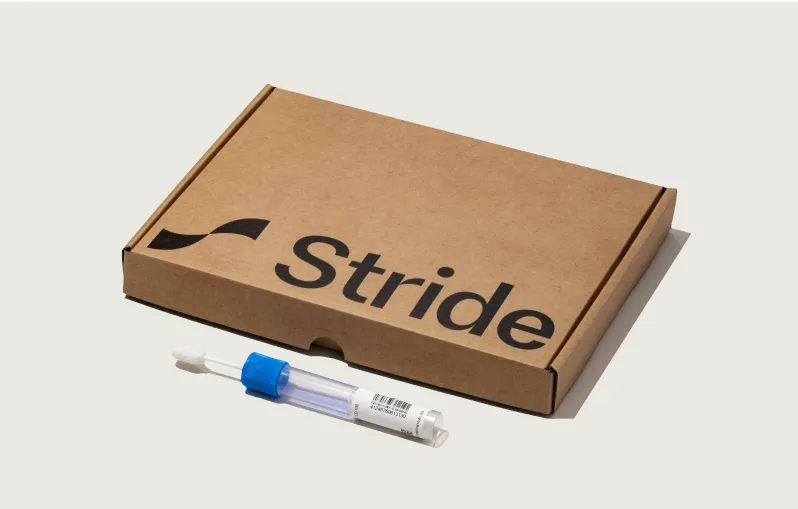






PLIN Gene Test (Perilipin 1)
The PLIN gene test analyses DNA for common variants in the perilipin 1 gene that influence how your fat cells store and release triglycerides on the surface of lipid droplets. Understanding your PLIN status adds genetic context to fat distribution, weight regulation, and cardiometabolic risk so you can personalise nutrition, training, and long-term prevention instead of guessing.


Sample type
Cheek swab, Blood sample

Collection
At-home

Often paired with
Body composition measures, fasting glucose and HbA1c, insulin and HOMA-IR, lipid panel, liver enzymes, inflammatory markers, other adiposity and lipid metabolism genes

Fasting required
Not required for DNA testing; follow clinical guidance for any accompanying blood tests
Key benefits of testing PLIN
- Identify whether you carry PLIN1 variants that influence perilipin expression and function on adipocyte lipid droplets, subtly shifting how easily you store versus mobilise fat at a given calorie intake.
- Help explain why you may gain fat more readily in certain contexts, or why you respond differently to weight loss, energy restriction, or specific macronutrient patterns than people with similar routines.
- Inform personalised fat-loss and weight maintenance strategies, including dietary fat and carbohydrate balance, snack timing, and exercise approaches that work with your adipocyte biology.
- Provide context for how your body handles fasting, catecholamine-driven lipolysis, and longer-term changes in body composition in response to lifestyle and medication.
- Clarify your baseline fat storage and mobilisation profile alongside metabolic and inflammatory biomarkers, so prevention plans can focus on the levers that move the needle most for your biology.
What is the PLIN gene?
PLIN (often referred to as PLIN1 for perilipin 1) encodes a key lipid droplet surface protein in adipocytes that coats triglyceride-rich droplets and controls access of lipases to stored fat. Perilipin 1 is one of the most abundant proteins on mature fat cell lipid droplets and acts as a gatekeeper between storage and breakdown of triglycerides.
Under basal conditions, perilipin helps protect stored fat from uncontrolled lipolysis by limiting access of hormone-sensitive lipase and adipose triglyceride lipase to the droplet surface. When catecholamine signalling activates protein kinase A, perilipin becomes phosphorylated, changes configuration, and facilitates lipase access so stored triglycerides can be hydrolysed into free fatty acids and glycerol. Genetic variation in PLIN1 can modify this balance.
What does PLIN do?
PLIN sits at a crucial junction in adipocyte biology by regulating both the formation and the breakdown of lipid droplets. It promotes the assembly and stabilisation of triglyceride-rich droplets so that excess energy can be stored safely in adipose tissue rather than spilling into organs such as liver or muscle where it may impair insulin signalling.
When metabolic demands or hormonal signals call for energy release, perilipin's phosphorylation state and interacting partners determine how quickly lipases can access stored triglycerides. If perilipin function is altered by genetics or expression level, adipocytes may either release fat more readily, increasing circulating free fatty acids, or resist mobilising fat during weight loss attempts, which can influence weight trajectory and cardiometabolic health over time.
Why is PLIN important for health?
PLIN contributes to three interconnected systems: fat storage and body composition, insulin sensitivity and cardiometabolic risk, and energy balance and weight-change responses. By shaping how efficiently adipocytes store and release fat, perilipin influences whether excess calories are buffered in subcutaneous fat or contribute to ectopic fat and metabolic stress.
Human and animal studies link PLIN1 polymorphisms to differences in obesity risk, metabolic syndrome features, insulin resistance, and responsiveness to weight-loss interventions in specific populations. Some alleles have been associated with higher rates of metabolic syndrome or central obesity, while others appear to predict better weight loss and free fatty acid changes with energy restriction or lifestyle programs. Real-world effects are modest and strongly context dependent.
PLIN vs weight testing
It is easy to assume that PLIN testing and weight or body fat measurements tell you the same story, but they capture different layers of your biology. PLIN genotyping looks at inherited tendencies in lipid droplet regulation and adipocyte behaviour, whereas scale weight, waist circumference, and DEXA or bioimpedance scans show your current body composition under your present lifestyle and environment.
This distinction matters because you can carry PLIN variants associated with higher obesity risk yet maintain a favourable body composition if diet, movement, sleep, and energy balance are well supported. Conversely, you can develop obesity or metabolic syndrome without higher-risk PLIN variants if other genes, lifestyle factors, or medications are pushing energy balance and lipid handling in the wrong direction, which often responds well to targeted lifestyle and clinical interventions.
Factors that modify PLIN variants
The influence of PLIN variants is shaped far more by environment and habits than by the gene alone, which means you have meaningful room to change the trajectory. Several modifiable factors can either buffer genetic effects or amplify them.
- Energy balance and diet composition: Total calorie intake, dietary fat and carbohydrate ratio, fibre intake, and food quality all strongly influence how PLIN-related tendencies show up in body composition and metabolic markers. Diets rich in minimally processed foods and adequate protein and fibre typically support more favourable outcomes.
- Weight cycling and weight loss strategy: Approaches to weight loss, including rate of loss, macronutrient distribution, and use of meal timing strategies, may interact with PLIN1 polymorphisms to influence how easily fat mass is reduced and maintained. Structured, sustainable programmes tend to outperform extreme diets across genotypes.
- Physical activity and muscle mass: Regular movement and resistance training improve insulin sensitivity and increase the capacity to oxidise released fatty acids, which can help mitigate any PLIN-related tendency toward metabolic syndrome or central fat accumulation.
- Hormonal status and sex: Some PLIN1 associations with obesity and metabolic traits appear stronger in women in research cohorts, possibly reflecting interactions between sex hormones, adipose distribution, and perilipin regulation. Life stages such as menopause can therefore modify how PLIN-related differences are expressed.
- Inflammation and sleep: Chronic low-grade inflammation, poor sleep, and circadian disruption impair metabolic flexibility and can exacerbate PLIN-linked patterns of fat storage and mobilisation. Addressing sleep and stress is often as important as adjusting calories or macros.
- Medications and endocrine conditions: Drugs and conditions that influence appetite, insulin signalling, or lipid metabolism, such as certain antipsychotics, glucocorticoids, or endocrine disorders, can amplify or mask PLIN-related tendencies and should be considered in any personalised plan.
PLIN variants without symptoms
Yes, and that is very common. Most people with PLIN1 variants do not experience any direct, recognisable symptoms tied solely to this gene and typically discover their status only through DNA testing.
Features often blamed on bad genetics for weight, such as difficulty losing fat, weight regain after diets, or preferential deposition around the waist, are non-specific and can arise from many factors, including stress, sleep, environment, medications, and other genes. PLIN is one part of a complex network and is best used to refine strategy rather than to explain everything.
Common PLIN genotypes
Common PLIN1 genotypes mainly differ in how they influence perilipin expression, lipid droplet protection, and responsiveness to catecholamine-stimulated lipolysis, particularly in the context of energy balance and diet. Understanding your pattern can help tailor nutrition and training strategies instead of framing your metabolism as simply fast or slow.
- Variants linked to higher obesity or metabolic risk: Some PLIN1 SNPs have been associated with greater obesity risk, higher central fat accumulation, or more adverse metabolic profiles in observational cohorts. In these individuals, earlier and more assertive lifestyle intervention may be particularly valuable.
- Variants linked to better weight-loss response: Other PLIN1 polymorphisms have been linked to more favourable weight loss or free fatty acid changes during energy restriction or lifestyle programmes, suggesting a more responsive lipolysis and adaptation pattern under structured interventions.
- Diet- and sex-interacting variants: Several PLIN1 SNPs show interactions with dietary fat to carbohydrate ratio or differ by sex in their associations with obesity and insulin resistance traits. This supports the idea that PLIN-guided strategies should integrate diet pattern and sex-specific context, not just genotype alone.
- Rare functional variants: Rare PLIN1 variants with larger functional effects can cause more pronounced changes in adipocyte behaviour and are generally evaluated in specialist or research settings. They are not the typical focus of standard preventative health genotyping panels.
How to prepare for a PLIN test
For DNA-based PLIN testing, preparation is straightforward because your genotype does not change with recent meals, exercise, or sleep. The key step is selecting a panel that places PLIN alongside other metabolic genes, blood biomarkers, and lifestyle context so the results translate into clear, practical actions.
Standalone PLIN genotyping using blood or saliva does not require fasting, since it analyses stable DNA rather than dynamic blood levels. If PLIN is bundled with metabolic panels, body composition scans, or hormone testing, your clinician or testing instructions may recommend specific preparation, such as fasting or standardised measurement conditions, so you can track changes reliably over time.
Do I need a PLIN test?
A PLIN test is most valuable when the result will influence how you approach weight management, body composition goals, and cardiometabolic prevention, rather than as a curiosity in isolation. It becomes particularly informative when interpreted alongside waist and body fat measures, metabolic markers, and your history of weight change.
- History of weight cycling or resistant weight loss: If you have repeatedly dieted with limited success or rapid regain, PLIN genotyping may help refine which strategies, such as specific macro patterns or gradual versus aggressive approaches, are more likely to work for you.
- Central adiposity and early metabolic changes: If your weight and waist circumference are drifting upward and fasting glucose, HbA1c, or lipids are beginning to change, PLIN status can support earlier, more targeted lifestyle interventions and more frequent monitoring.
- Strong family history of obesity or metabolic syndrome: In families with clustering of abdominal obesity, metabolic syndrome, or type 2 diabetes, PLIN testing can add context to inherited adipocyte biology and help prioritise preventative strategies.
- Building a long-term body composition and longevity roadmap: For those investing in comprehensive testing, PLIN genotyping alongside other metabolic genes, blood markers, and microbiome insights provides a durable anchor for designing and adjusting body composition and cardiometabolic plans over time.
Stride tests that include PLIN


Health Tests
Core DNA Methylation Test
5 reports: Methylation profile reports
From $229 $183.20
FAQs
What is the PLIN gene test?
The PLIN gene test analyses your DNA from blood or saliva to look for common variants in the perilipin 1 gene that influence how your fat cells store and release triglycerides on lipid droplets, with implications for body composition and metabolic risk.
What does a PLIN variant mean?
Common PLIN1 variants can modestly alter perilipin expression or function and have been associated in some studies with differences in obesity risk, metabolic syndrome traits, and weight-loss responses, especially in interaction with diet, sex, and lifestyle.
Do PLIN variants always cause health problems?
No. Many people with PLIN variants never develop obesity or metabolic disease, particularly when they maintain supportive diet, activity, sleep, and stress patterns. Likewise, people without higher-risk variants can still gain weight or develop metabolic syndrome if other risk factors are not well managed.
Is PLIN testing used to choose weight-loss medication or surgery?
PLIN testing is not routinely used to select specific weight-loss drugs or bariatric procedures, but it can provide useful context when designing lifestyle-first strategies and setting expectations for how body composition may respond to different approaches.
Can PLIN affect fat distribution, cholesterol, or insulin resistance?
By regulating lipid droplet formation and lipolysis in adipocytes, PLIN variants can contribute to differences in fat distribution and may influence lipid profiles and insulin resistance risk in certain settings. However, overall energy balance, diet quality, and activity still drive most real-world variation.
Do I need a PLIN test?
You might consider a PLIN test if the results would change how you approach weight management, macronutrient balance, training strategy, or cardiometabolic prevention, especially if you have a strong family history of central obesity or metabolic syndrome or a history of resistant weight loss.
Do I need to fast for PLIN testing?
Fasting is not required for DNA-based PLIN testing. If accompanying blood tests such as fasting glucose, HbA1c, insulin, or lipids are ordered, your clinician or testing instructions may recommend fasting to ensure results are consistent and comparable over time.
How can I optimise my health if I carry PLIN variants?
Rather than trying to change the gene, focus on building a nutrient-dense, minimally processed diet, maintaining or moving toward a healthy body composition, prioritising regular movement and strength training, protecting sleep and stress balance, and tracking your metabolic markers over time so you can see how small, consistent choices reshape your long-term cardiometabolic risk.