
Menu
-
Shop All
Contact
hey@getstride.com
Stride Health Group
Stride Health Group Ltd
Company No 05158025
Lamas Road
Badersfield
Norwich
England
NR10 5FB
UK
Extra 10% Off | Enter code GIFT at checkout


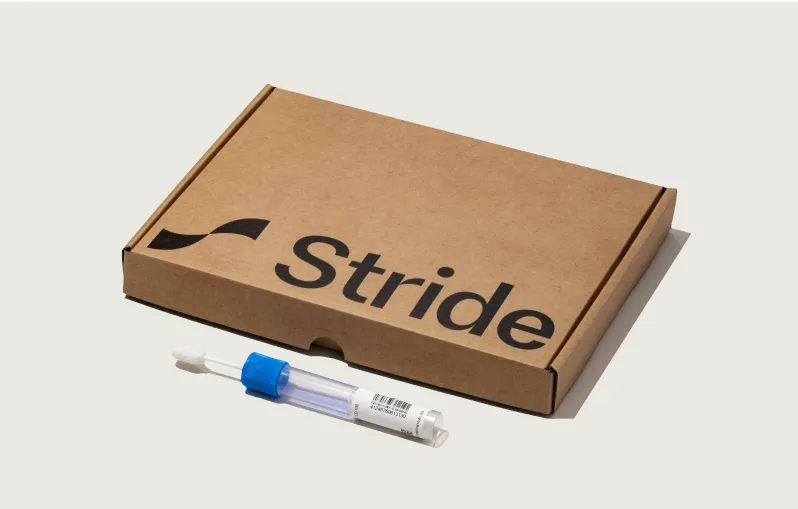






Platelets Blood Test
A platelet blood test measures how many platelets you have in your bloodstream. Platelets are tiny cell fragments that help your blood clot and your blood vessels repair, so changes in platelet count can increase your risk of bruising and bleeding when low or of clotting and inflammation when high.

Sample type
Blood sample

Collection
At-home

Often paired with
Full blood count FBC, mean platelet volume MPV, coagulation tests PT and aPTT, fibrinogen, D dimer, iron studies, B12 and folate, liver and kidney function, inflammatory markers, cardiovascular risk markers

Fasting required
0
Key benefits of testing platelets
A platelet blood test can help you:
- Detect thrombocytopenia low platelets, which increases the risk of bruising, nosebleeds, gum bleeding, heavy periods, and prolonged bleeding after injury or surgery.
- Detect thrombocytosis high platelets, which may reflect reactive changes to infection, inflammation, iron deficiency, or more rarely a myeloproliferative neoplasm and can influence clotting risk.
- Assess bleeding and clotting risk before operations, dental work, or starting antiplatelet or anticoagulant medicines.
- Monitor bone marrow and platelet responses during chemotherapy, immunosuppressive therapy, or after major bleeding.
- Provide context for symptoms such as easy bruising, petechiae tiny red spots, heavy periods, or a history of clots.
What are platelets
Platelets, also called thrombocytes, are small cell fragments produced in the bone marrow from large cells called megakaryocytes. They:
- Circulate in the blood ready to respond within seconds to vessel injury.
- Stick to damaged vessel walls and to each other to form a platelet plug.
- Provide a surface for clotting factors to assemble and strengthen the clot with fibrin.
Platelet count is usually reported as:
- Number of platelets per microlitre of blood for example 150,000 to 400,000.
- Or as × 10⁹/L for example 150 to 400 × 10⁹/L in UK practice.
What do platelets do in the body
Platelets play four main roles:
- Primary haemostasis: they are the first responders that plug small vessel breaks and prevent ongoing bleeding.
- Support of clotting cascades: they bring clotting factors together on their surface to build a stable fibrin clot.
- Vascular repair: they release growth factors that help blood vessels heal.
- Inflammation and atherosclerosis: activated platelets release signals that can fuel inflammation and contribute to plaque formation and thrombosis in arteries.
Too few platelets undermine your ability to stop bleeding. Too many, or overly reactive platelets, can promote unwanted clots, particularly in already narrowed or inflamed vessels.
Why are platelets important for bleeding, clotting, and cardiovascular health
Platelets matter because:
- Thrombocytopenia low platelets can be mild and found only on blood tests, or severe with spontaneous bruising, nosebleeds, gum bleeding, very heavy periods, or dangerous internal bleeding. Causes range from nutritional issues and infections to immune thrombocytopenia ITP, bone marrow failure, medication effects, and liver disease.
- Thrombocytosis high platelets may be reactive to infection, inflammation, recent surgery, iron deficiency, or cancer, or may reflect a primary bone marrow disorder such as essential thrombocythaemia. High platelet counts can sometimes add to clot risk in the wrong setting.
- Platelet behaviour interacts with cholesterol, blood pressure, and inflammation to influence heart attack and stroke risk, which is why antiplatelet drugs are used so widely in cardiovascular prevention and treatment.
Platelet count vs MPV vs clotting tests: what is the difference
These tests look at different aspects of clotting:
- Platelet count measures how many platelets you have per unit volume.
- MPV mean platelet volume reflects average platelet size and activity. Larger platelets are usually younger and more reactive.
- Coagulation tests PT and aPTT measure how quickly clotting factor pathways generate a clot, rather than platelet number or size.
- D dimer and fibrinogen provide information about clot breakdown and clotting factor levels.
In practice:
- Platelet count and MPV together help distinguish low production versus increased destruction or use of platelets.
- Clotting factor tests clarify whether bleeding risk is driven by platelets, clotting factors, or both.
What factors affect platelet count
Platelet levels are shaped by production in the bone marrow, destruction or use in the bloodstream, and sequestration in the spleen. Key influences include:
1. Bone marrow production
- Reduced production: chemotherapy, radiotherapy, some medicines, viral infections, heavy alcohol intake, nutritional deficiencies B12, folate, or severe illness and bone marrow diseases such as leukaemia and myelodysplasia can lower platelet production and cause thrombocytopenia.
- Increased production: myeloproliferative neoplasms such as essential thrombocythaemia cause persistently high platelet counts, often above 450 × 10⁹/L and sometimes over 1,000 × 10⁹/L.
2. Increased destruction or use
- Immune thrombocytopenia ITP, autoimmune disease, infections, some medicines, and heparin induced thrombocytopenia can cause the immune system to destroy platelets.
- Consumption in conditions such as disseminated intravascular coagulation DIC, sepsis, or massive bleeding uses platelets faster than the marrow can replace them.
3. Splenic sequestration and liver disease
- An enlarged spleen from liver disease, portal hypertension, or other causes can trap platelets, lowering the circulating count.
- Chronic liver disease also impairs hormone signals that promote platelet production.
4. Inflammatory, infectious, and iron status
- Acute and chronic inflammation, infections, surgery, and trauma can cause reactive thrombocytosis.
- Iron deficiency, particularly in adults, can raise platelets, sometimes markedly.
5. Pregnancy, hormones, and lifestyle
- Platelet counts can fall slightly during pregnancy, often without problems.
- Alcohol excess can reduce platelet production, while smoking and metabolic syndrome can influence platelet reactivity and trends over time.
Normal vs low vs high platelets: what is the difference
Reference ranges vary slightly, but in adults:
- Normal platelet count is often around 150 to 400 × 10⁹/L, with some labs extending slightly wider.
Broad interpretation:
- Thrombocytopenia low platelets: below 150 × 10⁹/L. Mild reductions may cause no symptoms, but risks rise as platelets fall, especially below 50 × 10⁹/L and markedly below 30 × 10⁹/L.
- Thrombocytosis high platelets: above 450 × 10⁹/L in many references, particularly if sustained. Reactive thrombocytosis from another condition is common, while primary bone marrow disease is less common but important to detect.
Do I need to fast for a platelets blood test
Fasting is not usually required for a platelet count. You can generally eat and drink as normal.
You may be asked to:
- Fast if your platelet count is measured as part of a fasting panel.
- Avoid heavy alcohol intake and extreme exercise just before testing, as these can transiently influence some blood parameters.
How can abnormal platelets be managed clinician guided
Managing platelet abnormalities focuses on understanding why counts are low or high and what that means for bleeding and clot risk.
For low platelets thrombocytopenia, clinician guided steps may include:
- Reviewing medications, alcohol, recent infections, and family history.
- Testing for viral infections, autoimmune markers, nutritional deficiencies, liver function, and bone marrow disorders.
- Treating underlying conditions, adjusting or stopping causative medicines, and using specific treatments such as steroids, immunoglobulins, or thrombopoietin receptor agonists in immune thrombocytopenia.
- Using bleeding precautions and planning around procedures when counts are very low.
For high platelets thrombocytosis, steps may include:
- Looking for reactive causes such as infection, inflammation, iron deficiency, recent surgery, or cancer.
- Checking iron studies, inflammatory markers, and, when appropriate, bone marrow and genetic studies JAK2 and others.
- Managing underlying conditions and, in primary myeloproliferative disease, using antiplatelet drugs and cytoreductive therapy to limit clot risk where indicated.
Stride tests that include Platelets
FAQs
What is the platelets blood test
The platelets blood test measures how many platelets you have in a given volume of blood. It is part of a full blood count and helps assess your risk of bruising and bleeding when low, and of clotting and inflammation when high, as well as bone marrow and systemic health.
What is a normal platelet count
In adults, a typical normal platelet count is around 150 to 400 × 10⁹/L, though exact reference ranges vary between laboratories. Your report will show the range used and whether your result is within, below, or above that range.
What is an optimal platelet level for health
Optimal platelets are a stable count within the normal range, consistent with low day to day bruising or bleeding risk and without unnecessary clot risk. The best level for you depends on your cardiovascular risk, medications, and conditions, and is interpreted alongside MPV, coagulation tests, inflammatory markers, and your history.
Is platelet count more important than MPV for clotting risk
Platelet count and MPV provide different insights. Count shows how many platelets you have, while MPV reflects their average size and reactivity. Clotting risk depends on both, plus vessel health, coagulation factors, and lifestyle. They are most useful when interpreted together rather than one being more important alone.
Can platelets be low or high even if I feel well
Yes. Mild thrombocytopenia or thrombocytosis is often picked up on blood tests before symptoms develop. Some people remain well with modest abnormalities, while others may have significant underlying conditions. Persistent or marked changes should always be discussed with a clinician, even if you feel fine.
Do I need a platelets blood test
You will usually have platelets measured whenever you have a full blood count, which is one of the most common blood tests. It is especially important if you bruise easily, have heavy periods, nosebleeds, or a clot history, are on antiplatelet or anticoagulant medicines, or are receiving chemotherapy or other treatments that affect bone marrow.
Do I need to fast for a platelets test
Fasting is not generally required for a platelet count alone. If your platelets are tested as part of a fasting panel, you will follow those instructions. Keeping your usual hydration and routine before the test helps ensure results reflect your typical baseline.
How can I improve my platelet result
Improving platelet levels involves treating the underlying cause. This may include addressing nutritional deficiencies, adjusting medicines, treating liver or marrow disease, managing infections or autoimmune conditions, reducing alcohol, and optimising cardiovascular and inflammatory risk with lifestyle changes, all under clinical guidance. As these factors improve, platelet count and related markers often move toward a healthier pattern.
Do I need a platelets blood test
If you want a clearer view of your bleeding and clotting resilience, especially with symptoms, a clot history, or conditions and treatments that affect bone marrow and vessels, discussing a full blood count including platelets with your clinician is a practical step. Within StrideOne, platelet count sits alongside hundreds of other biomarkers, helping you see exactly how this core clotting marker fits into your broader cardiovascular, inflammatory, and long term health strategy.