
Menu
-
Shop All
Contact
hey@getstride.com
Stride Health Group
Stride Health Group Ltd
Company No 05158025
Lamas Road
Badersfield
Norwich
England
NR10 5FB
UK
Extra 10% Off | Enter code GIFT at checkout







OXTR Gene Test (Oxytocin Receptor)
The OXTR gene test analyses DNA for variants in the oxytocin receptor, a key regulator of social bonding, stress buffering, empathy, and emotional regulation. Understanding your OXTR status adds genetic context to social behaviour, stress resilience, and treatment response so you can personalise long term mental health and relationship strategies instead of guessing.


Sample type
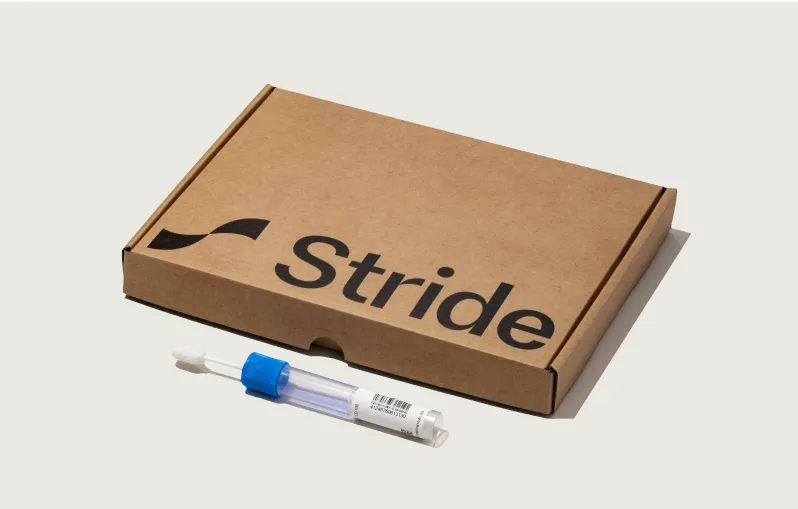
Cheek swab, Blood sample

Collection
At-home

Often paired with
Serotonin and dopamine pathway genes, FKBP5 and other stress response genes, autism and ADHD risk markers, mood and anxiety assessments, sleep and cardiometabolic markers

Fasting required
Not required for DNA testing; follow clinical guidance for any accompanying blood tests
Key benefits of testing OXTR
- Identify whether you carry common OXTR variants such as rs53576 and rs2254298 that have been linked to differences in empathy, sociality, stress reactivity, autistic traits, and attachment style in many studies.
- Help explain patterns such as finding social interactions energising or draining, relying heavily on close relationships for support, or feeling especially sensitive to social rejection or isolation.
- Add context to neurodevelopmental and psychiatric conditions, since OXTR polymorphisms have been associated with autism spectrum traits, anxiety, depression, and social functioning across childhood and adolescence, as well as with parenting behaviour and trust.
- Inform personalised approaches to stress management and therapy, because OXTR genotype interacts with social support to buffer stress and may moderate response to antidepressants and intranasal oxytocin in emerging pharmacogenetic work.
- Clarify your baseline oxytocin receptor architecture alongside other biomarkers, so long term plans for mental health, relationships, and performance can be built on both genetics and current psychological and physiological data.
What is the OXTR gene?
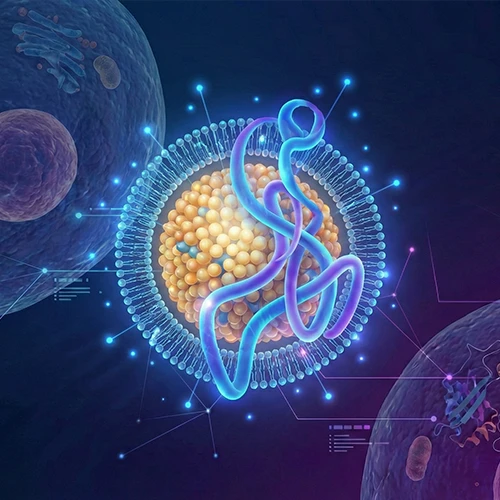
OXTR encodes the oxytocin receptor, a G protein coupled receptor that binds the neuropeptide oxytocin and signals mainly through Gq/11 to activate phospholipase C, increase intracellular calcium, and modulate MAPK and other intracellular pathways. It is expressed in brain regions crucial for social cognition and emotion, including amygdala, hypothalamus, anterior cingulate cortex, and nucleus accumbens, as well as in uterus, mammary glands, heart, and other peripheral tissues.
In the brain, OXTR underpins pair bonding, parental care, social recognition, trust, and social reward. In humans, OXTR variation has been associated with prosocial temperament, empathy, emotion regulation, and sensitivity to social support and rejection. In the periphery, oxytocin and OXTR coordinate uterine contractions and milk let down and influence cardiovascular function and energy balance.
What does OXTR do?
When oxytocin binds to OXTR, the receptor triggers intracellular cascades that modulate neuronal excitability and synaptic transmission in social and emotional circuits. Imaging studies show that OXTR variation influences amygdala reactivity, hypothalamic--limbic connectivity, and reward circuit activity in response to social stimuli, which maps onto differences in prosocial temperament and stress responses.
Common OXTR intronic SNPs such as rs53576 and rs2254298 are thought to affect receptor expression or splicing through regulatory mechanisms. The rs53576 G allele has been associated with higher general sociality, greater empathy, and lower stress reactivity, while A allele carriers often show lower empathy, higher stress responses, and increased risk of social difficulties in some cohorts. Similar patterns have been reported for rs2254298, which has been linked to attachment, social functioning, and selective associations with anxiety and autistic traits.
Why is OXTR important for health?
OXTR sits at the core of social and emotional health. Variation in OXTR contributes to individual differences in empathy, prosocial temperament, social sensitivity, and trust behaviour, and interacts with environmental factors such as childhood care and current social support to shape depression and anxiety risk.
OXTR polymorphisms have been associated with autism spectrum traits, social communication difficulties, and gaze behaviour, particularly in boys, although effect sizes are modest and findings vary by population. Meta analysis suggests rs53576 G allele homozygotes show slightly higher general sociality than A carriers, while close relationship quality is more strongly influenced by environment. OXTR variation also moderates the stress buffering effects of social support and has begun to show pharmacogenetic relevance for escitalopram response in generalised anxiety disorder and for intranasal oxytocin response in experimental and early clinical settings.
OXTR vs other social markers
It is easy to assume that OXTR testing and current mood or personality questionnaires tell you the same story, but they capture different layers of your biology. Psychological scales quantify how you feel and behave now; cortisol, heart rate variability, and imaging show current stress and brain responses; OXTR genotyping looks at inherited variants that set some of the parameters for how oxytocin signalling shapes social behaviour and stress buffering across your life.
This distinction matters because you can carry socially protective OXTR genotypes and still struggle if you experience severe trauma, isolation, or poor support, and you can thrive socially with risk alleles when environment and skills are strong. OXTR offers a receptor level lens on social sensitivity that complements, rather than replaces, lived experience and other biomarkers.
Factors that modify OXTR variants
The influence of OXTR variants is strongly shaped by your relationships, environment, and overall health rather than by the gene alone, which means you have meaningful room to change the trajectory. Several modifiable factors can either buffer or amplify any genetic tendency.
- Quality of social support and relationships: High quality, stable relationships and supportive communities can offset genetic sensitivity to stress and reduce depression and anxiety risk, particularly in carriers of risk alleles. Low support or conflict can unmask vulnerabilities.
- Early life caregiving and attachment: Maternal nurturance and parenting style interact with OXTR variation to shape adult depressive symptoms and social functioning. Warm, responsive care can protect against genetic risk, while neglect or harshness can amplify it.
- Stress exposure and coping strategies: Chronic stress and poor coping can drive HPA axis activation and blunt oxytocin's buffering effects. Stress management, therapy, and skills such as cognitive reappraisal and communication help stabilise this system.
- Sleep, exercise, and metabolic health: Sleep deprivation, inactivity, and metabolic syndrome worsen mood and social functioning, while exercise and good sleep support oxytocin and broader neuropeptide systems, reducing the practical impact of OXTR risk variants.
- Therapeutic context and pharmacology: Psychotherapy, group therapies, and relationship focused interventions can be particularly powerful for people with higher social sensitivity, and intranasal oxytocin or SSRI response may be partly moderated by OXTR genotype in emerging pharmacogenetic models.
OXTR variants without symptoms
Yes, and this is very common. The A allele of rs53576 and other OXTR variants associated with lower empathy or higher social stress are widespread in the population, yet most carriers do not meet criteria for autism, depression, or anxiety disorders. The effect sizes of individual polymorphisms are small and strongly context dependent.
Likewise, people with the prosocial GG genotype at rs53576 can still experience social difficulties or mental health problems if environmental risks, trauma, or other genetic vulnerabilities are strong. OXTR genotypes tilt probabilities but do not determine outcomes.
Common OXTR genotypes
Common OXTR genotypes mainly differ at intronic and regulatory SNPs, especially rs53576 and rs2254298, which influence social traits, stress reactivity, and, in some cases, treatment response.
- rs53576 (G/A): GG genotypes are often associated with higher general sociality, greater self reported empathy, better social auditory ability, and lower stress reactivity, as well as more prosocial temperament and lower risk of social dysfunction in some cohorts. AG/AA genotypes are associated in multiple studies with lower empathy, higher stress responses, less parental sensitivity, and slightly higher risk for autism spectrum traits and social difficulties, although results are not fully consistent across populations.
- rs2254298 (G/A): Has been linked to attachment, depression, anxiety, and autism spectrum traits, with some evidence for sex specific effects. Certain genotypes show altered social functioning and may influence escitalopram response in generalised anxiety disorder, with GG homozygotes in one study showing lower response rates.
Other OXTR polymorphisms, including rs1042778, rs237885, and rs237851, have been associated with social behaviours, autism risk in boys, and gaze patterns, but their clinical relevance is still emerging.
How to prepare for an OXTR test
For DNA based OXTR testing, preparation is simple because your genotype does not change with time, meals, or day to day stress. The key step is choosing a panel that includes OXTR within a broader mental health and social functioning genetics framework so results are interpreted in context.
Standalone OXTR genotyping using blood or saliva does not require fasting. If OXTR testing is part of a pharmacogenomic panel that also assesses drug levels or metabolic markers, follow any specific instructions for those blood tests so that data are consistent and comparable over time.
Do I need an OXTR test?
An OXTR test is most valuable when results will be used to adjust how you structure relationships, manage stress, and, in some cases, select or dose medications and therapies. It is less helpful when ordered in isolation without consideration of your history, environment, and other biomarkers.
- Social anxiety, relationship difficulties, or high sensitivity to social rejection: OXTR insights can provide a biological frame for sensitivity and support targeted work on boundaries, communication, and social environments.
- Autism spectrum or autistic traits: In neurodevelopmental assessments, OXTR may be one of several genes considered to understand social communication profiles and guide supportive environments, although it is not diagnostic.
- Treatment resistant anxiety or mood disorders: Pharmacogenomic panels including OXTR can sometimes help refine expectations and strategies for SSRIs and, in research contexts, intranasal oxytocin or other adjuncts.
- High performance and leadership roles: For individuals who lead teams or rely heavily on social influence, understanding OXTR related social sensitivity can inform how you design recovery, feedback, and collaboration structures.
Stride tests that include OXTR


Health Tests
Core DNA Methylation Test
5 reports: Methylation profile reports
From $229 $183.20
FAQs
What is the OXTR gene test?
The OXTR gene test analyses your DNA from blood or saliva to look for variants in the oxytocin receptor gene that can influence empathy, prosocial behaviour, stress reactivity, and risk for social difficulties or mood problems.
What does an OXTR rs53576 variant mean?
At rs53576, GG genotypes are often associated with slightly higher general sociality and empathy and lower stress reactivity, while A allele carriers may show lower empathy and higher stress responses and social sensitivity in some studies, though environment remains very important.
Do OXTR variants always cause autism, anxiety, or depression?
No; many people with OXTR risk alleles never develop autism, anxiety, or depression. These conditions depend on a combination of many genes plus life events, support, and health. OXTR shifts tendencies rather than determining outcomes.
Is OXTR testing recommended for choosing treatments?
OXTR testing can be informative as part of a broader pharmacogenomic and psychological profile, and emerging research suggests it may moderate SSRI and intranasal oxytocin response, but it is not yet a stand alone clinical decision tool.
Can OXTR affect how I experience relationships and social support?
Yes; OXTR variation has been linked to trust, warmth in parenting, gaze behaviour, and how strongly social support buffers stress, which can change how relationships feel and how you rely on them under pressure.
Do I need an OXTR test?
You might consider an OXTR test if you have ongoing social or relationship challenges, social anxiety, or treatment resistant mood or anxiety issues and if you plan to use the results with a clinician or coach to adjust therapy, social load, and lifestyle in a concrete way.
Do I need to fast for OXTR testing?
Fasting is not required for DNA based OXTR testing, although any accompanying blood tests such as metabolic or inflammatory panels may have specific preparation instructions that are worth following for consistent tracking.
How can I optimise OXTR related pathways?
Rather than trying to change the gene, focus on high quality relationships, regular exercise, good sleep, stress management, therapy when needed, and careful substance use so your social and emotional brain circuits can function well over time, whatever your OXTR genotype.