
Menu
-
Shop All
Contact
hey@getstride.com
Stride Health Group
Stride Health Group Ltd
Company No 05158025
Lamas Road
Badersfield
Norwich
England
NR10 5FB
UK
Extra 10% Off | Enter code GIFT at checkout


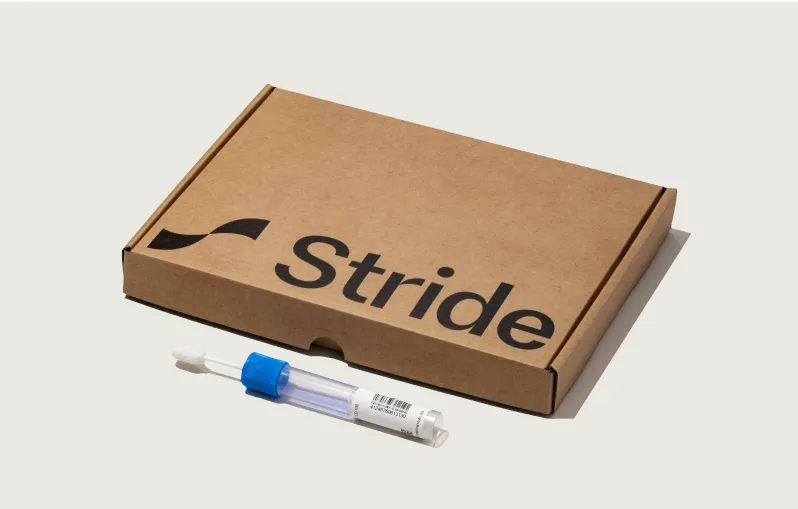




Oestradiol Blood Test
Oestradiol is the most active form of oestrogen in the body and a core hormone for menstrual cycles, fertility, bone density, brain health and long term cardiovascular resilience. An oestradiol blood test helps explain symptoms across the spectrum from irregular cycles and fertility challenges to perimenopause, menopause and hormone related changes in men.
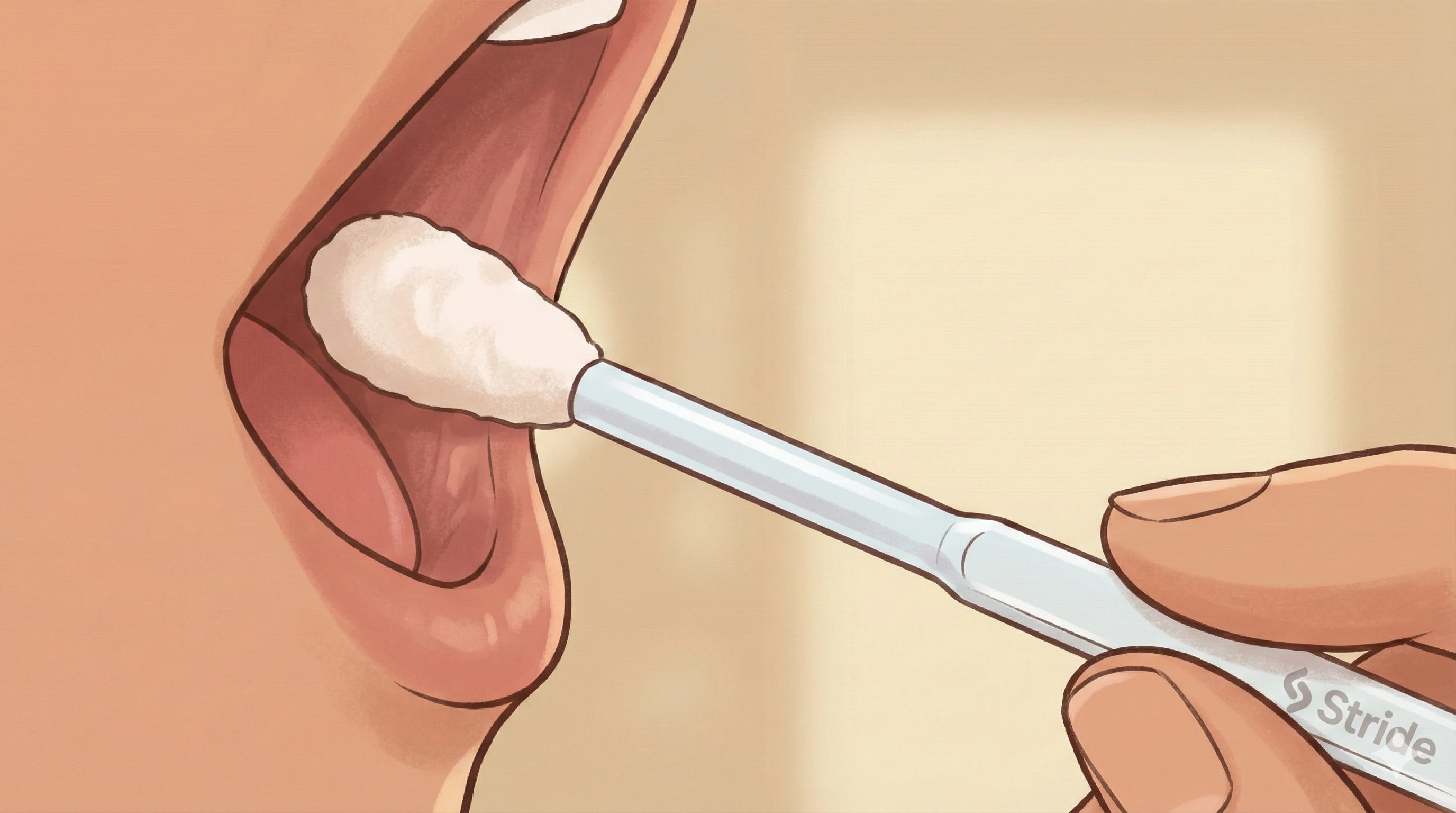

Sample type
Blood sample

Collection
At-home

Often paired with
FSH, LH, progesterone, AMH, testosterone, prolactin, thyroid panel, lipid profile, bone markers

Fasting required
Not usually required (follow your test instructions)
Key Benefits of Testing Oestradiol
- Helps investigate irregular periods, heavy bleeding, absent cycles or perimenopausal symptoms
- Supports fertility assessment in women by showing how well the ovaries are responding and where you are in the cycle
- Aids in evaluating gynaecomastia, low libido and hormone balance in men
- Monitors response to hormone replacement therapy and other hormone related treatments
- Provides context for bone density, mood, sleep, hot flushes and long term cardiometabolic health
What is Oestradiol?
Oestradiol, often referred to as E2, is a steroid hormone and the main form of oestrogen during the reproductive years. In women, it is produced primarily by the ovaries, with smaller amounts from the adrenal glands and, in fat tissue, through conversion of other hormones. In men and postmenopausal women, lower levels are produced mainly through peripheral conversion of androgens.
Oestradiol acts through oestrogen receptors found throughout the body, including in the brain, bones, blood vessels, skin, breast tissue and reproductive organs. Because of this wide receptor network, fluctuations or longer term shifts in oestradiol can affect everything from mood and sleep to bone strength and cardiovascular risk.
What does Oestradiol do in the body?
In women, oestradiol shapes the menstrual cycle by stimulating growth of the uterine lining, supporting follicle development in the ovaries and contributing to the feedback loops that regulate FSH and LH. It plays a central role in fertility by preparing the body for ovulation and potential pregnancy.
Beyond reproduction, oestradiol helps maintain bone density, supports flexible blood vessels, influences how the body handles lipids and glucose and contributes to cognitive function, skin quality and pelvic floor health. In men, balanced oestradiol levels support bone health, libido, erectile function and cardiovascular resilience. Both too little and too much oestradiol over time can be associated with health risks.
Why is Oestradiol important for hormone health?
Oestradiol is one of the main signals tying together the brain, ovaries or testes and the rest of the body. In women, low or erratic oestradiol can drive perimenopausal symptoms, irregular cycles, low bone density and changes in mood and sleep. High oestradiol can be seen in some PCOS patterns, certain ovarian cysts and as part of oestrogen dominant symptom clusters when not balanced by progesterone.
In men, oestradiol that is too low or too high relative to testosterone can play into fatigue, reduced libido, gynaecomastia, low bone mass and changes in body composition. Tracking oestradiol with related hormones gives a more complete view of hormone balance than looking at any single marker in isolation.
Oestradiol vs other oestrogens and progesterone
Oestradiol (E2) is the dominant oestrogen in cycling women, while estrone (E1) is more prominent after menopause and estriol (E3) rises in pregnancy. Most clinical hormone panels focus on oestradiol because it has the strongest receptor activity in most tissues during the reproductive years.
Progesterone balances many of oestradiol's effects in the menstrual cycle and across the body. In the second half of the cycle, progesterone rises after ovulation and modifies how oestradiol acts on the uterus, brain and breast tissue. Looking at oestradiol alone tells you about oestrogen load, while looking at it alongside progesterone, FSH, LH and AMH helps explain cycle quality, ovarian reserve and broader hormone balance.
What factors affect Oestradiol levels?
Oestradiol is influenced by age, ovarian or testicular function, body composition and hormone signalling from the brain. Key drivers include:
Age, sex and life stage: In women, oestradiol is low before puberty, rises through puberty, fluctuates across each menstrual cycle and declines across perimenopause into menopause. In men, oestradiol is present at lower, more stable levels across adulthood. After menopause, oestradiol levels fall significantly, with lower baseline levels maintained mainly through peripheral conversion.
Menstrual cycle and ovarian function: During a typical cycle, oestradiol rises in the follicular phase, peaks before ovulation and has a second smaller rise in the luteal phase. Conditions such as PCOS, diminished ovarian reserve or premature ovarian insufficiency can alter oestradiol patterns and the feedback to FSH and LH. In assisted reproduction, oestradiol is often closely monitored to track follicle response.
Body fat, metabolism and lifestyle: Oestradiol can be produced by the conversion of androgens in fat tissue, so higher body fat can influence levels, especially after menopause. Very low body fat, chronic undernutrition or high training loads can lower oestradiol and disrupt cycles. Alcohol intake, smoking and overall metabolic health can also modulate oestrogen metabolism and clearance.
Medications and hormone therapy: Combined hormonal contraception and some progestin based methods change endogenous oestradiol production and patterns. Hormone replacement therapy, fertility treatments and gender affirming hormone regimens deliberately alter oestradiol levels. Some medications, including certain anti epileptic drugs and treatments for breast or prostate cancer, interact with oestrogen pathways.
Pituitary and hypothalamic function: Conditions that affect FSH and LH production, such as pituitary adenomas or functional hypothalamic amenorrhoea, can lower oestradiol through reduced ovarian stimulation. Raised prolactin or other pituitary hormone changes may indirectly suppress oestradiol.
Normal vs optimal Oestradiol levels
Oestradiol reference ranges differ widely by sex, age and menstrual phase. In adult women, levels are lower in the early follicular phase, rise toward ovulation, remain moderately elevated in the luteal phase and fall to low ranges after menopause. Adult men typically have oestradiol values in a lower, stable band. Each laboratory provides specific ranges in pmol/L or pg/mL for different groups.
Clinically, values outside these ranges can suggest ovarian insufficiency, menopause, PCOS, hormone producing tumors or hormone therapy effects. From an optimisation perspective, the meaningful question is whether your oestradiol pattern over time aligns with your symptoms, cycle quality, fertility goals and bone and cardiovascular health, rather than aiming for one static number.
Do I need to fast for an Oestradiol test?
Fasting is not usually required for an oestradiol blood test. A standard sample, often taken in the morning, is sufficient.
For women with cycles, timing is more important than fasting. Oestradiol is often measured on day 2 to 5 of the cycle for baseline assessment or at other specific points depending on the question being asked. If you are postmenopausal or on stable hormone therapy, testing can usually be done on any convenient day. Always follow the timing guidance that comes with your test.
What can raise Oestradiol levels?
Higher than expected oestradiol levels can occur for several reasons, including:
- Some PCOS patterns or other ovarian conditions that drive multiple growing follicles
- Oestrogen containing hormone therapy or some fertility medications
- Higher levels of peripheral conversion in the context of increased body fat
- Certain ovarian or, more rarely, adrenal tumors that produce oestrogens
In men, elevated oestradiol relative to testosterone can contribute to gynaecomastia, reduced libido and altered body composition. Persistently high oestradiol usually needs careful interpretation in context and further investigation when unexplained.
How can Oestradiol be supported over time?
Supporting balanced oestradiol is about working with the whole hormone network rather than focusing on a single hormone. Practical, clinician aligned approaches often include:
- Assessing oestradiol alongside FSH, LH, progesterone, AMH and testosterone to understand the pattern, not just the number
- Addressing lifestyle factors that influence hormone production and metabolism, such as energy intake, body composition, movement, sleep and alcohol use
- Managing conditions such as PCOS, premature ovarian insufficiency, perimenopause or hypogonadism with tailored medical and lifestyle strategies
- Using hormone replacement therapy, cycle regulation or fertility treatments where appropriate, with monitoring to check that oestradiol and related markers are in a range that matches your goals and symptoms
Long term, tracking oestradiol within a broader biomarker set helps link what you feel with what is changing in your internal biology and whether interventions are moving the needle.
Stride tests that include Oestradiol
FAQs
What is the Oestradiol blood test?
The oestradiol blood test measures the level of oestradiol, the main oestrogen hormone, in your blood and helps assess menstrual cycle health, fertility, perimenopause and menopause patterns and hormone balance in both women and men.
What is a normal Oestradiol level?
Normal oestradiol levels vary widely with sex, age and menstrual phase. Women have low levels before puberty, fluctuating levels across the reproductive years and lower levels again after menopause, while men tend to have lower, more stable levels. Your lab report will show the reference range that applies to you.
Can Oestradiol be low but still in range?
Yes. You can have an oestradiol level that technically falls within the lab range but still be experiencing symptoms of low oestrogen, especially in perimenopause or in functional hypothalamic suppression. This is why interpretation in context of FSH, LH, progesterone, symptoms and life stage is so important.
What does high Oestradiol mean?
High oestradiol can be seen in some PCOS patterns, during certain phases of fertility treatment, in people using oestrogen therapy or in rarer cases of hormone producing tumors. In men, relatively high oestradiol compared with testosterone can drive breast tissue changes and impact libido and metabolic health.
Do I need an Oestradiol test?
You might consider an oestradiol test if you have irregular or heavy periods, possible perimenopausal symptoms, difficulty conceiving, suspected PCOS, changes in libido or breast tissue, or if you are on hormone therapy and want to understand whether your levels match your treatment goals. Including oestradiol as part of a comprehensive Stride panel helps you see how this central hormone fits into your wider biology and where you can make the most meaningful changes.