
Menu
-
Shop All
Contact
hey@getstride.com
Stride Health Group
Stride Health Group Ltd
Company No 05158025
Lamas Road
Badersfield
Norwich
England
NR10 5FB
UK
Extra 10% Off | Enter code GIFT at checkout


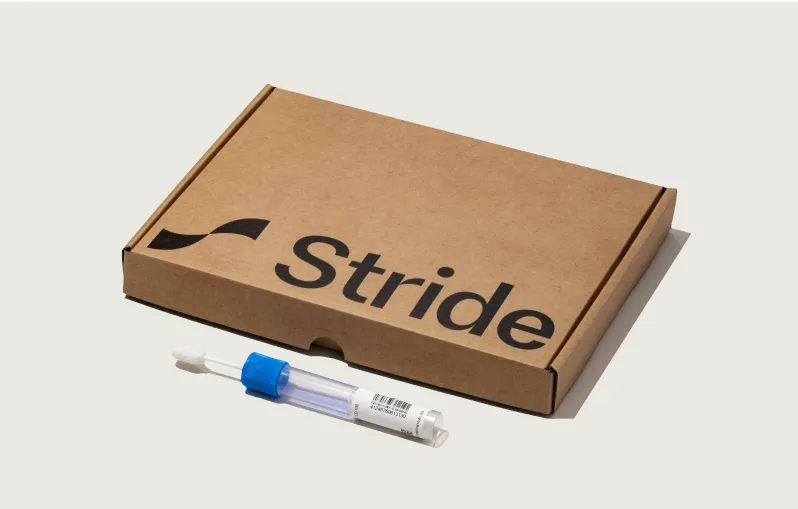





NBPF3 Gene Test (Neuroblastoma Breakpoint Family 3, Vitamin B6 & Neurodevelopment)
The NBPF3 gene test analyses DNA for variants in the neuroblastoma breakpoint family member 3 gene that are associated with vitamin B6 metabolism and neurodevelopmental pathways. Understanding your NBPF3 status adds genetic context to vitamin B6 handling, one-carbon metabolism, and brain and cardiovascular development, so you can personalise nutrient support and prevention rather than relying on guesswork.


Sample type
Cheek swab, Blood sample

Collection
At-home

Often paired with
Vitamin B6, B12 and folate levels, homocysteine, full blood count, liver function, inflammatory markers, cognitive and mood assessments, one-carbon and methylation genes

Fasting required
Not required for DNA testing; follow clinical guidance for any accompanying blood tests
Key benefits of testing NBPF3
- Identify whether you carry NBPF3 variants that have been associated with vitamin B6 regulation, one-carbon metabolism, and neurodevelopmental traits in population studies.
- Help explain why vitamin B6 levels or homocysteine may run high or low relative to intake, or why you may be more sensitive to B6 status in relation to cognition, mood, or energy.
- Inform personalised strategies around vitamin B6 intake from food and supplements, and how to balance it with other B vitamins for methylation and nervous system health.
- Provide context for brain development, mood, and cognitive performance, especially when combined with other nutrient and neurogenetic markers.
- Clarify your baseline NBPF3-related profile alongside B6, homocysteine, liver enzymes, and neurological or cardiovascular markers, so long-term health and performance plans can be tailored to your biology.
What is the NBPF3 gene?
NBPF3 (neuroblastoma breakpoint family member 3) is part of the NBPF gene family, a group of genes located mainly on chromosome 1 that are rich in DUF1220 domains and have expanded markedly in humans. NBPF3 itself is located on chromosome 1p36.12, close to ALPL and RAP1GAP, and encodes a protein of several hundred amino acids that is expressed in a range of tissues.
Members of the NBPF family have been highlighted in work on neurodevelopment, brain size, and susceptibility to certain congenital and neuropsychiatric conditions. NBPF3 has also been identified in genome-wide association studies as a locus linked to circulating vitamin B6 levels and liver enzymes, suggesting a role in one-carbon metabolism and nutrient regulation.
What does NBPF3 do?
NBPF3 sits at an intersection between complex genomic regulation and vitamin B6 metabolism. While its precise molecular mechanisms are still being clarified, population-level genetic studies suggest that variants near or within NBPF3 influence circulating pyridoxal and related vitamin B6 measures, as well as metabolites within one-carbon and methylation pathways.
Vitamin B6 is a cofactor for many enzymes involved in neurotransmitter synthesis, homocysteine metabolism, red blood cell function, and energy production. By modulating B6-related pathways, NBPF3 may indirectly affect neural function, vascular health, and liver enzyme patterns. Additionally, as part of the NBPF family, NBPF3 may have structural and regulatory functions relevant to brain development and cellular growth.
Why is NBPF3 important for health?
NBPF3 contributes to three interconnected systems: vitamin B6 and one-carbon metabolism, neurodevelopment and cognitive function, and broader cardiometabolic and hepatic health. Optimal B6 status supports neurotransmitter balance, mood regulation, sleep quality, energy metabolism, and homocysteine control, all of which are important for long-term brain and cardiovascular health.
Copy number variation and altered expression in the NBPF family, including NBPF3, have been implicated in a spectrum of neurodevelopmental and congenital conditions in research settings. While NBPF3 variants alone are not diagnostic, their association with B6 and related pathways makes them a useful context marker when exploring unexplained fatigue, mood challenges, cognitive issues, or elevated homocysteine in the setting of apparently adequate nutritional intake.
NBPF3 vs vitamin B6 blood levels
It is easy to assume that NBPF3 genotyping and vitamin B6 or homocysteine blood tests provide the same information, but they answer different questions. NBPF3 genotyping reveals inherited patterns that may influence how your body regulates B6-related pathways and one-carbon metabolism throughout life. This does not change with diet from week to week.
Vitamin B6, folate, B12, and homocysteine blood levels show your current nutritional and metabolic state under your existing diet, gut health, liver function, and supplementation. You can carry NBPF3 variants associated with altered B6 handling and still maintain optimal levels if intake, absorption, and cofactor status are well managed. Conversely, you can have neutral NBPF3 genotypes yet develop low B6 or high homocysteine from poor diet, malabsorption, medications, or high demand. Combining genotype with serial blood markers gives a more complete picture.
Factors that modify NBPF3 variants
The influence of NBPF3 variants is shaped by diet, liver function, kidney function, gut health, and overall one-carbon metabolism far more than by the gene alone. Several modifiable factors can either buffer genetic effects or amplify them.
- Vitamin B6 intake and form: Total B6 intake from food and supplements, the balance of pyridoxine and active forms, and timing relative to other B vitamins influence how NBPF3-related tendencies show up in blood levels and symptoms.
- Overall B vitamin and methylation status: Folate, B12, riboflavin, and choline all interact with one-carbon metabolism. Imbalance in these can magnify or mask NBPF3-related patterns in homocysteine and neurological function.
- Liver and kidney health: Vitamin B6 metabolism and clearance depend on hepatic and renal pathways. Liver disease, kidney impairment, or medications that affect these organs can change B6 dynamics, interacting with NBPF3 variation.
- Diet quality and protein intake: Adequate protein supports B6-dependent amino acid and neurotransmitter metabolism, while ultra-processed diets can deplete cofactor availability.
- Gut health and absorption: Conditions that impair nutrient absorption, such as coeliac disease or inflammatory bowel disease, can lower B6 and other B vitamins regardless of NBPF3 genotype, but may have larger impact when genetic demand is higher.
- Life stage and stress load: Growth, pregnancy, lactation, high training volumes, chronic stress, and some medications increase B6 requirements, which may reveal NBPF3-driven vulnerabilities if intake and support do not rise in parallel.
NBPF3 variants without symptoms
Yes. Many people with NBPF3 variants linked to B6 and one-carbon metabolism never experience obvious symptoms, particularly if their diet is nutrient dense, liver and kidney function are healthy, and overall lifestyle supports good metabolic balance. The gene acts as a background modifier rather than a simple cause of disease.
Where NBPF3 variation contributes to problems, early manifestations are often subtle and nonspecific, such as low energy, mild mood changes, disrupted sleep, or small shifts in homocysteine or liver enzymes, rather than clear-cut syndromes. More significant effects tend to arise when genetic predisposition aligns with low nutrient intake, absorption issues, or high physiological demand.
Common NBPF3 genotypes
NBPF3 genotypes mainly differ in how they influence copy number, expression, or regulatory regions that affect vitamin B6 and related metabolic pathways. Understanding your pattern can help tailor B6 and one-carbon support.
- Variants associated with vitamin B6 levels: Genome-wide association studies have identified NBPF3-linked loci that predict differences in circulating vitamin B6 and related metabolites, suggesting altered clearance or regulation.
- Copy number changes within NBPF family regions: Duplications and deletions in NBPF regions, including those involving NBPF3, have been associated with neurodevelopmental and congenital traits in research settings, although their impact in healthy individuals is still being mapped.
- Regulatory and intronic variants: Changes in regulatory elements may affect NBPF3 expression in different tissues and contexts, with downstream effects on pathways connected to one-carbon metabolism and neurodevelopment.
- Reference or typical patterns: Many people carry NBPF3 profiles that align with population averages. Their B6 and homocysteine profiles then depend largely on diet, lifestyle, and co-existing conditions.
How to prepare for an NBPF3 test
For DNA-based NBPF3 testing, preparation is straightforward because your genotype does not change with recent diet, supplements, or medications. The key step is clarifying how the results will be used, for example to guide B6 and methylation support, interpret long-standing homocysteine patterns, or investigate cognitive or mood concerns in the context of nutrient status.
Cheek swab, saliva, or blood-based NBPF3 genotyping does not require fasting. If you are also testing vitamin B6, B12, folate, homocysteine, or liver and kidney markers, follow the specific preparation instructions for those blood tests, which often include fasting and avoiding certain supplements ahead of time.
Do I need an NBPF3 test?
An NBPF3 test is most helpful when the result will influence how you structure nutrient and brain health strategies, rather than as a curiosity. It becomes particularly informative when interpreted alongside vitamin B6 and homocysteine levels, other B vitamin markers, and clinical context.
- Unexplained shifts in vitamin B6 or homocysteine: If B6 or homocysteine readings are consistently atypical for your intake and lifestyle, NBPF3 genotyping may add useful context.
- Cognitive, mood, or fatigue concerns: When these occur alongside suggestive lab patterns or a strong family history, NBPF3 and related genes can contribute to a more nuanced plan for B vitamin and methylation support.
- Complex nutrient or medication regimes: People on long-term medications that affect B6 or liver enzymes may benefit from understanding NBPF3 patterns when fine-tuning supplementation.
- Comprehensive performance and longevity planning: For those using broad DNA and blood testing, NBPF3 adds a vitamin B6 and neurogenetic dimension that complements methylation, inflammation, and cardiometabolic markers.
Stride tests that include NBPF3


Health Tests
Core DNA Methylation Test
5 reports: Methylation profile reports
From $229 $183.20
FAQs
What is the NBPF3 gene test?
The NBPF3 gene test analyses your DNA from blood or saliva to look for variants in the neuroblastoma breakpoint family member 3 gene that have been linked in research to vitamin B6 regulation, one-carbon metabolism, and neurodevelopmental pathways.
What does an NBPF3 variant mean?
NBPF3 variants can influence how your body regulates vitamin B6 and related metabolites, which may contribute to differences in B6 levels, homocysteine, liver enzymes, or neurocognitive traits when combined with diet and lifestyle factors.
Do NBPF3 variants always cause health problems?
No. Many people with NBPF3 variants never develop related health issues, especially if diet, nutrient intake, organ function, and lifestyle are supportive. The gene modifies risk and sensitivity rather than determining a fixed outcome.
Is NBPF3 testing used to diagnose disease?
NBPF3 testing is not a standalone diagnostic tool for specific diseases. It adds context when evaluating vitamin B6 and homocysteine patterns, mood and cognitive symptoms, or complex nutrient cases as part of a broader clinical picture.
Do I need an NBPF3 test?
You might consider an NBPF3 test if you have persistent B6 or homocysteine irregularities, unexplained fatigue or mood concerns in the context of B vitamin issues, complex medication regimens affecting liver or nutrient status, or if you are building a detailed performance and longevity plan where one-carbon metabolism is a central focus.
Do I need to fast for NBPF3 testing?
Fasting is not required for DNA-based NBPF3 testing. If B vitamin, homocysteine, or organ function tests are done at the same time, follow the preparation guidance for those specific panels.
How can I optimise my health if I carry NBPF3 variants?
Rather than trying to change the gene, focus on eating a nutrient-dense diet, ensuring appropriate vitamin B6 and other B vitamin intake, supporting liver and kidney health, protecting gut function, avoiding excessive alcohol and ultra-processed foods, and tracking B6, homocysteine, and related markers over time so you can see how consistent, targeted changes reshape your long-term brain, cardiovascular, and energy outcomes.