
Menu
-
Shop All
Contact
hey@getstride.com
Stride Health Group
Stride Health Group Ltd
Company No 05158025
Lamas Road
Badersfield
Norwich
England
NR10 5FB
UK
Extra 10% Off | Enter code GIFT at checkout


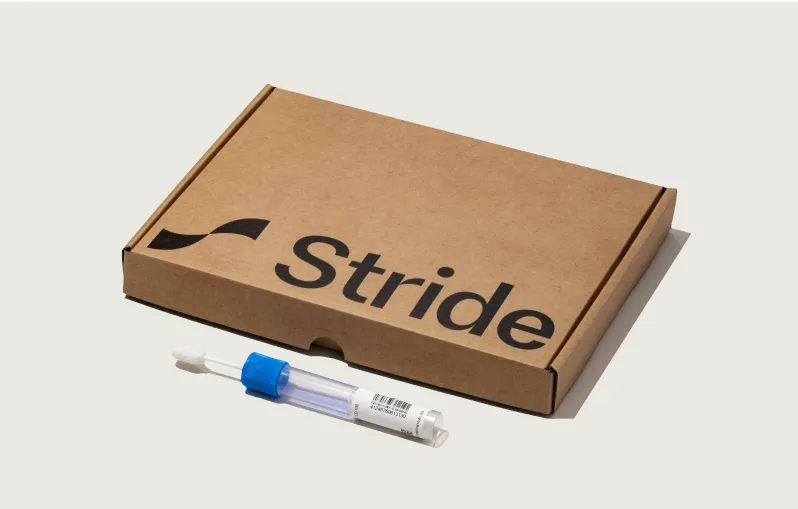






MTHFR Gene Test (Methylenetetrahydrofolate Reductase)
The MTHFR gene test analyses DNA for common genetic variants (C677T and A1298C) that can reduce enzyme activity and influence how your body processes folate, regulates homocysteine, and supports methylation, a core pathway for cardiovascular, neurological, and reproductive health. Understanding your MTHFR status adds genetic context to folate metabolism so you can personalise nutrition, methylation support, and long-term prevention strategies rather than guessing.


Sample type
Cheek swab, Blood sample

Collection
At-home

Often paired with
Homocysteine, serum folate, vitamin B12, methylmalonic acid, full blood count, lipid panel

Fasting required
Not required for DNA testing; follow clinical guidance for any accompanying blood tests
What is the MTHFR gene?
Methylenetetrahydrofolate reductase (MTHFR) is an enzyme that converts 5,10-methylenetetrahydrofolate into 5-methyltetrahydrofolate (5-MTHF), the primary circulating and bioactive form of folate used in methylation. The MTHFR gene provides the instructions for building this enzyme, and common variants such as C677T and A1298C can reduce its efficiency to varying degrees.
These variants are common in the general population, with a significant proportion of people carrying at least one copy of C677T or A1298C. Most carriers never develop a clear genetic disorder, but the variants can nudge homocysteine and methylation balance, especially when folate or B vitamin status is low.
What does MTHFR do?
MTHFR sits at a key junction between folate metabolism and the methylation cycle, helping convert dietary folate into 5-MTHF, which then donates a methyl group to recycle homocysteine back into methionine. Methionine feeds into S-adenosylmethionine (SAM), the body's universal methyl donor that supports hundreds of reactions, from DNA methylation to neurotransmitter synthesis.
When MTHFR activity is reduced by genetics, low folate intake, or both, homocysteine can accumulate and methylation capacity may be strained. This can subtly influence DNA repair, gene expression, mood-related pathways, and vascular function, especially when combined with other risk factors such as kidney disease, smoking, or nutrient-poor diets.
Why is MTHFR important for health?
MTHFR contributes to three interconnected systems: folate handling, homocysteine regulation, and the wider methylation network that underpins cardiovascular, neurological, and reproductive health. Research has explored links between MTHFR variants and conditions such as cardiovascular disease, venous thromboembolism, neural tube defects, pregnancy loss, and neuropsychiatric disorders, often in the context of folate status and homocysteine levels.
The real-world impact of common MTHFR variants is often modest and highly context dependent, with risk increasing mainly when nutrition and lifestyle are not optimised. Many guidelines highlight that genotype alone is rarely decisive; homocysteine, folate, B12, and overall metabolic health usually matter more for day-to-day decisions.
MTHFR vs homocysteine: what is the difference?
It is easy to assume that MTHFR testing and homocysteine testing tell you the same story, but they capture different layers of your biology. Homocysteine is a real-time blood marker of how your methylation and B vitamin status are functioning at that moment, whereas MTHFR testing looks at inherited variants that may influence how easily homocysteine rises when nutrition is suboptimal.
This distinction matters because you can carry an MTHFR variant and still have normal homocysteine if folate and related nutrients are in a good place. Conversely, you can have elevated homocysteine without an MTHFR variant due to factors such as kidney function, B12 deficiency, hypothyroidism, or certain medications, which often respond well to targeted lifestyle and clinical support.
What factors modify the effects of MTHFR variants?
The influence of MTHFR variants is shaped far more by your environment and habits than by the gene alone, which means you have meaningful room to change the trajectory. Several modifiable factors can either buffer genetic effects or amplify them.
- Folate and B vitamin status: Adequate folate, vitamin B12, and vitamin B6 intake supports homocysteine recycling and methylation, often neutralising much of the functional impact of reduced MTHFR activity. Low intake, restrictive diets, malabsorption, or B12 deficiency can make the same variants more clinically relevant.
- Metabolic and cardiovascular health: Chronic kidney disease, diabetes, hypothyroidism, and broader metabolic syndrome can independently raise homocysteine and strain vascular health, which can compound any MTHFR-related tendency. Addressing these conditions usually moves the needle more than the genotype itself.
- Medications: Drugs that interact with folate or methylation pathways, such as methotrexate and some anticonvulsants, can increase folate demand or change homocysteine handling in people with MTHFR variants. In these scenarios, genotype information can support personalised dosing, folate form selection, and monitoring under clinical supervision.
- Pregnancy and preconception nutrition: Around conception, folate requirements rise, and certain MTHFR variants combined with low folate status have been associated with a modestly higher risk of neural tube defects. Building robust folate status before and during early pregnancy remains the primary protective strategy, with genotype offering additional context.
- Lifestyle factors: Smoking, high alcohol intake, and nutrient-poor dietary patterns tend to worsen homocysteine and vascular markers, making any genetic effects more visible. Diets rich in leafy greens, legumes, wholegrains, and other natural sources of folate and B vitamins support methylation whether or not you carry MTHFR variants.
- Form of folate and supplementation approach: Some individuals with MTHFR variants may respond better to methylated folate (5-MTHF) than to standard folic acid, because 5-MTHF bypasses the MTHFR conversion step and directly feeds methylation. Combining 5-MTHF with active forms of B12 and B6 can support the full homocysteine pathway rather than focusing on a single gene.
Can you have MTHFR variants without symptoms?
Yes, and that is the norm rather than the exception. Most people with one or even two common MTHFR variants never experience obvious genetic symptoms and only discover their status through consumer DNA testing or broader methylation panels.
Many symptoms that are sometimes attributed to MTHFR, such as fatigue, low mood, or brain fog, are non-specific and can arise from sleep, stress, thyroid, iron status, mental health, and many other factors that deserve a comprehensive workup. Severe MTHFR deficiency is a rare metabolic condition usually detected in infancy with very high homocysteine, low methionine, and neurological complications, and it is distinct from the common polymorphisms reported on standard DNA tests.
MTHFR genotypes: how do common variants differ?
Common MTHFR genotypes mainly differ in how much they reduce enzyme activity and how strongly they influence homocysteine and methylation, especially when B vitamin status is not optimised. Understanding your pattern can help tailor B vitamin support and lifestyle choices rather than labelling you as "good" or "bad" genotype.
- Wild-type (no C677T or A1298C): This pattern is associated with full MTHFR enzyme function, so homocysteine levels and methylation capacity depend more on nutrition, kidney function, thyroid status, and lifestyle than on MTHFR itself.
- Heterozygous carriers (one C677T or one A1298C): These genotypes typically retain most enzyme activity, with small, context-dependent effects on homocysteine that are often buffered by adequate folate and B vitamin intake.
- Homozygous C677T or A1298C: Having two copies of the same variant reduces enzyme activity more substantially and can make homocysteine rise more readily when folate intake is low. Many people in this group still maintain healthy homocysteine with appropriate nutrition and lifestyle support.
- Compound heterozygous (one C677T plus one A1298C): This pattern usually produces an intermediate reduction in enzyme activity compared with C677T homozygosity, with real-world impact again driven by diet, B vitamins, metabolic health, and medication use.
How do I prepare for an MTHFR test?
For DNA-based MTHFR testing, preparation is usually simple because your genotype does not change day to day with meals, exercise, or sleep. The focus is on choosing the right test panel and ensuring any paired blood biomarkers are collected under consistent conditions.
Standalone MTHFR genotyping using blood or saliva does not require fasting, since it analyses stable DNA code rather than dynamic blood levels. If MTHFR is bundled with tests like homocysteine, lipids, or glucose, your clinician or testing instructions may recommend specific fasting windows, which are worth following so you can track changes reliably over time.
Do I need an MTHFR test?
An MTHFR test is most valuable when the result will influence how you personalise folate, B vitamin support, or medication decisions as part of a broader methylation and cardiovascular strategy. It is less helpful when done in isolation without access to homocysteine, folate, B12, and clinical context.
- Unexplained high homocysteine: If homocysteine remains elevated despite good folate and B vitamin intake, MTHFR testing can clarify whether reduced enzyme activity is contributing and whether forms like 5-MTHF plus active B12 might be especially relevant.
- Preconception and pregnancy planning: For people planning pregnancy or with a history of neural tube defect affected pregnancy or recurrent pregnancy loss, MTHFR testing can add useful context to folate form and dosing decisions alongside standard folate recommendations.
- Medications affecting folate pathways: If you are using or may need medications that influence folate metabolism, such as methotrexate or specific anticonvulsants, genotype information can support more tailored dosing, folate co-support, and monitoring under specialist care.
- Building a methylation roadmap: For those investing in preventative testing, MTHFR genotyping alongside homocysteine, folate, B12, and related biomarkers provides a durable piece of information that can be revisited at key life stages and medication changes.
Stride tests that include MTHFR


Health Tests
Core DNA Methylation Test
5 reports: Methylation profile reports
From $229 $183.20

Health Tests
Advanced DNA & Methylation Test
29 reports: Methylation profile and nutrigenetic reports
From $349 $279.20

Health Tests
Optimal DNA & Methylation Test
46 reports: Methylation profile, nutrigenetic, fitness, sleep, stress and skin reports
From $479 $383.20
FAQs
What is the MTHFR gene test?
The MTHFR gene test analyses your DNA from blood or saliva to look for common variants C677T and A1298C that can influence how efficiently your body processes folate and regulates homocysteine.
What does an MTHFR mutation mean?
Common MTHFR variants, more accurately called polymorphisms, may modestly reduce enzyme activity and slightly raise homocysteine when folate status is low, but many carriers stay well with good nutrition and lifestyle.
Do MTHFR variants always cause health problems?
No; most people with MTHFR variants never develop clear health problems, and methylation markers like homocysteine can remain within a healthy range when folate, B12, and overall health are well supported.
Is MTHFR testing recommended for blood clots or miscarriages?
Many expert groups do not recommend routine MTHFR testing as a standalone thrombophilia or recurrent pregnancy loss screen, because genotype alone has limited predictive power without broader clinical context.
Can MTHFR affect pregnancy or baby development?
Certain MTHFR variants, when combined with low folate intake, have been associated with a slightly higher risk of neural tube defects, but building adequate folate status before conception remains the key protective strategy.
Do I need an MTHFR test?
You might consider an MTHFR test if results would change how you approach folate form and dosing, manage persistently elevated homocysteine, interpret methylation-related symptoms, or personalise medications that affect folate pathways, ideally in partnership with a clinician.
Do I need to fast for MTHFR testing?
Fasting is not required for DNA-based MTHFR testing, although accompanying blood tests such as homocysteine, lipids, or glucose may have specific preparation instructions that are worth following for consistent tracking.
How can I optimise MTHFR status?
Rather than trying to "treat" the gene, focus on optimising folate (often via 5-MTHF), B12, and B6 intake, supporting metabolic health, and aligning lifestyle factors such as diet, movement, and sleep so your methylation network can perform well over time.