
Menu
-
Shop All
Contact
hey@getstride.com
Stride Health Group
Stride Health Group Ltd
Company No 05158025
Lamas Road
Badersfield
Norwich
England
NR10 5FB
UK
Extra 10% Off | Enter code GIFT at checkout


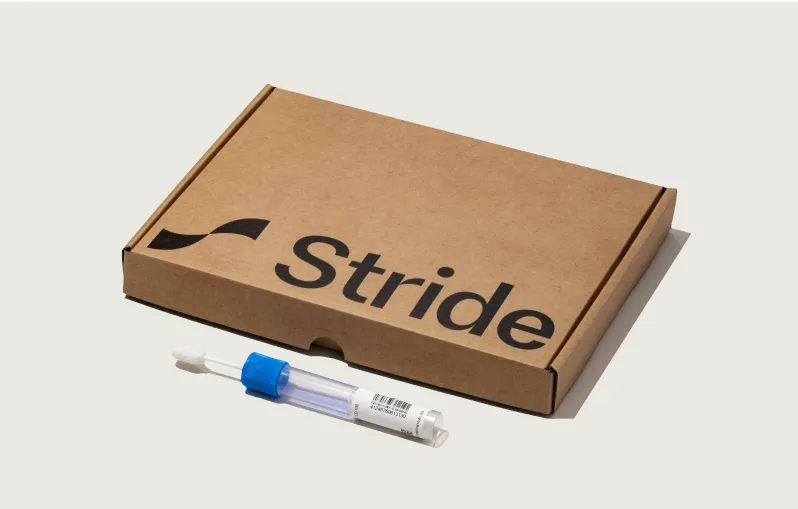






MEIS1 Gene Test (Myeloid Ecotropic Viral Integration Site 1)
The MEIS1 gene test analyses DNA for variants in a developmental transcription factor that strongly influence risk for restless legs syndrome, periodic limb movements in sleep, and insomnia related traits. Understanding your MEIS1 status adds genetic context to motor restlessness, sleep quality, and iron related pathways so you can personalise prevention and long term sleep strategies rather than guessing.
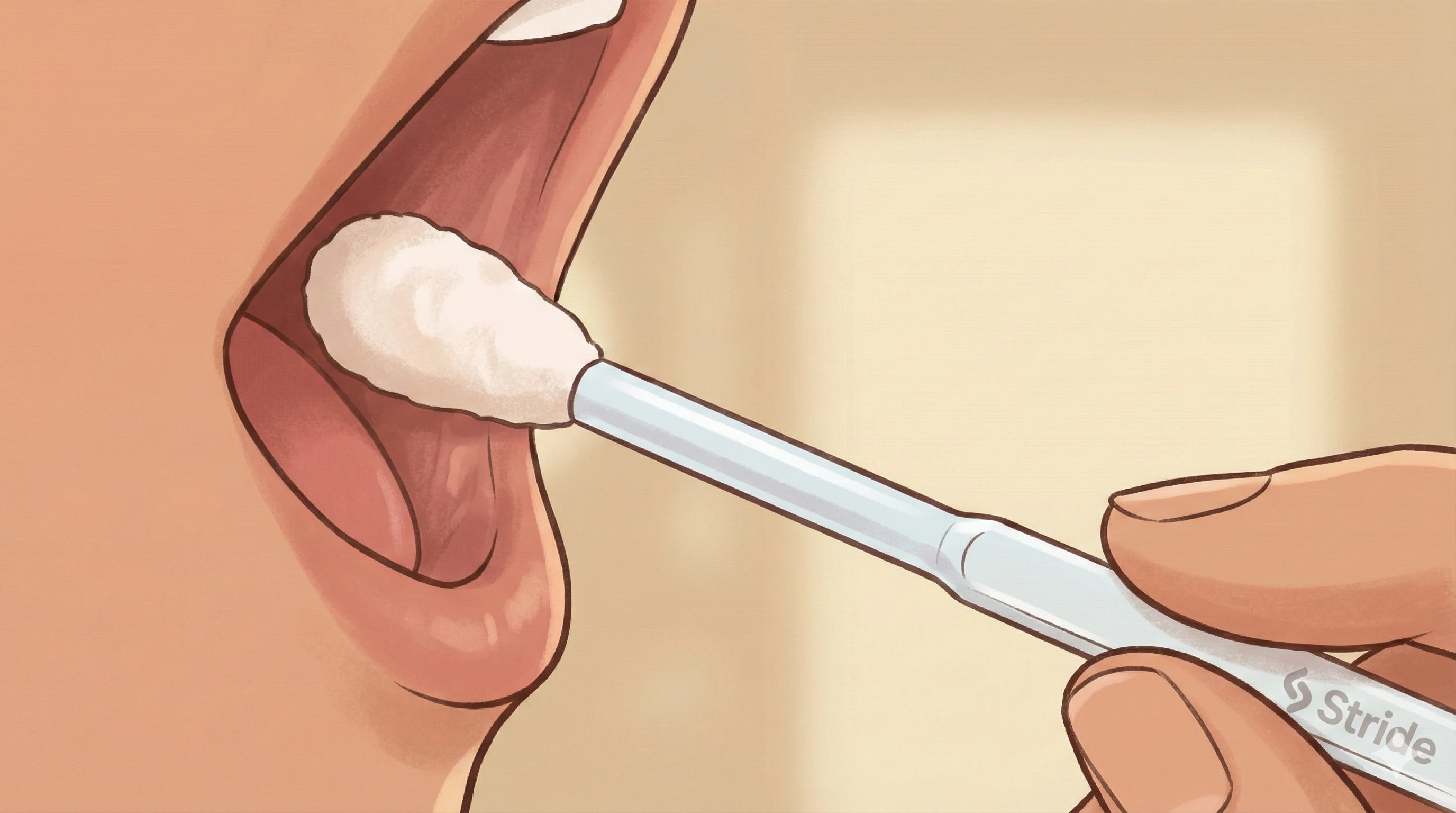

Sample type
Cheek swab, Blood sample

Collection
At-home

Often paired with
Other restless legs and sleep genes (BTBD9, MAP2K5, SKOR1, PTPRD), iron studies (ferritin, transferrin saturation), dopamine pathway markers, sleep tracking, mood and cognitive assessments

Fasting required
Not required for DNA testing; follow clinical guidance for any accompanying blood tests
Key benefits of testing MEIS1
- Identify whether you carry MEIS1 risk variants that lower MEIS1 expression and are consistently associated with higher susceptibility to restless legs syndrome and periodic limb movements during sleep.
- Help explain patterns such as an irresistible urge to move the legs at night, restlessness at rest, difficulty falling asleep due to leg sensations, or frequent arousals related to limb movements.
- Add context to iron and dopamine related findings, since MEIS1 risk haplotypes are linked with changes in ferritin, iron handling genes, and striatal dopaminergic and cholinergic systems in experimental models.
- Inform personalised strategies for iron optimisation, sleep hygiene, activity timing, and dopamine related interventions, particularly when combined with other sleep and iron markers and clinical guidance.
- Clarify your baseline neurodevelopmental and inhibitory neuron regulatory blueprint so that long term sleep optimisation and prevention plans can be built on both genetics and real time sleep data.
What is the MEIS1 gene?
MEIS1 encodes a homeobox transcription factor that plays key roles in the development of multiple organs, including central and peripheral nervous systems, blood forming tissues, and limbs. As a transcriptional regulator, MEIS1 binds to specific DNA sequences and controls the expression of sets of downstream genes in a time and cell type specific way.
In the brain, MEIS1 is particularly important in developing forebrain structures and inhibitory neuron lineages. Intronic regulatory elements within MEIS1 show cell type and maturation specific activity, and common intronic variants associated with restless legs syndrome and insomnia cluster in these regulatory regions, making MEIS1 a central node in genetic susceptibility to sensorimotor sleep phenotypes.
What does MEIS1 do?
MEIS1 functions as a transcription factor that partners with other homeobox proteins to orchestrate developmental programs and maintain certain neuron populations in the mature brain. It regulates expression of genes involved in inhibitory neuron differentiation, iron handling, and striatal dopaminergic and cholinergic signalling, among others.
In restless legs syndrome relevant contexts, MEIS1 influences motor circuitry and sensory processing pathways. Risk variants in intronic enhancers reduce MEIS1 expression and alter the regulation of downstream targets such as SKOR1 and iron related genes, leading to changes in ferritin expression, dopamine turnover, and firing patterns of striatal cholinergic interneurons in animal models. These changes appear to predispose to motor restlessness, increased arousal probability during the rest phase, and altered limb movement patterns during sleep.
Why is MEIS1 important for health?
MEIS1 is one of the most robust genetic risk factors for restless legs syndrome identified to date and is also associated with periodic limb movements in sleep and insomnia related traits in large genetic studies. Reduced MEIS1 expression, driven by intronic risk haplotypes, has been linked to RLS in multiple populations, and functional work shows that these intronic elements act as disease relevant enhancers in developing forebrain inhibitory neurons.
Because restless legs syndrome and periodic limb movements can severely fragment sleep, raise sympathetic activation, and impair quality of life, MEIS1 has indirect implications for cardiometabolic health, mental health, and daytime performance. Experimental models also show that Meis1 deficiency alters iron handling and dopaminergic systems, both of which are key in RLS biology. For most people, MEIS1 acts as a susceptibility factor: environmental and lifestyle factors such as iron status, medications, and comorbid conditions still shape whether symptoms emerge and how severe they are.
MEIS1 vs other sleep markers
It is easy to assume that MEIS1 testing and standard sleep or iron tests tell you the same story, but they capture different layers of your biology. Polysomnography and leg EMG show how often your legs move and how fragmented your sleep is right now; ferritin and iron studies show current iron status; MEIS1 testing looks at inherited variants that influence how your sensorimotor and inhibitory systems were wired during development and how they are regulated long term.
This distinction matters because you can carry MEIS1 risk variants yet never develop clinically significant restless legs if iron status is optimised, triggers are managed, and comorbidities are addressed. Conversely, restless legs and insomnia can arise without MEIS1 risk variants due to other RLS genes, iron deficiency, certain medications, kidney disease, pregnancy, or neuropathy, which are often more immediately actionable.
Factors that modify MEIS1 variants
The influence of MEIS1 variants is shaped heavily by iron status, dopaminergic tone, sleep habits, and comorbid conditions rather than by the gene alone. Several modifiable factors can either buffer or amplify any genetic tendency.
- Iron status and ferritin: Low or borderline ferritin and impaired brain iron handling are strongly implicated in RLS. Optimising iron intake, absorption, and storage under medical guidance can significantly improve symptoms even when MEIS1 risk variants are present.
- Dopaminergic and cholinergic balance: Medications that affect dopamine and related neurotransmitters can improve or worsen restless legs. Working with a clinician to review drugs such as certain antidepressants, antipsychotics, or dopamine agonists/antagonists is key if you carry MEIS1 risk variants and have symptoms.
- Sleep hygiene and circadian patterns: Irregular sleep schedules, chronic sleep restriction, and high evening stimulation raise arousal and may aggravate leg sensations and movements. Consistent routines and calming pre sleep behaviours help reduce symptom expression.
- Lifestyle and comorbidities: Pregnancy, kidney disease, peripheral neuropathy, and deficiencies in nutrients such as magnesium or B vitamins can exacerbate restless legs, while alcohol, caffeine, and nicotine near bedtime can worsen symptoms in susceptible individuals. Addressing these factors often makes more difference than genotype alone.
- Physical activity and movement patterns: Moderate regular exercise and movement can help relieve symptoms, whereas very intense evening exercise or prolonged immobility may worsen them in some people. Finding the right movement pattern is a powerful behavioural lever.
MEIS1 variants without symptoms
Yes, and this is common. Many people with MEIS1 risk haplotypes never meet diagnostic criteria for restless legs syndrome or insomnia. Genetic studies show increased odds, not a guarantee, and environmental and clinical factors determine whether the predisposition is expressed.
Even among people with restless legs, the severity and age of onset can vary widely, and MEIS1 is only one of several implicated genes. This means MEIS1 status is best interpreted as a risk and context marker that can help explain why you are more or less sensitive to certain triggers, rather than as a sole explanation for symptoms or a fixed destiny.
Common MEIS1 genotypes
Common MEIS1 genotypes mainly differ in intronic regulatory regions that control how much MEIS1 protein is produced in specific cell types and developmental stages. These differences shape the strength and pattern of MEIS1 driven transcriptional programs in the nervous system.
- Non risk MEIS1 haplotypes: Associated with typical expression levels and lower genetic susceptibility to restless legs and periodic limb movements, where symptoms, if present, are more likely driven by non genetic factors or other genes.
- Intronic risk haplotypes: Variants in introns, particularly intron 8 and neighbouring conserved elements, reduce MEIS1 mRNA and protein expression in brain tissue and lymphoblasts. These haplotypes show the strongest and most consistent association with restless legs syndrome and periodic limb movements across studies.
- Emerging coding variants: More recent work has identified specific coding variants that alter MEIS1 function and create RLS like phenotypes in mouse models. These are less common but may confer higher individual risk or more pronounced phenotypes when present.
How to prepare for a MEIS1 test
For DNA based MEIS1 testing, preparation is straightforward because your genotype does not change with sleep, diet, or stress. The main consideration is ensuring that MEIS1 is tested as part of a comprehensive sleep and neurological genetics panel so that results are interpreted using the full context.
Standalone MEIS1 genotyping using blood or saliva does not require fasting, since it assesses stable DNA. If MEIS1 is being evaluated alongside iron studies, dopamine metabolites, or sleep studies, your clinician or test provider may provide specific preparation instructions, such as timing of iron supplements or medication withholding, to keep results interpretable.
Do I need a MEIS1 test?
A MEIS1 test is most valuable when the result will be used to change how you approach restless legs and sleep management or to understand familial risk. It is less useful when ordered in isolation without considering symptoms, sleep data, and iron status.
- Recurrent leg discomfort and urge to move at rest: If you experience classic restless legs symptoms and are exploring a detailed workup, MEIS1 testing can help clarify your genetic background alongside iron studies and other RLS genes.
- Family history of restless legs or periodic limb movements: In families where RLS is common, MEIS1 status can add insight into shared risk and support earlier focus on iron optimisation and sleep hygiene in younger members.
- Insomnia with prominent motor restlessness: For people whose insomnia is driven by leg sensations and movements, MEIS1 genotyping may help differentiate sensorimotor driven sleep problems from primarily cognitive insomnia patterns.
- Advanced prevention and performance focus: If you are building a comprehensive sleep and brain health roadmap, MEIS1 sits alongside other sleep, iron, and dopamine related genes as a useful anchor for personalised strategies.
Stride tests that include MEIS1


Health Tests
Core DNA Methylation Test
5 reports: Methylation profile reports
From $229 $183.20
FAQs
What is the MEIS1 gene test?
The MEIS1 gene test analyses your DNA from blood or saliva to look for variants in the MEIS1 transcription factor that can influence risk for restless legs syndrome, periodic limb movements in sleep, and certain insomnia related traits.
What does a MEIS1 gene mutation mean?
Common MEIS1 risk variants, mostly in intronic regulatory regions, reduce MEIS1 expression and increase susceptibility to restless legs and periodic limb movements, but they act as risk modifiers rather than direct causes and need environmental and clinical context to manifest.
Do MEIS1 variants always cause restless legs syndrome?
No; many people with MEIS1 risk haplotypes never develop restless legs. Symptoms depend heavily on iron status, medications, comorbid conditions, sleep habits, and other genes, so MEIS1 is better viewed as a risk factor than a diagnosis.
Is MEIS1 testing recommended for insomnia or sleep disorders?
MEIS1 testing can add useful context in complex cases of restless legs, periodic limb movements, or insomnia with prominent leg restlessness, especially as part of a broader genetic and clinical assessment, but it is not a stand alone diagnostic tool.
Can MEIS1 affect iron or dopamine pathways?
Yes; MEIS1 risk variants and experimental knockdown are linked to changes in ferritin and iron handling genes and to altered striatal dopaminergic and cholinergic signalling in models, which likely contributes to restless legs biology.
Do I need a MEIS1 test?
You might consider a MEIS1 test if you have persistent restless legs symptoms, a strong family history of RLS or periodic limb movements, or you are building a detailed sleep and movement health strategy where genetic risk will genuinely change your approach to iron, medications, and routines.
Do I need to fast for MEIS1 testing?
Fasting is not required for DNA based MEIS1 testing, although accompanying blood tests such as iron studies or metabolic panels may have specific preparation instructions that are worth following for consistent tracking.
How can I optimise MEIS1 related pathways?
Rather than trying to treat the gene, focus on checking and optimising iron status with a clinician, building consistent sleep and wake times, limiting caffeine, alcohol, and nicotine in the evening, moving regularly, and reviewing medications that might worsen restless legs so your sensorimotor and sleep systems can perform well over time, whatever your MEIS1 genotype.