
Menu
-
Shop All
Contact
hey@getstride.com
Stride Health Group
Stride Health Group Ltd
Company No 05158025
Lamas Road
Badersfield
Norwich
England
NR10 5FB
UK
Extra 10% Off | Enter code GIFT at checkout









MAOB Gene Test (Monoamine Oxidase B)
The MAOB gene test analyses DNA for variants in monoamine oxidase B that can alter how efficiently you break down dopamine and other monoamine and trace amines, particularly in the brain and platelets. Understanding your MAOB status adds genetic context to dopamine balance, mood, movement, and brain ageing so you can personalise prevention, lifestyle, and, where appropriate, treatment plans instead of relying on guesswork.
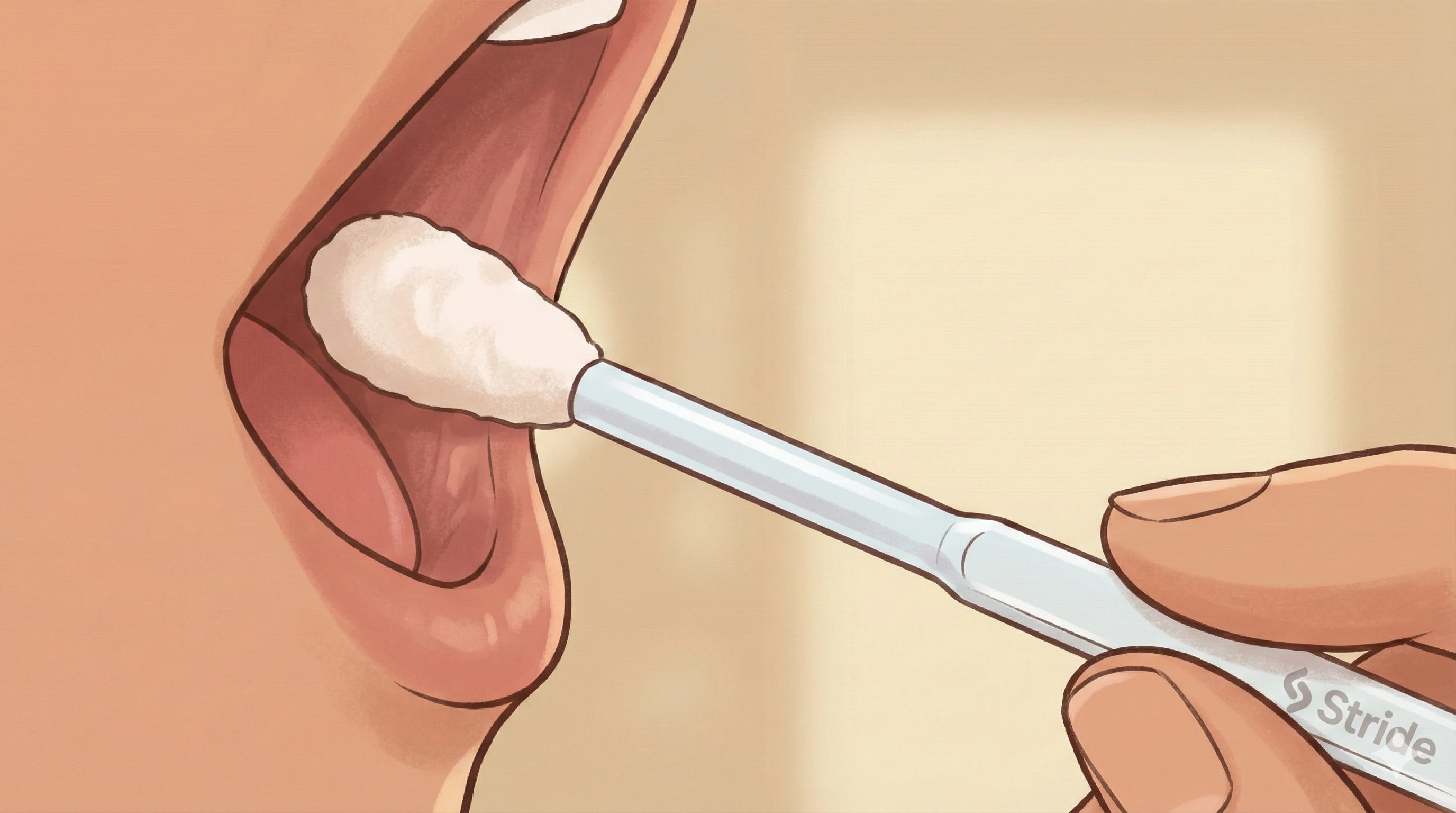

Sample type
Cheek swab, Blood sample

Collection
At-home

Often paired with
MAOA, COMT and other neurotransmitter genes, methylation panel, homocysteine, B vitamin status, stress and adrenal markers, Parkinson's and movement related assessments

Fasting required
Not required for DNA testing; follow clinical guidance for any accompanying blood tests
What is the MAOB gene?
Monoamine oxidase B (MAO B) is an enzyme located on the outer mitochondrial membrane that catalyses the oxidative deamination of neuroactive and vasoactive amines. The MAOB gene provides the instructions for making this enzyme, which belongs to the flavin monoamine oxidase family and is expressed in the brain, platelets, and many peripheral tissues.
MAO B preferentially breaks down dopamine, phenylethylamine, and certain other amines, and also participates in the metabolism of exogenous compounds and neurotoxins. Like MAOA, MAOB is encoded on the X chromosome, and common polymorphisms such as A644G in intron 13 have been linked in some studies to differences in enzyme activity and susceptibility to Parkinson's disease, levodopa induced dyskinesia, and mood or blood pressure traits, although findings are not uniform across populations.
What does MAOB do?
MAO B catalyses the oxidative deamination of dopamine and other monoamines, producing aldehydes, ammonia, and hydrogen peroxide as by products that are further metabolised. By controlling the breakdown rate of dopamine and trace amines, MAO B shapes synaptic dopamine tone, especially in basal ganglia circuits involved in movement, habit formation, and reward processing.
MAO B activity tends to increase with age in some brain regions, which may contribute to age related dopamine loss and increased oxidative stress from hydrogen peroxide production. Variants that shift MAO B activity can change how quickly dopamine is cleared and how much oxidative stress is generated for a given dopamine load, which may influence long term patterns in movement, mood, and neurodegenerative risk, particularly when combined with environmental exposures and lifestyle factors.
Why is MAOB important for health?
MAOB sits at the intersection of dopamine metabolism, brain ageing, and neurodegeneration. By regulating dopamine breakdown and interacting with environmental toxins and medications, MAO B influences susceptibility patterns for conditions such as Parkinson's disease, movement disorders, and some mood or cognitive issues.
Research has linked MAOB polymorphisms, particularly A644G and nearby variants, with differences in Parkinson's risk, age at onset, and levodopa induced dyskinesia in some cohorts. MAO B is also the target of a major class of Parkinson's medications, and its activity has been studied in relation to smoking, hypertension, mood, and neurotoxicity from compounds like MPTP. These relationships are influenced heavily by age, environment, and overall metabolic health, so genotype is one part of a larger picture.
MAOB vs MAOA: what is the difference?
It is easy to assume that MAOA and MAOB are interchangeable, but they have distinct roles and tissue patterns. MAOA is more prominent in catecholaminergic neurons and is particularly important for serotonin, norepinephrine, and epinephrine breakdown, while MAOB is more abundant in glial cells, serotonergic and histaminergic neurons, and platelets, and preferentially handles dopamine and trace amines such as phenylethylamine.
Both enzymes sit on the outer mitochondrial membrane and produce similar by products, including hydrogen peroxide, but their substrate preferences and localisation mean they influence different aspects of brain and vascular function. MAOB is especially relevant for dopamine related movement pathways and response to MAO B inhibitor therapy, whereas MAOA plays a larger role in mood and impulse control, though there is overlap and cross talk between the two systems.
What factors modify the effects of MAOB variants?
The influence of MAOB variants is shaped more by environment, ageing, and lifestyle than by the gene alone. Several modifiable factors can buffer or amplify MAOB related tendencies.
- Age and brain ageing: MAO B levels generally increase with age in certain brain regions, which can magnify any genetic differences in enzyme activity and contribute to dopamine loss and oxidative stress. Movement, sleep, and cardiovascular health support can help preserve brain resilience over time.
- Environmental exposures and smoking: Pesticides, solvents, and other neurotoxins interact with dopamine pathways and oxidative stress, which may intersect with MAOB related vulnerabilities. Smoking has been linked to altered MAO B activity and Parkinson's risk in complex ways. Minimising toxic exposures is helpful regardless of genotype.
- Diet, antioxidants, and metabolic health: Diets rich in antioxidants, polyphenols, and supportive nutrients can help buffer oxidative stress generated during dopamine metabolism. Good metabolic health and vascular function also support brain perfusion and resilience, which often matter more than MAOB status alone.
- Medications and supplements: MAO B inhibitors are used to manage Parkinson's symptoms and may be studied in other contexts. Other drugs and supplements that influence dopamine levels can interact with MAOB activity, so genotype information can sometimes contribute to personalised dosing and monitoring decisions under specialist care.
- Sleep and movement patterns: Regular physical activity and high quality sleep support dopamine signalling, synaptic plasticity, and glymphatic clearance. These habits can modulate how MAOB related differences translate into real world function.
Can you have MAOB variants without symptoms?
Yes, and this is very common. Many people with MAOB polymorphisms, including A644G, never develop Parkinson's, movement disorders, or significant mood problems, and only learn about their variants through DNA or preventive health testing.
Parkinson's disease and related conditions arise from a combination of genetic, environmental, and ageing related factors, and most clinical risk is driven by broader patterns rather than a single common variant. MAOB status is best viewed as a nuance, not a diagnosis.
MAOB genotypes: how do common variants differ?
Common MAOB genotypes mainly differ in how they modulate enzyme expression or activity and how strongly they influence dopamine breakdown and oxidative stress, particularly in the context of age and environmental exposures. Understanding your pattern can inform long term prevention strategies without defining your future.
- A allele predominant patterns at A644G: In some studies, A alleles at A644G have been associated with higher MAO B activity, which could increase dopamine breakdown and oxidative stress but may also alter response to environmental modifiers and medications.
- G allele predominant patterns at A644G: G alleles have been associated with lower MAO B activity in some brain regions and altered Parkinson's risk or dyskinesia patterns, though results vary by study and population.
- Combined MAOB and broader gene patterns: The impact of MAOB variants is often shaped by other genes, including those related to dopamine transport, antioxidant defence, and mitochondrial function. Comprehensive panels can give a more complete picture than a single polymorphism.
How do I prepare for an MAOB test?
For DNA based MAOB testing, preparation is simple because genotype is stable across your lifetime. The key is clarifying how you and your clinician will use the information to inform prevention, monitoring, or treatment, particularly if there is a personal or family history of movement disorders.
Standalone MAOB genotyping using blood or saliva does not require fasting, since it targets DNA sequence rather than dynamic dopamine levels. If your test is bundled with blood markers such as inflammatory markers, lipids, glucose, or vitamin levels, your clinician or provider may give specific timing or fasting instructions to keep those results consistent over time.
Do I need an MAOB test?
An MAOB test is most helpful when the results will inform concrete decisions around neurological prevention, monitoring, or treatment in the context of a thorough assessment. It is less useful as a stand alone predictor of Parkinson's disease or mood problems.
- Family history of Parkinson's or movement disorders: If Parkinson's or related conditions are common in your family, MAOB testing alongside other neurological genes, environmental review, and clinical assessment can add nuance to your prevention plan.
- Existing Parkinson's disease or early movement symptoms: In people already under specialist care, MAOB genotype may contribute to discussions about MAO B inhibitor use, levodopa dosing, and dyskinesia risk, although it is one of many factors involved.
- Preventive brain health profiling: For individuals investing in long term brain health, MAOB testing alongside COMT, MAOA, antioxidant and mitochondrial markers, and lifestyle review can help personalise strategies to support dopamine balance and resilience with ageing.
Stride tests that include MAOB


Health Tests
Core DNA Methylation Test
5 reports: Methylation profile reports
From $229 $183.20

Health Tests
Advanced DNA & Methylation Test
29 reports: Methylation profile and nutrigenetic reports
From $349 $279.20

Health Tests
Optimal DNA & Methylation Test
46 reports: Methylation profile, nutrigenetic, fitness, sleep, stress and skin reports
From $479 $383.20
FAQs
What is the MAOB gene test?
The MAOB gene test analyses your DNA from blood or saliva to look for variants in the monoamine oxidase B gene that influence how efficiently you break down dopamine and other monoamines in the brain and peripheral tissues.
What does an MAOB variant mean?
Common MAOB variants, such as A644G and related polymorphisms, can modestly shift enzyme activity and dopamine metabolism, influencing patterns in neurodegenerative risk or movement symptoms, but they are not deterministic on their own.
Do MAOB variants always cause Parkinson's disease or movement problems?
No. Most people with MAOB variants never develop Parkinson's disease or major movement disorders. Risk depends on many factors, including age, environment, lifestyle, other genes, and overall vascular and metabolic health.
Is MAOB testing recommended for Parkinson's disease?
In clinical practice, MAOB testing is not routinely used as a stand alone screen for Parkinson's, but may be considered in research, specialist settings, or comprehensive genetic assessments to refine understanding of risk or treatment response.
Can MAOB affect response to MAO B inhibitors or other medications?
MAOB defines the target for MAO B inhibitor drugs used in Parkinson's disease. Variants may contribute modestly to differences in response or side effects, but treatment decisions should always be guided by a neurologist using clinical response and broader context.
Do I need an MAOB test?
You might consider an MAOB test if you have a strong family history of Parkinson's or related conditions, are involved in specialist care where genetic information could shape treatment decisions, or are building a detailed preventive brain health profile with expert support.
Do I need to fast for MAOB testing?
Fasting is not required for DNA based MAOB testing, although accompanying blood tests such as glucose, lipids, or inflammatory markers may have specific preparation instructions that help keep results comparable over time.
How can I support MAOB related pathways?
Rather than focusing solely on the gene, prioritise regular movement, restorative sleep, cardiovascular and metabolic health, a nutrient dense and antioxidant rich diet, and minimising toxin exposures, using MAOB status as one piece of your personalised plan for long term brain resilience.