
Menu
-
Shop All
Contact
hey@getstride.com
Stride Health Group
Stride Health Group Ltd
Company No 05158025
Lamas Road
Badersfield
Norwich
England
NR10 5FB
UK
Extra 10% Off | Enter code GIFT at checkout


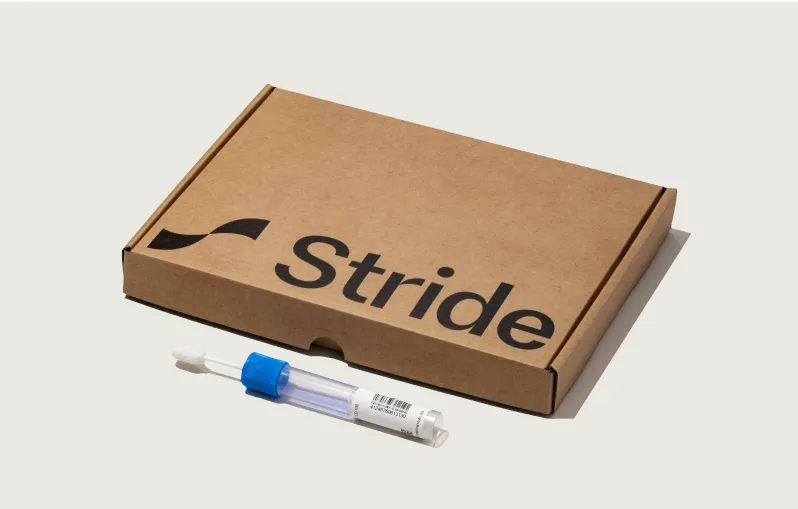






Lipoprotein(a) Blood Test
Lipoprotein (a), often written as Lp(a), is a genetically driven cholesterol particle that can significantly increase cardiovascular risk even when standard cholesterol looks normal. It behaves like a "stickier" form of LDL, promoting plaque build up, clot formation, and aortic valve disease, which is why one lifetime Lp(a) test can be so important for prevention.


Sample type
Blood sample

Collection
At-home

Often paired with
Lipid panel, ApoB, ApoA1, ApoB/A1 Ratio, non HDL cholesterol, hsCRP, HbA1c, kidney function

Fasting required
0
Key benefits of testing Lipoprotein (a)
An Lp(a) blood test can help you:
- Reveal inherited cholesterol related risk that standard lipid tests can easily miss.
- Explain why cardiovascular disease occurs early or progresses despite "good" cholesterol levels.
- Refine risk in people with strong family history of heart attacks, strokes, or aortic valve disease.
- Support clinician led decisions about how intensively to manage LDL, ApoB, blood pressure, and other factors when Lp(a) is high.
- Identify people who may benefit most from emerging Lp(a) targeted therapies and closer long term follow up.
What is Lipoprotein (a)
Lipoprotein (a) is a cholesterol carrying particle made by the liver. Structurally, it looks like an LDL particle combined with an extra protein called apolipoprotein (a), or Apo(a), attached to its surface.
This combination gives Lp(a) two important features:
- It carries cholesterol and ApoB, similar to LDL, so it can deposit cholesterol into artery walls.
- The Apo(a) component makes it "stickier" and able to interact with the body's clotting system and inflammatory pathways.
Crucially, Lp(a) levels are determined mainly by your genes and are relatively stable across your lifetime. Diet, exercise, and weight have only modest influence compared with other lipids.
What does Lipoprotein (a) do
Lp(a) participates in several processes that influence cardiovascular and valvular disease:
- Atherosclerosis. Lp(a) deposits cholesterol in artery walls, contributing to plaque build up alongside LDL and other ApoB containing particles.
- Thrombosis. Because Apo(a) resembles a clotting protein, Lp(a) may interfere with normal clot breakdown and promote thrombosis in plaques.
- Inflammation and calcification. Elevated Lp(a) is linked with vascular inflammation and calcification, including calcific aortic valve stenosis.
These combined actions mean that high Lp(a) can amplify risk even when LDL cholesterol is well controlled, which is why it is considered an independent risk factor.
Why is Lipoprotein (a) important for heart health
Lp(a) matters because it adds a genetic layer of risk on top of traditional factors like LDL, blood pressure, and smoking. Elevated levels are associated with:
- Earlier and more frequent heart attacks and strokes, particularly in people with strong family history.
- More rapid progression of coronary artery disease and atherosclerotic plaque.
- Aortic valve stenosis, where the valve between the heart and the aorta becomes calcified and narrowed.
Since Lp(a) is largely genetic and relatively stable, a single test result can provide a lifetime signal of risk. This allows a more personalised prevention strategy, including:
- Tighter LDL and ApoB targets if Lp(a) is high.
- Earlier and more aggressive lifestyle and risk factor management.
- Consideration of new Lp(a) lowering therapies as they become available.
Lipoprotein (a) vs LDL cholesterol: what is the difference
It is easy to assume Lp(a) is just another way of saying LDL, but there are important differences.
- LDL cholesterol measures the cholesterol carried in LDL particles, which all contain ApoB.
- Lp(a) measures a subset of LDL like particles that also carry the additional Apo(a) protein, making them more atherogenic and pro thrombotic.
Key implications:
- You can have normal LDL cholesterol and still have high Lp(a), which raises risk.
- You can have high LDL and normal Lp(a), where LDL remains the main target.
- Standard lipid panels do not routinely separate Lp(a) from other LDL particles, so you need a specific Lp(a) test to know your level.
Lp(a) is best interpreted alongside LDL, ApoB, non HDL cholesterol, and hsCRP to understand the full picture.
What factors affect Lipoprotein (a) levels
Unlike many lipids, Lp(a) is influenced mainly by genetics, with limited impact from lifestyle. Key factors include:
1. Genetics primary determinant
- Lp(a) levels are inherited, often in a pattern where high levels run in families with early heart disease or aortic valve disease.
- Variants in the LPA gene determine how much Apo(a) your liver produces and how large each Apo(a) protein is, which together set your Lp(a) level.
- Because of this, Lp(a) testing is particularly valuable if close relatives have had heart attacks or strokes at younger ages.
2. Ethnicity
- Lp(a) levels vary by ethnicity, with some groups having a higher prevalence of elevated Lp(a).
- This variation is genetic and does not reflect lifestyle or diet alone.
3. Kidney and other medical conditions
- Certain kidney diseases, particularly chronic kidney disease and nephrotic syndrome, can increase Lp(a).
- Inflammatory and hormonal states may influence levels modestly, but the underlying genetic baseline remains the main driver.
4. Medications
- Standard lipid lowering therapies such as statins often have little effect on Lp(a) and can occasionally raise it slightly, even while lowering LDL and ApoB.
- Some other agents may modestly lower Lp(a), but their primary benefit is usually through LDL reduction rather than Lp(a) itself.
- Emerging targeted therapies are being developed specifically to reduce Lp(a), and knowing your level helps determine whether these may be relevant in future.
Can Lipoprotein (a) be high if my cholesterol is normal
Yes. This is one of the most important reasons to test Lp(a).
You can have:
- Normal LDL and ApoB, but high Lp(a), which significantly elevates lifetime risk.
- Normal total cholesterol, but a high proportion of that cholesterol carried by Lp(a), especially if other factors are well controlled.
In these scenarios, traditional lipid panels can look reassuring, yet genetic risk from Lp(a) remains hidden. Measuring Lp(a) reveals this and helps tailor how closely you and your clinician manage other risk factors.
Normal vs high Lipoprotein (a): what is the difference
There is no single globally agreed cut off for Lp(a), and results may be reported in mg/dL or nmol/L. However, many expert groups use approximate thresholds such as:
- Lower risk: Lp(a) in the lower ranges of the reference interval.
- Higher risk: levels above roughly 30 mg/dL or 50 mg/dL, or above around 75 to 125 nmol/L, depending on the guideline used.
The higher your Lp(a), the more it can amplify other cardiovascular risk factors. For someone with high Lp(a), clinicians may:
- Aim for particularly low LDL and ApoB targets.
- Manage blood pressure, blood sugar, and lifestyle risks more proactively.
- Consider earlier referral to lipid or cardiology specialists.
Do I need to fast for a Lipoprotein (a) test
Lp(a) is not significantly affected by a single meal, so fasting is usually not required for an Lp(a) test on its own.
However:
- If your test panel includes fasting lipids, glucose, or other markers that do require fasting, you may still be asked not to eat for a set period.
- Always follow the instructions provided with your test so that every marker can be interpreted reliably.
How can high Lipoprotein (a) risk be managed clinician guided
Because Lp(a) itself is largely genetic and relatively stable, management focuses on reducing the overall burden of cardiovascular risk rather than trying to normalise Lp(a) with lifestyle alone. Depending on your situation, clinician guided strategies may include:
- Driving LDL and ApoB as low as is safe and practical, often with statins and, when needed, additional agents.
- Addressing all modifiable risk factors aggressively, including blood pressure, smoking, blood sugar, weight, and physical inactivity.
- Considering aspirin or other antithrombotic strategies where appropriate, based on overall risk and bleeding profile.
- Discussing emerging Lp(a) targeted therapies or clinical trials if your levels are particularly high and you are at high risk or already have cardiovascular disease.
Because Lp(a) is stable, you usually do not need frequent retesting. Instead, the result is used as a flag to set the intensity of your lifelong prevention plan.
Stride tests that include Lp(a)
FAQs
What is the Lipoprotein (a) blood test
The Lipoprotein (a) blood test measures the level of Lp(a), a genetically determined cholesterol particle that behaves like a sticky form of LDL. High Lp(a) increases the risk of heart attacks, strokes, and aortic valve disease, even when standard cholesterol results look normal.
What is a normal Lipoprotein (a) level
Normal or lower risk Lp(a) levels are those in the lower part of the lab's reference interval. Many expert groups consider levels above roughly 30 mg/dL or 50 mg/dL, or their equivalents in nmol/L, as raised and associated with higher cardiovascular risk. The exact cut off can vary between laboratories and guidelines.
What is an optimal Lipoprotein (a) level for heart health
From a prevention viewpoint, lower Lp(a) is generally better, but you cannot usually influence it dramatically with lifestyle. The key is knowing whether your Lp(a) is in a higher risk range, so you and your clinician can set more precise goals for LDL, ApoB, blood pressure, and other modifiable risk factors.
Is Lipoprotein (a) the same as LDL cholesterol
No. Lp(a) is an LDL like particle that carries cholesterol and ApoB but also has an extra Apo(a) protein attached. This extra protein makes Lp(a) more pro inflammatory and pro thrombotic. You can have normal LDL but high Lp(a), or high LDL and normal Lp(a), so a specific Lp(a) test is needed.
Can Lipoprotein (a) be high even if I live a healthy lifestyle
Yes. Lp(a) levels are largely set by your genes and are not significantly lowered by diet, exercise, or weight loss. A healthy lifestyle is still crucial because it helps offset the additional risk from high Lp(a) by improving LDL, ApoB, blood pressure, blood sugar, and inflammation.
Do I need Lipoprotein (a) testing
You may benefit from an Lp(a) test if you have a strong family history of early heart attacks or strokes, personal history of cardiovascular disease with only modest cholesterol elevation, high LDL that has been difficult to control, or aortic valve disease without clear explanation. Many prevention focused individuals also choose to measure Lp(a) once to understand their inherited risk.
Do I need to fast for a Lipoprotein (a) test
Fasting is usually not required for Lp(a) itself, but if you are having a full lipid or metabolic panel at the same time, you may be asked to fast so that all results are consistent. Follow the instructions provided with your test.
How can I lower my Lipoprotein (a) related risk
While you may not be able to significantly lower Lp(a) itself with lifestyle, you can meaningfully lower overall risk by reducing LDL and ApoB, not smoking, managing blood pressure and blood sugar, maintaining a healthy waist circumference, and staying physically active. Your clinician may also consider emerging Lp(a) targeted therapies or clinical trials if your levels and risk are high.
Do I need a Lipoprotein (a) test
If you want to move beyond basic cholesterol numbers and understand how your genetics may be shaping your heart risk, discussing a Lipoprotein (a) test with your clinician is a smart step. Within StrideOne, Lp(a) is part of a broader panel that shows you not just where your risk comes from, but how you can act on it over time.