
Menu
-
Shop All
Contact
hey@getstride.com
Stride Health Group
Stride Health Group Ltd
Company No 05158025
Lamas Road
Badersfield
Norwich
England
NR10 5FB
UK
Extra 10% Off | Enter code GIFT at checkout


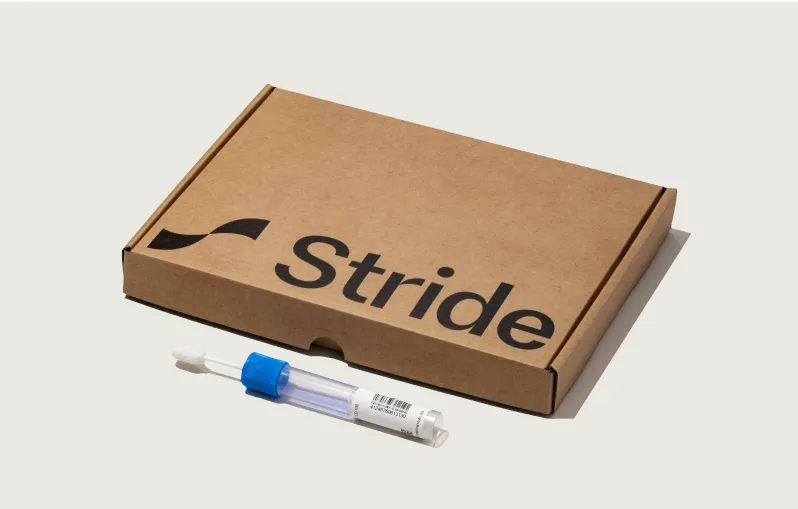






LIPC Gene Test (Hepatic Lipase)
The LIPC gene test analyses DNA for variants in hepatic lipase, a key enzyme that remodels HDL and intermediate-density lipoproteins and helps regulate triglycerides, HDL, and LDL. Understanding your LIPC status adds genetic context to HDL levels, triglyceride metabolism, and cardiovascular risk so you can personalise cardiometabolic prevention instead of relying on HDL numbers alone.


Sample type
Cheek swab, Blood sample

Collection
At-home

Often paired with
Full lipid profile (HDL, LDL, non-HDL, triglycerides), apolipoproteins, remnant cholesterol, inflammatory markers, LPL, CETP, APOE and APOA5 variants, liver enzymes, imaging of arterial health

Fasting required
Not required for DNA testing; fasting is usually recommended for accompanying lipid blood tests
Key benefits of testing LIPC
- Identify whether you carry LIPC variants that alter hepatic lipase expression or activity and thereby shift HDL cholesterol levels, HDL particle size, triglycerides, and IDL and LDL composition.
- Help explain patterns such as unexpectedly high HDL, "paradoxical" high HDL with cardiovascular events, or mixed lipid profiles that do not fully match lifestyle, by revealing how your hepatic lipase system is wired.
- Add context to coronary artery disease risk, since some LIPC promoter and intronic haplotypes are linked to higher HDL but also to increased coronary calcification, diabetes, hypertriglyceridaemia, or hypertension, while others are associated with hyperalphalipoproteinaemia and altered HDL metabolism.
- Inform personalised strategies around how aggressively to target apoB and triglycerides, how to interpret high HDL, and how to combine diet, activity, and lipid‑lowering therapies alongside other lipid genes such as LPL and CETP.
- Clarify your baseline remnant and HDL remodelling architecture, so long term cardiovascular plans can be built on both genetics and real time lipids.
What is the LIPC gene?
LIPC encodes hepatic lipase, a glycoprotein lipase mainly synthesised and secreted by liver cells. After secretion, hepatic lipase binds to heparan sulfate proteoglycans on the surface of liver sinusoidal endothelial cells and hepatocytes, where it exerts its lipolytic and bridging functions.
Hepatic lipase belongs to the same lipase family as lipoprotein lipase but has distinct substrate preferences and tissue distribution. It hydrolyses triglycerides and phospholipids in circulating lipoproteins, particularly in intermediate density lipoproteins (IDL) and HDL, and it facilitates hepatic uptake of remnant particles. Mutations in LIPC can cause hepatic lipase deficiency, while common regulatory variants modulate HDL and triglyceride levels and cardiovascular risk.
What does LIPC do?
Hepatic lipase catalyses the hydrolysis of triglycerides and phospholipids in IDL and HDL particles, converting larger, triglyceride rich HDL2 into smaller, denser HDL3 and promoting the conversion of IDL to LDL. Through these actions, it helps regulate plasma triglyceride levels and HDL particle distribution and influences LDL composition.
LIPC also acts as a ligand or "bridging" factor that promotes hepatic uptake of remnant lipoproteins and HDL particles. By participating in HDL‑mediated reverse cholesterol transport, hepatic lipase helps move cholesterol from peripheral tissues to the liver for excretion. Variants that reduce hepatic lipase activity can lead to increased levels of large, triglyceride rich HDL2 particles and hyperalphalipoproteinaemia, while other variants alter HDL and triglyceride levels in more subtle ways.
Why is LIPC important for health?
LIPC is central to HDL metabolism, triglyceride clearance, and remnant handling. Rare LIPC loss of function variants can contribute to hepatic lipase deficiency, sometimes identified in people with very high HDL cholesterol and unusual HDL particle distributions. In some cases, these changes are associated with a form of hyperalphalipoproteinaemia that may or may not be protective against coronary disease, depending on overall lipoprotein context.
Common LIPC promoter and intronic variants, such as −514C>T (rs1800588), −250G/A (rs2070895), and specific intron 1 haplotypes, are associated with differences in HDL cholesterol, triglycerides, and cardiometabolic traits. Some haplotypes are linked to elevated HDL, while others are associated with lower HDL and higher triglycerides. Certain promoter polymorphisms have been associated with increased risk of type 2 diabetes, hypertriglyceridaemia, hypertension, and coronary artery calcification in specific populations, highlighting that "high HDL" driven by hepatic lipase changes is not always benign.
LIPC vs other lipid markers
It is easy to assume that LIPC testing and standard lipid panels tell you the same story, but they capture different layers of your biology. Lipid panels, apoB, and remnant cholesterol show how your lipids are behaving now; coronary calcium and imaging show current arterial impact; LIPC genotyping reveals inherited variants that influence hepatic lipase activity and thereby how HDL, IDL, and LDL are remodelled and cleared over the long term.
This distinction matters because you can have LIPC variants that raise HDL but still carry significant coronary risk if apoB, remnant cholesterol, blood pressure, and inflammation are not well controlled. Conversely, you can have lower HDL with relatively favourable LIPC genotypes but low overall risk if apoB and other risk factors are managed. LIPC status is most useful for interpreting high HDL and remnant profiles within a broader risk picture.
Factors that modify LIPC variants
The influence of LIPC variants is shaped by triglyceride levels, apoB burden, lifestyle, and other lipid genes rather than by the gene alone, which means you have meaningful room to change the trajectory. Several modifiable factors can either buffer or amplify any genetic tendency.
- Triglycerides and remnant lipoproteins: High triglycerides from diet, alcohol, or insulin resistance increase substrate for hepatic lipase and can mask or modify LIPC‑HDL associations. Improving triglycerides and remnant cholesterol often has a larger effect on risk than any single LIPC variant.
- ApoB and LDL cholesterol: Elevated apoB and LDL increase the atherogenic impact of any adverse hepatic lipase‑driven remnant and LDL changes. Lowering apoB with diet and medications reduces risk regardless of LIPC genotype.
- Body weight and insulin sensitivity: Central obesity and insulin resistance worsen triglycerides and HDL, interacting with LIPC variants to shape HDL size and function. Weight loss and better insulin sensitivity improve lipoprotein profiles across genotypes.
- Physical activity: Regular exercise improves triglycerides, HDL, and insulin sensitivity, and can offset less favourable LIPC genotypes by improving overall lipoprotein metabolism and vascular health.
- Other lipid genes and environment: Variants in LPL, CETP, APOA5, APOE, and other genes interact with LIPC, and secondary causes such as diabetes, hypothyroidism, kidney disease, and certain medications can overshadow modest LIPC effects.
LIPC variants without symptoms
Yes, and this is common. Many people carry LIPC variants that influence HDL or triglycerides without any obvious symptoms or events, especially when other risk factors are well controlled. LIPC polymorphisms usually have modest effects on lipids and risk compared with factors such as apoB, blood pressure, smoking, and diabetes.
Even individuals with hepatic lipase deficiency and hyperalphalipoproteinaemia can show variable cardiovascular outcomes, reflecting the combined influence of other genes and lifestyle. A high HDL cholesterol level driven by LIPC variants does not guarantee protection, just as a lower HDL level in a favourable risk environment does not guarantee events.
Common LIPC genotypes
Common LIPC genotypes mainly differ at promoter and intronic sites that regulate hepatic lipase expression and activity, and at coding or nearby variants that influence enzyme function.
- Loss of function or marked reduction variants: Rare coding or regulatory variants that significantly reduce hepatic lipase activity can contribute to hepatic lipase deficiency and hyperalphalipoproteinaemia, with increased HDL cholesterol and large, triglyceride rich HDL particles and altered remnant metabolism.
- Promoter variants such as −514C>T (rs1800588) and −250G/A (rs2070895): These polymorphisms and their haplotypes are associated with differences in hepatic lipase expression, HDL cholesterol, triglycerides, and cardiometabolic traits. Some haplotypes increase HDL while also associating with higher risk of hypertension, diabetes, hypertriglyceridaemia, or coronary calcification in specific settings.
- Intronic haplotypes in intron 1: Certain haplotypes are associated with higher HDL cholesterol and altered HDL metabolism, including hyperalphalipoproteinaemia 1 in some cohorts. These haplotypes modify HDL levels and particle characteristics rather than acting as stand alone disease mutations.
Together, these variants help explain interindividual differences in HDL levels and particle size and in remnant handling, but their effect on cardiovascular events depends heavily on apoB, blood pressure, and lifestyle.
How to prepare for a LIPC test
For DNA based LIPC testing, preparation is straightforward because your genotype does not change with diet or training. The key step is ensuring LIPC is tested within a clinically relevant panel, such as a hyperalphalipoproteinaemia or cardiometabolic panel, and that you have or will obtain up to date lipid and cardiometabolic data to interpret the result.
LIPC genotyping from blood or saliva does not require fasting. However, fasting is usually recommended before lipid and triglyceride blood tests so that HDL, LDL, non‑HDL, and remnant measures are accurate and comparable over time. You should follow any instructions about fasting, alcohol, and medication timing for these companion tests.
Do I need a LIPC test?
A LIPC test is most valuable when the result will influence how you and your clinician interpret HDL, triglycerides, and remnant cholesterol and plan cardiovascular prevention. It is less helpful when ordered in isolation without considering lipid profiles, apoB, family history, and lifestyle.
- Very high HDL cholesterol or suspected hyperalphalipoproteinaemia: If HDL is markedly elevated without obvious secondary causes, LIPC testing, alongside CETP and LPL, can clarify whether a primary hyperalphalipoproteinaemia is present and how to interpret that high HDL in terms of risk.
- Mixed or unexplained lipid profiles: When lipid patterns seem disproportionate to lifestyle or standard risk factors, LIPC genotyping can add nuance to understanding HDL and remnant metabolism and to decisions about therapy focus.
- Strong family history of premature coronary disease with high HDL: In families with early heart disease and "good" HDL, LIPC variants may contribute to risk and support an emphasis on apoB and blood pressure control rather than relying on HDL as protective.
- Comprehensive cardiometabolic prevention: In high detail prevention strategies, LIPC sits alongside LPL, CETP, APOE, and other lipid genes to refine diet, exercise, and medication plans aimed at optimising apoB, triglycerides, and remnant cholesterol.
Stride tests that include LIPC


Health Tests
Core DNA Methylation Test
5 reports: Methylation profile reports
From $229 $183.20
FAQs
What is the LIPC gene test?
The LIPC gene test analyses your DNA from blood or saliva to look for variants in the hepatic lipase gene that influence how efficiently your liver remodels HDL and IDL, clears triglycerides and remnants, and shapes HDL cholesterol levels and cardiovascular risk.
What does a LIPC gene variant mean?
Rare LIPC loss of function variants can contribute to hepatic lipase deficiency and hyperalphalipoproteinaemia, while common promoter and intronic polymorphisms can raise or lower HDL, alter triglycerides, and modify risk of diabetes, hypertension, coronary calcification, and coronary artery disease in combination with other factors.
Do LIPC variants always protect against or cause heart disease?
No; LIPC variants change HDL and triglyceride patterns but do not determine outcome on their own. High HDL from certain LIPC variants is not always protective, and lower HDL can be low risk in the context of excellent apoB, blood pressure, and lifestyle.
Is LIPC testing recommended for routine lipid management?
LIPC testing is most useful in very high HDL, suspected primary hyperalphalipoproteinaemia, unexplained lipid patterns, or comprehensive prevention programmes. For routine care, fasting lipids and apoB remain the starting point, with genetics added when results will change management.
Can LIPC affect HDL and triglyceride levels?
Yes; hepatic lipase is a key regulator of HDL particle size and triglyceride rich lipoprotein metabolism. LIPC variants can shift HDL cholesterol up or down and influence triglyceride levels and remnant handling, which may alter cardiovascular risk when combined with other factors.
Do I need a LIPC test?
You might consider a LIPC test if you have very high HDL, unusual lipid patterns, strong family history of premature coronary disease or hyperalphalipoproteinaemia, or if you are building a detailed cardiometabolic prevention plan where hepatic lipase insights will guide diet, exercise, and treatment choices.
Do I need to fast for LIPC testing?
Fasting is not required for DNA based LIPC testing, although fasting is usually recommended for accompanying lipid and triglyceride blood tests so that results are accurate and comparable over time.
How can I optimise LIPC related pathways?
Rather than trying to target LIPC directly, focus on lowering apoB and remnant cholesterol, keeping triglycerides in a healthy range, maintaining a healthy weight, limiting refined carbohydrates and alcohol, exercising regularly, not smoking, and managing blood pressure and inflammation so your cardiovascular risk stays low, whatever your LIPC genotype.