
Menu
-
Shop All
Contact
hey@getstride.com
Stride Health Group
Stride Health Group Ltd
Company No 05158025
Lamas Road
Badersfield
Norwich
England
NR10 5FB
UK
Extra 10% Off | Enter code GIFT at checkout


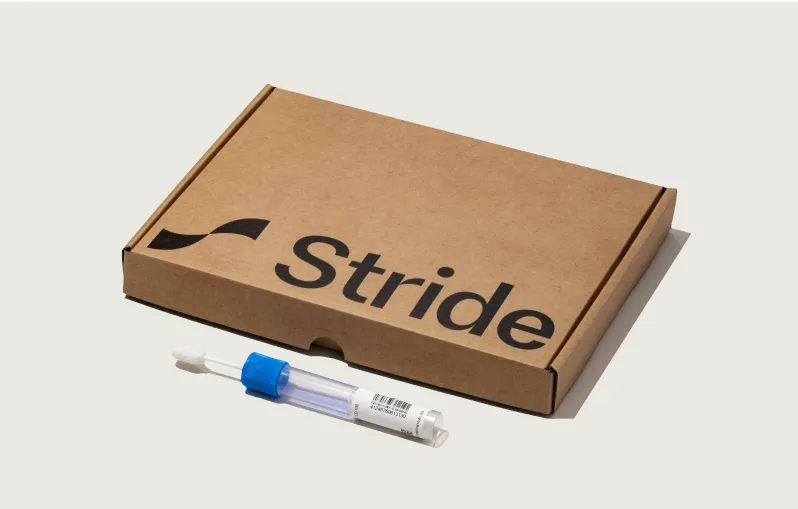






LINC00461 Gene Test (Long Intergenic Non-Protein Coding RNA 461)
The LINC00461 gene test analyses DNA for variants near LINC00461, a brain enriched long non coding RNA that helps regulate neurodevelopment, hippocampal function, and glioma behaviour. Understanding your LINC00461 status adds emerging genetic context to cognitive traits, schizophrenia risk, and glioma biology so you can place brain health and oncology insights within a more precise framework.


Sample type
Cheek swab, Blood sample

Collection
At-home

Often paired with
Neurodevelopment and cognition genes (MEF2C, BDNF, MIR2113), schizophrenia and mood risk loci, glioma driver genes, brain imaging, cognitive testing, and oncology panels

Fasting required
Not required for DNA testing; follow clinical guidance for any accompanying blood tests
Key benefits of testing LINC00461
- Identify whether you carry regulatory variants in the LINC00461 locus that influence expression of this highly conserved brain lncRNA, which has been implicated in hippocampal volume, educational attainment, and susceptibility to schizophrenia.
- Help explain, in research and specialist contexts, why some individuals may show specific patterns of hippocampal dependent cognition or neurodevelopmental vulnerability, by highlighting a regulatory RNA layer rather than a protein coding change.
- Add context to glioma biology, since LINC00461 is highly expressed in gliomas and supports proliferation, migration, invasion, and stem like properties, making it a potential prognostic marker and therapeutic target in brain tumours.
- Inform future personalised strategies around early brain health support in high risk families, and around trial eligibility or targeted therapies in glioma, as LINC00461 guided interventions move from bench to clinic.
- Clarify your baseline non coding regulatory architecture for brain development and tumour biology alongside other biomarkers, so long term planning can integrate both coding and non coding genomic information.
What is the LINC00461 gene?
LINC00461 (often written as LINC00461, with older mouse work referring to the orthologue C130071C03Rik) is a long intergenic non protein coding RNA located on chromosome 5q23.3 in humans. It does not encode a protein but produces spliced lncRNA transcripts that act as regulatory molecules in the nucleus and cytoplasm.
LINC00461 is evolutionarily highly conserved and is predominantly expressed in the brain, particularly in neural stem and precursor regions such as the ventricular zone during development and the hippocampus and subventricular zone postnatally. This conservation and restricted expression pattern suggest an important role in neural development, synaptic plasticity, and higher cognitive functions.
What does LINC00461 do?
LINC00461 functions as a regulatory hub rather than a classic enzyme or receptor. In neural tissue it influences neuronal differentiation, migration, and maturation by modulating gene expression programs, including the expression of its neighbour MEF2C, a transcription factor that is critical for neurodevelopment and synaptic plasticity.
In gliomas, LINC00461 is markedly upregulated compared with non neoplastic brain tissue. Experimental knockdown reduces expression of cyclin D1/A/E and induces G0/G1 arrest, decreasing proliferation. It also lowers levels of epithelial-mesenchymal transition markers such as N cadherin and ZEB1 and stemness markers including SOX2, Nestin, and CD44, leading to reduced migration and invasion. These findings indicate that LINC00461 supports tumour growth, EMT, and cancer stem like properties, partly through interactions with miRNAs and epigenetic regulators.
Why is LINC00461 important for health?
LINC00461 links neurodevelopment, cognition, psychiatric risk, and glioma biology. Genetic variants across the LINC00461 region have been associated with schizophrenia in genome wide studies, with the index SNP rs410216 risk allele predicting lower hippocampal volume, reduced educational attainment, and lower LINC00461 expression in hippocampus and blood of first episode schizophrenia patients.
At the same time, LINC00461 is one of the most pleiotropic lncRNAs in cross trait analyses, connecting to several major psychiatric traits and cognitive phenotypes, likely through its regulation of MEF2C and other neurodevelopmental genes and its role in hippocampal structure and function. In oncology, its high expression and functional importance in glioma make it a candidate biomarker for tumour aggressiveness and resistance to therapies such as sunitinib and cisplatin in certain cancers, as summarised in recent reviews.
LINC00461 vs brain and tumour markers
It is easy to assume that LINC00461 testing and standard brain imaging or tumour sequencing tell you the same story, but they capture different layers of your biology. MRI, neuropsychological tests, and histopathology show current brain structure, function, and tumour grade; coding gene panels highlight driver mutations in proteins such as IDH1, TP53, or EGFR; LINC00461 genotyping and expression add a non coding regulatory layer that influences how developmental and oncogenic programs are turned up or down.
This distinction matters because subtle regulatory changes at LINC00461 can shift hippocampal development or glioma behaviour even when coding sequences appear intact. Conversely, severe disease can occur in people with typical LINC00461 alleles when other genes or environmental insults dominate. LINC00461 is therefore best viewed as a fine tuner of risk and progression, complementary to established structural and mutational markers.
Factors that modify LINC00461 effects
The influence of LINC00461 variants is shaped by the broader developmental, environmental, and tumour context rather than by the locus alone. Several factors can modify how LINC00461 related biology shows up in real life.
- Neurodevelopmental environment: Prenatal and early life factors such as nutrition, toxins, infection, and early stress influence brain development and can interact with LINC00461 governed pathways involving MEF2C and hippocampal maturation.
- Polygenic background and coexisting risk loci: Other genes associated with schizophrenia, ADHD, autism, and cognitive traits combine with LINC00461 variants to shape overall risk and cognitive profile. LINC00461 is one piece in a larger neurodevelopmental network.
- Tumour microenvironment and driver mutations: In gliomas and other cancers, the impact of LINC00461 on proliferation, EMT, and drug resistance is modulated by core driver mutations, epigenetic landscape, and immune infiltration patterns.
- Treatment exposures: Radiotherapy, chemotherapy, and targeted agents can change selection pressures in tumours and may interact with LINC00461 mediated pathways of proliferation and drug resistance.
- Lifestyle and systemic health: In psychiatric and cognitive contexts, sleep, metabolic health, physical activity, and environmental enrichment influence synaptic plasticity and hippocampal resilience, which can partly buffer or amplify genetic tendencies associated with LINC00461.
LINC00461 variants without symptoms
Yes, and this is expected. Many people carry LINC00461 risk alleles identified in schizophrenia and cognitive GWAS without developing clinical schizophrenia or major cognitive impairment. Effect sizes of individual variants such as rs410216 are small and act mainly by shifting population averages and vulnerability in combination with other risk factors.
Similarly, LINC00461 expression can be elevated in glioma tissue without any direct germline variant in the locus; tumour specific regulatory changes and copy number alterations can drive upregulation independently of inherited genotype. Conversely, typical LINC00461 alleles do not guarantee protection if strong driver mutations and environmental insults are present.
Common LINC00461 genotypes
Common LINC00461 genotypes mainly differ in non coding regulatory SNPs that alter enhancer activity, chromatin state, and lncRNA expression, rather than changing a protein sequence. The best characterised associations are in psychiatric genetics.
- Reference LINC00461 pattern: Variants associated with typical expression levels and hippocampal structure. In these individuals, neurodevelopmental and psychiatric risk are driven more by the broader polygenic background and environment than by LINC00461 alone.
- Schizophrenia associated risk alleles (for example rs410216 risk allele): Linked to reduced hippocampal volume, lower LINC00461 expression in hippocampus and blood, and lower educational attainment, suggesting a small increased vulnerability to schizophrenia and cognitive challenges through developmental effects on the hippocampus.
- Cancer related expression patterns: While specific germline SNPs tied to cancer risk are less well defined, high LINC00461 expression in gliomas and other solid tumours correlates with more aggressive features and resistance to certain drugs, making expression status and copy number more relevant than a single germline SNP classification.
Preparing for a LINC00461 test
For DNA based LINC00461 testing, preparation is simple because your genotype does not change with daily lifestyle or stress. The key step is deciding whether LINC00461 adds meaningful information alongside more established neurodevelopmental and oncology markers in your situation.
In tumours, LINC00461 is usually assessed at the RNA expression level via tissue profiling rather than through germline genotyping. This requires a biopsy and is performed as part of broader transcriptomic or lncRNA panels. No special preparation is needed beyond standard procedures, and results should be interpreted by specialists familiar with non coding RNA biology.
Do I need a LINC00461 test?
A LINC00461 test is most relevant today in research, specialist neuropsychiatric contexts, and advanced oncology, rather than as a routine clinical test. It is less helpful as a stand alone test for general brain health.
- Specialist schizophrenia or neurodevelopmental evaluations: In research or advanced clinical settings, LINC00461 can be part of extended panels exploring hippocampal related genetic risk, especially when combined with MEF2C and other neurodevelopmental genes.
- Glioma and brain tumour profiling: For patients with glioma, LINC00461 expression in tumour tissue may inform research protocols and future targeted strategies, but standard clinical decisions still mostly rely on established histological and genetic markers.
- High depth brain health and longevity projects: For individuals undertaking extensive genomics for precision brain health in collaboration with experts, LINC00461 can provide an additional lens on hippocampal and cognitive resilience in combination with other markers.
- Clinical trials and translational research: As lncRNA targeting therapies and diagnostics develop, LINC00461 status may become an inclusion or stratification criterion for trials in schizophrenia or glioma.
Stride tests that include LINC00461


Health Tests
Core DNA Methylation Test
5 reports: Methylation profile reports
From $229 $183.20
FAQs
What is the LINC00461 gene test?
The LINC00461 gene test analyses your DNA for variants in and around the LINC00461 long intergenic non coding RNA locus, which is highly expressed in the brain and has been linked to hippocampal development, schizophrenia risk, cognitive traits, and glioma behaviour.
What does a LINC00461 gene variant mean?
Common LINC00461 variants mainly act as subtle regulators of lncRNA expression and chromatin function, shifting probabilities of schizophrenia or educational attainment and modifying glioma biology, rather than directly causing disease on their own.
Do LINC00461 variants always cause schizophrenia or brain tumours?
No; most people with LINC00461 risk alleles never develop schizophrenia or glioma. These conditions depend on a combination of many genes plus environmental, developmental, and lifestyle factors, and LINC00461 is just one piece of a complex puzzle.
Is LINC00461 testing recommended for routine mental health or cancer screening?
Not at present. LINC00461 testing is mainly used in research and advanced molecular profiling rather than in routine clinical screening, where standard psychiatric assessment and established cancer screening protocols remain the primary tools.
Can LINC00461 affect cognition or educational attainment?
Yes, variants in the LINC00461 region have been associated with differences in hippocampal volume, cognitive performance, and educational attainment in population studies, but effect sizes are modest and environment and other genes remain more influential overall.
Do I need a LINC00461 test?
You might consider a LINC00461 test if you are participating in high depth neurogenetic or oncology research, or if a specialist team is building a very detailed genomic profile to inform brain health or glioma management where non coding RNA information will genuinely shape decisions.
Do I need to fast for LINC00461 testing?
Fasting is not required for DNA based LINC00461 testing, although any accompanying blood tests such as metabolic or inflammatory panels may have specific preparation instructions that are worth following for consistent tracking.
How can I optimise LINC00461 related pathways?
Rather than trying to target LINC00461 directly outside research or oncology trials, focus on classic brain and systemic health foundations such as sleep, movement, vascular risk control, nutrient dense food, cognitive stimulation, and early mental health support, which protect hippocampal function and reduce cancer risk whatever your LINC00461 genotype.