
Menu
-
Shop All
Contact
hey@getstride.com
Stride Health Group
Stride Health Group Ltd
Company No 05158025
Lamas Road
Badersfield
Norwich
England
NR10 5FB
UK
Extra 10% Off | Enter code GIFT at checkout


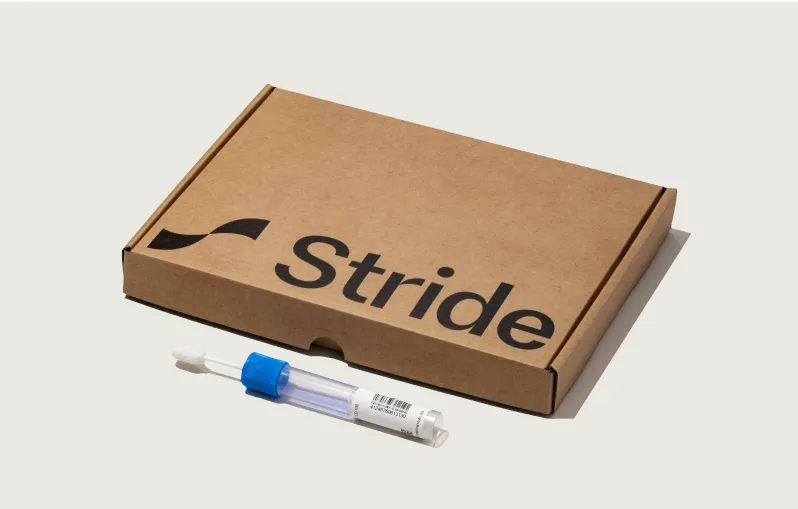






INSIG Gene Test (Insulin-Induced Gene 1 / 2)
The INSIG gene test analyses DNA for variants in the insulin induced genes INSIG1 and INSIG2 that influence how tightly your cells control cholesterol and fatty acid synthesis through SREBP and HMG-CoA reductase pathways. Understanding your INSIG status adds genetic context to cholesterol handling, triglycerides, and metabolic risk so you can personalise nutrition and prevention instead of guessing.


Sample type
Cheek swab, Blood sample

Collection
At-home

Often paired with
Full lipid panel, fasting glucose and HbA1c, liver enzymes, body composition measures, blood pressure, other cholesterol and triglyceride genes

Fasting required
Not required for DNA testing; follow clinical guidance for any accompanying blood tests
Key benefits of testing INSIG
- Identify whether you carry INSIG1 and INSIG2 variants that can alter feedback control of cholesterol and fatty acid synthesis, subtly influencing LDL, HDL, triglycerides, and fat storage over time.
- Help explain why your cholesterol or triglycerides drift higher than expected for your diet and activity pattern, or why you respond differently to changes in dietary fat or weight loss.
- Inform personalised nutrition strategies, including total fat and saturated fat intake, fibre and plant sterol focus, and meal patterns that better support your lipid biology.
- Provide context for how you might respond to cholesterol-modifying medications and lifestyle interventions, supporting more tailored discussions with your clinician.
- Clarify your baseline sterol-regulation profile alongside real-time lipids, liver markers, and metabolic data, so prevention plans can focus on changes that move the needle most for your biology.
What is the INSIG gene?
The INSIG gene family encodes insulin-induced genes 1 and 2, endoplasmic reticulum membrane proteins that act as key intracellular sensors and regulators of cholesterol and lipid synthesis. INSIG1 and INSIG2 bind to sterol regulatory element binding protein cleavage-activating protein (SCAP) and to HMG-CoA reductase, the rate-limiting enzyme for cholesterol production.
When cellular sterol levels are high, INSIG proteins retain the SCAP-SREBP complex in the endoplasmic reticulum and promote HMG-CoA reductase degradation, reducing new cholesterol synthesis. When sterols are low, SCAP-SREBP is released to the Golgi for activation, and reductase is stabilised, increasing synthesis. Genetic variation in INSIG can affect the sensitivity and strength of these feedback controls.
What does INSIG do?
INSIG sits at a critical junction between sterol sensing and lipid synthesis by controlling both the trafficking of SREBP transcription factors and the stability of HMG-CoA reductase in response to oxysterols and cholesterol. By binding SCAP, INSIG keeps SREBPs in the endoplasmic reticulum when sterols are sufficient, preventing excess cholesterol synthesis and limiting expression of lipogenic genes.
INSIG also recruits ubiquitin ligases to HMG-CoA reductase and, in some tissues, to other lipid-related enzymes, marking them for degradation when sterol levels are high. This dual control helps keep intracellular cholesterol and some neutral lipids within a narrow range, balancing de novo synthesis with dietary intake and tissue demand. When INSIG function is altered, feedback can be less precise, which may contribute to dyslipidaemia and metabolic traits in susceptible environments.
Why is INSIG important for health?
INSIG contributes to three interconnected systems: cholesterol and fatty acid synthesis, triglyceride and adiposity patterns, and broader cardiometabolic risk. By coordinating SREBP activation and HMG-CoA reductase degradation, INSIG helps determine how aggressively your liver and other tissues produce cholesterol and certain lipids at a given intake and hormonal state.
Research links INSIG2 polymorphisms, such as rs7566605 upstream of the gene, with variation in body weight, subcutaneous fat, triglycerides, and blood pressure in specific cohorts, while INSIG1 variation has been associated with differences in sterol sensitivity and lipid synthesis control in cellular and animal models. Real-world impact is modest and highly context dependent, with diet, body composition, and other genes often outweighing INSIG alone.
INSIG vs cholesterol blood tests
It is easy to assume that INSIG testing and standard cholesterol blood tests tell you the same story, but they capture different layers of your biology. INSIG genotyping looks at inherited tendencies in sterol sensing and SREBP-HMG-CoA reductase feedback, whereas LDL, HDL, non-HDL cholesterol, and triglycerides show your current lipid profile under your existing diet, body composition, hormones, and medications.
This distinction matters because you can carry INSIG variants associated with higher triglycerides or altered adiposity and still maintain a favourable lipid panel if your diet, movement, and weight are well supported. Conversely, you can have dyslipidaemia without higher-risk INSIG variants due to other genes, endocrine conditions, or lifestyle factors that usually respond to targeted interventions and, when needed, medication.
Factors that modify INSIG effects
The influence of INSIG variants is shaped more by environment and habits than by the gene alone, which means you have meaningful room to change the trajectory. Several modifiable factors can either buffer genetic effects or amplify them.
- Diet quality and fat pattern: Total energy intake, the balance of saturated, monounsaturated, and polyunsaturated fats, cholesterol intake, and soluble fibre all strongly influence LDL, HDL, and triglycerides and can overshadow modest differences in INSIG-mediated synthesis.
- Body weight and fat distribution: Central adiposity and overall fat mass increase hepatic lipid flux and VLDL production, which can accentuate INSIG-related tendencies to higher triglycerides or LDL. Weight management and waist reduction often deliver substantial lipid improvements regardless of genotype.
- Physical activity: Regular aerobic and resistance training improve triglyceride clearance, raise HDL, and reduce small dense LDL, buffering any INSIG-linked tendency toward dyslipidaemia or increased cardiometabolic risk.
- Liver health and insulin resistance: Non-alcoholic fatty liver disease and insulin resistance amplify hepatic lipid production and blunt normal sterol feedback; in this context, INSIG variants may have more apparent effects on triglycerides and cholesterol.
- Medications: Statins, ezetimibe, PCSK9 inhibitors, and other lipid-modifying drugs can change the balance between synthesis and clearance and may interact with INSIG-driven regulatory loops, although current prescribing is not based on INSIG genotyping alone.
- Age, hormones, and endocrine status: Ageing, menopause, thyroid function, and other hormonal shifts change lipid profiles and sterol handling and can modulate how INSIG-related differences appear in blood tests.
INSIG variants without symptoms
Yes, and that is the norm. Most people with INSIG1 or INSIG2 variants have no direct symptoms and only discover their status through DNA testing.
Elevated cholesterol, raised triglycerides, or modest blood pressure changes are often silent for years and reflect the combined influence of diet, body composition, physical activity, endocrine factors, and multiple genes. INSIG variants slightly adjust the background setting of sterol and lipid synthesis, but lifestyle and overall metabolic health typically drive the visible outcomes.
Common INSIG genotypes
Common INSIG genotypes mainly differ in how they influence the sensitivity and strength of feedback inhibition on cholesterol and fatty acid synthesis, especially in the context of energy surplus, diet patterns, and adiposity. Understanding your pattern can help tailor nutrition and prevention strategies rather than framing your lipids as simply "good" or "bad."
- Variants upstream of INSIG2 (for example rs7566605): Some upstream INSIG2 polymorphisms have been associated with higher BMI, greater subcutaneous fat, increased triglycerides, and slightly higher blood pressure in specific cohorts, especially in obesity. In these individuals, earlier attention to weight, diet quality, and lipid monitoring may be particularly valuable.
- Coding and regulatory variants in INSIG1: Variants that affect INSIG1 expression or interaction with SCAP or HMG-CoA reductase can theoretically shift the sterol threshold for feedback; in practice, their real-world impact is subtle and best interpreted with lipid panels.
- Haplotype patterns across INSIG1 and INSIG2: Combinations of variants may provide more nuanced information about sterol regulation and adiposity than single SNPs, but current clinical and consumer panels usually focus on a small set of well-characterised markers.
- Rare functional variants: Rare INSIG variants with stronger effects on protein function are usually studied in research or specialist settings and are not the primary focus of standard preventative health reports.
Preparing for an INSIG test
For DNA-based INSIG testing, preparation is straightforward because your genotype does not change with meals, exercise, or medications. The key step is choosing a panel that interprets INSIG alongside other lipid genes, metabolic markers, and lifestyle factors so results convert into clear nutritional and prevention strategies.
Standalone INSIG genotyping using blood or saliva does not require fasting, since it analyses stable DNA rather than dynamic blood levels. If INSIG is bundled with lipid panels, glucose, or liver tests, your clinician or testing instructions may recommend fasting and consistent collection timing so you can accurately track lipid changes over time.
Do I need an INSIG test?
An INSIG test is most valuable when the result will influence how you approach cholesterol and triglyceride management, weight strategy, and long-term cardiometabolic prevention, rather than as a curiosity in isolation. It becomes particularly informative when interpreted alongside lipid profiles, body composition, family history, and lifestyle.
- Strong family history of dyslipidaemia or premature cardiovascular disease: INSIG genotyping can help clarify whether altered sterol feedback may be part of the picture and support earlier and more tailored lifestyle and monitoring plans.
- Elevated triglycerides or mixed dyslipidaemia at a younger age: If lipids are drifting despite reasonable diet and activity, INSIG results can add context and support proactive changes around dietary fats, fibre, and weight management.
- Obesity or metabolic syndrome: In the setting of obesity or metabolic syndrome, INSIG variants may contribute to triglyceride and blood pressure patterns; knowing this can reinforce the value of structured, long-term lifestyle and, when needed, medication strategies.
- Building a cardiometabolic and longevity roadmap: For those using comprehensive DNA, blood, and microbiome testing, INSIG genotyping provides a durable anchor for personalising lipid-focused prevention across life stages.
Stride tests that include INSIG


Health Tests
Core DNA Methylation Test
5 reports: Methylation profile reports
From $229 $183.20
FAQs
What is the INSIG gene test?
The INSIG gene test analyses your DNA from blood or saliva to look for variants in the insulin induced genes INSIG1 and INSIG2 that help regulate cholesterol and fatty acid synthesis through SREBP and HMG-CoA reductase feedback, with implications for lipids and metabolic risk.
What does an INSIG variant mean?
Common INSIG variants, particularly upstream polymorphisms in INSIG2 and regulatory changes in INSIG1, can modestly alter sterol-sensing feedback and have been associated in some studies with differences in body weight, triglycerides, and blood pressure, especially in obesity.
Do INSIG variants always cause health problems?
No. Many people with INSIG variants never develop dyslipidaemia or cardiovascular disease, especially when diet, weight, and activity are well supported. Likewise, people without these variants can still have high cholesterol or triglycerides if other genetic and lifestyle factors are not well managed.
Is INSIG testing used to choose cholesterol medication?
INSIG testing is not routinely used to select cholesterol-lowering medications, but it can provide additional context when planning lifestyle and treatment strategies for dyslipidaemia, particularly in people with strong family history or early-onset lipid issues.
Can INSIG affect obesity or metabolic syndrome?
Through its role in lipid synthesis and adiposity, INSIG2 variation has been linked to differences in body fat, triglycerides, and blood pressure in some cohorts. However, overall energy balance, diet quality, and physical activity remain the primary drivers of obesity and metabolic syndrome and are highly modifiable.
Do I need an INSIG test?
You might consider an INSIG test if the results would change how early and how intensively you act on lipid and weight management, such as prioritising specific dietary fat and fibre changes, more frequent lipid monitoring, or earlier conversations with your clinician about cardiometabolic prevention.
Do I need to fast for INSIG testing?
Fasting is not required for DNA-based INSIG testing. If accompanying blood tests such as lipid panels, fasting glucose, or liver enzymes are ordered, your clinician or testing instructions may recommend fasting to ensure accurate and comparable results.
How can I optimise my health if I carry INSIG variants?
Rather than trying to change the gene, focus on building a heart-friendly diet with appropriate fat balance and high fibre, maintaining or moving toward a healthy body composition, staying active, limiting smoking and excess alcohol, protecting sleep and stress balance, and tracking your lipid and metabolic markers over time so you can see how small, consistent choices reshape your long-term cardiovascular risk.