
Menu
-
Shop All
Contact
hey@getstride.com
Stride Health Group
Stride Health Group Ltd
Company No 05158025
Lamas Road
Badersfield
Norwich
England
NR10 5FB
UK
Extra 10% Off | Enter code GIFT at checkout


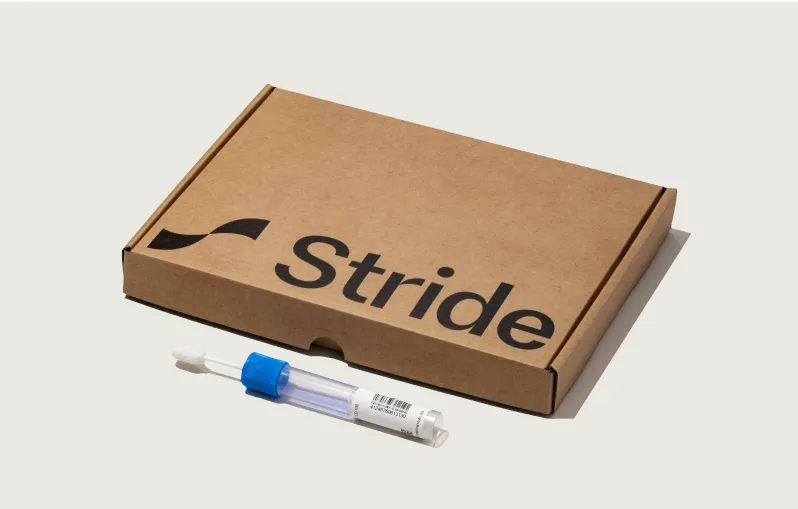






IL6 Gene Test (Interleukin 6, Inflammation & Cardiometabolic Risk)
The IL6 gene test analyses DNA for variants in the interleukin 6 gene that influence how strongly you generate IL-6, a key cytokine that drives inflammation, acute phase responses, and cardiometabolic risk. Understanding your IL6 status adds genetic context to chronic inflammation, cardiovascular and metabolic risk, and response to lifestyle and therapeutic strategies, so you can personalise prevention instead of guessing.


Sample type
Cheek swab, Blood sample

Collection
At-home

Often paired with
High-sensitivity CRP, fibrinogen, full blood count, lipid panel, fasting glucose and insulin, HbA1c, liver enzymes, IL-6 protein where available, other inflammatory and immune genes

Fasting required
Not required for DNA testing; follow clinical guidance for any accompanying blood tests
Key benefits of testing IL6
- Identify whether you carry IL6 promoter variants, such as rs1800795 and rs1800796, that affect how much IL-6 you produce in response to stressors and infections.
- Help explain a tendency toward higher inflammatory markers, increased cardiovascular risk, or more pronounced responses to infection or autoimmune triggers.
- Inform personalised strategies around diet, movement, sleep, stress, and targeted interventions to dampen chronic inflammation and protect cardiovascular and metabolic health.
- Provide context for how your immune system may respond to acute challenges versus chronic low-grade stress, and how aggressive to be with anti-inflammatory lifestyle strategies.
- Clarify your baseline inflammatory set point alongside IL-6 protein, CRP, and cardiometabolic markers, so long-term prevention and performance plans focus on interventions that really move the needle.
What is the IL6 gene?
IL6 encodes interleukin 6, a pleiotropic cytokine produced by a wide range of cells including immune cells, endothelial cells, adipocytes, fibroblasts, and skeletal muscle. IL-6 acts locally in tissues and systemically through the bloodstream to coordinate inflammation, immune responses, and acute phase protein production.
The IL6 gene is tightly regulated at the transcriptional level, with promoter variants influencing how strongly it is switched on in response to stimuli. IL-6 signals through classic membrane-bound receptors and through soluble receptor complexes, allowing it to affect both immune and non-immune cells in many organs.
What does IL6 do?
IL6 sits at a key junction between local tissue stress and systemic inflammatory responses. In acute settings, IL-6 is rapidly produced in response to infections, injuries, and other stressors. It stimulates the liver to produce acute phase proteins, supports fever responses, helps direct white blood cell production and differentiation, and contributes to host defence.
Beyond its acute roles, IL-6 also influences metabolism, bone remodelling, and neural and cardiovascular function. When production is tightly controlled and transient, IL-6 helps resolve challenges and return the body to homeostasis. When production is sustained or dysregulated, it contributes to chronic inflammation, autoimmunity, and tissue damage.
Why is IL6 important for health?
IL6 contributes to three interconnected systems: acute and chronic inflammation, cardiometabolic risk, and immune and tissue adaptation. In the short term, IL-6 helps clear infections and repair injuries through coordinated immune and acute phase responses.
However, persistent elevation of IL-6 is associated with chronic inflammatory diseases, autoimmune conditions, cancer development and progression, and increased cardiovascular risk. Higher IL-6 levels have been linked to greater risk of heart attacks, strokes, heart failure, and cardiovascular death, as well as to features of insulin resistance and adverse lipid profiles. IL-6 is also involved in cytokine storm syndromes and can shape severity of certain infections and inflammatory flares.
IL6 vs IL-6 protein and CRP
It is easy to assume that IL6 genotyping and IL-6 or CRP blood tests tell the same story, but they capture different aspects of inflammation. IL6 genotyping looks at inherited differences in the gene's promoter and other regions that influence how strongly and in what pattern IL-6 is produced over time. These variants do not change with lifestyle, though their impact is heavily modulated by environment.
IL-6 protein levels and high-sensitivity CRP are dynamic markers that reflect your current inflammatory state, driven by behaviour, infections, visceral fat, sleep, stress, and other factors. You can have an IL6 genotype linked to higher production but maintain low IL-6 and CRP levels with an anti-inflammatory lifestyle, or you can have neutral IL6 variants but elevated IL-6 due to obesity, poor sleep, or chronic disease. Together, genotype and repeated blood markers provide the richest insights.
Factors that modify IL6 effects
The influence of IL6 variants is shaped by body composition, diet, sleep, stress, infections, and overall metabolic health much more than by the gene alone. Several modifiable factors can either buffer genetic effects or amplify them.
- Adiposity and visceral fat: Adipose tissue, especially visceral fat, produces IL-6. Higher central adiposity amplifies IL-6 production, particularly in people with higher-expression IL6 variants, increasing cardiometabolic risk.
- Diet quality and inflammation: Diets high in ultra-processed foods, refined carbohydrates, and certain fats increase low-grade inflammation, while patterns rich in whole foods, fibre, omega-3 fats, and phytonutrients help dampen IL-6 signalling.
- Physical activity and muscle mass: Regular movement and higher lean mass tend to reduce chronic IL-6 production from adipose tissue and improve inflammatory tone, even though IL-6 can transiently rise as a beneficial myokine during exercise.
- Sleep, stress, and circadian rhythm: Poor sleep, chronic psychological stress, and circadian disruption can elevate IL-6 and other inflammatory mediators, particularly in people with high-expression IL6 genotypes.
- Infections and autoimmunity: Frequent infections, autoimmune disease, and chronic inflammatory conditions provide repeated triggers for IL-6 production. In individuals with certain IL6 promoter variants, this can lead to higher or more persistent IL-6 responses.
- Smoking, air pollution, and environmental exposures: Tobacco smoke and air pollutants increase systemic inflammation and IL-6 levels, adding extra load on top of any genetic predisposition.
IL6 variants without symptoms
Yes. Many people with IL6 promoter polymorphisms never experience obvious symptoms linked directly to these variants. The gene primarily modifies risk and response to environmental triggers rather than acting as a simple on/off switch for disease.
Even when IL6 variants contribute to higher baseline IL-6, early effects may show up only as subtle changes in fatigue, recovery capacity, or slow shifts in cardiovascular risk markers over time. Clinical diseases related to chronic inflammation usually arise when genetic predisposition, behaviour, and other medical conditions intersect.
Common IL6 genotypes
IL6 genotypes mainly differ in how they influence promoter activity and, in turn, how much IL-6 is produced in response to stimuli. Understanding your pattern can help tailor lifestyle and monitoring, rather than treating inflammation as entirely random.
- Reference or lower-expression patterns: Some IL6 promoter genotypes are associated with relatively lower IL-6 production under standard stimuli. They may confer slightly lower risk of certain inflammatory or cardiometabolic conditions when environment is favourable.
- Higher-expression promoter variants (for example rs1800795 and rs1800796 patterns): These variants have been associated with increased IL-6 transcription in some contexts, and with higher risk of several inflammatory and cardiovascular conditions in specific populations. They can raise the baseline inflammatory set point when combined with pro-inflammatory environments.
- Complex and ancestry-specific patterns: Associations between specific IL6 SNPs and diseases differ by ancestry and context. Some variants appear protective in one population and neutral or adverse in another. Panel interpretation therefore benefits from being anchored in your broader risk profile.
Preparing for an IL6 test
For DNA-based IL6 testing, preparation is simple because your genotype does not change with recent infections, lifestyle, or medications. The key step is clarifying how you will use the results, for example to inform cardiovascular and metabolic strategies, autoimmune risk discussions, or recovery and training plans.
Cheek swab, saliva, or blood-based IL6 genotyping does not require fasting. If testing is combined with IL-6 protein levels, CRP, lipids, or other blood markers, you may be asked to fast, avoid strenuous exercise immediately beforehand, and schedule the test when you are not acutely unwell, to capture a stable baseline.
Do I need an IL6 test?
An IL6 test is most useful when the result will influence how aggressively you target inflammation and cardiovascular risk, rather than as a curiosity. It becomes particularly informative when combined with inflammatory markers, cardiometabolic labs, and clinical context.
- Elevated CRP or IL-6 with unclear drivers: If you have persistently raised inflammatory markers, IL6 genotyping can help determine whether you have a higher-expression background that warrants more intensive lifestyle and preventive strategies.
- Strong family history of cardiovascular or autoimmune disease: In combination with other risk markers, IL6 status can contribute to earlier and more tailored prevention for heart disease, stroke, and inflammatory conditions.
- Athletes and high performers: For people pushing training loads or running high-stress lifestyles, IL6 insights can shape recovery, stress management, and anti-inflammatory nutrition strategies to protect long-term health.
- Comprehensive longevity planning: Within a broader DNA and blood testing programme, IL6 helps define how central inflammation is likely to be as a lever for healthy ageing and disease risk reduction.
Stride tests that include IL6


Health Tests
Core DNA Methylation Test
5 reports: Methylation profile reports
From $229 $183.20
FAQs
What is the IL6 gene test?
The IL6 gene test analyses your DNA from blood or saliva to look for variants in the interleukin 6 gene that influence how strongly you produce IL-6, a key inflammatory cytokine linked to cardiovascular, metabolic, and autoimmune risk.
What does an IL6 variant mean?
IL6 promoter variants can shift how much IL-6 you produce in response to stressors. Some patterns are associated with higher IL-6 levels and increased risk of certain inflammatory and cardiovascular conditions in specific populations, especially when lifestyle is unfavourable.
Do IL6 variants always cause health problems?
No. Many people with higher-expression IL6 variants never develop related diseases, especially if they maintain healthy weight, diet, sleep, and stress, and avoid smoking. Conversely, unhealthy environments can drive high IL-6 even in people without higher-risk variants.
Is IL6 testing used to diagnose disease?
IL6 testing is not a standalone diagnostic tool for any specific condition, but it adds context when evaluating inflammatory and cardiometabolic risk, especially alongside IL-6 protein, CRP, lipids, and clinical history. Diagnosis of specific diseases still relies on clinical assessment and targeted investigations.
Do I need an IL6 test?
You might consider an IL6 test if you have elevated inflammatory markers, strong family history of cardiovascular or autoimmune disease, or if you are designing a detailed prevention and performance plan where inflammation is a central lever.
Do I need to fast for IL6 testing?
Fasting is not required for DNA-based IL6 testing. If inflammatory markers, lipids, or glucose are measured at the same time, follow the preparation guidance provided for those tests.
How can I optimise my health if I carry higher-expression IL6 variants?
Rather than trying to change the gene, focus on maintaining a healthy body composition, following an anti-inflammatory, whole-food diet, moving regularly, protecting sleep and stress balance, avoiding smoking and excess alcohol, and tracking inflammatory and cardiometabolic markers over time so you can see how consistent, targeted changes reshape your long-term risk.