
Menu
-
Shop All
Contact
hey@getstride.com
Stride Health Group
Stride Health Group Ltd
Company No 05158025
Lamas Road
Badersfield
Norwich
England
NR10 5FB
UK
Extra 10% Off | Enter code GIFT at checkout


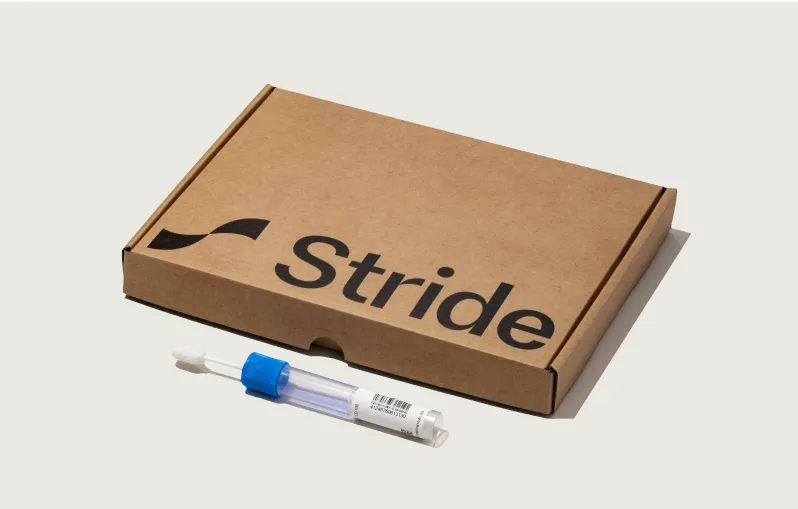






hsCRP Blood Test (High Sensitivity C-Reactive Protein)
High sensitivity C reactive protein hsCRP is a blood marker of low grade inflammation that can help refine cardiovascular risk and give insight into how your body is responding to long term stressors. Unlike standard CRP, which rises sharply with acute infection or injury, hsCRP detects subtle, persistent inflammation that can contribute to atherosclerosis and future heart events.


Sample type
Blood sample

Collection
At-home

Often paired with
Lipid panel, ApoB, ApoA1, ApoB/A1 Ratio, Lp(a), HbA1c, fasting glucose, liver function tests

Fasting required
0
Key benefits of testing hsCRP
An hsCRP blood test can help you:
- Assess low grade inflammation that may be quietly increasing cardiovascular risk, even when cholesterol looks normal.
- Reclassify borderline or intermediate heart risk by clarifying whether inflammation is adding extra load on top of lipid related risk.
- Provide context for other markers such as ApoB, ApoA1, Lp(a), and HbA1c, since inflammation interacts with lipids and metabolism.
- Track how your inflammatory profile changes over time as you adjust nutrition, movement, sleep, and stress.
- Support clinician guided decisions about how aggressively to manage cardiovascular risk and whether additional investigations are needed.
What is hsCRP (High sensitivity C reactive protein)
C reactive protein CRP is a protein made by the liver in response to signals from the immune system. It rises when the body is responding to infection, tissue injury, or other inflammatory triggers. Standard CRP tests are designed to detect large rises that occur with acute inflammation.
High sensitivity C reactive protein hsCRP uses a more precise method to detect much lower levels of CRP in the bloodstream. This low level range is typically not about acute infection, but about persistent, low grade inflammation that may reflect vascular inflammation within the artery wall.
Because atherosclerosis is partly an inflammatory process, hsCRP has become a useful marker to help estimate future cardiovascular risk. It does not tell you where inflammation is coming from, but it does help show whether inflammatory signalling is higher than expected for your overall health profile.
What does hsCRP do
hsCRP itself is not a hormone or enzyme, but a marker of the broader inflammatory response. When interpreted correctly, it can:
- Reflect low grade, chronic inflammation that is not obvious from symptoms alone.
- Provide insight into inflammatory activity in arterial walls, which contributes to plaque formation and instability.
- Help distinguish between lower and higher cardiovascular risk in people with similar cholesterol profiles.
- Flag when inflammation is high enough that another cause, such as infection or autoimmune disease, should be considered.
In preventive care, hsCRP is often interpreted in three broad bands for cardiovascular risk:
- Lower risk: hsCRP below around 1 mg/L.
- Intermediate risk: hsCRP around 1 to 3 mg/L.
- Higher risk: hsCRP persistently above around 3 mg/L, once acute triggers have been ruled out.
Why is hsCRP important for heart health
Heart disease is driven not only by cholesterol and blood pressure, but also by the inflammatory environment in which arteries live. Artery walls that are chronically inflamed are more likely to develop plaques and for those plaques to become unstable.
hsCRP matters because:
- Higher levels are associated with a greater risk of heart attack, stroke, and other cardiovascular events, even after accounting for cholesterol.
- Persistent elevation over several measurements appears more predictive than a single raised value.
- It helps identify people whose cardiovascular risk is higher than their lipid panel alone would suggest, especially in intermediate risk groups.
In practice, hsCRP is particularly useful when:
- You have borderline cholesterol results and your clinician is deciding how intensively to treat.
- You have a strong family history of cardiovascular disease but no obvious risk factors.
- You live with conditions like metabolic syndrome, type 2 diabetes, or autoimmune disease, where inflammation and cardiometabolic health are tightly linked.
hsCRP vs standard CRP: what is the difference
It is easy to assume hsCRP and standard CRP are the same test, but they are used for different purposes.
- Standard CRP is designed to detect large increases in CRP, often in the range seen with acute infection, significant injury, or active inflammatory disease. It is commonly used in hospital and acute care settings.
- hsCRP is designed to accurately measure much lower CRP levels, typically in the range associated with low grade inflammation and vascular risk. It is used for cardiovascular risk assessment and long term monitoring.
This distinction matters because:
- A standard CRP test may read as "normal" while hsCRP reveals subtle but persistently elevated inflammation.
- hsCRP is not used to diagnose the cause of inflammation but to help refine cardiovascular risk and track trends over time.
What factors affect hsCRP levels
hsCRP reflects a broad mix of lifestyle, metabolic, and medical influences. These are some of the main factors that can raise or lower levels.
1. Acute infection and injury
- Viral or bacterial infections, recent surgery, or significant injuries can raise CRP well above 10 mg/L.
- In this context, an elevated hsCRP is usually explained by the acute trigger rather than long term vascular risk.
- For cardiovascular risk assessment, hsCRP is typically rechecked after acute issues have settled.
2. Chronic low grade inflammation
- Obesity, particularly central abdominal fat, is strongly associated with chronically higher hsCRP.
- Metabolic syndrome and type 2 diabetes often drive persistent low grade inflammation through insulin resistance and fatty liver.
- Chronic inflammatory or autoimmune conditions can also elevate hsCRP, although interpretation then focuses on disease activity as well as cardiovascular risk.
3. Lifestyle factors
- Smoking is a powerful driver of higher hsCRP and vascular inflammation.
- Low physical activity and poor sleep quality can contribute to elevated hsCRP over time.
- Diets high in ultra processed foods, added sugars, and certain trans fats may promote low grade inflammation in some people.
4. Hormones and life stage
- Hormonal transitions such as menopause, pregnancy, and changes in sex hormone levels can influence inflammatory markers.
- Ageing is associated with a gradual rise in inflammatory signals for many people, sometimes referred to as "inflammaging."
5. Medications and supplements
- Some medications, such as statins, appear to reduce hsCRP as well as LDL cholesterol in many individuals.
- Non steroidal anti inflammatory drugs and certain targeted therapies can also affect CRP levels, though they are not prescribed purely to optimise hsCRP for prevention.
- Any new or changed medication should be factored into hsCRP interpretation, especially when you are tracking trends over time.
Can hsCRP be high if my cholesterol is normal
Yes. hsCRP can be high even when total cholesterol and LDL cholesterol appear within the reference range. This pattern is important because it suggests that inflammation may be adding extra cardiovascular risk independently of lipids.
Common scenarios include:
- People with normal cholesterol but central weight gain, insulin resistance, or early metabolic syndrome.
- Individuals with autoimmune or inflammatory conditions where traditional lipid panels do not fully capture elevated cardiovascular risk.
- People with high Lp(a) or ApoB where inflammation and lipids may interact to compound risk.
In these cases, hsCRP helps identify those who may benefit from more intensive lifestyle intervention and closer cardiovascular follow up.
Normal vs optimal hsCRP: what is the difference
Laboratories usually report hsCRP as a specific number in mg/L, often with interpretive bands. These bands reflect population risk rather than a hard cut off between safe and unsafe.
From a cardiovascular prevention perspective:
- Lower levels, typically below 1 mg/L, are often considered more favourable.
- Levels between about 1 and 3 mg/L are often viewed as intermediate, where other risk factors become important for context.
- Levels persistently above about 3 mg/L suggest higher cardiovascular risk, once acute infections and short term triggers have been ruled out.
The most appropriate target for hsCRP depends on your overall risk profile. For someone at very high cardiovascular risk, your clinician may aim for an hsCRP that is as low as reasonably achievable alongside lipid, blood pressure, and glucose control.
Do I need to fast for an hsCRP test
You usually do not need to fast for an hsCRP test, as CRP levels are not directly influenced by a single meal in the way triglycerides can be. However:
- If your hsCRP is being measured as part of a broader metabolic and lipid panel, fasting may still be recommended for the other markers.
- Your test instructions will clarify whether you should avoid food and caloric drinks for a set number of hours before the blood draw.
Following the preparation guidance helps your healthcare team interpret your results consistently and compare them over time.
How can hsCRP be lowered clinician guided
Lowering hsCRP focuses on identifying and addressing the sources of inflammation rather than chasing a number in isolation. Depending on your situation, clinician guided strategies may include:
- Improving metabolic health through nutrition, physical activity, and sustainable weight management, particularly targeting central abdominal fat.
- Supporting healthy sleep patterns and stress management, both of which influence inflammatory signalling.
- Stopping smoking and moderating alcohol intake, which can have significant impact on vascular inflammation.
- Investigating and treating underlying conditions such as infections, autoimmune diseases, or inflammatory joint conditions where clinically indicated.
- Using lipid lowering therapies or other cardiometabolic medications when appropriate, which may reduce hsCRP alongside improvements in other markers.
Because hsCRP can fluctuate, some guidelines suggest averaging two results taken at least two weeks apart when using it for cardiovascular risk assessment. Tracking hsCRP over months and years, rather than focusing on a single reading, shows how your inflammatory profile responds to targeted changes.
Stride tests that include hsCRP
FAQs
What is the hsCRP blood test
The hsCRP blood test measures very low levels of C reactive protein in your bloodstream to assess low grade inflammation. It is especially useful for refining cardiovascular risk and tracking how your inflammatory profile changes over time.
What is a normal hsCRP range
Typical laboratory ranges for hsCRP in cardiovascular risk assessment describe lower risk below about 1 mg/L, intermediate risk around 1 to 3 mg/L, and higher risk above about 3 mg/L. Levels above 10 mg/L often suggest an acute infection or inflammatory flare and should usually be rechecked once the acute issue has settled.
What is an optimal hsCRP level for heart health
For many people, an hsCRP below 1 mg/L is considered more favourable for cardiovascular prevention, particularly when combined with well controlled lipids and blood pressure. However, the right target for you depends on your overall risk profile and should be discussed with your clinician as part of a personalised plan.
Is hsCRP better than cholesterol for predicting heart disease
hsCRP and cholesterol measure different aspects of risk. Cholesterol and apolipoprotein markers reflect the lipid side of atherosclerosis, while hsCRP reflects the inflammatory environment that influences plaque development and stability. Together, they provide a more complete view than either marker alone.
Can hsCRP be high with normal cholesterol
Yes. hsCRP can be elevated even when cholesterol appears normal. This pattern suggests that low grade inflammation may be adding to your cardiovascular risk independently of lipids and may prompt a closer look at lifestyle, metabolic health, and possible underlying inflammatory conditions.
Do I need hsCRP testing
You may benefit from an hsCRP test if you have intermediate cardiovascular risk, a strong family history of heart disease, or metabolic risk factors such as abdominal obesity or type 2 diabetes. hsCRP is also useful if you are focused on prevention and want to understand whether low grade inflammation is playing a role in your long term risk profile.
Do I need to fast for hsCRP
Fasting is usually not required for hsCRP itself, but if it is ordered as part of a broader blood panel, you may be asked to fast for the other tests. Always follow the preparation instructions given with your test so your results are consistent and reliable.
How can I lower hsCRP
Practical ways to lower hsCRP include regular physical activity, a whole food focused diet, maintaining a healthy waist circumference, prioritising sleep, and not smoking. For some people, addressing underlying conditions or using lipid and blood pressure medications also contributes. Tracking hsCRP over time can show which changes are genuinely reducing your inflammatory load.
Do I need an hsCRP (High sensitivity C reactive protein) test
If you want a deeper understanding of your heart and inflammation risk beyond standard cholesterol, or your current results do not fully match your family history or symptoms, discussing an hsCRP test with your clinician can be helpful. As part of a comprehensive panel such as StrideOne, hsCRP helps reveal how inflammation fits into your overall health picture and where to focus your next steps.