
Menu
-
Shop All
Contact
hey@getstride.com
Stride Health Group
Stride Health Group Ltd
Company No 05158025
Lamas Road
Badersfield
Norwich
England
NR10 5FB
UK


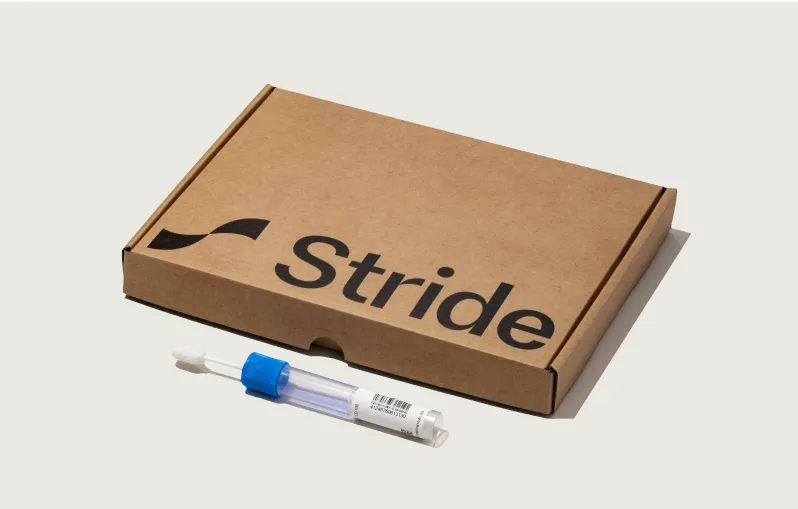





HDL % of Total Cholesterol Blood Test
HDL percentage of total cholesterol HDL % of Total Cholesterol is a calculated heart health marker that shows how much of your total cholesterol is made up of protective HDL cholesterol. It helps translate your lipid panel into a simple percentage that reflects the balance between "good" HDL and overall cholesterol load, giving extra context beyond individual numbers.
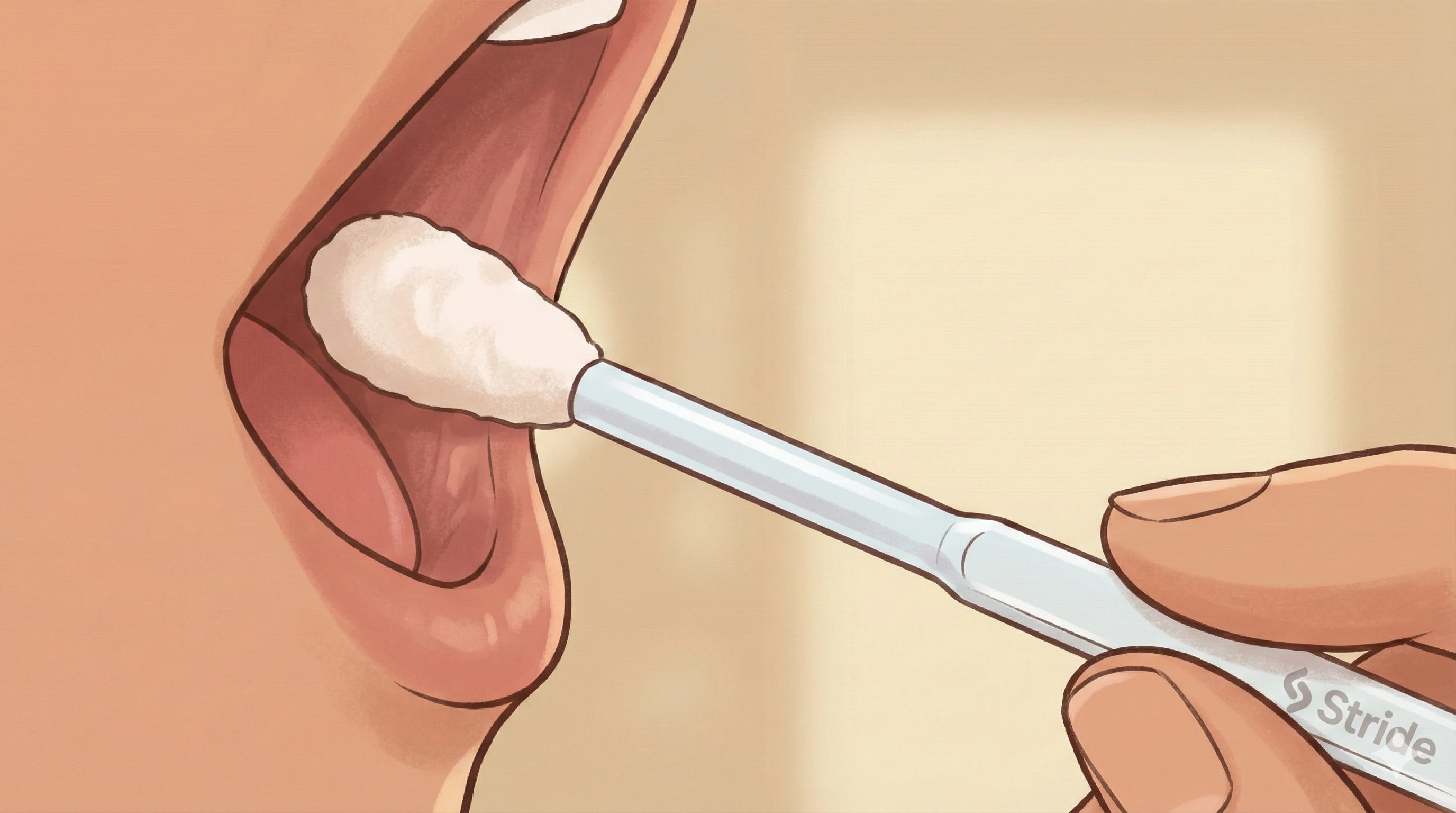

Sample type
Blood sample

Collection
At-home

Often paired with
Total cholesterol, HDL cholesterol, LDL cholesterol, non HDL cholesterol, triglycerides, ApoB, ApoA1, ApoB/A1 Ratio, hsCRP, HbA1c

Fasting required
1
Key benefits of testing HDL % of Total Cholesterol
An HDL % of Total Cholesterol result can help you:
- See at a glance how much of your total cholesterol is coming from protective HDL rather than potentially harmful particles.
- Refine cardiovascular risk assessment beyond absolute HDL and total cholesterol values.
- Identify patterns where total cholesterol looks acceptable, but HDL is too small a proportion of the whole.
- Track how lifestyle changes and treatments are shifting the balance between protective and atherogenic cholesterol over time.
- Support clinician led decisions on how intensively to address cardiometabolic risk.
What is HDL % of Total Cholesterol
HDL % of Total Cholesterol is not a separate substance in your blood, but a calculated value derived from your standard lipid panel. It is usually worked out as:
HDL % of Total Cholesterol = (HDL cholesterol ÷ Total cholesterol) × 100
Total cholesterol includes cholesterol carried in lipoproteins such as LDL, VLDL, and HDL. HDL cholesterol represents the portion carried in high density lipoprotein particles that support reverse cholesterol transport and vascular protection.
By expressing HDL as a percentage of the total, this marker helps you understand how much of your cholesterol profile is dominated by protective HDL versus other fractions that can contribute to plaque formation when elevated.
What does HDL % of Total Cholesterol do
The value of HDL % of Total Cholesterol lies in how it summarises your lipid balance.
It helps:
- Highlight when HDL makes up a healthy share of total cholesterol, which is generally more favourable for cardiovascular risk.
- Expose patterns where HDL remains low relative to total cholesterol, even if individual numbers do not look dramatically abnormal.
- Provide a simple number that is easy to follow over time as you track progress.
For example, if your total cholesterol is 5 mmol/L and your HDL is 1.5 mmol/L, your HDL makes up 30 percent of your total. If, after lifestyle changes, your total is 4.5 mmol/L and HDL is 1.6 mmol/L, your percentage rises, reflecting a more protective profile even before looking at ApoB or non HDL cholesterol.
Why is HDL % of Total Cholesterol important for heart health
Heart risk is driven not only by how high total cholesterol is, but by how that cholesterol is distributed across different lipoproteins. A panel with lower LDL and ApoB and a meaningful contribution from HDL is generally more protective than the same total cholesterol with low HDL.
HDL % of Total Cholesterol matters because:
- It captures both total cholesterol and HDL in one metric, offering a quick sense of balance between protective and potentially harmful fractions.
- A higher percentage of HDL within total cholesterol is usually associated with lower cardiovascular risk, provided total cholesterol and ApoB are not excessively high.
- A lower percentage can flag increased risk even when absolute HDL meets minimum thresholds, especially if ApoB, non HDL cholesterol, or triglycerides are elevated.
In prevention focused care, HDL % of Total Cholesterol is most useful alongside particle based markers such as ApoB and ApoA1, non HDL cholesterol, and hsCRP, rather than used alone.
HDL % of Total Cholesterol vs HDL cholesterol and total cholesterol: what is the difference
It is easy to assume HDL % of Total Cholesterol is redundant if you already know your HDL and total cholesterol, but the percentage adds a different lens.
- HDL cholesterol tells you how much "good" cholesterol you have in absolute terms.
- Total cholesterol sums all cholesterol carried across LDL, VLDL, HDL, and other lipoproteins.
- HDL % of Total Cholesterol shows how much of that total is protective HDL, helping you see the relative balance.
This matters because:
- Two people can have the same HDL cholesterol, but one has a much higher total cholesterol. The person with the higher total will have a lower HDL percentage and potentially higher risk.
- Two people can have the same total cholesterol, but one has a higher HDL and lower LDL. Their HDL percentage will be higher, reflecting a more favourable balance.
For this reason, many clinicians consider ratios and percentages, not just isolated numbers, when discussing heart health.
What factors affect HDL % of Total Cholesterol
Because this marker is calculated from HDL and total cholesterol, anything that changes either will influence the percentage.
1. Changes in HDL cholesterol
- Lifestyle factors that raise HDL, such as regular physical activity, smoking cessation, and supportive dietary patterns, typically increase the HDL percentage, assuming total cholesterol is stable.
- Conditions and medications that lower HDL, such as metabolic syndrome or certain drugs, can reduce the percentage even if total cholesterol does not change much.
2. Changes in total cholesterol and non HDL cholesterol
- High LDL and non HDL cholesterol can push total cholesterol up, lowering the proportion that comes from HDL.
- Lipid lowering therapies that reduce LDL and non HDL cholesterol without reducing HDL as much can increase the HDL percentage, even if HDL stays similar in absolute terms.
- Diets high in saturated fats and trans fats may raise LDL and total cholesterol, lowering the HDL share.
3. Metabolic health and triglycerides
- Metabolic syndrome and insulin resistance often present with low HDL and high triglycerides, which tend to reduce HDL % of Total Cholesterol.
- Improving insulin sensitivity and reducing triglycerides can help shift the lipid pattern towards a higher HDL contribution.
4. Hormones, age, and sex
- Oestrogen tends to support higher HDL, so premenopausal women often have higher HDL percentages compared with men of the same age.
- Menopause and hormonal changes, as well as ageing in general, can alter both HDL and total cholesterol, affecting the percentage.
Can HDL % of Total Cholesterol be low if HDL is normal
Yes. HDL % of Total Cholesterol can be relatively low even when HDL is technically within the reference range. This can happen when:
- Total cholesterol is high, driven mainly by elevated LDL and non HDL cholesterol.
- ApoB and non HDL cholesterol are raised, increasing total cholesterol more than HDL.
In this scenario, HDL may meet a minimum threshold in absolute terms, but since total cholesterol is high, the proportion coming from HDL is small. This pattern can signal a less favourable lipid balance than HDL alone would suggest.
Normal vs optimal HDL % of Total Cholesterol: what is the difference
There is no single universally agreed reference range for HDL % of Total Cholesterol, and labs may not always report this metric directly. However, from a prevention perspective:
- A higher percentage of HDL within total cholesterol is generally more favourable, provided overall cholesterol and ApoB are not excessive.
- Lower percentages, particularly when combined with high ApoB, non HDL cholesterol, or other risk factors, suggest higher cardiovascular risk.
Many clinicians focus on established ratio measures such as total cholesterol to HDL and non HDL cholesterol, and HDL percentage aligns with this idea of balancing protective and atherogenic fractions. The optimal percentage for you depends on your overall risk profile and should be interpreted in combination with other markers.
Do I need to fast for an HDL % of Total Cholesterol test
Because HDL % of Total Cholesterol is calculated from HDL and total cholesterol, which are relatively stable, it can often be assessed in a non fasting sample. However:
- When lipids are measured for risk assessment, fasting is still commonly recommended to improve the interpretation of triglycerides and calculated LDL cholesterol.
- If your clinician wants a full picture including triglycerides and calculated LDL, you may be asked to fast before testing.
Always follow the preparation instructions provided so your results can be compared reliably over time.
How can HDL % of Total Cholesterol be improved clinician guided
Improving HDL % of Total Cholesterol involves both supporting HDL and managing overall cholesterol, particularly LDL and ApoB. Depending on your situation, clinician guided strategies may include:
- Increasing regular physical activity, both aerobic and resistance training, to support HDL and improve lipid metabolism.
- Adjusting diet to include more whole foods, healthy fats such as olive oil and oily fish, and fewer ultra processed foods and trans fats, to support HDL and lower LDL and non HDL cholesterol.
- Supporting healthy weight and waist circumference, especially reducing visceral fat through sustainable lifestyle approaches.
- Stopping smoking, which can significantly improve HDL and vascular health.
- Considering lipid lowering therapies when appropriate, particularly if ApoB, LDL, or non HDL cholesterol are elevated, which can improve the HDL percentage as total cholesterol falls.
Tracking HDL % of Total Cholesterol over time, along with ApoB, ApoA1, LDL, non HDL cholesterol, and hsCRP, helps you and your clinician see how your lipid balance is shifting in response to your strategy.
Stride tests that include HDL % of Total Cholesterol
FAQs
What is the HDL % of Total Cholesterol blood test
HDL % of Total Cholesterol is a calculated value that shows what proportion of your total cholesterol is made up of HDL cholesterol. It helps you understand the balance between protective HDL and overall cholesterol load in a single number.
What is a normal HDL % of Total Cholesterol
There is no single standard reference range, but a higher percentage of HDL within your total cholesterol is generally considered more favourable for heart health, assuming total cholesterol and ApoB are not too high. Lower percentages, especially in the presence of other risk factors, can indicate higher cardiovascular risk.
What is an optimal HDL % of Total Cholesterol for heart health
Optimal HDL percentage varies between individuals, but many clinicians aim for a profile where HDL forms a meaningful share of total cholesterol, supported by lower LDL, non HDL cholesterol, and ApoB. The right target for you depends on your age, sex, overall risk factors, and existing cardiovascular disease, and should be agreed with your clinician.
Is HDL % of Total Cholesterol better than HDL alone
HDL percentage and HDL alone answer slightly different questions. HDL tells you the absolute amount of "good" cholesterol, while HDL % of Total Cholesterol shows how dominant HDL is within your total cholesterol. Used together, and in combination with ApoB and non HDL cholesterol, they provide a more complete picture than either alone.
Can HDL % of Total Cholesterol be low even if my HDL result looks fine
Yes. If your total cholesterol is high, your HDL can still form a small percentage of the total, even when it meets a minimum threshold in absolute terms. This pattern suggests that a lot of your cholesterol is carried by non HDL particles, which may raise your cardiovascular risk.
Do I need HDL % of Total Cholesterol testing
You may find HDL % of Total Cholesterol particularly useful if you want a simple way to understand the balance of your lipids or if your cholesterol results have been borderline or confusing. It is most informative when viewed alongside ApoB, ApoA1, LDL, non HDL cholesterol, and hsCRP as part of a comprehensive cardiovascular risk assessment.
Do I need to fast for an HDL % of Total Cholesterol test
Fasting is not always required for HDL and total cholesterol themselves, but many clinicians still request a fasting sample when ordering a full lipid panel. Follow the instructions you are given so that all parts of your test, including ratios and percentages, can be interpreted accurately.
How can I improve my HDL % of Total Cholesterol
Practical steps include moving more, eating a whole food pattern rich in healthy fats and low in trans fats and ultra processed foods, maintaining a healthy waist circumference, and not smoking. For some people, lipid lowering medications that reduce LDL and non HDL cholesterol will also improve the HDL percentage. Tracking your percentage over time shows whether your changes are shifting the balance in a more protective direction.
Do I need an HDL % of Total Cholesterol test
If you want to move beyond simple "good" and "bad" cholesterol labels and understand how much of your total cholesterol truly comes from protective HDL, discussing HDL % of Total Cholesterol as part of a comprehensive lipid assessment makes sense. Within StrideOne, the lipid measures needed to calculate this percentage are already included, helping you see how your heart health is evolving, not just where it sits today.