
Menu
-
Shop All
Contact
hey@getstride.com
Stride Health Group
Stride Health Group Ltd
Company No 05158025
Lamas Road
Badersfield
Norwich
England
NR10 5FB
UK
Extra 10% Off | Enter code GIFT at checkout


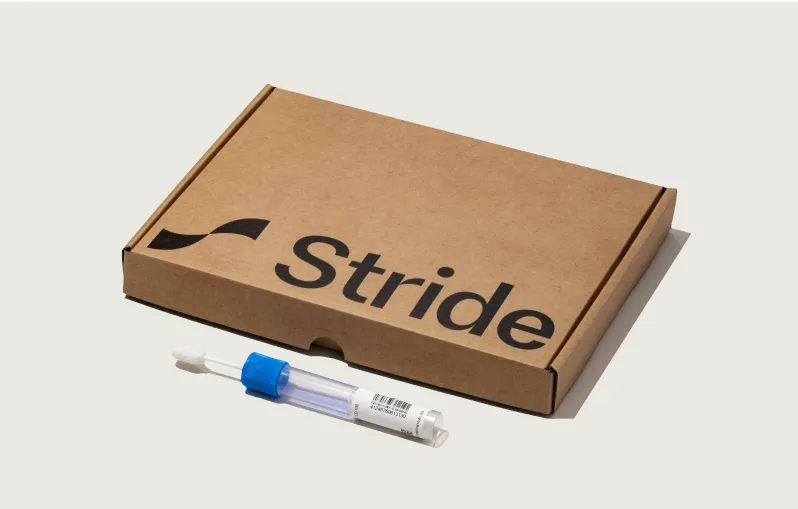




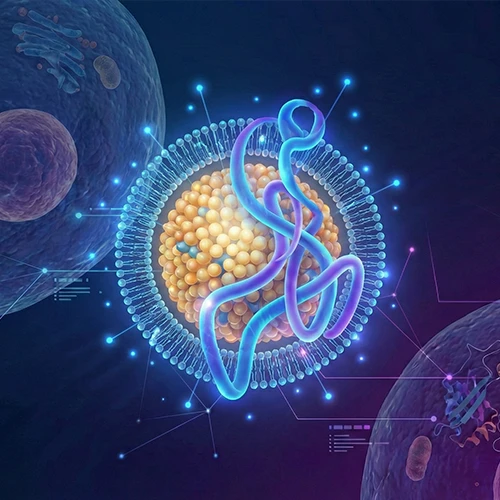

HCRTR2 Gene Test (Hypocretin / Orexin Receptor 2)
The HCRTR2 gene test analyses DNA for variants in the hypocretin (orexin) receptor 2, a brain receptor that helps control wakefulness, sleep stability, appetite, pain modulation, and mood. Understanding your HCRTR2 status adds genetic context to daytime alertness, napping tendencies, headache risk, and stress resilience so you can personalise sleep and lifestyle strategies rather than guessing.
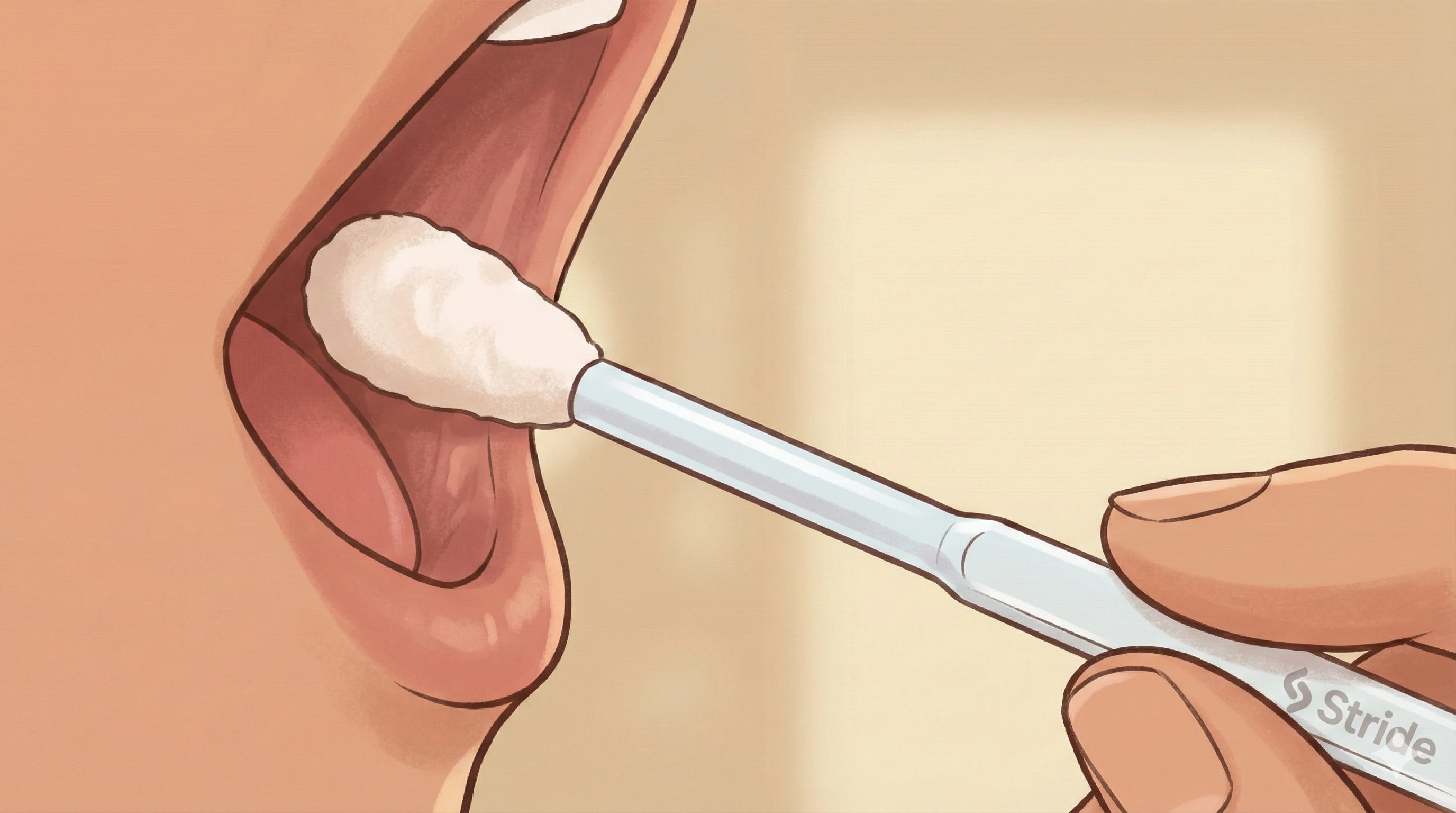

Sample type
Cheek swab, Blood sample

Collection
At-home

Often paired with
PER2, PER3, VIP, RGS16, other stress and sleep response genes, migraine and headache related genes, mood and cognition assessments, cardiometabolic markers

Fasting required
Not required for DNA testing; follow clinical guidance for any accompanying blood tests
Key benefits of testing HCRTR2
- Identify whether you carry HCRTR2 variants that may alter orexin receptor 2 signalling, which can influence your ability to maintain stable wakefulness, your tendency to nap, and how you respond to sleep disruption.
- Help explain patterns such as strong daytime sleepiness, preference for napping, or difficulty staying awake in monotonous situations, by highlighting a genetic tendency that can be supported rather than fixed.
- Add context to headache and pain sensitivity, since HCRTR2 polymorphisms have been studied in cluster headache and migraine, which often show circadian patterns and hypothalamic involvement.
- Inform personalised strategies around sleep timing, light exposure, caffeine use, and stress management, especially when combined with PER genes, wearable sleep tracking, and clinical assessment.
- Clarify your baseline orexin system architecture alongside other biomarkers, so long term optimisation plans can be built on both genetics and current biology rather than population averages.
What is the HCRTR2 gene?
HCRTR2 (also called OX2R) encodes hypocretin receptor 2, a class A G protein coupled receptor that binds the neuropeptides orexin A and orexin B with high affinity. This receptor is expressed mainly in the brain, particularly in histaminergic neurons of the tuberomammillary nucleus and other arousal related regions, where it translates orexin signals into changes in neuronal firing and intracellular calcium.
The orexin system is central to stabilising sleep and wake states, integrating information about energy balance, emotion, and circadian timing. Loss of orexin signalling causes narcolepsy in animal models, and disruption of HCRTR2 function has been shown to produce narcolepsy in dogs and marked sleepiness in mice, underlining the receptor's importance in maintaining consolidated wakefulness.
What does HCRTR2 do?
HCRTR2 serves as one of the main receptors through which orexin neurons promote wakefulness and modulate multiple physiological systems. When orexin A or orexin B bind to HCRTR2, the receptor couples to several G proteins and triggers increases in intracellular calcium and downstream signalling cascades that enhance excitability of target neurons.
In the posterior hypothalamus and tuberomammillary region, HCRTR2 activation supports sustained wakefulness by driving histaminergic and other arousal pathways. Beyond sleep-wake control, HCRTR2 is involved in regulating feeding behaviour, energy balance, reward processing, and pain modulation. Variants and altered signalling in HCRTR2 have been linked in research to narcolepsy models, cluster headache susceptibility, mood related behaviours, and responses to certain antidepressants and sleep medicines.
Why is HCRTR2 important for health?
HCRTR2 contributes to three interconnected domains: sleep and wake stability, circadian and behavioural timing, and integration of energy, pain, and mood signals. In animal models, selective loss of HCRTR2 leads to an inability to maintain long bouts of wakefulness and rapid transitions into sleep; complete loss of orexin signalling produces a narcolepsy like phenotype with cataplexy.
In humans, HCRTR2 variants have been associated with traits such as daytime napping, morningness, and risk for cluster headache in some populations, although findings are not uniform across studies. Because sleep stability, pain sensitivity, and mood regulation all influence cardiometabolic health, mental health, and long term performance, understanding HCRTR2 offers one lens on why some people are more vulnerable to fragmented sleep, headaches, or low mood under stress. Common variants usually have modest effects and act alongside many other genes and environmental factors.
HCRTR2 vs sleep and arousal markers
It is easy to assume that HCRTR2 testing and standard sleep or fatigue assessments tell you the same story, but they capture different layers of your biology. Sleep diaries, wearable data, and polysomnography show how you are sleeping and waking right now; daytime sleepiness scales capture your current alertness; HCRTR2 testing looks at inherited variants that influence how orexin signals are received and how robust your arousal circuits are over the long term.
This distinction matters because you can have HCRTR2 variants and still enjoy excellent sleep and daytime energy when your routines, light exposure, and mental health are well supported. Conversely, severe sleepiness, insomnia, or headache can occur without notable HCRTR2 variants due to other genes, lifestyle patterns, medications, or medical conditions, which often provide more direct levers for change.
Factors that modify HCRTR2 effects
The influence of HCRTR2 variants is shaped more by your sleep habits, light environment, mental health, and metabolic status than by the gene alone, which means you have meaningful room to change the trajectory. Several modifiable factors can either buffer or amplify any genetic tendency.
- Sleep duration and regularity: Getting enough high quality sleep and maintaining consistent bed and wake times reduces the strain on orexin and HCRTR2 pathways and can minimise daytime sleepiness, even in people with more sensitive arousal systems.
- Light exposure and circadian alignment: Morning daylight, reduced bright light and screens late at night, and predictable routines help synchronise your clock and support orexin neuron firing at the right times, which may be particularly important if your HCRTR2 signalling is less robust.
- Caffeine, alcohol, and sedating medications: High caffeine use, especially late in the day, and sedating drugs or alcohol near bedtime can disrupt sleep architecture and orexin driven wakefulness. Adjusting timing and dose can significantly improve daytime alertness regardless of genotype.
- Pain and headache triggers: In people prone to cluster headache or migraine, managing triggers such as alcohol, sleep disruption, and certain environmental cues can reduce attack burden, which may matter more than genotype in practice.
- Stress, mood, and metabolic health: Chronic stress, depression, anxiety, and metabolic dysregulation can all affect sleep quality and orexin function. Addressing these with appropriate therapy, movement, and nutritional strategies often moves the needle more than any single gene.
HCRTR2 variants without symptoms
Yes, and that is very common. Many people carry HCRTR2 polymorphisms that have been studied in cluster headache, migraine, mood, or napping traits without ever developing a clinically significant sleep or headache disorder.
Narcolepsy and chronic hypersomnolence in humans are usually driven by loss of orexin producing neurons or autoimmunity, not by common HCRTR2 variants alone. Likewise, headache disorders and mood conditions are highly multifactorial, and most individuals with HCRTR2 variants will not see clear, gene specific symptoms. HCRTR2 is best viewed as one of several contributors to arousal and pain biology, not a stand alone diagnosis.
Common HCRTR2 genotypes
Common HCRTR2 genotypes mainly differ in how they subtly alter receptor function, expression, or downstream signalling, which can influence wake promotion, pain modulation, and mood related behaviours in certain contexts. Their effect sizes are generally small.
- Reference HCRTR2 pattern: Reflects the most commonly observed sequence, with typical orexin receptor 2 activity and wake-promoting signalling, leaving sleep habits, light, stress, and health conditions as the dominant drivers of real world outcomes.
- Functional and regulatory polymorphisms: Variants such as G1246A and other single nucleotide polymorphisms have been studied in relation to cluster headache, migraine, mood traits, and daytime napping, with mixed results across populations. These variants may slightly shift risk or trait tendencies but rarely act in isolation.
- Rare or high impact variants: In rare monogenic contexts, disruptive HCRTR2 mutations can produce narcolepsy in animals. In humans, rare variants might be reported in specialist panels, but their significance must be interpreted carefully alongside clinical findings and other genes.
Preparing for an HCRTR2 test
For DNA based HCRTR2 testing, preparation is straightforward because your genotype does not change with sleep, diet, or stress. The key decision is which panel to use and how HCRTR2 insights will sit alongside other stress and sleep response genes and biomarkers.
Standalone HCRTR2 genotyping using blood or saliva does not require fasting, since it analyses stable DNA rather than fluctuating neurotransmitters or hormones. If HCRTR2 is assessed as part of a package that includes sleep studies, hormone profiles, or cardiometabolic markers, your clinician or testing provider may recommend specific preparation steps so you can track changes reliably over time.
Do I need an HCRTR2 test?
An HCRTR2 test is most valuable when the result will influence how you personalise sleep, light, and headache or mood strategies as part of a broader prevention and performance plan. It is less helpful when pursued in isolation without considering symptoms, sleep data, and clinical context.
- Significant daytime sleepiness or napping tendency: If you struggle with staying awake despite good sleep opportunity, or rely heavily on daytime naps, HCRTR2 testing, alongside clinical evaluation, can help frame whether orexin related biology might be relevant.
- Headache patterns with strong circadian features: For people with suspected cluster headache or circadian migraine patterns, HCRTR2 can form part of a broader genetic and clinical workup, although diagnosis and management remain primarily clinical.
- Mood and stress related sleep disruption: In those exploring detailed sleep and mood genetics, HCRTR2 adds another layer to the picture, especially when used to fine tune behavioural and environmental interventions.
- High performance and longevity focus: If you already track your sleep, training, and productivity, HCRTR2 can help you understand how your arousal system might respond to shift work, travel, and late nights, supporting more intelligent schedule design and recovery planning.
Stride tests that include HCRTR2


Health Tests
Core DNA Methylation Test
5 reports: Methylation profile reports
From $229 $183.20
FAQs
What is the HCRTR2 gene test?
The HCRTR2 gene test analyses your DNA from blood or saliva to look for variants in the hypocretin (orexin) receptor 2 gene that can influence wakefulness, napping tendencies, sleep stability, and headache or mood related traits.
What does an HCRTR2 gene mutation mean?
Common HCRTR2 variants usually act as subtle modifiers of arousal, headache risk, or mood rather than direct causes of disease, and their impact depends heavily on sleep patterns, stress, light exposure, and other genes.
Do HCRTR2 variants always cause sleep problems?
No; most people with HCRTR2 variants never develop narcolepsy or major sleep disorders. Severe sleepiness in humans is more often linked to loss of orexin producing neurons, medications, medical conditions, or lifestyle factors.
Is HCRTR2 testing recommended for narcolepsy or cluster headache?
HCRTR2 testing can appear in research or specialist panels, but diagnosis and management of narcolepsy or cluster headache are primarily clinical. Genetic results are supporting information, not stand alone diagnostic tools.
Can HCRTR2 affect my chronotype or napping behaviour?
HCRTR2 helps stabilise wakefulness and integrates signals from the hypothalamus, so certain variants have been linked to daytime napping and morningness traits, but behaviour, environment, and schedule still shape how you actually sleep and wake.
Do I need an HCRTR2 test?
You might consider an HCRTR2 test if results would change how you structure sleep timing, light exposure, caffeine use, and recovery plans, particularly if you experience pronounced daytime sleepiness, circadian headaches, or are building a detailed sleep optimisation plan with a clinician or coach.
Do I need to fast for HCRTR2 testing?
Fasting is not required for DNA based HCRTR2 testing, although any accompanying blood tests such as cortisol, glucose, lipids, or inflammatory markers may have specific preparation instructions that are worth following for consistent tracking.
How can I optimise HCRTR2 related pathways?
Rather than trying to treat the gene, focus on consistent sleep and wake times, strong morning light, reduced late night screens, smart caffeine and alcohol timing, regular movement, and effective stress management so your orexin and arousal systems can perform well over time, whatever your HCRTR2 genotype.