
Menu
-
Shop All
Contact
hey@getstride.com
Stride Health Group
Stride Health Group Ltd
Company No 05158025
Lamas Road
Badersfield
Norwich
England
NR10 5FB
UK
Extra 10% Off | Enter code GIFT at checkout


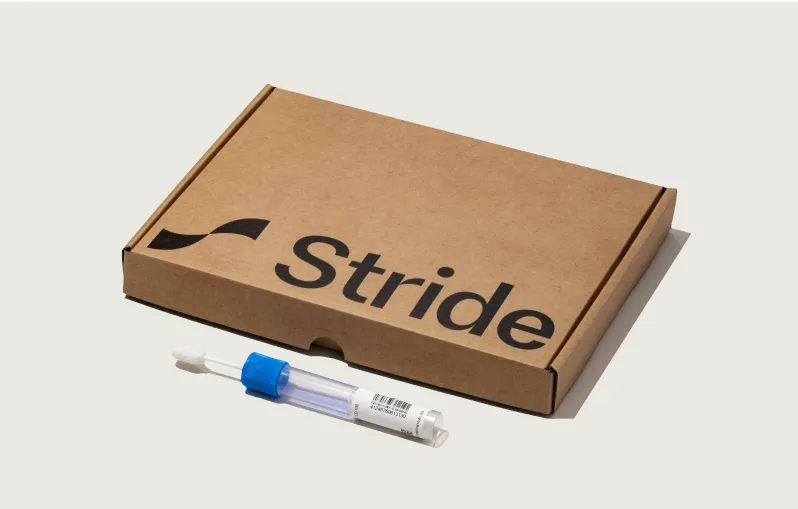




Haemoglobin Blood Test (Red Blood Cell & Oxygen Biomarker)
A haemoglobin blood test measures the amount of haemoglobin, the iron containing protein in red blood cells that carries oxygen from your lungs to the rest of your body. Your haemoglobin level is central to how energised you feel and how well you perform, and it is one of the key numbers used to diagnose anaemia when it is low and polycythaemia when it is high.
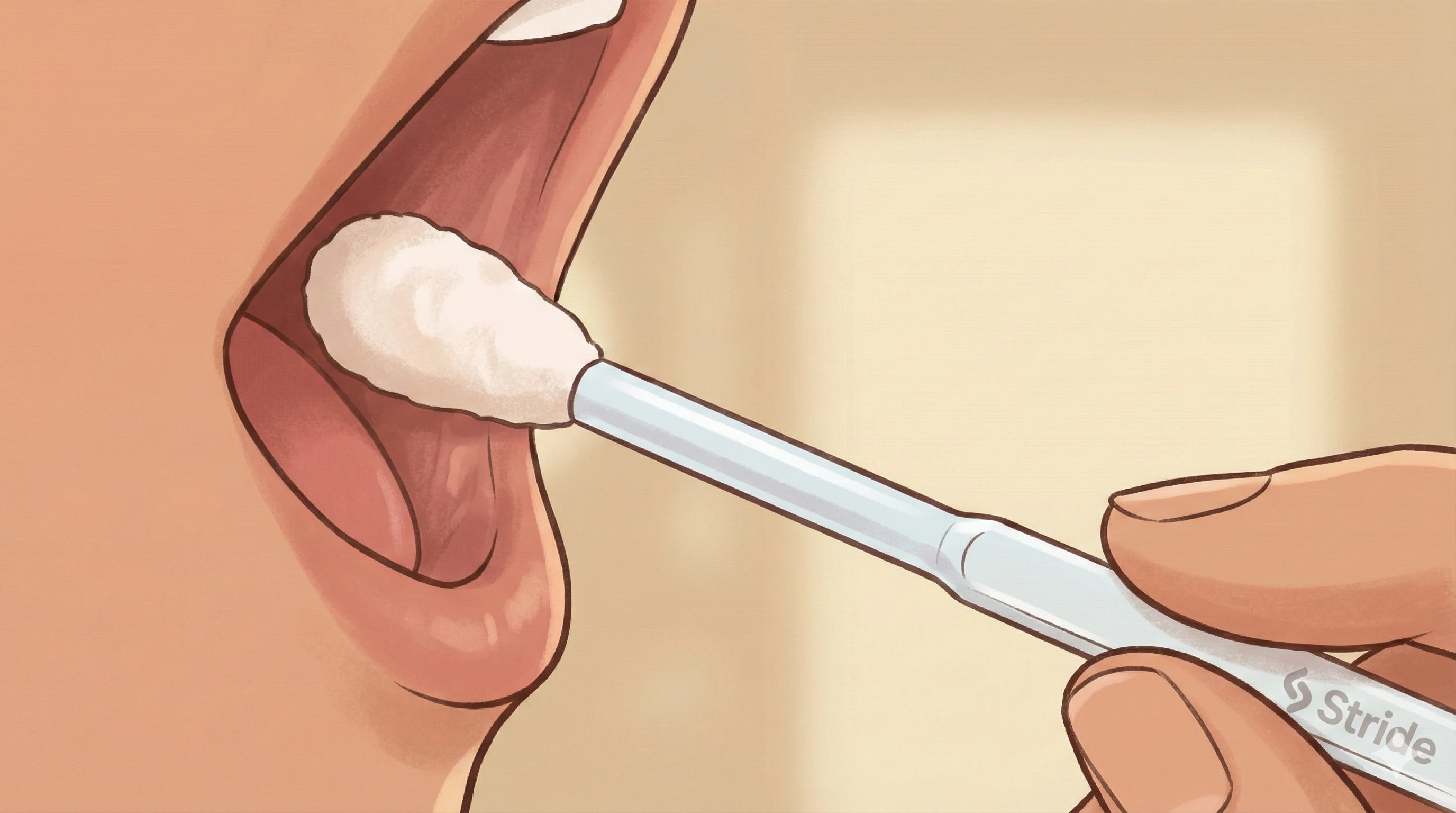

Sample type
Blood sample

Collection
At-home

Often paired with
Haematocrit, red blood cell count RBC, mean cell volume MCV, ferritin, iron, transferrin saturation, vitamin B12, folate, kidney and thyroid function tests, inflammatory markers

Fasting required
Not usually. Haemoglobin is not significantly affected by short term food intake. You may be asked to fast if your haemoglobin is tested within a wider metabolic or lipid panel.
Key benefits of testing haemoglobin
A haemoglobin blood test can help you:
- Detect anaemia when haemoglobin is too low, which may explain fatigue, breathlessness, palpitations, headaches, or reduced performance.
- Identify high haemoglobin polycythaemia when levels are above normal, which can thicken the blood and increase clot and cardiovascular risk.
- Monitor response to treatment for iron deficiency, B12 or folate deficiency, kidney disease, or chronic inflammatory conditions.
- Support decisions about blood transfusion, iron therapy, or erythropoiesis stimulating agents in specific clinical settings.
- Track how training load, menstrual health, altitude exposure, and diet are affecting oxygen carrying capacity over time.
What is haemoglobin
Haemoglobin is a complex protein inside red blood cells made up of four globin chains, each carrying an iron containing haem group that binds oxygen. It:
- Gives red blood cells their colour.
- Binds oxygen in the lungs and releases it in tissues where it is needed.
- Helps carry carbon dioxide and hydrogen ions back to the lungs for removal.
Haemoglobin levels are usually reported as:
- Grams per decilitre g/dL.
- Or grams per litre g/L in UK practice.
Haemoglobin is measured as part of a full blood count and is interpreted alongside haematocrit, RBC count, and red cell indices.
What does haemoglobin do in the body
Haemoglobin has two core functions:
- Oxygen transport: it picks up oxygen in the lungs and releases it in tissues according to local oxygen demand, pH, and carbon dioxide levels.
- Carbon dioxide and acid handling: it binds some carbon dioxide and hydrogen ions, helping buffer blood pH and returning carbon dioxide to the lungs.
If haemoglobin is low:
- Oxygen delivery to tissues is reduced, which can cause tiredness, reduced exercise capacity, breathlessness, poor concentration, and feeling cold.
If haemoglobin is high:
- Blood can become thicker, increasing resistance to flow, which can strain the heart and raise the risk of clots, especially alongside other cardiovascular risks.
Why is haemoglobin important for energy, performance, and long term health
Haemoglobin is central because:
- It directly determines how much oxygen each litre of blood can carry, which sets the ceiling for aerobic performance and how you feel during day to day activity.
- Low haemoglobin anaemia is common and can be caused by iron deficiency, heavy menstrual bleeding, gut blood loss, poor diet, chronic disease, kidney problems, or bone marrow conditions. Left untreated, anaemia increases heart strain and reduces quality of life.
- High haemoglobin and haematocrit polycythaemia or erythrocytosis can be driven by smoking, chronic lung disease, sleep apnoea, altitude, testosterone or EPO use, or bone marrow disorders and may increase the risk of thrombosis and cardiovascular events.
In preventive health, having haemoglobin in a healthy range supports sustained energy, protects heart and brain function, and is a key foundation for training and recovery.
Haemoglobin vs haematocrit vs RBC vs ferritin: what is the difference
These markers each tell part of the red blood cell story:
- Haemoglobin is the oxygen carrying protein concentration in your blood.
- Haematocrit is the percentage of blood volume made up of red blood cells.
- RBC count is the number of red blood cells per unit volume of blood.
- Ferritin reflects iron stores, which are needed to build haemoglobin and red blood cells.
In simple terms:
- Haemoglobin and haematocrit tell you if you have anaemia or too many red cells.
- Ferritin and iron studies help you understand whether iron deficiency or another cause is behind a low haemoglobin.
- RBC and red cell indices MCV, MCH help classify the type of anaemia and guide further testing.
What factors affect haemoglobin levels
Haemoglobin is influenced by red cell production, loss, destruction, and plasma volume. Key factors include:
1. Iron, B12, and folate
- Iron deficiency from heavy periods, gut blood loss, low intake, or poor absorption reduces haemoglobin synthesis and causes microcytic small cell anaemia.
- Vitamin B12 and folate deficiency impair DNA synthesis in red cell precursors, causing macrocytic large cell anaemia and low haemoglobin.
2. Kidney and chronic disease
- Kidneys produce erythropoietin, a hormone that stimulates red cell production. Chronic kidney disease reduces this signal and often leads to anaemia.
- Chronic inflammation, autoimmune disease, infection, and cancer can cause anaemia of chronic disease, where iron handling and bone marrow response are altered.
3. Blood loss and haemolysis
- Acute or chronic blood loss from the gut, uterus, trauma, or repeated donations lowers haemoglobin.
- Haemolytic anaemias, where red cells are destroyed prematurely, also reduce haemoglobin and may cause jaundice and dark urine.
4. Lung, heart, altitude, and lifestyle
- Chronic lung disease, sleep apnoea, congenital heart disease, and smoking can drive the body to raise haemoglobin as a compensation for lower oxygen levels.
- Living or training at altitude increases haemoglobin as an adaptation to thinner air.
- Smoking and testosterone use can also raise haemoglobin and haematocrit.
5. Hydration and pregnancy
- Dehydration can concentrate haemoglobin and make it appear higher.
- Pregnancy increases plasma volume more than red cell mass, often lowering measured haemoglobin dilutional anaemia.
Normal vs low vs high haemoglobin: what is the difference
Reference ranges vary by lab, age, and sex. Typical adult UK ranges are:
- Adult men: about 130 to 180 g/L 13.0 to 18.0 g/dL.
- Adult women: about 115 to 165 g/L 11.5 to 16.5 g/dL.
Broad interpretation:
- Low haemoglobin anaemia can cause fatigue, breathlessness, palpitations, dizziness, cold hands and feet, pale skin, headaches, and reduced exercise capacity. Severity is usually classified as mild, moderate, or severe based on how far below the reference range the level is, and on symptoms.
- High haemoglobin erythrocytosis or polycythaemia may cause headaches, dizziness, redness, visual disturbance, and a feeling of fullness or throbbing, and can increase clot risk in some conditions.
Haemoglobin results are always interpreted alongside haematocrit, RBC count, red cell indices, iron studies, B12, folate, kidney function, and clinical context.
Do I need to fast for a haemoglobin blood test
You do not usually need to fast for a haemoglobin test. You can eat and drink normally.
You may be asked to:
- Fast if haemoglobin is being measured within a fasting panel such as a metabolic or lipid panel.
- Avoid very intense exercise or significant dehydration immediately before testing so that results reflect your typical baseline.
How can haemoglobin be improved or lowered (clinician guided)
Improving low haemoglobin anaemia focuses on treating the cause and supporting red cell production:
- Iron deficiency: increase iron intake through diet and supplements, address heavy menstrual bleeding or gut blood loss, and treat underlying conditions affecting absorption such as coeliac disease.
- B12 or folate deficiency: supplement appropriately and address causes such as pernicious anaemia, dietary patterns, or malabsorption.
- CKD or chronic disease: optimise disease control, use erythropoiesis stimulating agents where appropriate, and manage iron and nutrient status.
- Haemolytic or bone marrow conditions: treat the specific underlying disorder with haematology guidance.
Lowering very high haemoglobin in polycythaemia focuses on reducing risk:
- Address dehydration, smoking, lung disease, or sleep apnoea to reduce hypoxia driven erythrocytosis.
- Evaluate for polycythaemia vera and other myeloproliferative neoplasms and, if present, consider venesection and low dose aspirin under specialist care.
- Carefully tailor altitude exposure and any performance enhancing strategies in athletes to stay within safe ranges.
Stride tests that include Haemoglobin
FAQs
What is the haemoglobin blood test
The haemoglobin blood test measures the concentration of haemoglobin, the oxygen carrying protein in red blood cells, in your blood. It is a central part of a full blood count and is used to diagnose and monitor anaemia, polycythaemia, and many conditions that affect oxygen delivery and red cell health.
What is a normal haemoglobin level
In adults, normal haemoglobin ranges are roughly 130 to 180 g/L for men and 115 to 165 g/L for women, though exact cut offs vary between laboratories. Your lab report will show the reference range used and whether your level is within, below, or above that range.
What is an optimal haemoglobin level for health and performance
Optimal haemoglobin is a stable level within the normal range that supports good oxygen delivery without making blood overly thick. For most people, that means sitting comfortably in the mid range for their sex and age rather than at the extremes, but the best level for you depends on altitude, health conditions, and goals and should be considered alongside haematocrit, iron status, and cardiovascular risk.
Is haemoglobin better than ferritin for checking iron
Haemoglobin and ferritin answer different questions. Haemoglobin tells you whether you currently have anaemia, while ferritin tells you how much iron you have in store. You can have normal haemoglobin with low ferritin early iron deficiency or low haemoglobin with normal ferritin in anaemia of chronic disease. Together, they give a clearer picture than either alone.
Can haemoglobin be low even if my iron level looks normal
Yes. Haemoglobin can be low in vitamin B12 or folate deficiency, chronic kidney disease, chronic inflammatory or autoimmune disease, bone marrow disorders, or recent blood loss, even when iron appears normal. This is why a full anaemia workup usually includes haemoglobin, haematocrit, red cell indices, iron studies, B12, folate, kidney function, and inflammatory markers.
Do I need a haemoglobin blood test
You will usually have haemoglobin measured whenever you have a full blood count, which is one of the most common blood tests. It is particularly useful if you have symptoms such as fatigue, breathlessness, palpitations, dizziness, heavy periods, chronic disease, or if you are an athlete or active person looking to understand your oxygen carrying capacity.
Do I need to fast for a haemoglobin test
Fasting is not generally required for haemoglobin alone. If your haemoglobin test is included in a fasting metabolic or lipid panel, you will follow those fasting instructions. Keeping your routine hydration and exercise patterns steady before the test helps ensure your result reflects your usual state.
How can I improve my haemoglobin result
If your haemoglobin is low, you can support improvement by correcting iron, B12, or folate deficiency, addressing sources of blood loss, managing kidney or chronic disease, and ensuring adequate protein and calorie intake with guidance from your clinician. If your haemoglobin is high, management focuses on optimising hydration, reducing smoking, addressing sleep apnoea or lung disease, and, where needed, using venesection or other targeted treatments to safely reduce levels.
Do I need a haemoglobin blood test
If you want to know whether anaemia or thick blood might be influencing your energy, performance, or long term cardiovascular risk, or you have risk factors for iron deficiency or polycythaemia, discussing a haemoglobin blood test as part of a full blood count and iron panel is a practical step. Within StrideOne, haemoglobin is measured alongside hundreds of other biomarkers, helping you see exactly how this core oxygen marker fits into your wider health and longevity strategy.