
Menu
-
Shop All
Contact
hey@getstride.com
Stride Health Group
Stride Health Group Ltd
Company No 05158025
Lamas Road
Badersfield
Norwich
England
NR10 5FB
UK
Extra 10% Off | Enter code GIFT at checkout


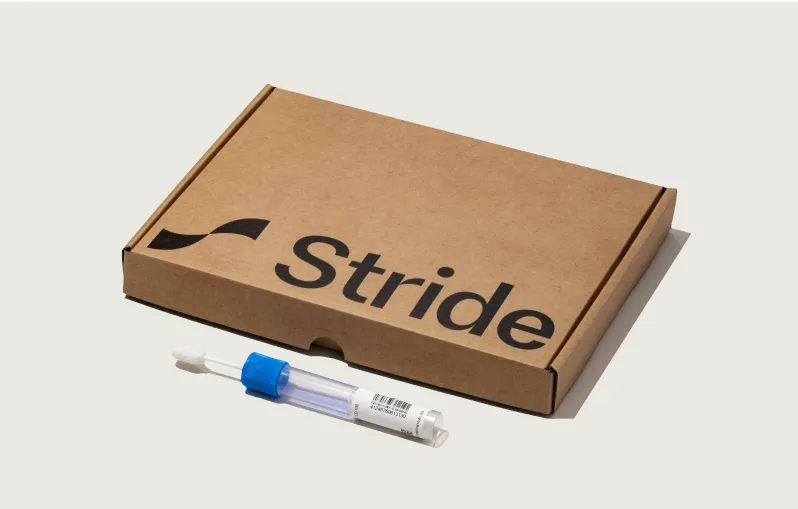






Glucose Blood Test
A random glucose test measures the amount of glucose circulating in your blood at any point in the day, regardless of when you last ate. It gives a quick snapshot of your current blood sugar level and can help flag diabetes, hypoglycaemia, or unstable glucose control that might need more detailed follow up.


Sample type
Blood sample

Collection
At-home

Often paired with
Fasting glucose, HbA1c, oral glucose tolerance test (OGTT), lipid panel, ApoB, hsCRP, insulin, kidney function

Fasting required
0
Key benefits of testing random glucose
A random glucose blood test can help you:
- Check for significantly raised or low blood sugar at any time of day, especially if you have symptoms.
- Support rapid assessment for diabetes in urgent or unplanned situations, for example in suspected type 1 diabetes.
- Provide context alongside HbA1c and fasting glucose when glucose control appears unstable or symptoms do not match other results.
- Monitor day to day blood sugar patterns in people already diagnosed with diabetes, alongside home glucose monitoring.
- Guide decisions on whether more detailed tests such as fasting glucose or an OGTT are needed.
What is random glucose
Glucose is the primary sugar circulating in your bloodstream and the main fuel for your brain and many other tissues. A random glucose test measures the concentration of glucose in a blood sample taken at any time, without needing to plan around meals.
Unlike fasting glucose or an OGTT, which are standardised around a period without food and a set glucose dose, random glucose reflects your real life blood sugar at the moment of the test. This means it is influenced by:
- Recent meals and snacks.
- Physical activity.
- Stress and illness.
- Medications such as insulin or tablets for diabetes.
Because of this, random glucose is most useful for picking up clearly abnormal levels, rather than subtle early changes.
What does random glucose do
Random glucose does not change your biology, but it provides immediate information about how your body is handling glucose right now. In practice, it can:
- Identify markedly high glucose levels that may indicate diabetes, particularly if you also have symptoms such as thirst, frequent urination, or unexplained weight loss.
- Help assess for hypoglycaemia if glucose is unexpectedly low, especially in people on insulin or certain tablets.
- Offer a quick cross check when HbA1c or fasting glucose results do not fit the clinical picture.
A very high random glucose usually prompts repeat testing or confirmation with fasting glucose, HbA1c, or an OGTT before a firm diagnosis is made, unless there is clear evidence of acute metabolic decompensation.
Why is random glucose important for metabolic health
Metabolic health is about how efficiently your body handles fuels like glucose day in, day out. Random glucose is important because:
- Glucose levels that are very high, even on a single random test, can signal underlying diabetes or significant dysregulation that needs urgent attention.
- For people with established diabetes, random glucose readings help track how food, medication, and activity influence blood sugar outside the clinic.
- In situations where fasting or scheduled testing is not practical, random glucose provides a starting point to decide whether more formal evaluation is needed.
However, random glucose is not usually the primary test for long term risk. HbA1c and fasting glucose are often preferred for diagnosing and staging type 2 diabetes, with random glucose providing useful supporting information.
Random glucose vs fasting glucose vs HbA1c: what is the difference
These three tests all relate to blood sugar, but each answers a different question.
- Random glucose measures your blood sugar at any time of the day, regardless of food. It is most helpful for detecting clearly abnormal levels and for urgent assessment.
- Fasting glucose measures blood sugar after you have not eaten for a set period, usually at least 8 hours. It is more standardised and widely used for diagnosing diabetes and prediabetes.
- HbA1c measures the percentage of haemoglobin coated with glucose, reflecting your average blood sugar over the past 2 to 3 months. It is the key marker for long term glucose control.
In practice:
- A very high random glucose can strongly suggest diabetes and prompts further testing.
- Fasting glucose and HbA1c provide a more stable basis for diagnosis and monitoring.
- Combining these markers gives a fuller picture of both day to day and long term glucose health.
What factors affect random glucose levels
Random glucose is sensitive to many short term and long term influences. Key factors include:
1. Recent food and drink
- Carbohydrate rich meals, snacks, sugary drinks, and large portions can raise random glucose, particularly in people with insulin resistance or diabetes.
- Meals rich in fibre, protein, and healthy fats may lead to a slower, smaller rise in glucose.
2. Physical activity
- Exercise generally helps muscles use glucose more effectively and can lower random glucose, both during and after activity.
- Sedentary behaviour, especially after meals, may contribute to higher random readings.
3. Insulin and other medications
- For people with diabetes, the timing and dose of insulin or glucose lowering tablets strongly influence random glucose.
- Missed doses, incorrect timing, or changes in other medications such as steroids can all shift readings up or down.
4. Stress, illness, and hormones
- Acute illness, infections, and physical or psychological stress can raise random glucose via stress hormones.
- Hormonal changes such as those during menstruation, pregnancy, or menopause can also affect readings.
5. Underlying metabolic health
- Insulin resistance, metabolic syndrome, and type 2 diabetes tend to result in higher random glucose, especially after meals.
- Rare hormone disorders and pancreatic disease can also cause abnormal random glucose patterns.
Can random glucose be high while HbA1c is normal
Yes. It is possible to have a high random glucose with a normal HbA1c, especially if:
- The high reading occurs after a particularly large or carbohydrate heavy meal.
- You are acutely unwell or stressed, temporarily raising glucose.
- Early dysregulation is present, but average levels over the past 2 to 3 months have not yet risen significantly.
In these situations, clinicians often repeat testing, check fasting glucose or HbA1c again, and interpret the result in the context of symptoms, risk factors, and other biomarkers.
Normal vs concerning random glucose: what is the difference
Exact thresholds can vary slightly between guidelines and units, but broadly:
- Random glucose within a typical reference range is generally reassuring, especially if you have no symptoms and other markers are normal.
- Significantly elevated random glucose, particularly above the diagnostic thresholds used for diabetes, is concerning and usually prompts repeat or confirmatory testing.
- Very low random glucose can indicate hypoglycaemia, which is especially important to address in people taking insulin or certain tablets.
Your clinician will interpret your random glucose result alongside HbA1c, fasting glucose, symptoms, medications, and overall risk.
Do I need to fast for a random glucose test
No. By definition, a random glucose test is taken without fasting and can be done at any time of day. You do not need to change your usual food or drink pattern unless your test provider gives specific instructions as part of a broader panel.
If your random glucose is taken at the same time as fasting dependent tests, you may still be asked to fast. In that case, the "random" label refers to the lack of timing with meals, but you may have been fasting for other reasons.
How can random glucose patterns be improved clinician guided
Improving random glucose patterns means smoothing and lowering the peaks and troughs of blood sugar across the day. Depending on your situation, clinician guided strategies may include:
- Adjusting carbohydrate quantity and quality, focusing on whole, fibre rich sources and balancing meals with protein and healthy fats.
- Spacing meals consistently and avoiding frequent high sugar snacks and drinks.
- Increasing daily movement, including short walks after meals to help muscles use glucose.
- Supporting healthy weight and waist circumference to improve insulin sensitivity.
- Optimising diabetes medications if you already have a diagnosis, tailoring timing and doses to your patterns.
Over time, these changes should be reflected not only in more stable random glucose readings, but also in improved HbA1c and fasting glucose.
Stride tests that include Glucose
FAQs
What is the random glucose blood test
The random glucose blood test measures your blood sugar level at any time of day, without needing to fast. It provides a quick snapshot of how much glucose is circulating in your blood at that moment and can help detect significant high or low levels.
What is a normal random glucose level
Typical reference ranges vary, but random glucose values within the lab's normal interval are generally reassuring, especially if you have no symptoms and normal HbA1c. Values above diagnostic thresholds for diabetes, particularly when symptoms are present, usually prompt further testing and clinical review.
What is an optimal random glucose level for health
Optimal random glucose values are those that stay within or close to the normal range throughout the day, without large spikes or frequent lows. In practice, the focus is on keeping both random readings and long term markers like HbA1c in a healthy range, guided by your clinician.
Is random glucose better than fasting glucose
Random and fasting glucose serve different roles. Random glucose is convenient and useful for picking up clearly abnormal levels at any time, while fasting glucose provides a more standardised baseline for diagnosis. Used together with HbA1c, they give a fuller picture of your glucose control.
Can random glucose be high if my HbA1c is normal
Yes. A single high random reading can occur after a large meal, during illness, or under stress even if your HbA1c is still in the normal range. Repeating the test and checking fasting glucose or HbA1c again helps clarify whether this is a one off spike or a sign of an ongoing issue.
Do I need random glucose testing
You might benefit from a random glucose test if you have symptoms of high or low blood sugar, such as thirst, frequent urination, fatigue, shakiness, or confusion, or if diabetes is suspected and a quick assessment is needed. People already living with diabetes also use random glucose readings to understand how daily choices and medications are affecting control.
Do I need to fast for random glucose
No. Fasting is not required for a random glucose test, and the result is interpreted in the context of when you last ate, your symptoms, and your other blood tests. If you are having other tests at the same time that do require fasting, follow the instructions given.
How can I improve my random glucose results
You can support healthier random glucose patterns by choosing balanced, fibre rich meals, keeping portions of refined carbohydrates modest, moving regularly, especially after eating, maintaining a healthy waist circumference, and following your diabetes treatment plan if you have one. Tracking both random readings and HbA1c over time shows whether these changes are working.
Do I need a random glucose test
If you want a real world snapshot of how your body is handling blood sugar right now, alongside long term markers like HbA1c, discussing a random glucose test with your clinician is a practical step. Within StrideOne, random glucose sits among hundreds of biomarkers, helping you see not just a number, but how it fits into your wider metabolic health story.