
Menu
-
Shop All
Contact
hey@getstride.com
Stride Health Group
Stride Health Group Ltd
Company No 05158025
Lamas Road
Badersfield
Norwich
England
NR10 5FB
UK
Extra 10% Off | Enter code GIFT at checkout


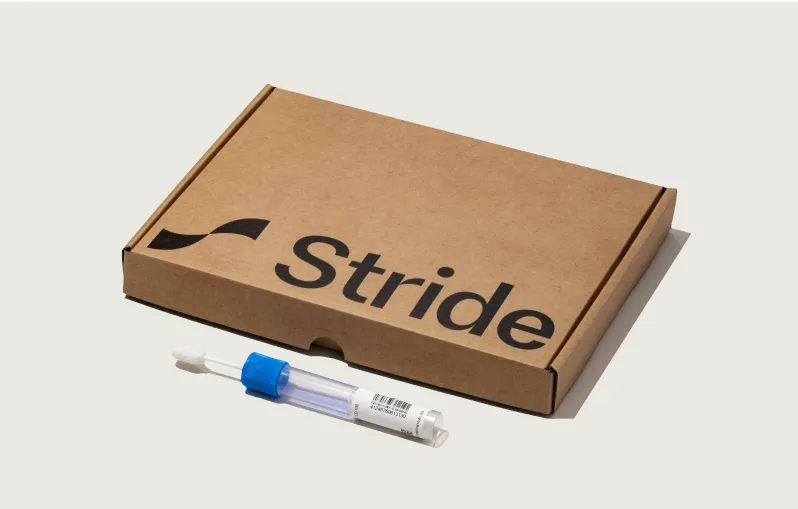



FUT2 Gene Test (Fucosyltransferase 2)
The FUT2 gene test analyses DNA for variants in fucosyltransferase 2 that determine your secretor status, meaning whether you express ABO blood group antigens in saliva, intestinal mucus, and other secretions. Secretor status influences gut microbiome composition, susceptibility to specific infections, vitamin B12 handling, and risk patterns for conditions such as inflammatory bowel disease, so understanding your FUT2 status helps you personalise gut, immune, and nutrient strategies instead of relying on population averages.


Sample type
Cheek swab, Blood sample

Collection
At-home

Often paired with
Microbiome testing, vitamin B12, folate, homocysteine, inflammatory markers, coeliac and IBD panels, cardiometabolic panel

Fasting required
Not required for DNA testing; follow clinical guidance for any accompanying blood tests
What is the FUT2 gene?
FUT2 encodes alpha 1,2 fucosyltransferase 2, an enzyme that adds fucose to precursor structures to produce H type 1 antigens (ABO blood group precursors) on mucosal surfaces and in bodily secretions. This determines secretor status: secretors have at least one functional FUT2 allele and express ABO antigens in secretions, while non secretors are homozygous for nonfunctional alleles and do not.
The FUT2 gene is located on chromosome 19q13.33 and contains several population specific polymorphisms. In many European populations, the rs601338 A allele (428G>A) is the main cause of non secretor status, while other missense variants such as 571C>T, 739G>A, and 839T>C contribute in specific groups. Around 70--80 percent of people are secretors, with the remainder non secretors, and both patterns have distinct health implications.
What does FUT2 do?
FUT2's primary role is to fucosylate glycan structures in secreted mucins and other glycoproteins, generating ABH and Lewis histo blood group antigens in saliva, intestinal mucus, and other secretions. These fucosylated glycans act as binding sites and nutrient sources for specific gut microbes and, in some cases, as receptors for viruses and bacteria.
In secretors, the presence of these antigens supports colonisation by certain commensal species, particularly bifidobacteria, and also allows specific pathogens to attach. In non secretors, the absence of FUT2 mediated fucosylation changes the ecological landscape of the gut and mucosa, often reducing susceptibility to some viral infections such as norovirus, while increasing risk for other conditions, including certain respiratory and gastrointestinal infections and some autoimmune diseases.
Why is FUT2 important for health?
FUT2 sits at the intersection of three interconnected systems: gut microbiome composition, mucosal immunity and infection susceptibility, and nutrient handling, particularly vitamin B12. Secretor status influences which bacteria thrive in your gut, which in turn affects barrier function, immune training, and metabolite production.
Non secretor status has been associated with distinct microbiota profiles, lower bifidobacterial diversity, and higher risk for conditions such as Crohn's disease and other inflammatory bowel diseases, as well as altered susceptibility to respiratory and gastrointestinal infections. Secretor status and FUT2 polymorphisms also correlate with plasma vitamin B12 levels and some autoimmune traits. The real world impact is heavily shaped by diet, environment, and other genes, so FUT2 is best viewed as one important piece of a larger puzzle.
FUT2 and secretor status: what is the difference?
It is easy to treat FUT2 and "secretor status" as separate, but secretor status is essentially the phenotype created by FUT2 activity. Functional FUT2 alleles produce a working fucosyltransferase 2 enzyme, leading to secretor status, while nonfunctional alleles produce non secretors.
Clinically, the distinction is that FUT2 genotyping provides the underlying genetic explanation and can differentiate between heterozygous secretors and homozygous secretors, while secretor phenotype testing looks at the presence or absence of ABH antigens in secretions. Both carry similar implications for microbiome, infection risk, and B12 patterns, but genotype offers a stable, once only measurement.
What factors modify the effects of FUT2 variants?
The influence of FUT2 variants is shaped more by diet, environment, and coexisting health conditions than by the gene alone. Several modifiable factors can buffer or amplify FUT2 related tendencies.
- Diet and prebiotics: Fibre type and quantity, resistant starch, and specific prebiotic substrates influence which microbes flourish in your gut. Secretor and non secretor microbiomes respond differently, so tailoring fibre and prebiotic strategies can help support a balanced microbiota in either context.
- Probiotics and fermented foods: Different probiotic strains and fermented foods interact with host glycans and existing microbiota in distinct ways. FUT2 status can modulate which strains colonise more easily, so personal experimentation guided by symptom and biomarker tracking is often useful.
- Infection exposure and hygiene: Contact with viruses like norovirus, rotavirus, and certain bacteria interacts with FUT2 status to shape infection risk. Good hygiene, vaccination where available, and early support during infections remain important for everyone, regardless of secretor status.
- Vitamin B12 intake and absorption: FUT2 variants have been linked to lower plasma B12 levels in some cohorts, possibly via intrinsic factor related mechanisms or microbiome effects. Ensuring adequate B12 intake and checking levels when indicated helps prevent deficiency, especially in higher risk groups such as vegans and older adults.
- Underlying immune and gut conditions: Existing inflammatory bowel disease, coeliac disease, or other autoimmune conditions interact with FUT2 status to influence microbiome patterns and symptom expression. Comprehensive care that addresses inflammation, barrier function, and diet can mitigate genetic tendencies.
Can you have FUT2 variants without symptoms?
Yes, and most people do. Both secretor and non secretor states are common and often asymptomatic, and many individuals never notice major health differences attributable solely to FUT2 status.
FUT2 related patterns usually emerge when combined with other risk factors, such as poor diet, chronic stress, specific infections, or coexisting immune conditions. Many secretors and non secretors maintain good gut and immune health when diet, sleep, stress, and broader lifestyle factors are well supported, highlighting that genes create tendencies, not rigid outcomes.
FUT2 genotypes: how do common variants differ?
Common FUT2 genotypes differ mainly in whether they produce a functional enzyme and how they distribute across populations. Understanding your pattern helps frame your secretor status and potential tendencies in gut, infection, and B12 domains.
- Functional / secretor genotypes (for example rs601338 GG or GA): These genotypes produce an active enzyme and lead to secretor status, with ABH antigens expressed in secretions. Secretors tend to have higher bifidobacterial diversity and distinct infection and autoimmune risk patterns compared with non secretors.
- Nonfunctional / non secretor genotypes (for example rs601338 AA, or compound homozygotes at 571C>T, 739G>A, 839T>C in some populations): These genotypes produce little or no functional enzyme, leading to non secretor status and absence of ABH antigens in secretions. Non secretors often have different microbiota composition, reduced susceptibility to some viral infections, and higher risk of certain autoimmune and inflammatory conditions.
- Population specific variants: Different populations show distinct frequencies of non secretor alleles, with rs601338 A common in many European groups and other missense variants contributing in Asian and African populations. This diversity reflects evolutionary pressures from pathogens and environment.
How do I prepare for a FUT2 test?
For DNA based FUT2 testing, preparation is simple because genotype does not change over time. The key is clarifying how you and your clinician will use secretor status information to inform gut, immune, and nutrient strategies.
Standalone FUT2 genotyping using blood or saliva does not require fasting, since it examines stable DNA sequence rather than current microbiota or vitamin levels. If FUT2 testing is bundled with microbiome analysis, B12, homocysteine, or inflammatory markers, follow any preparation instructions for those tests so results are comparable at repeat time points.
Do I need a FUT2 test?
A FUT2 test is most helpful when the result will meaningfully shape your approach to gut health, immune support, and vitamin B12 monitoring as part of a broader strategy. It is less useful as a curiosity test without attention to diet, microbiome, and clinical context.
- Chronic gut symptoms or IBS type issues: For individuals with persistent bloating, gas, diarrhoea, constipation, or recurrent gut infections, FUT2 genotyping alongside microbiome testing, coeliac and IBD panels, and diet review can help tailor prebiotic, probiotic, and nutrition strategies.
- Inflammatory bowel disease or strong family history: FUT2 status has been associated with Crohn's disease and other IBD risk patterns in some populations. In those contexts, FUT2 genotyping can add nuance to a multifactorial risk assessment, although it is not a stand alone diagnostic tool.
- Recurrent norovirus or other infections: Secretor status significantly influences norovirus susceptibility. In people with recurrent infections or in occupational settings with high exposure, FUT2 testing may contribute to prevention strategies and risk understanding.
- Vitamin B12 and methylation focus: For individuals with borderline or low B12 levels, or those on vegetarian or vegan diets, FUT2 genotyping can help explain patterns seen in B12 and homocysteine and guide how aggressively to monitor and support these pathways.
Stride tests that include FUT2


Health Tests
Core DNA Methylation Test
5 reports: Methylation profile reports
From $229 $183.20
FAQs
What is the FUT2 gene test?
The FUT2 gene test analyses your DNA from blood or saliva to look for variants in the fucosyltransferase 2 gene that determine whether you are a secretor or non secretor of ABO blood group antigens in saliva, intestinal mucus, and other secretions.
What does a FUT2 variant mean?
Common FUT2 variants, such as rs601338 and other missense changes, can inactivate the enzyme and create non secretor status, which is associated with distinct patterns in gut microbiota, infection susceptibility, vitamin B12 levels, and autoimmune risk, while functional variants produce secretor status.
Do FUT2 variants always cause gut or immune problems?
No. Many secretors and non secretors remain healthy, and FUT2 status mainly changes tendencies in microbiome composition, infection patterns, and B12 handling. Diet, lifestyle, and coexisting health conditions usually have a much larger impact on day to day symptoms.
Can FUT2 affect vitamin B12 levels?
Yes. FUT2 polymorphisms have been associated with lower plasma B12 levels in some populations, likely via effects on intrinsic factor and gut microbiota. Knowing your FUT2 status can help decide how closely to monitor and support vitamin B12, especially on low animal product diets.
Can FUT2 affect risk of inflammatory bowel disease or Crohn's disease?
FUT2 non secretor status and related variants have been linked to higher risk of Crohn's disease and other IBD in several studies, probably through microbiome and mucosal immune mechanisms. It is one of many genetic and environmental factors and does not act as a stand alone predictor.
Do I need a FUT2 test?
You might consider a FUT2 test if results would change how you and your clinician approach chronic gut symptoms, infection risk, B12 monitoring, or IBD risk management, ideally as part of a comprehensive gut and immune assessment rather than a single data point.
Do I need to fast for FUT2 testing?
Fasting is not required for DNA based FUT2 testing, although any accompanying blood tests for B12, homocysteine, inflammatory markers, lipids, or glucose may have specific preparation instructions that help keep results consistent over time.
How can I work with my FUT2 status?
Rather than trying to change the gene, focus on building a diverse, fibre rich diet, using targeted prebiotics and probiotics where helpful, supporting vitamin B12 and folate, managing stress, and working with clinicians on infections or inflammatory conditions, using FUT2 as one lens to personalise your gut and immune health strategy over the long term.