
Menu
-
Shop All
Contact
hey@getstride.com
Stride Health Group
Stride Health Group Ltd
Company No 05158025
Lamas Road
Badersfield
Norwich
England
NR10 5FB
UK
Extra 10% Off | Enter code GIFT at checkout


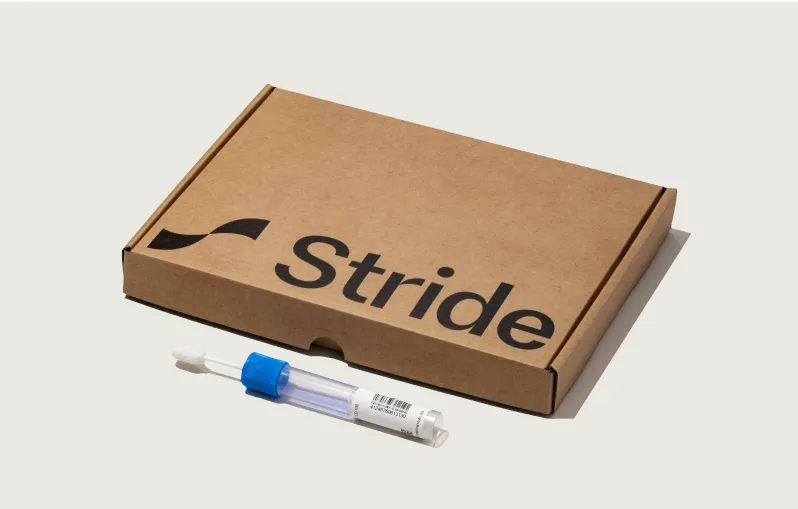





FT3 Blood Test (Free Triiodothyronine)
FT3 (Free Triiodothyronine) is a thyroid hormone marker that measures the unbound, biologically active form of T3 circulating in your blood. It provides a direct window into thyroid hormone activity at the tissue level and can reveal thyroid issues that TSH and FT4 alone sometimes miss.

Sample type
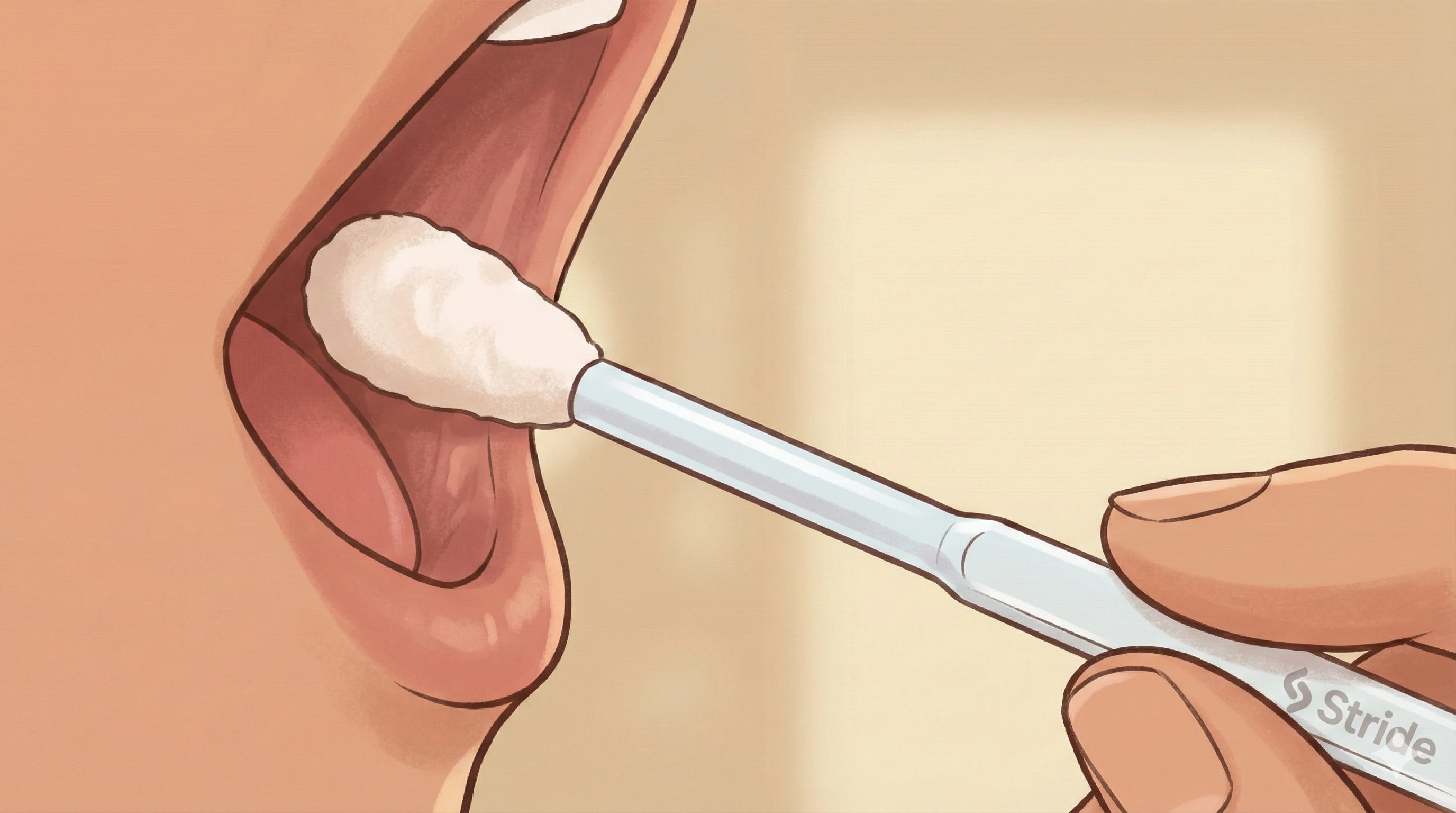
Blood sample

Collection
At-home

Often paired with
TSH, Free T4, total T3, thyroid antibodies (Anti-TPO, Anti-TG), lipid panel, glucose and metabolic markers

Fasting required
Not usually required (follow your test instructions)
Key Benefits of Testing FT3
- Measures the active thyroid hormone driving metabolism, energy and temperature regulation
- Helps clarify thyroid status when TSH and FT4 do not fully match symptoms
- Can detect patterns such as T3-predominant hyperthyroidism or low T3 states in complex illness
- Supports more precise monitoring in people on thyroid treatment where symptoms persist despite "normal" standard tests
- Adds context to weight changes, fatigue, mood, heart rate and heat or cold sensitivity
What is FT3 (Free Triiodothyronine)?
Triiodothyronine (T3) is the most potent thyroid hormone, acting directly on receptors in cells to regulate metabolism, oxygen use and many aspects of brain and body function. Most T3 in the bloodstream is bound to carrier proteins and is not immediately available to cells.
FT3 reflects the fraction of T3 that is unbound and biologically active. This free portion is what can cross into cells and trigger thyroid hormone effects. Because of that, FT3 is often considered the most immediate indicator of thyroid hormone activity at the cellular level.
What does FT3 do in the body?
FT3 does not have a separate function from T3, but it represents the form that is ready to act. Once FT3 enters cells, it binds to thyroid hormone receptors in the nucleus and influences gene expression. This shapes how much energy your cells burn, how quickly tissues renew, and how your body handles lipids, glucose and temperature.
Optimal FT3 activity supports steady energy, mental clarity, a stable heart rate, healthy hair and skin, and a comfortable tolerance for heat and cold. When FT3 is too high, people may experience anxiety, palpitations, weight loss despite good intake, heat intolerance and tremor. When FT3 is too low, fatigue, weight gain, feeling cold, low mood and brain fog are common.
Why is FT3 important for thyroid health?
TSH is often the starting point for thyroid assessment, but it reflects how the brain is responding to circulating thyroid hormone, not how much active hormone is reaching tissues. FT4 tracks the prohormone T4, which must be converted to T3 to exert its full effect. FT3 completes this picture by showing how much activated hormone is available now.
In some situations, FT3 can diverge from TSH and FT4. Examples include T3-predominant hyperthyroidism, certain forms of thyroid treatment, chronic illness and states where conversion from T4 to T3 is altered. Including FT3 makes it easier to understand why someone might still feel hypothyroid or hyperthyroid despite apparently normal screening tests.
FT3 vs FT4 and TSH: What is the difference?
TSH is a pituitary hormone that signals the thyroid to produce T4 and T3. It is sensitive to overall thyroid hormone levels but is an indirect measure. FT4 is the unbound form of thyroxine, the main hormone the thyroid secretes, which then needs to be converted into T3 in tissues.
FT3 is the unbound form of T3, the hormone with the strongest direct effect on cellular metabolism. While FT4 reflects hormone supply and TSH reflects the control system, FT3 reflects the active output. Looking at all three together gives a more nuanced view than any single number on its own.
What factors affect FT3 levels?
FT3 levels are shaped by thyroid production, peripheral conversion from T4 and how the body uses or clears thyroid hormones. Key influences include:
1. Thyroid gland function
- Overactive thyroid conditions, such as Graves disease and toxic nodules, often raise FT3, sometimes more than FT4
- Underactive thyroid, whether autoimmune or post treatment, tends to lower FT3 alongside FT4
2. T4 to T3 conversion
- Most T3 is generated outside the thyroid by enzymes that convert T4 to T3 in the liver, muscles and other tissues
- Illness, inflammation, severe stress and some medications can shift conversion toward reverse T3 or reduce T3 production, lowering FT3
3. Nutritional and metabolic status
- Low calorie intake, rapid weight loss and chronic underfuelling can reduce FT3 as the body conserves energy
- Iron, selenium, zinc and iodine status all support healthy thyroid hormone production and conversion
- Insulin resistance and metabolic health influence how tissues respond to thyroid hormones and how they are processed
4. Medications and hormones
- Thyroid hormone replacement regimens, particularly T4 only therapy, shape FT3 through conversion
- Some drugs, including steroids, amiodarone and certain psychiatric medications, can alter thyroid hormone metabolism
- Oestrogen, pregnancy and liver function can affect binding proteins and overall thyroid hormone dynamics
5. Age and life stage
- FT3 levels are typically higher in younger individuals and tend to decline with age
- Pregnancy, menopause and other hormonal transitions can change the thyroid set point and symptoms, even if FT3 stays within the reference range
Normal vs optimal FT3 levels
Most laboratories use an adult FT3 reference interval that roughly sits in the region of about 3 to 7 pmol/L, though the exact cut offs vary by lab and method. A result outside the reference range suggests either hyperthyroidism or hypothyroidism, depending on the direction and the pattern of TSH and FT4.
From an optimisation perspective, many people feel best when FT3 sits in a stable position within the range that matches their symptoms, lifestyle and broader health picture. It is possible for two people to have identical FT3 values and feel very different, which is why FT3 is best interpreted alongside TSH, FT4, antibodies and your lived experience.
Do I need to fast for an FT3 test?
In most cases, FT3 can be measured reliably without fasting. Standard practice is to take the sample in the morning, especially if it is part of a full thyroid panel.
If FT3 is being checked alongside other markers such as lipids or glucose, a clinician may recommend a fasting sample to keep those markers comparable over time. Always follow the preparation details that come with your specific test so that your results are consistent when you retest.
What can raise FT3 levels?
FT3 can be raised by increased thyroid hormone production or by enhanced conversion of T4 to T3. Potential drivers include:
- Hyperthyroid conditions such as Graves disease or toxic nodules
- Excess thyroid hormone replacement, particularly when dosing includes T3
- Early phases of thyroiditis where stored hormone is released into the bloodstream
- In some cases, strong metabolic drive or certain medications that modify thyroid hormone metabolism
Persistently high FT3 usually warrants further investigation, especially when combined with symptoms like palpitations, anxiety, heat intolerance and weight loss.
How can FT3 be supported over time? (clinician guided)
Supporting healthy FT3 is about looking at the full thyroid system and how your body is using energy. Practical, clinician aligned steps often include:
- Checking TSH, FT4 and thyroid antibodies so FT3 is not interpreted in isolation
- Addressing underlying thyroid conditions, whether autoimmune, nodular or post treatment
- Optimising nutrition, including adequate protein and key micronutrients such as iodine, selenium, zinc and iron
- Supporting metabolic health through movement, sleep quality, stress management and sustainable energy intake
For some people on thyroid medication, clinicians may adjust dose, timing or formulation based on symptoms and detailed thyroid panels that include FT3. The aim is a stable, personalised hormone pattern that fits how you feel and how you want to perform over the long term.
Stride tests that include FT3
FAQs
What is the FT3 blood test?
The FT3 blood test measures the level of free triiodothyronine, the active thyroid hormone that directly influences how your cells use energy and how fast your metabolism runs.
What is a normal FT3 range?
Adult reference ranges for FT3 typically sit in a band of around 3 to 7 pmol/L, but exact cut offs vary by laboratory and method. Your report will show the specific interval used for your sample.
Can FT3 be abnormal when TSH is normal?
Yes. FT3 can be relatively high or low while TSH remains within the reference range, particularly in early or complex thyroid conditions and in some people on thyroid hormone treatment. This is one reason why a full thyroid panel can be more informative than TSH alone.
What does a low FT3 result mean?
A low FT3 result suggests that less active thyroid hormone is available to tissues. This can occur in hypothyroidism, in severe illness, during undernutrition or when conversion from T4 to T3 is reduced. The implications depend on the pattern of TSH and FT4 and on your symptoms.
What does a high FT3 result mean?
A high FT3 result often points toward hyperthyroid activity, especially when accompanied by low TSH and symptoms such as palpitations, heat intolerance and weight loss. It may also be seen in some forms of thyroiditis or in people taking higher doses of thyroid hormone.
Do I need an FT3 (Free Triiodothyronine) test?
You might consider an FT3 test if you have thyroid type symptoms but only limited testing so far, if your TSH and FT4 do not seem to match how you feel, or if you are on thyroid treatment and want a more detailed view of active hormone. Including FT3 in your Stride panels helps you see how your thyroid is performing as part of a wider network of 500 plus biomarkers.