
Menu
-
Shop All
Contact
hey@getstride.com
Stride Health Group
Stride Health Group Ltd
Company No 05158025
Lamas Road
Badersfield
Norwich
England
NR10 5FB
UK
Extra 10% Off | Enter code GIFT at checkout


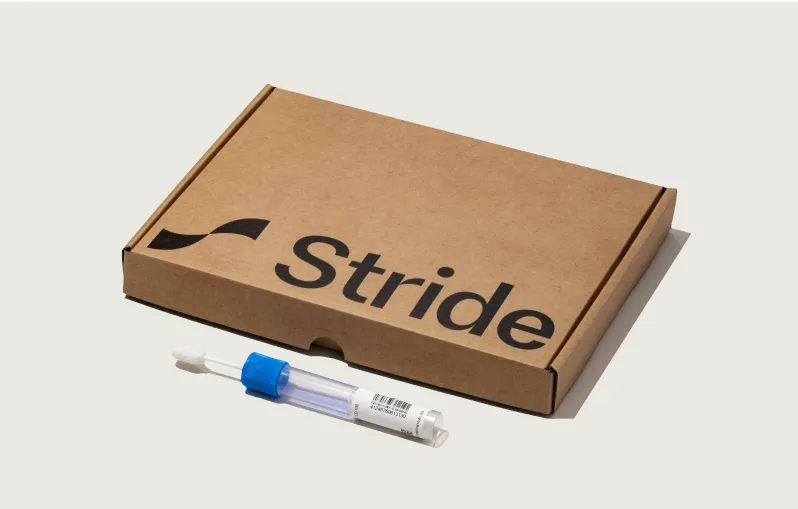





FKBP5 Gene Test (FK506 Binding Protein 5 / FKBP51)
The FKBP5 gene test analyses DNA for variants in FK506 binding protein 5 (FKBP51), a co chaperone that helps regulate glucocorticoid receptor sensitivity and the hypothalamic pituitary adrenal (HPA) axis stress response. Understanding your FKBP5 status adds genetic context to stress resilience, trauma sensitivity, inflammation, and cardiometabolic risk so you can personalise long term prevention and recovery strategies rather than guessing.

Sample type
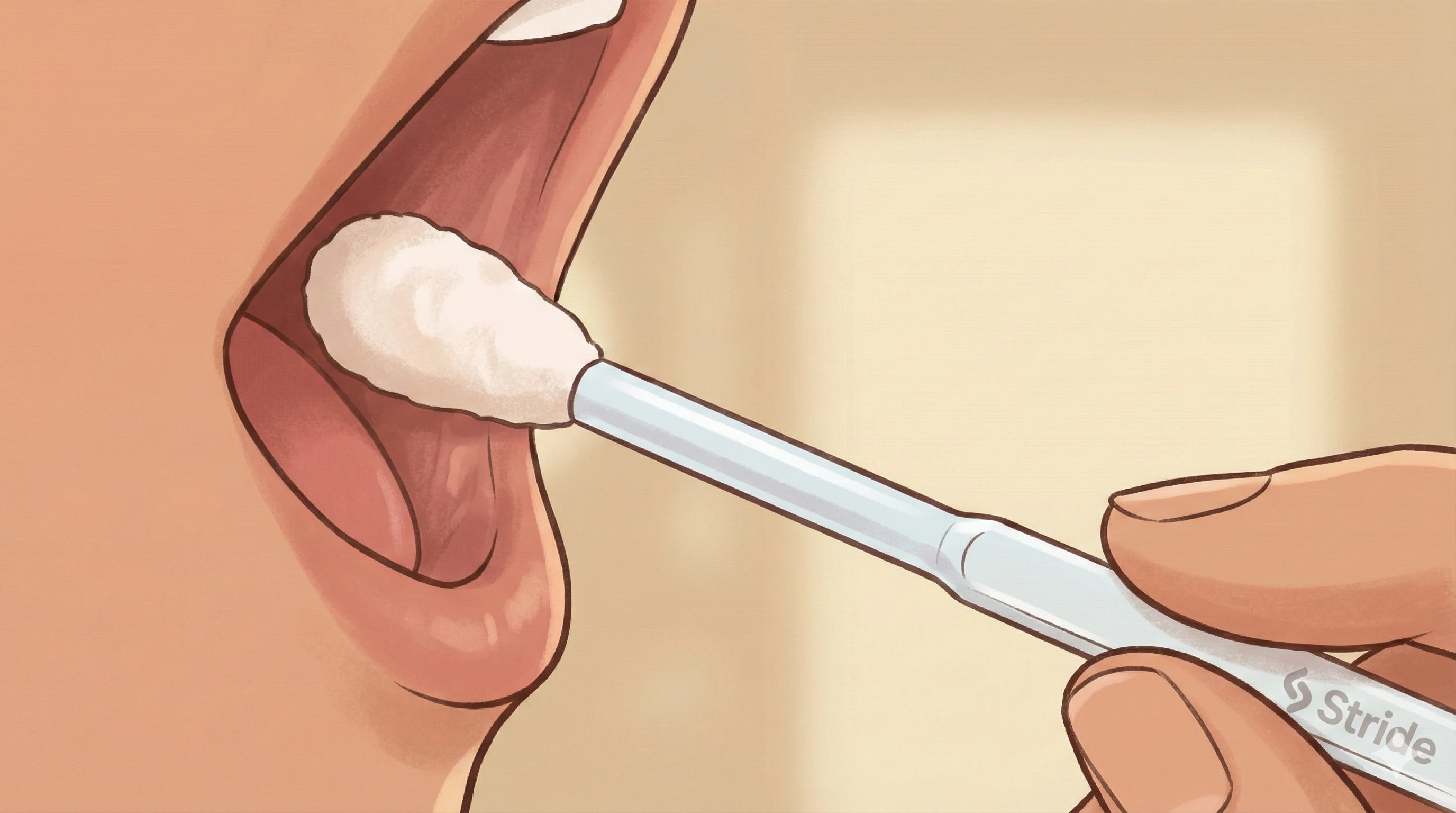
Cheek swab, Blood sample

Collection
At-home

Often paired with
Other stress and mood genes, cortisol and HPA axis markers, inflammatory markers, cardiometabolic panels, sleep data, trauma and mental health assessments

Fasting required
Not required for DNA testing; follow clinical guidance for any accompanying blood tests
Key benefits of testing FKBP5
- Identify whether you carry FKBP5 variants that alter FKBP51 expression and glucocorticoid receptor sensitivity, which can change how your HPA axis responds to acute and chronic stress.
- Help explain why some people show higher cortisol reactivity, slower recovery after stress, or stronger mood and anxiety responses to trauma, by highlighting a gene--stress interaction that can be supported rather than fixed.
- Add context to trauma related conditions such as post traumatic stress disorder, depression, anxiety, and alcohol use disorder, where specific FKBP5 polymorphisms in combination with early life stress have been linked to increased risk and distinct biological subtypes.
- Inform personalised strategies for stress dosing, therapy choices, and inflammation and cardiovascular risk management, since epigenetic upregulation of FKBP5 with aging and stress has been tied to NF κB driven inflammation and higher cardiovascular risk.
- Clarify your baseline stress hormone feedback and epigenetic sensitivity architecture alongside other biomarkers, so long term mental health and cardiometabolic plans can be built on both genetics and real time biology rather than population averages.
What is the FKBP5 gene?
FKBP5 encodes FK506 binding protein 5, also called FKBP51, a member of the immunophilin family that functions as a co chaperone within the heat shock protein 90 complex. FKBP51 interacts with glucocorticoid receptors and other steroid receptors, modulating their folding, ligand binding affinity, and nuclear translocation.
The FKBP5 locus lies on chromosome 6p21 and is highly inducible by glucocorticoids. When glucocorticoid receptors are activated by cortisol, FKBP5 expression increases, which in turn feeds back to reduce glucocorticoid receptor sensitivity. This creates an ultra short feedback loop where FKBP5 acts as a key negative regulator of HPA axis signalling. Common single nucleotide polymorphisms (SNPs) such as rs1360780, rs9296158, rs3800373, and rs9470080 have been widely studied for their roles in stress related psychiatric disorders.
What does FKBP5 do?
FKBP5 encodes FKBP51, which binds to the glucocorticoid receptor complex and reduces the receptor's affinity for cortisol while stabilising it in the cytoplasm. This reduces ligand activated translocation of the receptor to the nucleus and dampens transcription of glucocorticoid responsive genes, effectively decreasing glucocorticoid receptor sensitivity.
Under stress, cortisol rises and activates glucocorticoid receptors, which increases FKBP5 expression. Higher FKBP5 then further inhibits glucocorticoid receptor signalling, weakening negative feedback and allowing cortisol levels to remain higher for longer. FKBP5 genetic variants can shift this feedback balance, altering HPA axis reactivity and recovery. Epigenetically, early life trauma and chronic stress can reduce DNA methylation at specific FKBP5 CpG sites in risk allele carriers, leading to long lasting upregulation of FKBP5 and persistent changes in stress hormone dynamics. FKBP5 also directly promotes NF κB driven inflammatory signalling and leukocyte chemotaxis, linking stress biology to systemic inflammation and cardiovascular risk.
Why is FKBP5 important for health?
FKBP5 is central to how your body and brain register and recover from stress. Functional FKBP5 variants that enhance FKBP51 induction or alter chromatin looping around response elements have been shown to interact with childhood trauma to increase risk for depression, post traumatic stress disorder, and alcohol use disorder. These gene--environment interactions also relate to greater amygdala threat reactivity and altered connectivity in stress related brain circuits.
Beyond mental health, aging and cumulative stress are associated with epigenetic upregulation of FKBP5, which promotes NF κB activity, increases production of inflammatory cytokines, and is associated with higher prevalence of myocardial infarction. FKBP5 mRNA in blood is used as a pharmacodynamic biomarker of glucocorticoid receptor activation or antagonism in clinical trials, highlighting its role as a live readout of glucocorticoid signalling. Taken together, FKBP5 influences stress sensitivity, trauma related risk, inflammation load, and downstream cardiometabolic outcomes.
FKBP5 vs stress and mental health markers
It is easy to assume that FKBP5 testing and current cortisol or mental health scales tell you the same story, but they capture different layers of your biology. Questionnaires and clinical interviews show how you are feeling and functioning now; cortisol tests and dexamethasone suppression tests show current HPA axis behaviour; FKBP5 genotyping and methylation status reflect your inherited and acquired regulation of glucocorticoid receptor sensitivity and your long term stress imprint.
This distinction matters because you can carry FKBP5 risk alleles and have experienced trauma yet remain resilient if you have strong protective factors, supportive environments, and effective therapy. Conversely, individuals without FKBP5 risk variants can still develop severe stress related disorders when exposed to intense or repeated trauma. FKBP5 is best seen as a sensitivity and plasticity marker that shapes how experiences land in the body rather than as a simple risk switch.
Factors that modify FKBP5 effects
The influence of FKBP5 variants is strongly shaped by your life history, stress load, and health environment rather than by the gene alone, which means you have meaningful room to change the trajectory. Several modifiable factors can either buffer or amplify any genetic tendency.
- Early life stress and trauma: Childhood adversity interacts with FKBP5 risk alleles to drive allele specific demethylation and lasting upregulation, which in turn shifts HPA axis feedback and increases risk for PTSD, depression, and alcohol use disorder. Trauma informed care and early intervention are especially important for at risk individuals.
- Current stress exposure and coping capacity: Ongoing high stress without adequate recovery and support pushes cortisol and glucocorticoid signalling, which can further shape FKBP5 expression and HPA axis tuning over time. Building strong coping strategies, boundaries, and recovery practices helps to stabilise this system.
- Sleep quality and circadian alignment: Disrupted sleep and circadian misalignment increase HPA activity and sympathetic tone, making stress responses more volatile. Regular sleep schedules, light hygiene, and targeted interventions to reduce insomnia are powerful levers.
- Inflammation and cardiometabolic health: Obesity, insulin resistance, smoking, and chronic systemic inflammation all interact with FKBP5 driven NF κB activation, potentially amplifying cardiovascular risk in the context of high FKBP5 expression. Improving metabolic health and reducing inflammatory burden can dampen these effects.
- Psychotherapy and medication: Evidence based psychological treatments for trauma and depression, and pharmacological modulation of glucocorticoid receptors or FKBP5 itself, can reshape stress responses and symptoms. FKBP5 mRNA levels are already used as a biomarker of glucocorticoid receptor antagonist activity in clinical studies.
FKBP5 variants without symptoms
Yes, and that is common. Many people carry FKBP5 risk alleles such as rs1360780 T, rs9296158 G, or rs9470080 risk genotypes without ever developing PTSD, depression, or alcohol use disorder. These variants typically require significant stress or trauma exposure, especially in early life, to reveal their full impact.
Similarly, epigenetic changes at FKBP5 are not uniform across all stress exposed individuals; allele specific demethylation is most pronounced in those who both carry certain risk alleles and experience severe or repeated trauma. This means FKBP5 status is informative primarily as part of a gene--stress story, not as a stand alone diagnostic marker.
Common FKBP5 genotypes
Common FKBP5 genotypes mainly differ at regulatory SNPs in introns that affect glucocorticoid responsive transcription and chromatin looping, and thereby FKBP5 induction after stress.
- Non risk FKBP5 patterns: Genotypes in which glucocorticoid induced FKBP5 upregulation remains within a typical range, leading to standard negative feedback on the HPA axis. Stress resilience and disease risk are driven more by other genes and environment.
- Risk haplotypes (for example rs1360780 T carrier, rs9296158 G, rs3800373 T, rs9470080 T): Associated with stronger FKBP5 induction after glucocorticoid exposure, reduced negative feedback, and greater cortisol reactivity, particularly in the context of early life stress. These haplotypes show allele specific demethylation and have been linked to higher rates of PTSD, depression, and alcohol use disorder in traumatised cohorts.
- Other functional variants: Additional FKBP5 SNPs, such as rs4713916 and rs9470079, have been associated with altered cortisol responses in stress tests and differential dexamethasone suppression, but their effects appear smaller and require more research for routine use.
Preparing for an FKBP5 test
For DNA based FKBP5 testing, preparation is straightforward because your genotype does not change with daily stressors or sleep. The main consideration is ensuring FKBP5 is included within a broader mental health, stress, and cardiometabolic panel so that results are interpreted with full context rather than in isolation.
If FKBP5 is measured as mRNA expression in blood to monitor glucocorticoid receptor activation or antagonism, timing relative to medication or glucocorticoid dosing matters, and your clinical team will specify sampling times. For standard DNA genotyping as part of prevention planning, no fasting or special timing is required.
Do I need an FKBP5 test?
An FKBP5 test is most valuable when the result will help guide a personalised approach to stress, trauma recovery, and cardiometabolic prevention, ideally in collaboration with a clinician or coach. It is less helpful when ordered without considering life history, symptoms, and other biomarkers.
- History of significant trauma or chronic stress: If you have experienced early life adversity or repeated trauma and are planning a long term recovery strategy, FKBP5 genotyping can help frame your stress sensitivity and inform how aggressively to support HPA axis regulation.
- PTSD, depression, anxiety, or alcohol use disorder with trauma links: In complex clinical pictures, FKBP5 status may contribute to understanding why symptoms persist or why stress exposure feels particularly overwhelming, and may support stratification in research settings.
- Strong interest in stress related cardiometabolic risk: For individuals working proactively on heart and metabolic health with a high lifetime stress load, FKBP5 can add a mechanistic layer that supports focus on inflammation control, sleep, and psychological support.
- Advanced mental health and performance profiling: For people who already track sleep, biomarkers, and psychological load, FKBP5 sits alongside other genes as a useful lens on how to dose stress, design recovery, and choose modalities such as therapy, breathing work, or pharmacological support.
Stride tests that include FKBP5


Health Tests
Core DNA Methylation Test
5 reports: Methylation profile reports
From $229 $183.20
FAQs
What is the FKBP5 gene test?
The FKBP5 gene test analyses your DNA from blood or saliva to look for variants in FK506 binding protein 5 that influence glucocorticoid receptor sensitivity, HPA axis feedback, stress reactivity, and inflammation risk.
What does an FKBP5 gene variant mean?
Common FKBP5 variants affect how strongly FKBP5 is induced by stress hormones and how powerfully it dampens glucocorticoid receptor signalling. In the context of trauma, risk alleles can increase vulnerability to PTSD, depression, and alcohol use disorder and shape distinct endocrine profiles.
Do FKBP5 variants always cause PTSD or depression?
No; many people with FKBP5 risk alleles never develop PTSD or depression. These conditions depend on trauma severity, timing, support, other genes, and lifestyle. FKBP5 primarily changes how sensitive you are to stress, not whether you will inevitably become unwell.
Is FKBP5 testing recommended for diagnosing mental illness?
FKBP5 testing is not a stand alone diagnostic tool. It provides biological context for stress related disorders and is most useful when integrated with full clinical assessment and, where relevant, trauma focused evaluation.
Can FKBP5 affect inflammation or cardiovascular risk?
Yes; epigenetic upregulation of FKBP5 with aging and stress can promote NF κB driven inflammation and has been associated with higher cardiovascular risk. This makes inflammation control and cardiometabolic care particularly important if FKBP5 variants and high stress load are present.
Do I need an FKBP5 test?
You might consider an FKBP5 test if you have a significant trauma history, ongoing stress related symptoms, or a strong interest in stress related cardiometabolic risk and plan to use the results with a clinician or coach to shape a concrete prevention and recovery plan.
Do I need to fast for FKBP5 testing?
Fasting is not required for DNA based FKBP5 testing, although any accompanying blood tests such as cortisol curves, inflammatory markers, or metabolic panels may have specific preparation instructions that are worth following for consistent tracking.
How can I optimise FKBP5 related pathways?
Rather than trying to change the gene, focus on high quality sleep, trauma informed psychological support, regular movement, strong social connection, nutrient dense food, and inflammation and cardiometabolic control so your stress response and recovery capacity can remain robust over time, whatever your FKBP5 genotype.