
Menu
-
Shop All
Contact
hey@getstride.com
Stride Health Group
Stride Health Group Ltd
Company No 05158025
Lamas Road
Badersfield
Norwich
England
NR10 5FB
UK






eGFR (estimated Glomerular Filtration Rate)
Estimated glomerular filtration rate eGFR is a calculation that uses your creatinine blood test, age, sex, and body size to estimate how well your kidneys filter waste from your blood each minute. eGFR underpins how kidney function is staged, so it is central to spotting chronic kidney disease CKD early and guiding how aggressively to protect your kidneys and heart.

Sample type
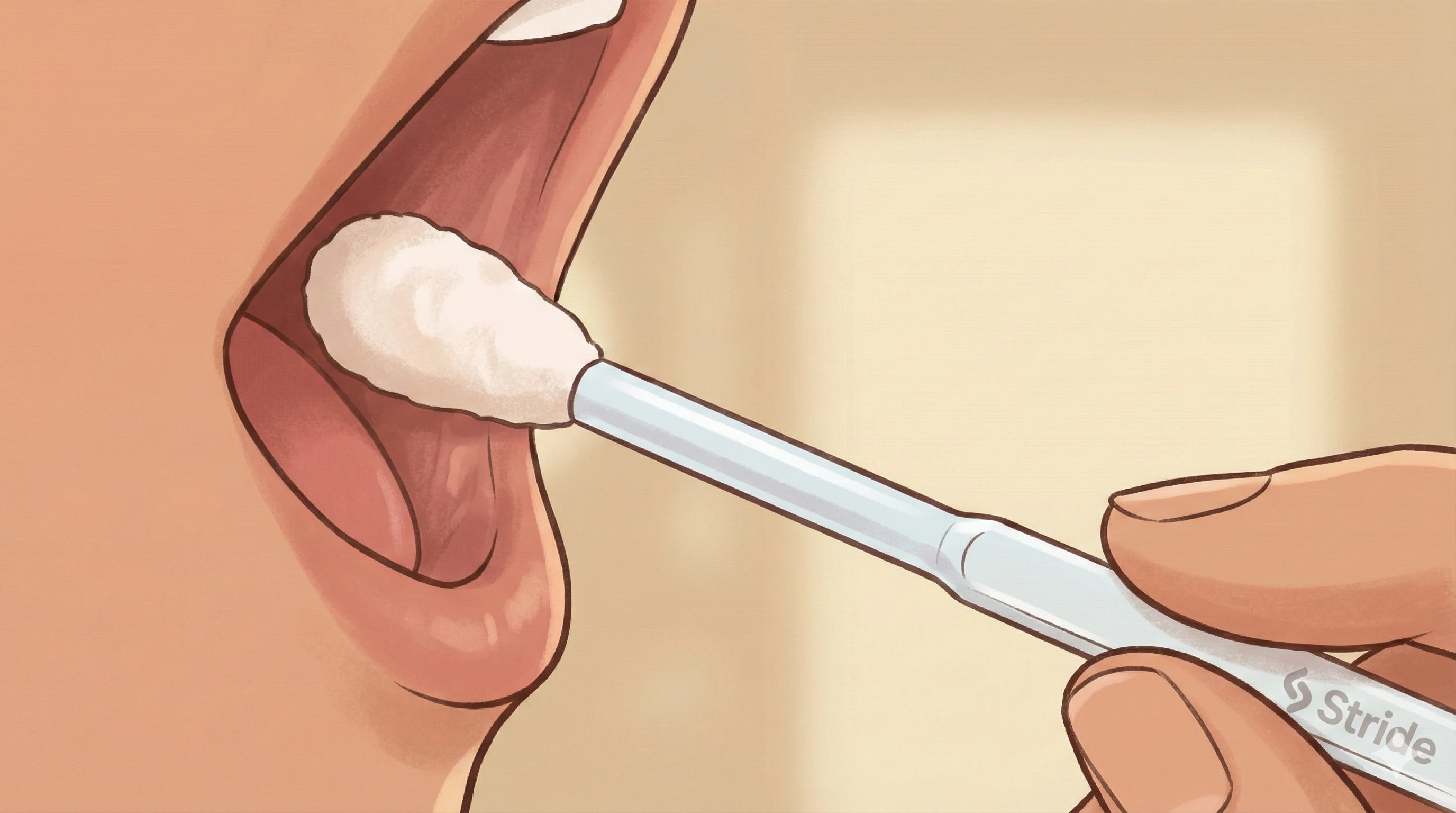
Blood sample

Collection
At-home

Often paired with
Creatinine, urea, electrolytes sodium, potassium, bicarbonate, urine albumin creatinine ratio ACR, blood pressure, HbA1c, lipids

Fasting required
0
Key benefits of testing eGFR
An eGFR blood test can help you:
- Understand how well your kidneys are filtering waste and where you sit on the CKD stage spectrum.
- Detect chronic kidney disease years before symptoms such as swelling, fatigue, or changes in urination appear.
- Guide safe prescribing and dosing of medicines that are cleared by the kidneys.
- Quantify kidney related cardiovascular risk and influence blood pressure, lipid, and glucose targets.
- Monitor the impact of lifestyle and medication changes on kidney function over time.
What is eGFR
Glomerular filtration rate GFR is the volume of blood plasma filtered by your kidney glomeruli every minute, usually adjusted to a standard body surface area of 1.73 m². Directly measuring GFR is complex, so in everyday practice clinicians use eGFR, an estimate based on creatinine and demographic variables.
Key points:
- eGFR is expressed as millilitres per minute per 1.73 m² mL/min/1.73 m².
- Formulas such as CKD EPI use creatinine, age, sex, and sometimes ethnicity to calculate eGFR.
- Some labs use cystatin C either instead of or in addition to creatinine in specific situations.
eGFR is a practical, reproducible way to approximate true kidney filtration in most adults.
What does eGFR do
eGFR does not change kidney function it quantifies it.
Clinically, eGFR is used to:
- Stage CKD from G1 to G5, which informs follow up intensity and timing of referral to nephrology.
- Track kidney function over months and years, looking for stability or decline.
- Guide safe use of contrast agents, many common medicines, and dose adjustments, especially for older adults and those with comorbidities.
Importantly, a single eGFR below 60 does not confirm CKD by itself. Chronic kidney disease is defined by a reduced eGFR or other evidence of kidney damage persisting for at least three months.
Why is eGFR important for kidney, heart, and long term health
eGFR matters because:
- Lower eGFR is associated with higher risks of kidney failure, heart disease, stroke, hospitalisation, and early mortality.
- Many people with eGFR between 30 and 59 feel well, so without testing they would not know their kidneys need protection.
- Early, targeted intervention on blood pressure, glucose, weight, lipids, and medication choices can slow or halt CKD progression and reduce cardiovascular events.
eGFR is therefore both a kidney function number and a risk signal that should trigger action, not just observation.
eGFR vs creatinine vs ACR vs creatinine clearance: what is the difference
These tests all relate to kidney function but focus on different aspects:
- Creatinine is the measured level of muscle waste in your blood. It is influenced by kidney filtration and muscle mass.
- eGFR is a calculated estimate of how many millilitres of blood your kidneys filter each minute, derived from creatinine and demographic factors.
- Urine albumin creatinine ratio ACR measures how much albumin leaks into urine relative to creatinine and is an early marker of kidney damage, especially in diabetes and hypertension.
- Creatinine clearance uses blood and 24 hour urine creatinine to estimate GFR more directly. It is used less often than eGFR in routine practice.
In short:
- eGFR describes filtration capacity.
- ACR describes filter leakiness damage.
- Together they categorise CKD stage and risk more accurately than either measure alone.
What factors affect eGFR
eGFR is influenced by anything that changes creatinine, true GFR, or both. Key factors include:
1. Age and physiology
- GFR peaks in young adulthood and gradually declines with age even in healthy people.
- A slightly lower eGFR can be normal in older adults if there is no other evidence of kidney damage.
2. Kidney disease and injury
- CKD from diabetes, high blood pressure, glomerulonephritis, polycystic kidney disease, or other causes lowers eGFR over time.
- Acute kidney injury from dehydration, severe infection, obstruction, or contrast and medicines can rapidly reduce eGFR.
3. Muscle mass and body composition
- High muscle mass raises creatinine and can lower calculated eGFR without true kidney disease.
- Low muscle mass frailty, chronic illness can make creatinine look reassuring and overestimate true GFR.
4. Diet, hydration, and medications
- Very high meat intake or creatine supplements can increase creatinine and transiently lower eGFR.
- Dehydration reduces kidney perfusion and lowers eGFR until fluid status is corrected.
- Some medicines can acutely or chronically reduce eGFR by affecting renal blood flow or causing structural damage.
5. Calculation method and lab factors
- Different formulas CKD EPI, MDRD can produce slightly different eGFR values. Most UK labs now use CKD EPI.
- eGFR is less accurate at extremes of age, size, muscle mass, or pregnancy, and in some ethnic groups, so clinical context is essential.
Can eGFR be low if I feel well
Yes. Many people with early or moderate CKD have no specific symptoms.
Typical examples:
- An eGFR between 45 and 59 G3a in someone with long standing hypertension or type 2 diabetes who feels fine day to day.
- An eGFR of 60 to 89 with raised urine ACR in a young person with diabetes, representing early kidney damage.
Because kidney disease is often silent until late stages, eGFR plus ACR and blood pressure form the cornerstone of early detection.
Normal vs reduced eGFR: what is the difference
For adults, many guidelines and UK practice interpret eGFR roughly as:
- G1: eGFR ≥ 90 mL/min/1.73 m² normal or high, but CKD only if there is other evidence of kidney damage.
- G2: eGFR 60 to 89 mildly reduced; may be normal with age unless other kidney damage is present.
- G3a: eGFR 45 to 59 mild to moderate reduction.
- G3b: eGFR 30 to 44 moderate to severe reduction.
- G4: eGFR 15 to 29 severe reduction.
- G5: eGFR < 15 kidney failure.
The significance of a given eGFR depends on:
- Age, baseline values, and rate of change.
- Presence of albuminuria ACR, blood pressure patterns, and other risk factors.
- Coexisting cardiovascular disease, diabetes, or autoimmune conditions.
Do I need to fast for an eGFR blood test
Fasting is not usually required for eGFR, since it is calculated from creatinine.
You may be asked to:
- Fast if your eGFR is part of a fasting metabolic or lipid panel.
- Avoid large meat heavy meals and intense exercise in the day before testing to keep creatinine closer to your typical baseline.
How can eGFR and kidney health be improved or protected clinician guided
While lost kidney function cannot usually be fully recovered, eGFR decline can often be slowed or stabilised. Depending on your situation, clinician guided strategies may include:
- Achieving and maintaining tight blood pressure control, often with ACE inhibitors or ARBs that protect kidney filters.
- Optimising blood glucose in diabetes, including use of kidney protective medicines such as SGLT2 inhibitors where appropriate.
- Managing weight, waist circumference, and lipids to reduce cardio renal strain.
- Avoiding or adjusting nephrotoxic medicines and contrast where alternatives exist.
- Stopping smoking, moderating alcohol, staying physically active, and maintaining good sleep and stress management.
- Regularly monitoring eGFR, creatinine, ACR, and blood pressure to identify and act on any changes early.
Stride tests that include eGFR
FAQs
What is the eGFR (estimated Glomerular Filtration Rate) blood test
The eGFR blood test is a calculation based on your creatinine result, age, sex, and body size that estimates how much blood your kidneys filter each minute. It is the main number doctors use to assess kidney function and stage chronic kidney disease.
What is a normal eGFR level
For most adults, an eGFR of 90 mL/min/1.73 m² or higher is considered normal if there is no other evidence of kidney damage. Values between 60 and 89 can also be normal, particularly in older adults, provided urine ACR and other tests are reassuring.
What is an optimal eGFR level for health
Optimal eGFR is a stable value appropriate for your age, ideally above 90 in younger adults and above 60 in older adults without albuminuria or other signs of kidney damage. The best target for you depends on your age, muscle mass, medical conditions, and overall risk profile and is best interpreted over time rather than from a single reading.
Is eGFR better than creatinine for checking kidney function
Yes. eGFR gives a clearer picture of kidney function than creatinine alone, because it accounts for age and sex, and sometimes other factors. Creatinine on its own can be misleading in people with very high or very low muscle mass, whereas eGFR puts the creatinine result into more meaningful context.
Can eGFR be low if my creatinine is normal
It is uncommon but possible around the borderline between "normal" and "abnormal" ranges, particularly if your creatinine is near the upper limit for your lab and demographic and you have other risk factors. In practice, laboratories report eGFR alongside creatinine, so any borderline reductions are flagged even when creatinine is technically in range.
Do I need eGFR testing
You may benefit from an eGFR calculation if you have high blood pressure, diabetes, cardiovascular disease, a family history of kidney disease, are taking medicines that can affect the kidneys, or as part of a comprehensive health check. eGFR is also monitored regularly in established CKD to track progression and adjust treatment.
Do I need to fast for an eGFR test
Fasting is not usually needed for eGFR itself, but you may be asked to fast if creatinine is measured as part of a fasting panel. Avoiding large meat heavy meals and intense exercise immediately beforehand can help ensure your creatinine and eGFR reflect your usual baseline.
How can I improve or protect my eGFR
You can protect your eGFR by controlling blood pressure and blood sugar, maintaining a healthy weight and waist size, moderating salt and processed foods, staying active, not smoking, moderating alcohol, and working with your clinician to choose kidney friendly medicines where possible. Regular monitoring helps show whether your efforts are keeping your kidneys stable.
Do I need an eGFR (estimated Glomerular Filtration Rate) test
If you want to know how well your kidneys are working, or you have risk factors such as hypertension, diabetes, cardiovascular disease, or a family history of kidney problems, discussing an eGFR calculation from your blood tests is a practical step. Within StrideOne, eGFR is reported alongside hundreds of other biomarkers, helping you see exactly how kidney function fits into your heart, metabolic, and long term health story.