
Menu
-
Shop All
Contact
hey@getstride.com
Stride Health Group
Stride Health Group Ltd
Company No 05158025
Lamas Road
Badersfield
Norwich
England
NR10 5FB
UK
Extra 10% Off | Enter code GIFT at checkout


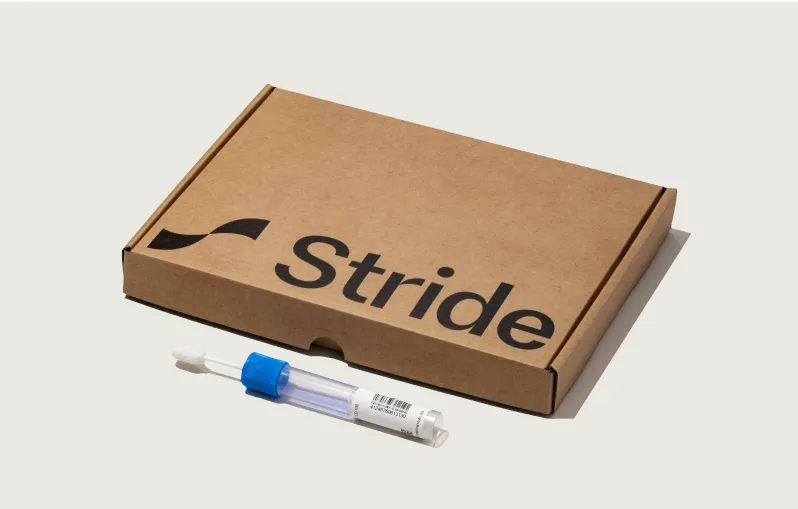






CYP4F2 Gene Test (Vitamin K, Blood Pressure & Warfarin Response)
The CYP4F2 gene test analyses DNA for variants in the cytochrome P450 4F2 gene that influence vitamin K metabolism, blood pressure regulation, and dose requirements for common anticoagulant drugs such as warfarin. Understanding your CYP4F2 status adds genetic context to clotting risk, hypertension, and cardiovascular events, and can help you and your clinician personalise prevention and treatment instead of relying on trial and error.


Sample type
Cheek swab, Blood sample

Collection
At-home

Often paired with
Vitamin K status, INR and clotting tests, liver and kidney function, lipid profile, blood pressure monitoring, other pharmacogenes such as VKORC1 and CYP2C9

Fasting required
Not required for DNA testing; follow clinical guidance for any accompanying blood tests
Key benefits of testing CYP4F2
- Identify whether you carry the common CYP4F2 V433M (rs2108622) variant or other changes that alter vitamin K1 oxidation and affect warfarin dose requirements.
- Help explain why you may need a slightly higher or lower warfarin maintenance dose than expected, or why INR control has been challenging despite good adherence.
- Provide additional context for blood pressure regulation and risk of hypertension or ischemic stroke in some populations, through CYP4F2's role in producing 20-HETE and metabolising polyunsaturated fatty acids.
- Inform personalised strategies around vitamin K intake, anticoagulant choice and dosing, and cardiovascular risk management, especially when combined with VKORC1, CYP2C9, and blood pressure data.
- Clarify your baseline CYP4F2-related risk profile alongside clotting tests, lipids, liver function, and blood pressure, so long-term heart, brain, and vascular health plans can be better targeted.
What is the CYP4F2 gene?
CYP4F2 encodes cytochrome P450 4F2, a monooxygenase enzyme expressed mainly in the liver and kidney, with additional expression in vascular and immune tissues. It carries out omega-hydroxylation of several endogenous substrates, including arachidonic acid, leukotriene B4, tocopherols (vitamin E), and vitamin K1.
By influencing the metabolism of vitamin K1 and key eicosanoids such as 20-HETE, CYP4F2 plays a role in coagulation, vascular tone, sodium handling in the kidney, and inflammatory signalling. The common V433M polymorphism has been associated with differences in warfarin dose requirements and with blood pressure and stroke risk in some cohorts.
What does CYP4F2 do?
CYP4F2 sits at a key junction between lipid mediators, vitamin K metabolism, and renal regulation of blood pressure. In the kidney, CYP4F2 is a major source of 20-HETE, a signalling lipid that modulates sodium transport and vascular tone, contributing to natriuresis and blood pressure control. In the liver, CYP4F2 acts as a vitamin K1 oxidase and participates in the catabolism of vitamin K, thereby influencing hepatic vitamin K stores and the sensitivity of vitamin K--dependent clotting factors to warfarin.
Through these actions, CYP4F2 helps set the baseline balance between clotting and bleeding, and between blood pressure, vascular responses, and sodium balance. Variants that reduce CYP4F2 activity tend to lower 20-HETE production and vitamin K oxidation, which can increase vitamin K availability and modestly increase warfarin requirements, while also influencing blood pressure and cardiovascular risk in some groups.
Why is CYP4F2 important for health?
CYP4F2 contributes to three interconnected systems: anticoagulation and vitamin K biology, renal and vascular regulation of blood pressure, and longer-term cardiovascular and cerebrovascular risk. In people treated with warfarin or similar coumarin anticoagulants, CYP4F2 variants such as V433M account for a small but clinically meaningful proportion of dose variability, on top of VKORC1 and CYP2C9.
Beyond anticoagulation, CYP4F2-driven changes in 20-HETE and fatty acid metabolism have been associated in research with differences in blood pressure levels, prevalence of hypertension, and risk of ischemic stroke, particularly in some male populations. As a result, CYP4F2 sits at the intersection of clotting, vascular biology, and kidney function and can inform how aggressively to manage modifiable risk factors.
CYP4F2 vs blood pressure and INR
It is easy to assume that CYP4F2 genotyping, INR, vitamin K, and blood pressure readings all provide the same information, but they answer different questions. CYP4F2 genotyping shows your inherited capacity to metabolise vitamin K1 and certain eicosanoids; it remains constant throughout life. It helps predict tendencies in warfarin dose requirements and aspects of blood pressure regulation but does not replace monitoring.
INR and vitamin K--dependent clotting tests show how anticoagulation is working right now under your current medication, diet, and CYP4F2, VKORC1, and CYP2C9 background. Blood pressure readings and kidney function tests reveal how your cardiovascular and renal systems are performing in real time. You can carry CYP4F2 variants but maintain excellent control with appropriate dosing and lifestyle, and you can have typical CYP4F2 genotypes yet experience issues if other genes, medications, or lifestyle factors exert stronger effects. The most robust approach combines genotype with regular monitoring.
Factors that modify CYP4F2 effects
The impact of CYP4F2 variants is shaped by vitamin K intake, co-medications, other pharmacogenes, and broader cardiovascular risk factors far more than by the gene alone. Several modifiable factors can either buffer genetic effects or amplify them.
- Vitamin K intake and dietary pattern: The amount, consistency, and sources of vitamin K in your diet strongly influence warfarin response and clotting. CYP4F2 variants that reduce vitamin K oxidation can make you more sensitive to swings in intake.
- Other pharmacogenes and drugs: VKORC1 and CYP2C9 variants have larger effects on warfarin dose than CYP4F2, and many drugs interact with warfarin and CYP systems. Genotype-guided dosing needs to consider this broader context.
- Blood pressure and salt intake: Salt intake, weight, and kidney health interact with CYP4F2-driven differences in 20-HETE to shape blood pressure and hypertension risk. Managing these can reduce the impact of less favourable variants.
- Liver and kidney function: Because CYP4F2 is expressed in these organs, liver disease or kidney impairment can change its effective activity and modify warfarin response and vascular effects.
- Smoking, alcohol, and inflammation: These factors influence oxidative stress, vascular integrity, and, in some cases, CYP expression, which can amplify or mask CYP4F2-related patterns.
- Overall cardiovascular risk profile: Lipids, glucose control, obesity, and other risk factors often have larger direct impacts on event risk, but may interact with CYP4F2 in shaping stroke and hypertension outcomes.
CYP4F2 variants without symptoms
Yes. Most people with CYP4F2 variants, including V433M, will never notice symptoms specifically attributable to this gene. Its effects are subtle and usually appear only when you are exposed to particular environments or treatments, such as warfarin therapy or high salt intake in the context of other cardiovascular risks.
In those on warfarin, CYP4F2 variation generally manifests as a modest difference in the stable maintenance dose required to reach the target INR, rather than obvious day-to-day sensations. In blood pressure and cardiovascular health, the gene acts as a background modifier that can slightly tilt risk in one direction or another when other factors are present.
Common CYP4F2 genotypes
CYP4F2 genotypes mainly differ in how they influence enzyme activity toward vitamin K1 and 20-HETE and, consequently, warfarin dose and aspects of cardiovascular risk. Understanding your pattern helps you and your clinician interpret dose response and risk in context.
- V433M (rs2108622) functional variant: This well-studied polymorphism alters CYP4F2 activity and is associated with slightly higher warfarin dose requirements and modest shifts in vitamin K handling. Some studies also link it to blood pressure and ischemic stroke risk in specific populations.
- Other coding and regulatory variants: Additional nonsynonymous and promoter variants can influence CYP4F2 expression or function and are being explored for roles in vitamin K, eicosanoid, and tocopherol metabolism.
- Haplotype combinations: Clusters of CYP4F2 variants may have cumulative effects on enzyme activity, although most clinical pharmacogenomic work focuses on V433M.
- Reference or typical activity patterns: Many individuals carry genotypes associated with average CYP4F2 function and rely predominantly on VKORC1, CYP2C9, diet, and lifestyle as main determinants of warfarin response and cardiovascular risk.
Preparing for a CYP4F2 test
For DNA-based CYP4F2 testing, preparation is straightforward because your genotype does not change with diet, medication, or recent vitamin K intake. The key step is clarifying how the results will be used, such as informing warfarin dosing, evaluating cardiovascular risk, or guiding prevention strategies.
Cheek swab, saliva, or blood-based CYP4F2 genotyping does not require fasting. If genotyping is combined with coagulation tests, vitamin K, liver and kidney function, or blood pressure measurements, follow the preparation guidance for those assessments, such as maintaining stable diet patterns and following medication instructions around test timing.
Do I need a CYP4F2 test?
A CYP4F2 test is most helpful when the result will influence how you approach anticoagulation and cardiovascular risk management, rather than as a curiosity. It becomes particularly informative in the context of warfarin therapy and in high-risk cardiovascular profiles.
- Current or planned warfarin therapy: CYP4F2 genotyping, alongside VKORC1 and CYP2C9, can help explain dose variability and support more accurate starting and maintenance doses under clinical guidance.
- History of unstable INR: If INR has been difficult to stabilise despite good adherence to medication and diet, CYP4F2 and other pharmacogenes may provide useful additional context.
- Elevated cardiovascular or stroke risk: In some populations, CYP4F2 variants have been associated with blood pressure and stroke risk. While not determinative, they can help justify stronger attention to modifiable risk factors.
- Comprehensive prevention and longevity strategies: For those using broad DNA and blood testing, CYP4F2 adds a vitamin K, eicosanoid, and pharmacogenomic dimension that complements methylation, lipid, and blood pressure markers.
Stride tests that include CYP4F2


Health Tests
Core DNA Methylation Test
5 reports: Methylation profile reports
From $229 $183.20
FAQs
What is the CYP4F2 gene test?
The CYP4F2 gene test analyses your DNA from blood or saliva to look for variants in the cytochrome P450 4F2 gene that influence vitamin K metabolism, production of 20-HETE, and response to anticoagulant drugs such as warfarin, with implications for blood pressure, clotting, and cardiovascular risk.
What does a CYP4F2 variant mean?
Common variants such as V433M can reduce CYP4F2 activity, leading to higher vitamin K availability and slightly higher warfarin dose requirements, and may also affect blood pressure and stroke risk in some populations through changes in eicosanoid signalling.
Do CYP4F2 variants always cause problems with warfarin or blood pressure?
No. CYP4F2 variants modestly shift your dose requirements and risk profile but do not determine outcomes on their own. Careful INR monitoring, attention to vitamin K intake, and management of blood pressure and other risk factors can maintain good control regardless of genotype.
Is CYP4F2 testing used to diagnose disease?
CYP4F2 testing is not used to diagnose specific diseases. It is a pharmacogenomic and risk-modifying marker that provides additional context for anticoagulant dosing and cardiovascular prevention, especially when combined with other genes, lab markers, and clinical assessment.
Do I need a CYP4F2 test?
You might consider a CYP4F2 test if you are on or likely to start warfarin, have a history of unstable INR despite good adherence, have significant cardiovascular or stroke risk where additional insight could influence prevention strategies, or are building a comprehensive, genetics-informed longevity plan.
Do I need to fast for CYP4F2 testing?
Fasting is not required for DNA-based CYP4F2 testing. If coagulation, vitamin K, or other blood tests are done at the same time, follow the preparation guidance for those specific panels.
How can I optimise my health if I carry CYP4F2 variants?
Rather than trying to change the gene, focus on working with your clinician for genotype-informed warfarin dosing if relevant, keeping vitamin K intake consistent, managing blood pressure, maintaining a heart-healthy diet and body composition, avoiding smoking, moderating alcohol, staying active, and tracking cardiovascular and clotting markers over time so you can see how consistent, targeted changes reshape your long-term heart and brain health.