
Menu
-
Shop All
Contact
hey@getstride.com
Stride Health Group
Stride Health Group Ltd
Company No 05158025
Lamas Road
Badersfield
Norwich
England
NR10 5FB
UK
Extra 10% Off | Enter code GIFT at checkout


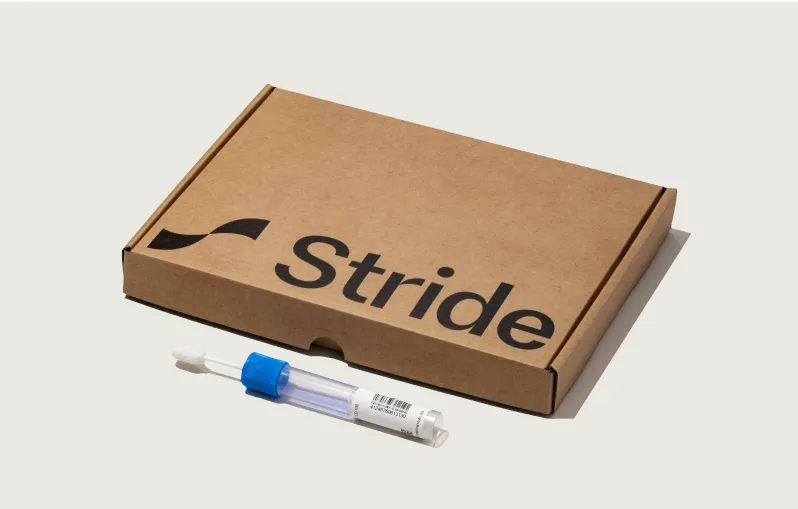






CRP Gene Test (C-Reactive Protein)
The CRP gene test analyses DNA for variants in the C-reactive protein gene that influence how much CRP your liver produces in response to inflammatory signals. Understanding your CRP genetic profile adds context to high-sensitivity CRP (hs-CRP) blood levels, inflammation-related cardiovascular risk, and how strongly lifestyle or therapies may move your inflammatory set point.


Sample type
Cheek swab, Blood sample

Collection
At-home

Often paired with
hs-CRP blood test, IL-6, TNF, full blood count, lipid panel, fasting glucose and HbA1c, liver function tests, blood pressure and body composition, other inflammatory and cardiometabolic genes

Fasting required
Not required
Key benefits of testing CRP
- Identify whether you carry CRP promoter and regulatory variants that shift baseline hs‑CRP levels higher or lower at rest and after stressors such as exercise, illness, or surgery.
- Help explain why your hs‑CRP runs higher or lower than expected compared with others with similar lifestyle, weight, and health status.
- Inform how intensively to pursue inflammation‑lowering strategies through nutrition, weight management, sleep, stress, and targeted therapies, and how closely to track hs‑CRP over time.
- Provide context for cardiovascular and metabolic risk prediction that goes beyond a single hs‑CRP reading, by separating genetic predisposition from modifiable drivers of inflammation.
- Clarify your inflammatory "set point" alongside actual hs‑CRP levels and cardiometabolic markers, so long‑term heart, brain, and immune strategies are tailored to your biology.
What is the CRP gene?
CRP encodes C‑reactive protein, a pentraxin family protein produced almost entirely by the liver in response to pro‑inflammatory cytokines, particularly interleukin‑6. Circulating CRP rises rapidly and substantially during acute inflammation and infection and can remain modestly elevated in chronic low‑grade inflammatory states.
CRP binds to phosphocholine on damaged cells and pathogens, activates the classical complement pathway, and enhances clearance of cellular debris and microbes. The CRP gene contains promoter, intronic, and untranslated region variants that influence how strongly it is transcribed in response to inflammatory stimuli, which in turn shifts baseline and stimulated hs‑CRP levels.
What does CRP do?
CRP sits at a central junction between innate immunity, tissue repair, and vascular inflammation. When the body senses injury, infection, or metabolic stress, cytokines such as IL‑6 stimulate hepatocytes to produce CRP. CRP binds to altered or apoptotic cells and certain pathogens, flags them for phagocytosis, and activates complement, assisting the immune system in cleanup and defence.
In the vasculature, CRP is more than a passive marker. It associates with atherosclerotic plaques and has been shown in experimental systems to influence endothelial function, nitric oxide availability, and vascular smooth muscle activity. Persistent elevation of hs‑CRP within the "high‑normal" range reflects chronic low‑grade inflammation and is closely tied to cardiometabolic and heart failure risk.
Why is CRP important for health?
CRP contributes to three interconnected systems: acute inflammatory response, chronic low‑grade inflammation, and cardiovascular and metabolic risk. Clinically, hs‑CRP is widely used as a biomarker to stratify risk of coronary artery disease, stroke, and other cardiovascular events in apparently healthy individuals and in those with known disease.
Elevated hs‑CRP is associated with higher risk of myocardial infarction, stroke, peripheral artery disease, and heart failure, and with worse outcomes after events. It correlates with central obesity, insulin resistance, and metabolic syndrome and often tracks with other inflammatory markers. CRP gene variation influences resting hs‑CRP levels, but chronic lifestyle and disease processes remain the dominant drivers of risk.
CRP gene vs hs‑CRP blood test and other inflammation markers
It is easy to assume that CRP genotyping and hs‑CRP blood levels capture the same thing, but they provide different information. CRP genotyping examines inherited variants at the CRP locus that affect how strongly the gene is expressed. These variants shift your baseline tendency for higher or lower hs‑CRP but do not directly tell you your current inflammatory state.
An hs‑CRP blood test measures the concentration of CRP in your blood at a given point in time and reflects the combined effects of genetics, adiposity, infections, lifestyle, medications, and co‑existing diseases. Someone with "high‑expression" CRP genotypes can still achieve low hs‑CRP through weight management, activity, and targeted strategies, while someone with "low‑expression" genotypes may have raised hs‑CRP if obesity, metabolic dysfunction, or chronic inflammation are present. Measuring both genotype and hs‑CRP over time provides the clearest picture.
What factors modify the effects of CRP variants?
The influence of CRP variants is shaped largely by lifestyle, metabolic health, and other inflammatory drivers. Several modifiable factors can either buffer genetic effects or amplify them.
- Adiposity and body composition: Visceral fat is a major source of inflammatory cytokines that drive CRP production. Higher waist circumference and BMI raise hs‑CRP regardless of genotype, with greater effect when high‑expression CRP variants are present.
- Diet quality and glycaemic control: Diets rich in ultra‑processed foods, refined carbohydrates, and certain fats are associated with higher hs‑CRP, while patterns rich in whole plants, fibre, omega‑3 fats, and polyphenols tend to lower chronic inflammation.
- Physical activity and fitness: Regular physical activity lowers long‑term hs‑CRP and improves endothelial health, even though intense exercise transiently increases CRP in the short term. Sedentary behaviour amplifies CRP‑driven risk.
- Smoking, pollution, and sleep: Smoking, air pollution exposure, poor sleep, and chronic stress all raise inflammatory tone and hs‑CRP, and their impact can overshadow modest genetic differences.
- Infections and chronic inflammatory diseases: Autoimmune conditions, chronic infections, and inflammatory disorders markedly increase hs‑CRP. In these settings, CRP genotype is minor compared to disease activity and treatment.
- Medications and targeted therapies: Lipid‑lowering drugs, some antihypertensives, anti‑inflammatory agents, and newer anti‑cytokine therapies can lower hs‑CRP and modify risk independent of CRP gene variation.
Can you have CRP gene variants without symptoms?
Yes. Many people carry CRP variants that raise or lower hs‑CRP without any obvious symptoms, particularly if their weight, metabolic health, and lifestyle are favourable. The gene modifies markers and risk probability rather than producing a distinct syndrome.
Subtle effects may be visible only in laboratory data or when large groups are compared statistically. Even for individuals with variants linked to higher hs‑CRP, the absolute risk remains highly modifiable through diet, activity, body composition, blood pressure control, and smoking status.
CRP genotypes: how do common variants differ?
CRP genotypes mainly differ in promoter, intronic, and untranslated region variants that change transcription and regulation of CRP expression. Understanding your pattern helps you interpret hs‑CRP levels in context.
- Promoter polymorphisms (for example rs2794521 and rs3091244): Changes in the promoter can increase or decrease transcriptional activity, leading to higher or lower basal and stimulated CRP levels. Some promoter alleles are associated with greater hs‑CRP variance and, in some cohorts, modestly altered coronary heart disease risk.
- 3′UTR and other regulatory variants (for example rs1205, rs1130864): Variants in untranslated regions and introns influence mRNA stability and expression and are consistently associated with higher or lower hs‑CRP in multiple populations.
- Haplotype patterns: Combinations of CRP SNPs form haplotypes that can be more predictive of hs‑CRP levels than single variants, explaining part of the heritable component of CRP.
- Reference or neutral patterns: Many people carry CRP genotype combinations that sit near the population average, with hs‑CRP levels then shaped mainly by lifestyle and clinical factors.
How do I prepare for a CRP gene test?
For DNA‑based CRP testing, preparation is simple because genotype does not change with infections, diet, or medications. The key step is clarifying how you plan to use the information, for example to interpret hs‑CRP readings more precisely or to motivate inflammation‑focused lifestyle changes.
Cheek swab, saliva, or blood‑based CRP genotyping does not require fasting. If you are combining CRP genotyping with hs‑CRP, lipid, glucose, or other blood tests, follow the preparation guidance for those tests, which often include fasting and scheduling the blood draw when you are not acutely unwell, to capture a stable baseline.
Do I need a CRP gene test?
A CRP gene test is most useful when the result will change how you interpret and act on hs‑CRP levels and cardiovascular risk, rather than as a curiosity. It becomes particularly informative when combined with actual hs‑CRP measurements, body composition, and cardiometabolic data.
- Borderline or persistently elevated hs‑CRP: If hs‑CRP stays raised despite lifestyle changes, CRP genotyping can help distinguish genetic baseline from modifiable drivers and guide how intensively to focus on inflammation.
- Strong family history of cardiovascular disease: In families with premature heart disease or stroke, CRP and other inflammatory genes add context to traditional risk factors and may support earlier prevention.
- Complex cardiometabolic risk profiles: In people with metabolic syndrome, autoimmune disease, or multiple risk factors, CRP genotype and hs‑CRP help refine risk communication and track response to interventions.
- Comprehensive prevention and longevity planning: For individuals building broad DNA and blood testing programmes, CRP sits alongside IL6, TNF, and lipid genes as a central lever in inflammation‑centred prevention.
Stride tests that include CRP


Health Tests
Core DNA Methylation Test
5 reports: Methylation profile reports
From $229 $183.20
FAQs
What is the CRP gene test?
The CRP gene test analyses your DNA from blood or saliva to look for variants in the C‑reactive protein gene that influence how much CRP your liver produces in response to inflammation, which helps explain differences in hs‑CRP levels and cardiovascular risk between individuals.
What does a CRP gene variant mean?
Common CRP promoter and regulatory variants can raise or lower baseline hs‑CRP. They modestly shift your inflammatory set point but are only one part of the picture alongside weight, lifestyle, infections, and other genes.
Do CRP gene variants always cause high CRP or cardiovascular disease?
No. CRP variants adjust your tendency but do not guarantee high hs‑CRP or events. Many people with "high‑CRP" genotypes maintain low hs‑CRP and good cardiovascular health with supportive lifestyle choices, and others with "low‑CRP" genotypes can have raised hs‑CRP if other risk factors are present.
Is CRP gene testing used to diagnose disease?
CRP gene testing is not a diagnostic tool for specific diseases. It is a risk and trait marker that adds context when evaluating hs‑CRP, inflammatory status, and cardiovascular risk as part of a wider clinical assessment.
Do I need a CRP gene test?
You might consider a CRP gene test if you have persistently raised hs‑CRP, a strong family history of cardiovascular disease, complex metabolic or inflammatory risk, or if you are building a detailed prevention and performance plan where inflammation is a central focus.
Do I need to fast for CRP gene testing?
Fasting is not required for DNA‑based CRP testing. If hs‑CRP, lipids, or other blood tests are done at the same time, follow the preparation guidance for those specific tests.
How can I optimise my health if I carry CRP risk variants?
Rather than trying to change the gene, focus on maintaining a healthy body composition, following an anti‑inflammatory whole‑food diet, exercising regularly, protecting sleep and stress balance, avoiding smoking, moderating alcohol, and tracking hs‑CRP and cardiometabolic markers over time so you can see how consistent, targeted changes reshape your long‑term cardiovascular and inflammatory risk.