
Menu
-
Shop All
Contact
hey@getstride.com
Stride Health Group
Stride Health Group Ltd
Company No 05158025
Lamas Road
Badersfield
Norwich
England
NR10 5FB
UK
Extra 10% Off | Enter code GIFT at checkout


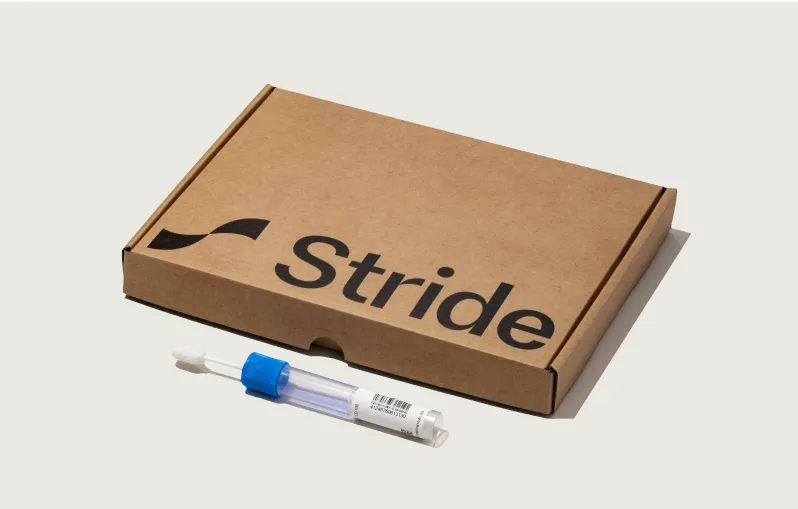




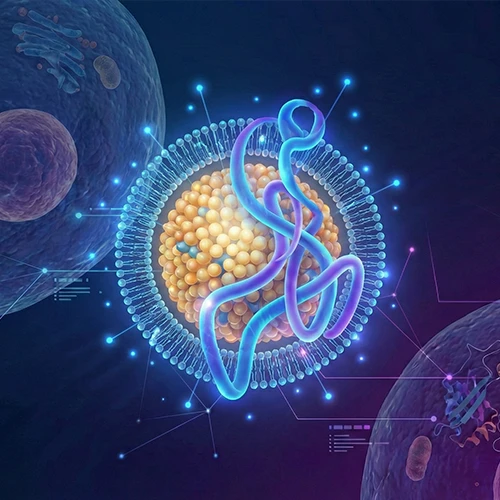

COL1A1 Gene Test (Collagen Type I Alpha 1)
The COL1A1 gene test analyses DNA for variants in the collagen type I alpha 1 gene that influence the quantity and quality of type I collagen in bone and connective tissues. Understanding your COL1A1 status adds genetic context to bone mineral density, fracture risk, and connective tissue resilience, so you can personalise prevention, nutrition, and training loads rather than relying on trial and error.


Sample type
Cheek swab, Blood sample

Collection
At-home

Often paired with
Bone mineral density (DXA), vitamin D, calcium and parathyroid hormone, alkaline phosphatase and bone turnover markers, collagen and joint markers, body composition, fall and strength assessments, other bone and collagen genes (for example COL1A2, VDR)

Fasting required
Not required
Key benefits of testing COL1A1
- Identify whether you carry functional COL1A1 variants at the Sp1 binding site and related regions that are associated with lower bone mineral density and higher risk of osteoporotic fracture in some populations.
- Help explain why your bones may be more fragile than expected for your age, sex, and lifestyle, or why you have a strong or weak response to weight‑bearing exercise and bone‑active therapies.
- Inform personalised strategies around calcium, vitamin D, protein, and overall nutrition, as well as strength and impact training, to build and preserve bone strength.
- Provide context for connective tissue resilience in tendons, ligaments, skin, and other collagen‑rich structures as you age.
- Clarify your baseline bone biology alongside DXA, bone turnover markers, falls and fracture history, and hormone status, so long‑term skeletal health and performance plans can be tailored to your physiology.
What is the COL1A1 gene?
COL1A1 encodes the pro‑alpha 1 chain of type I collagen, the most abundant collagen in the body. Type I collagen is a fibril‑forming collagen that provides tensile strength and structural support in bone, tendon, ligaments, skin, dentin, and the cornea. Each type I collagen molecule is a triple helix made from two alpha 1 chains, encoded by COL1A1, and one alpha 2 chain, encoded by COL1A2.
Mutations in COL1A1 are a well‑established cause of osteogenesis imperfecta, a group of brittle‑bone disorders, as well as certain types of Ehlers‑Danlos syndrome and rare connective tissue conditions. Common regulatory polymorphisms, especially at transcription factor binding sites such as the Sp1 site, do not cause overt genetic disease but subtly alter collagen synthesis and are linked to idiopathic osteoporosis and fracture risk in the general population.
What does COL1A1 do?
COL1A1 sits at the core of type I collagen synthesis. Osteoblasts, fibroblasts, and other connective tissue cells transcribe COL1A1 and COL1A2 to produce procollagen chains, which assemble into triple helices, are secreted, and then processed into mature collagen fibrils that mineralise and form the structural backbone of bone and other tissues.
Regulatory variants at COL1A1 can alter transcription and the balance between alpha 1 and alpha 2 chains. The well‑studied Sp1 binding site polymorphism increases Sp1 transcription factor binding and leads to higher COL1A1 mRNA relative to COL1A2. This shift can drive formation of collagen alpha 1 homotrimers and change mineralisation patterns, producing bone that may have normal or mildly reduced density but reduced material strength and a higher fracture risk.
Why is COL1A1 important for health?
COL1A1 contributes to three interconnected systems: bone mass and mineral density, bone quality and fracture resistance, and the integrity of collagen‑rich connective tissues. Genetic disruption in COL1A1 can cause osteogenesis imperfecta with markedly fragile bones, while common regulatory variants fine‑tune bone density and quality in the broader population.
The Sp1 polymorphism and related variants have been associated in many cohorts with lower bone mineral density, reduced bone strength, and higher risk of vertebral and non‑vertebral osteoporotic fractures. Because these variants can act through both bone mass and bone microarchitecture or material properties, individuals with COL1A1 risk alleles may benefit from earlier and more assertive bone‑protective strategies even when bone density is only modestly reduced.
COL1A1 vs DXA bone scans and bone turnover markers
It is easy to assume that COL1A1 genotyping and bone density scans measure the same thing, but they answer different questions. COL1A1 genotyping reveals inherited differences in the blueprint for type I collagen synthesis and structure. It helps explain underlying susceptibility to reduced bone strength and may predict who is more likely to benefit from targeted prevention.
DXA scans and quantitative imaging measure bone mineral density and, in some modalities, structural geometry. Bone turnover markers show how rapidly bone is being broken down and rebuilt under current conditions. You can carry a COL1A1 risk genotype but maintain strong bones if you build peak bone mass, maintain muscle strength, and protect hormones and nutrition. Conversely, someone without risk variants can still develop osteoporosis through inactivity, low nutrient intake, endocrine issues, or medications such as long‑term steroids. Genetics, imaging, and labs together give the most complete picture.
What factors modify the effects of COL1A1 variants?
The influence of COL1A1 variants is shaped heavily by nutrition, hormones, body composition, mechanical loading, and medications. Several modifiable factors can either buffer genetic risk or amplify it.
- Peak bone mass and life‑course loading: Bone mass accrued by early adulthood is a major determinant of later fracture risk. Weight‑bearing activity and impact exercise during youth and midlife can help counteract genetic vulnerabilities at COL1A1.
- Calcium, vitamin D, and protein intake: Adequate calcium and vitamin D support mineralisation, while sufficient protein provides amino acid building blocks for collagen. Low intake magnifies the impact of COL1A1‑related weaknesses.
- Sex hormones and endocrine health: Oestrogen, testosterone, thyroid hormones, and cortisol all influence bone turnover. Menopause, hypogonadism, hyperthyroidism, and Cushing‑like states increase risk and interact with COL1A1 patterns.
- Body weight and muscle strength: Very low body weight and sarcopenia weaken skeletal support, while obesity without muscle strength may increase fall force. Strong muscles, good balance, and fall‑prevention strategies reduce fracture risk at any genotype.
- Medications and medical conditions: Glucocorticoids, some anti‑epileptic drugs, and GI or inflammatory diseases that impair nutrient absorption or increase inflammation can accelerate bone loss independently of COL1A1.
- Lifestyle factors: Smoking, excessive alcohol intake, inactivity, and poor sleep all negatively influence bone health through hormonal, inflammatory, and behavioural pathways.
Can you have COL1A1 variants without symptoms?
Yes. Many people with COL1A1 Sp1 or related variants do not have obvious symptoms and may only discover their genotype through testing or after a DXA scan or fracture prompts deeper investigation. Genotype shifts risk curves rather than dictating outcomes.
Subtle manifestations may include slightly lower bone density than peers, slower recovery after bone stress, or fractures arising from modest trauma in midlife or later. These patterns frequently become visible only when combined with other risk factors such as low body weight, menopause, smoking, or long‑term steroid use, which is why proactive lifestyle and monitoring can be so powerful.
COL1A1 genotypes: how do common variants differ?
COL1A1 genotypes mainly differ in regulatory polymorphisms that alter gene transcription and in rare coding mutations that cause monogenic disorders. For everyday practice, the focus is usually on the Sp1 site polymorphism and nearby regulatory variants.
- Sp1 binding site polymorphism (often denoted G/T or "Ss" vs "SS"): The variant allele increases Sp1 binding, leading to increased COL1A1 transcription, an altered alpha 1 to alpha 2 chain ratio, and formation of more homotrimeric collagen. This is associated with lower bone mass and reduced bone strength and higher fracture risk in multiple populations.
- Other 5′ flanking and intronic polymorphisms: Variants at additional sites in the 5′ region can further modulate transcription factor binding and gene expression, contributing to differences in bone density and fracture susceptibility.
- Rare coding mutations: Missense, nonsense, or splice‑site variants can disrupt collagen triple‑helix structure or processing and underlie osteogenesis imperfecta and certain Ehlers‑Danlos subtypes. These usually present with characteristic clinical features and are distinct from the common risk variants considered in general osteoporosis profiling.
- Combined haplotypes: Patterns of multiple COL1A1 polymorphisms can refine the prediction of bone density or fracture risk, especially when combined with COL1A2 and other bone genes.
How do I prepare for a COL1A1 test?
For DNA‑based COL1A1 testing, preparation is straightforward because your genotype does not change with age, diet, hormones, or medications. The key step is clarifying how you plan to use the information, such as deciding when to start DXA screening, how assertively to pursue bone‑building exercise, or how to calibrate nutrition and hormone discussions.
Cheek swab, saliva, or blood‑based COL1A1 genotyping does not require fasting. If you are also undergoing bone density scans, bone turnover markers, vitamin D and calcium tests, or hormone panels, follow the preparation instructions for those, which may include fasting or specific timing in relation to medications or the menstrual cycle.
Do I need a COL1A1 test?
A COL1A1 test is most useful when the result will change how you manage bone and connective tissue health, rather than as a curiosity. It becomes particularly informative when interpreted alongside DXA, fracture history, hormones, and lifestyle.
- Family history of osteoporosis or fragility fractures: If parents or siblings have had hip, vertebral, or wrist fractures from standing‑height falls, or early osteoporosis, COL1A1 can add context and justify earlier or more intensive prevention.
- Personal fractures or low bone density out of proportion to age: Unexplained fractures or low DXA scores in midlife may prompt analysis of bone genes, including COL1A1, to refine your plan.
- Long‑term steroid or high‑risk medication use: People on chronic glucocorticoids or other bone‑affecting drugs may benefit from understanding COL1A1‑related vulnerability to better time DXA scans and interventions.
- Comprehensive performance and longevity planning: For those building wide‑angle DNA and biomarker profiles, COL1A1 anchors the bone and connective tissue component of long‑term resilience and independence.
Stride tests that include COL1A1


Health Tests
Core DNA Methylation Test
5 reports: Methylation profile reports
From $229 $183.20
FAQs
What is the COL1A1 gene test?
The COL1A1 gene test analyses your DNA from blood or saliva to look for variants in the collagen type I alpha 1 gene that influence how your body builds type I collagen, with implications for bone density, fracture risk, and connective tissue resilience.
What does a COL1A1 variant mean?
Functional variants such as the Sp1 binding site polymorphism can alter COL1A1 transcription, change the ratio of collagen chains, and reduce bone mass and bone quality, leading to a higher risk of osteoporotic fractures, especially when other risk factors are present.
Do COL1A1 variants always cause osteoporosis or fragile bones?
No. COL1A1 variants shift risk but do not guarantee disease. Many people with risk alleles maintain good bone health through adequate nutrition, weight‑bearing exercise, hormone and endocrine optimisation, and avoidance of smoking and excessive alcohol. Others without risk variants can still develop osteoporosis if environmental and lifestyle factors are unfavourable.
Is COL1A1 testing used to diagnose bone disease?
COL1A1 testing alone does not diagnose osteoporosis or osteogenesis imperfecta in general practice. Diagnosis relies on clinical assessment, imaging, and, for monogenic disorders, more extensive genetic evaluation. COL1A1 is a trait and risk marker that adds context to DXA and fracture data.
Do I need a COL1A1 test?
You might consider a COL1A1 test if you have a strong family history of osteoporosis or fragility fractures, unexplained low bone density or fractures at a relatively young age, long‑term exposure to bone‑affecting medications, or if you are building a detailed prevention and longevity plan where bone and connective tissue health are central.
Do I need to fast for COL1A1 testing?
Fasting is not required for DNA‑based COL1A1 testing. If vitamin D, calcium, or other blood tests are performed at the same time, follow the preparation guidance for those specific panels.
How can I optimise my bone and connective tissue health if I carry COL1A1 risk variants?
Rather than trying to change the gene, focus on building and maintaining bone through regular weight‑bearing and resistance training, ensuring adequate calcium, vitamin D, protein, and key micronutrients, avoiding smoking and excessive alcohol, protecting hormone and endocrine health, reducing fall risk through strength and balance work, and tracking bone density and key labs over time so you can see how consistent, targeted changes reshape your long‑term skeletal resilience.