
Menu
-
Shop All
Contact
hey@getstride.com
Stride Health Group
Stride Health Group Ltd
Company No 05158025
Lamas Road
Badersfield
Norwich
England
NR10 5FB
UK
Extra 10% Off | Enter code GIFT at checkout


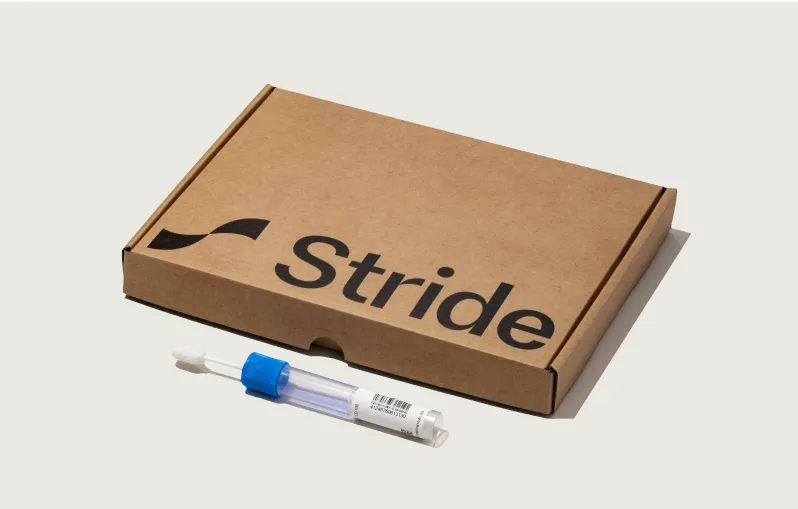






BCO1 Gene Test (Beta-Carotene Oxygenase 1)
The BCO1 gene test analyses DNA for variants in the beta-carotene oxygenase 1 gene that influence how efficiently you convert plant carotenoids, such as beta-carotene, into active vitamin A (retinol). Understanding your BCO1 status adds genetic context to vitamin A status, vision and skin health, immune resilience, and antioxidant capacity, especially if you rely heavily on plant-based sources of vitamin A.


Sample type
Cheek swab, Blood sample

Collection
At-home

Often paired with
Serum vitamin A and carotenoids, vitamin D, zinc, iron, full blood count, liver function, skin and eye health assessments, other nutrient and antioxidant genes

Fasting required
Not required
Key benefits of testing BCO1
- Identify whether you carry BCO1 variants such as R267S, A379V and others that reduce the conversion of beta-carotene and other provitamin A carotenoids into retinol.
- Help explain why you may show lower vitamin A status, dry skin or eyes, or weaker immune resilience than expected for your diet, particularly on plant-heavy or vegetarian patterns.
- Inform personalised strategies around vitamin A intake from animal and plant sources, carotenoid-rich foods, and supplement choices, so you can avoid both deficiency and excess.
- Provide context for antioxidant support, skin and mucosal barrier health, and vision performance, especially in low-light conditions.
- Clarify your baseline carotenoid conversion profile alongside serum retinol, carotenoids, and liver markers, so long-term health plans can be tailored to your actual ability to activate plant-based vitamin A.
What is the BCO1 gene?
BCO1 encodes beta-carotene oxygenase 1, a key enzyme expressed in the intestinal mucosa and other tissues that centrally controls the first step of converting provitamin A carotenoids into retinal, which is then further converted to retinol and retinoic acid. The enzyme cleaves beta-carotene at its central double bond, generating two molecules of retinal.
BCO1 is a major determinant of how efficiently dietary carotenoids from colourful fruits and vegetables can be turned into bioactive vitamin A. Common genetic polymorphisms in BCO1 can reduce enzyme activity, leading to higher circulating carotenoids but lower conversion to retinol, particularly when dietary preformed vitamin A from animal sources is limited.
What does BCO1 do?
BCO1 sits at a critical junction between dietary carotenoid intake and active vitamin A availability. When you consume foods rich in beta-carotene, such as carrots, sweet potatoes, and dark leafy greens, BCO1 in the intestine cleaves these molecules to produce retinal, which is then converted into retinol for storage or retinoic acid for signalling.
Vitamin A derived via BCO1-dependent conversion is essential for vision, especially low-light and colour vision, immune function, epithelial barrier integrity, skin cell differentiation, and proper development and tissue remodelling. Variants that impact BCO1 activity alter how much vitamin A can be generated from a given amount of carotenoids, which means some individuals need more preformed vitamin A or higher carotenoid intake to achieve the same functional status as others.
Why is BCO1 important for health?
BCO1 contributes to three interconnected systems: vitamin A status and vision, immune and barrier health, and antioxidant protection and skin integrity. Vitamin A plays a central role in maintaining the structure and function of the cornea and retina, supporting immune defences at mucosal surfaces, and regulating gene expression in multiple tissues.
When BCO1 function is impaired and dietary preformed vitamin A is low, individuals can be at greater risk of marginal or overt vitamin A insufficiency, which can influence visual performance, skin and mucosal dryness, susceptibility to infections, and aspects of reproductive and developmental health. On the other hand, understanding a high-conversion or lower-need profile helps avoid unnecessary high-dose supplementation that could risk vitamin A excess when combined with diet.
BCO1 vs vitamin A blood levels and dietary intake
It is easy to assume that BCO1 genotyping, vitamin A blood levels, and dietary intake all reflect the same information, but they answer different questions. BCO1 genotyping reveals your inherited ability to convert provitamin A carotenoids into retinol and does not change over time. It explains why two people with the same plant-rich diet may have very different vitamin A status.
Serum retinol, carotenoids, and dietary records show how much vitamin A and provitamin A you are currently getting and how your body is handling them, which can change with diet, liver health, infections, pregnancy, and supplementation. You can have conversion-reducing BCO1 variants but maintain good vitamin A status if you include enough preformed vitamin A or adapt your diet and supplements, and you can have favourable BCO1 genotypes yet develop low vitamin A if intake or absorption is poor. Combining genotype with lab and dietary data is most informative.
What factors modify the effects of BCO1 variants?
The influence of BCO1 variants is shaped by diet, fat absorption, gut health, and liver function much more than by the gene alone. Several modifiable factors can either buffer genetic effects or amplify them.
- Source and balance of vitamin A: Individuals with reduced BCO1 activity are more reliant on preformed vitamin A from eggs, dairy, liver, and some fortified foods, or on higher intakes of carotenoids to reach equivalent status. Vegans and some vegetarians with BCO1 variants may be particularly affected if not carefully supported.
- Dietary fat and meal context: Carotenoids are fat-soluble and require adequate dietary fat and proper digestion for optimal absorption. Low-fat meals, poor bile flow, or pancreatic insufficiency can reduce carotenoid uptake and compound BCO1-related issues.
- Gut health and microbiome: Intestinal inflammation, coeliac disease, inflammatory bowel disease, and dysbiosis can impair absorption of carotenoids and vitamin A, increasing the impact of low BCO1 activity.
- Liver function and storage: The liver stores vitamin A and releases it into circulation bound to specific proteins. Liver disease or poor liver function can impair storage and mobilisation, making BCO1 status more clinically relevant.
- Overall antioxidant and nutrient status: Adequate zinc, vitamin E, and other nutrients support vitamin A metabolism and antioxidant defences. Deficiency in these can amplify the functional impact of suboptimal BCO1 activity.
- Life stage and physiological demand: Pregnancy, breastfeeding, growth, and high training loads increase vitamin A requirements. In these settings, the gap between intake and BCO1-mediated conversion becomes more important.
Can you have BCO1 variants without symptoms?
Yes. Many people carry BCO1 variants that reduce carotenoid conversion yet never experience overt symptoms, particularly if they consume enough preformed vitamin A or have mixed diets that include animal and plant sources. In these individuals, the gene acts as a subtle modifier that becomes more important in specific dietary contexts.
Early manifestations of suboptimal vitamin A status can be nonspecific, including dry skin, brittle hair, recurrent infections, or difficulty seeing in low light, which are often attributed to other causes. More pronounced deficiency states are uncommon in high-income settings but can arise when restrictive diets, gut issues, or other conditions converge with reduced BCO1 function.
BCO1 genotypes: how do common variants differ?
BCO1 genotypes mainly differ in how they influence enzyme activity and, therefore, the efficiency of converting beta-carotene and related carotenoids to retinal. Understanding your pattern can help you tailor vitamin A sources and supplementation.
- Reduced-conversion variants (for example R267S, A379V and linked haplotypes): These commonly studied variants are associated with lower BCO1 activity and higher circulating beta-carotene levels for a given intake, indicating less conversion to retinol. Individuals may need more preformed vitamin A or higher carotenoid intakes to reach equivalent vitamin A status.
- Promoter and regulatory variants: Changes in regulatory regions can alter BCO1 expression in the intestine and other tissues, fine-tuning how much enzyme is available for carotenoid cleavage.
- Putative loss-of-function or rare variants: Rare alleles that severely impair BCO1 may lead to markedly reduced conversion and high beta-carotene levels in the face of lower vitamin A status, although these are uncommon.
- Reference or typical activity patterns: Many individuals have genotype combinations that support average conversion efficiency, but their actual vitamin A status can still vary with diet, gut health, and liver function.
How do I prepare for a BCO1 test?
For DNA-based BCO1 testing, preparation is simple because your genotype does not change with diet, supplements, or recent meals. The key step is clarifying how you will use the results, for example to inform vitamin A and carotenoid strategies, guide plant-based nutrition, or refine skin, eye, and immune health plans.
Cheek swab, saliva, or blood-based BCO1 genotyping does not require fasting. If you are also measuring serum retinol, carotenoids, or other nutrient markers, follow the preparation guidance for those tests, which may include fasting, avoiding specific supplements beforehand, and scheduling blood draws at consistent times.
Do I need a BCO1 test?
A BCO1 test is most useful when the result will influence your diet, supplementation, and monitoring of vitamin A-related outcomes, rather than as a curiosity. It becomes particularly informative when interpreted alongside vitamin A and carotenoid levels, dietary patterns, and clinical context.
- Plant-based or low-animal-product diets: If you rely heavily on plant sources for vitamin A, BCO1 genotyping can help determine how cautious you need to be about preformed vitamin A and how much to emphasise carotenoid-rich foods.
- Skin, eye, or immune health concerns: Recurrent infections, dry eyes or skin, or suboptimal wound healing may prompt deeper exploration of vitamin A pathways, especially if diet seems adequate.
- Pregnancy planning or high-demand states: Individuals planning pregnancy, breastfeeding, or undertaking high-intensity training may wish to ensure vitamin A status is optimised and aligned with their BCO1 profile.
- Comprehensive performance and longevity strategies: For those building broad DNA and blood testing programmes, BCO1 adds a nutrient and antioxidant dimension that complements methylation, cardiometabolic, and inflammatory markers.
Stride tests that include BCO1


Health Tests
Core DNA Methylation Test
5 reports: Methylation profile reports
From $229 $183.20
FAQs
What is the BCO1 gene test?
The BCO1 gene test analyses your DNA from blood or saliva to look for variants in the beta-carotene oxygenase 1 gene that influence how efficiently you convert provitamin A carotenoids, such as beta-carotene, into active vitamin A, with implications for vision, skin, immunity, and antioxidant support.
What does a BCO1 variant mean?
Certain BCO1 variants reduce enzyme activity and carotenoid-to-retinol conversion efficiency, so you may need more preformed vitamin A or higher carotenoid intakes to achieve the same vitamin A status as someone without these variants, especially on plant-heavy diets.
Do BCO1 variants always cause vitamin A deficiency?
No. BCO1 variants shift your reliance on different vitamin A sources but do not guarantee deficiency. Adequate intake of preformed vitamin A, balanced carotenoid intake, good gut and liver health, and thoughtful supplementation can maintain optimal status even with reduced conversion.
Is BCO1 testing used to diagnose disease?
BCO1 testing is not a diagnostic test for specific diseases, but it adds useful context when evaluating vitamin A status, plant-based diets, skin or eye concerns, and immune resilience as part of a wider nutritional and clinical assessment.
Do I need a BCO1 test?
You might consider a BCO1 test if you follow or plan to follow a vegetarian or vegan diet, have skin, eye, or immune issues despite apparently adequate nutrition, are designing a high-performance or longevity strategy where micronutrient precision matters, or want to understand how best to balance carotenoid-rich foods and vitamin A intake.
Do I need to fast for BCO1 testing?
Fasting is not required for DNA-based BCO1 testing. If vitamin A, carotenoids, or other blood tests are performed at the same time, follow the preparation guidance for those specific panels.
How can I optimise my health if I carry BCO1 variants?
Rather than trying to change the gene, focus on aligning your diet and supplements with your biology: ensure adequate preformed vitamin A if appropriate for your diet pattern, emphasise a variety of colourful carotenoid-rich plants with sufficient healthy fats, support gut and liver health, avoid extreme vitamin A restriction or excess, and track relevant nutrient and health markers over time to see how targeted changes reshape your long-term resilience and performance.